Tenontosaurus
Tenontosaurus tilletti
Image: Image sourced via web search (Fair use / Educational)
About Tenontosaurus
Tenontosaurus tilletti was a medium-to-large herbivorous ornithopod dinosaur that lived during the Aptian and Albian stages of the Early Cretaceous period, approximately 115 to 108 million years ago. Roaming the floodplains of what is now western North America, this dinosaur is one of the most abundant and well-represented vertebrate fossils found in the Cloverly and Antlers formations. As a basal iguanodontian, Tenontosaurus occupies a critical transitional position in the dinosaur family tree, bridging the evolutionary gap between smaller, bipedal ornithopods of the Jurassic and the massive, highly specialized duck-billed hadrosaurs that would come to dominate the Late Cretaceous ecosystems. Its name, which translates to 'sinew lizard,' reflects the extensive network of ossified tendons that stiffened its remarkably long tail. In paleontology, Tenontosaurus is perhaps most famous not for its own evolutionary success, but for its ecological role as the primary prey item for the iconic dromaeosaurid predator Deinonychus, a relationship that fundamentally altered scientific understanding of dinosaur behavior and predator-prey dynamics in the Mesozoic era.
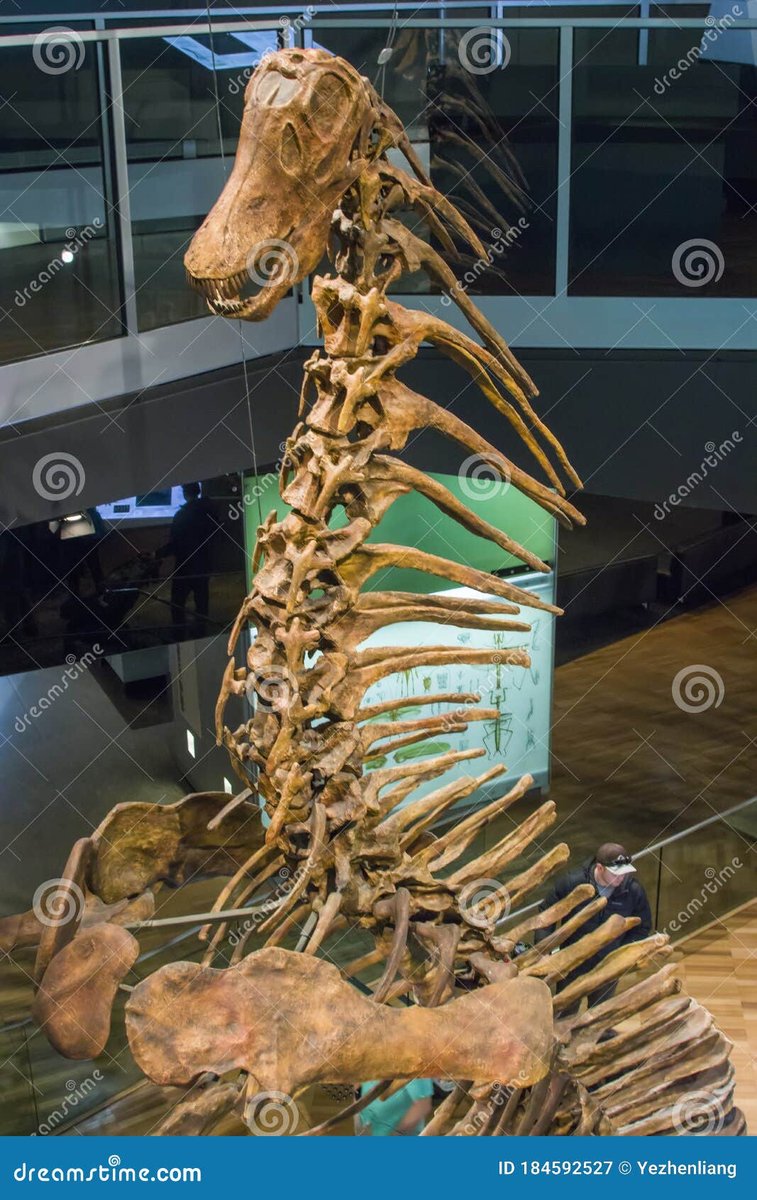
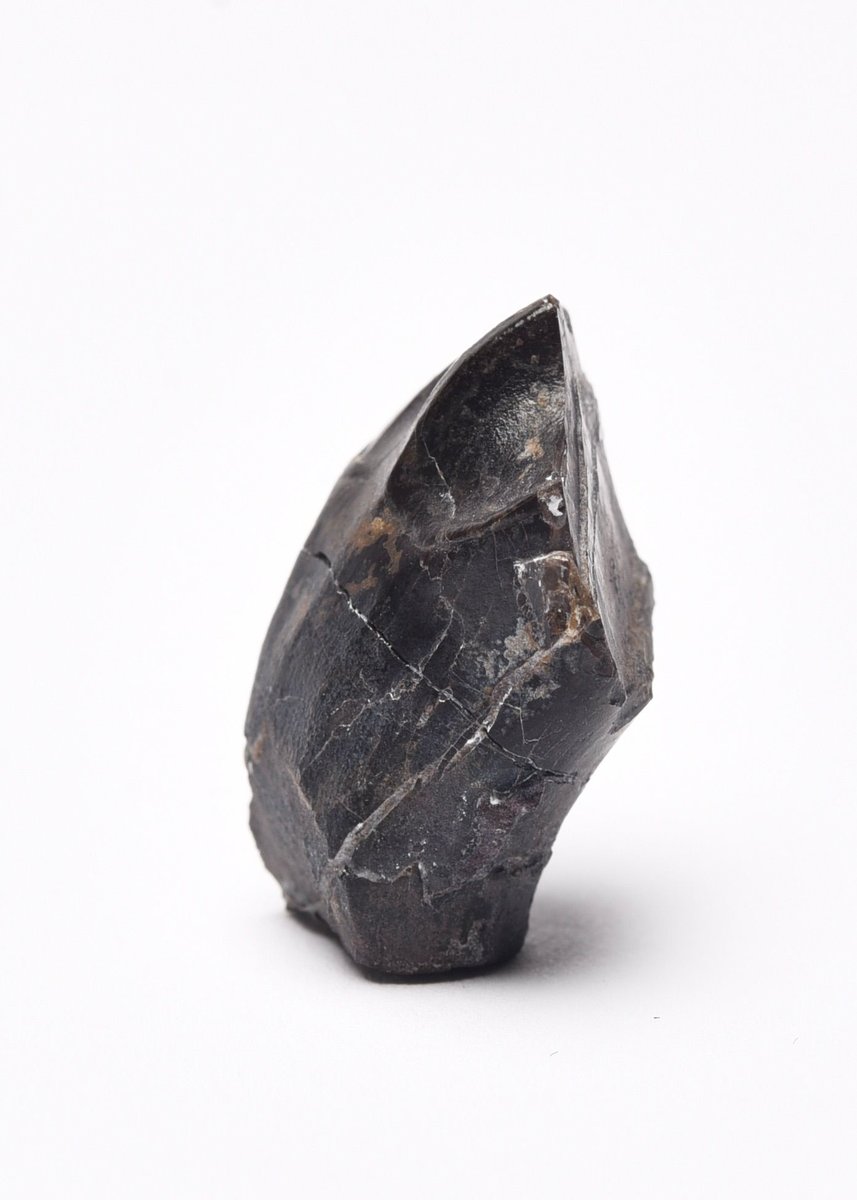
In terms of physical anatomy, Tenontosaurus was a robust and heavily built animal, measuring between 6.5 and 8 meters (21 to 26 feet) in length and weighing an estimated 1 to 2 metric tons. To put this into perspective, a fully grown Tenontosaurus would have been roughly the size and weight of a modern rhinoceros, though distributed over a much longer, reptilian frame. The most distinctive anatomical feature of Tenontosaurus was its extraordinarily long and muscular tail, which accounted for nearly two-thirds of its total body length. This tail was exceptionally broad and deep at the base, supported by a dense lattice of ossified tendons that ran along the neural spines and chevrons of the caudal vertebrae. These bony sinews, which inspired the animal's generic name, would have made the tail incredibly stiff and powerful, likely serving as a crucial counterbalance when the animal reared up on its hind legs, and potentially acting as a formidable bludgeoning weapon against predators. The skull of Tenontosaurus was relatively large, deep, and boxy, ending in a broad, toothless, U-shaped beak that was covered in a keratinous sheath in life. Behind this beak, the jaws were lined with rows of leaf-shaped, serrated teeth designed for slicing through tough vegetation. Its forelimbs were strong and elongated, ending in five-fingered hands that were capable of bearing weight, indicating that while it could walk bipedally, it spent a significant amount of time moving on all fours. The hind limbs were powerful and ended in three-toed, hoof-like claws, built for sustained walking rather than rapid running.
The paleobiology of Tenontosaurus reveals a highly successful and adaptable herbivore. Its robust beak and specialized dentition suggest it was a low-to-medium browser, feeding on a diet of tough, fibrous plants such as ferns, cycads, and early angiosperms (flowering plants) that were beginning to diversify during the Early Cretaceous. The wear patterns on its teeth indicate a shearing motion, allowing it to process large volumes of vegetation efficiently. Locomotion in Tenontosaurus was likely facultatively bipedal; juveniles may have been primarily bipedal, but as they grew larger and heavier, adults likely adopted a quadrupedal stance for foraging and resting, rearing up on their hind legs only to reach higher foliage or to flee from danger. Bone histology studies, particularly those conducted by paleontologist Sarah Werning, have provided profound insights into the growth patterns and metabolism of Tenontosaurus. Cross-sections of its long bones reveal lines of arrested growth (LAGs), similar to the growth rings of a tree, indicating that it grew rapidly during its early years before reaching skeletal maturity around the age of eight to ten. This rapid growth rate suggests a high metabolic rate, pointing toward endothermy (warm-bloodedness) or at least a transitional state of mesothermy. Furthermore, the discovery of medullary bone—a calcium-rich tissue found in modern female birds prior to egg-laying—in some Tenontosaurus specimens has allowed scientists to determine the sex of certain individuals and confirmed that they reached reproductive maturity before they were fully grown. The sheer abundance of Tenontosaurus fossils found in close proximity suggests they may have been gregarious animals, living in loose herds or family groups to provide mutual defense against predators.
The ecological context of the Early Cretaceous North American landscape was one of dynamic change, characterized by a semi-arid climate with distinct wet and dry seasons. The Cloverly Formation of Montana and Wyoming, and the Antlers Formation of Oklahoma and Texas, preserve a vast coastal plain environment crisscrossed by meandering rivers and seasonal floodplains. During the wet season, these areas would have been lush and verdant, supporting massive populations of herbivores, while the dry season would have brought harsh droughts, forcing animals to congregate around shrinking water sources. Tenontosaurus was the undisputed dominant medium-sized herbivore of this ecosystem, vastly outnumbering other plant-eaters like the armored nodosaurid Sauropelta and the smaller ornithopod Zephyrosaurus. In this food web, Tenontosaurus occupied the role of a primary consumer, acting as the ecological equivalent of a modern wildebeest or zebra on the African savanna. However, this abundance made it the primary target for the apex predators of its day. The massive carcharodontosaurid Acrocanthosaurus, measuring up to 11 meters in length, would have easily preyed upon adult Tenontosaurus. Yet, the most famous predator-prey relationship involves the much smaller, sickle-clawed dromaeosaurid Deinonychus antirrhopus. The frequent association of Deinonychus teeth and skeletons alongside the remains of Tenontosaurus suggests a highly specific ecological linkage, where the smaller predator regularly hunted or scavenged the abundant herbivore, shaping the evolutionary pressures on both species.
The discovery history of Tenontosaurus is deeply intertwined with the golden age of American paleontology and the subsequent 'Dinosaur Renaissance.' The first remains were discovered in 1903 by an expedition from the American Museum of Natural History, led by the legendary fossil hunter Barnum Brown, in the Cloverly Formation of Big Horn County, Montana. However, these initial finds were fragmentary and remained unstudied for decades. It was not until the 1960s that the true significance of the animal was realized. During expeditions led by Yale University paleontologist John Ostrom and his assistant Grant E. Meyer, numerous well-preserved skeletons of this large ornithopod were unearthed. In 1970, Ostrom formally described and named the genus Tenontosaurus, meaning 'sinew lizard,' and designated the type species Tenontosaurus tilletti in honor of the Tillett family, local ranchers who had graciously hosted and assisted the Yale expedition teams. Ostrom's work in the Cloverly Formation was revolutionary; he discovered the remains of several Deinonychus individuals clustered around a single, large Tenontosaurus skeleton. This specific find (specimen YPM 5060) became one of the most famous fossil associations in history, leading Ostrom to propose that Deinonychus was a highly active, warm-blooded, pack-hunting predator. This hypothesis directly challenged the prevailing view of dinosaurs as sluggish, cold-blooded reptiles and ignited the Dinosaur Renaissance, forever changing how scientists and the public viewed these ancient creatures.
In terms of evolutionary significance, Tenontosaurus holds a pivotal place in the phylogeny of ornithischian dinosaurs. It is classified as a basal iguanodontian, representing a crucial morphological and evolutionary bridge between the small, fast-running hypsilophodontids of the Jurassic and the large, highly derived iguanodontids and hadrosaurids (duck-billed dinosaurs) of the Late Cretaceous. While it retained primitive features such as a relatively simple dental battery and a long, stiffened tail reminiscent of earlier ornithopods, it also exhibited advanced traits like increased body size, a broader beak, and the loss of premaxillary teeth, which foreshadowed the evolutionary trajectory of later ornithopods. By studying Tenontosaurus, paleontologists can trace the gradual evolution of quadrupedality in the ornithopod lineage, as well as the development of more complex chewing mechanisms that would eventually allow hadrosaurs to become the most efficient herbivores of the Mesozoic. Furthermore, the survival and immense success of Tenontosaurus during the Aptian-Albian stages demonstrate the adaptability of this basal body plan, proving that an animal did not need the extreme specializations of later duck-bills to dominate its ecosystem. Its lineage eventually gave rise to the incredibly diverse and globally distributed iguanodontian clade, making Tenontosaurus a vital puzzle piece in understanding the broader narrative of dinosaur evolution.
Despite its well-documented fossil record, Tenontosaurus remains the subject of several ongoing scientific debates, most notably regarding its relationship with the predator Deinonychus. For decades following Ostrom's initial description, the paradigm was that Deinonychus hunted Tenontosaurus in highly coordinated packs, similar to modern wolves. This was based on the discovery of multiple Deinonychus skeletons alongside a single Tenontosaurus. However, recent taphonomic and behavioral studies have challenged this romanticized view. Some paleontologists now argue that the association of these fossils represents a 'predator trap' or a mobbing scenario, where solitary Deinonychus individuals gathered aggressively around a carcass to scavenge, frequently killing each other in the ensuing feeding frenzy, much like modern Komodo dragons. Isotopic analysis of Deinonychus teeth has also suggested that juveniles and adults had different diets, which contradicts the cooperative pack-hunting model where food is shared among the group. Additionally, there are ongoing debates regarding the exact biomechanics of Tenontosaurus's posture and locomotion. While it is generally accepted as a facultative biped, the exact ratio of time spent on two legs versus four, and the specific range of motion of its heavily ossified tail, remain subjects of biomechanical modeling and lively discussion within the paleontological community.
The fossil record of Tenontosaurus is exceptionally rich, making it one of the best-understood dinosaurs of the Early Cretaceous. Fossils are primarily found in the Cloverly Formation of Montana and Wyoming, and the Antlers Formation of Oklahoma, Texas, and Arkansas. To date, over 80 individual specimens have been recovered, ranging from isolated bones and teeth to nearly complete, fully articulated skeletons. The preservation quality is often excellent; the dense, heavy bones of Tenontosaurus survived the fossilization process well, and the distinctive ossified tendons of the tail are frequently preserved in their original life positions. Because of its abundance, Tenontosaurus serves as an important index fossil for the Aptian-Albian stages of North America; where Tenontosaurus is found, paleontologists can reliably date the rock layers and predict the presence of other specific fauna, such as Deinonychus and Sauropelta. The sheer volume of specimens, which includes individuals of various ontogenetic stages from hatchlings to fully mature adults, has allowed researchers to conduct large-scale statistical analyses of its growth, variation, and population dynamics, a rarity in vertebrate paleontology.
In popular culture, Tenontosaurus has achieved a unique, albeit somewhat tragic, fame. It is almost universally depicted in paleoart, museum dioramas, and documentaries as the perpetual victim, locked in a desperate, losing battle against a pack of leaping, slashing Deinonychus. This dramatic tableau has been immortalized in countless illustrations and is a staple exhibit in major institutions like the American Museum of Natural History and the Yale Peabody Museum. While this singular association has overshadowed the animal's own biological success, it has cemented Tenontosaurus in the public consciousness as the quintessential dinosaurian prey. Educationally, it serves as the perfect vehicle for teaching students about Mesozoic food webs, the scientific method of deducing behavior from fossil associations, and the historical shift in our understanding of dinosaur metabolism and activity levels.
Classification
Time Period
Discovery
Location
United States
Formation
Cloverly Formation
Frequently Asked Questions
What is Tenontosaurus?
Tenontosaurus tilletti was a medium-to-large herbivorous ornithopod dinosaur that lived during the Aptian and Albian stages of the Early Cretaceous period, approximately 115 to 108 million years ago. Roaming the floodplains of what is now western North America, this dinosaur is one of the most abund...
When did Tenontosaurus live?
Tenontosaurus lived during the cretaceous period of the mesozoic era approximately 115-108 million years ago.
Where was Tenontosaurus discovered?
Fossils of Tenontosaurus were discovered in United States in the Cloverly Formation.
What did Tenontosaurus eat?
Tenontosaurus was a herbivore. It lived in terrestrial habitats.
What type of fossil is Tenontosaurus?
Tenontosaurus is preserved as a body fossil. The preservation quality is excellent.
Related Specimens
From the mesozoic era · body fossils