Sebecus
Sebecus icaeorhinus
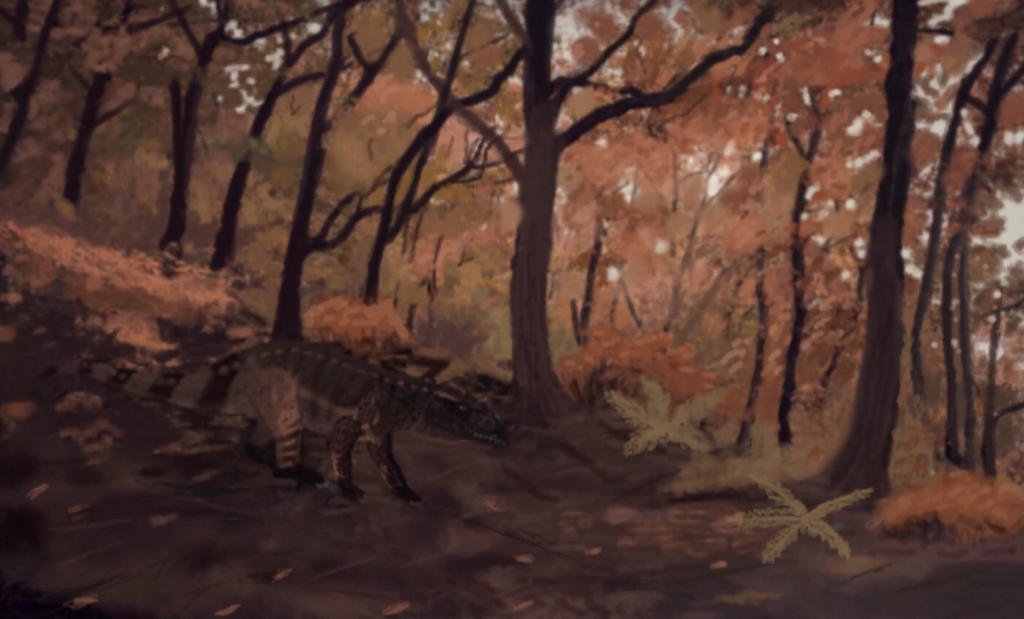
Image: Image sourced via web search (Fair use / Educational)
About Sebecus
Sebecus icaeorhinus is an extinct genus of sebecid crocodylomorph that inhabited South America during the Eocene epoch of the Paleogene period, approximately 49 to 39 million years ago. Unlike modern crocodilians, which are primarily semi-aquatic ambush predators, Sebecus was a fully terrestrial carnivore equipped with a deep, narrow snout and serrated, ziphodont teeth designed for slicing flesh rather than grasping aquatic prey. Its discovery in the fossil-rich beds of Patagonia, Argentina, provided crucial early evidence of the diverse and highly specialized terrestrial crocodylomorphs that dominated the predatory niches of Cenozoic South America alongside terror birds and sparassodonts. The significance of Sebecus in paleontology cannot be overstated, as it serves as the type genus for the family Sebecidae and the suborder Sebecosuchia, representing a highly successful lineage that survived the Cretaceous-Paleogene extinction event and thrived in isolation for tens of millions of years.
The physical anatomy of Sebecus icaeorhinus was strikingly different from that of extant crocodilians, reflecting its highly specialized terrestrial lifestyle. Estimates based on the available cranial and postcranial material suggest that Sebecus reached an approximate body length of 200 to 300 centimeters, weighing roughly 50 to 100 kilograms, making it a medium-sized but formidable predator. The most distinctive feature of Sebecus was its skull, which was laterally compressed, deep, and narrow, superficially resembling the skulls of theropod dinosaurs rather than the broad, flattened skulls of modern alligators or crocodiles. This remarkable convergence with theropods extended to its dentition; Sebecus possessed ziphodont teeth, which were laterally compressed, backward-curving, and featured finely serrated edges (carinae) perfectly adapted for slicing through meat and hide. The external nares (nostrils) were positioned at the very tip of the snout and directed forward, rather than upward, further indicating a terrestrial rather than aquatic habit. Postcranial remains, though less complete than the cranial material, indicate that Sebecus possessed longer, more erect limbs than modern crocodilians, allowing for an agile, parasagittal gait. The eyes were situated on the sides of the head, providing a wide field of vision suitable for scanning the terrestrial environment for prey. Soft tissue inferences suggest a tough, scaly integument typical of crocodylomorphs, though perhaps lacking the heavy osteoderm armor of aquatic forms to reduce weight and increase terrestrial mobility.
The paleobiology of Sebecus icaeorhinus paints a picture of a highly active, terrestrial apex or meso-predator. Its diet was strictly carnivorous, utilizing its ziphodont teeth to deliver devastating, slicing bites to its prey, causing massive blood loss and tissue damage. This hunting strategy is fundamentally different from the "grab and drown" or "death roll" techniques employed by modern crocodilians, which rely on conical teeth to hold struggling prey. Instead, Sebecus likely hunted more like a mammalian carnivore or a theropod dinosaur, employing cursorial locomotion to chase down or ambush terrestrial vertebrates. Its erect limb posture would have allowed for sustained walking and bursts of running speed, making it an efficient hunter in the forested and open environments of Eocene South America. Metabolic estimates for Sebecus and other sebecosuchians are a subject of ongoing research, but their active, terrestrial lifestyle suggests they may have possessed a higher metabolic rate than modern ectothermic crocodilians, possibly exhibiting some degree of endothermy or homeothermy, though they likely remained fundamentally ectothermic. Growth patterns, inferred from bone histology of related taxa, suggest a relatively slow but continuous growth rate, typical of large reptiles. Social behavior is difficult to infer from the fossil record, but given the solitary nature of most large terrestrial predators, Sebecus likely operated alone or in loose associations, coming together primarily for mating or opportunistic feeding on large carcasses.
During the Eocene epoch, approximately 49 to 39 million years ago, the world was experiencing a warm, "hothouse" climate, and South America was an island continent, completely isolated from other landmasses. This isolation allowed for the evolution of a highly unique and endemic fauna. The environment of Patagonia, where Sebecus lived, was significantly warmer and more humid than it is today, characterized by lush, subtropical to temperate forests and emerging open woodland habitats. In this ecosystem, Sebecus occupied a crucial position in the food web as a primary terrestrial predator. It shared its habitat with a bizarre array of endemic South American mammals, including early notoungulates, litopterns, and astrapotheres, which likely formed the bulk of its diet. Sebecus also coexisted with other formidable predators, most notably the sparassodonts (a group of carnivorous metatherians) and the early phorusrhacids, or "terror birds." The presence of Sebecus alongside these other predators suggests a complex partitioning of predatory niches. Sebecus, with its slicing dentition and cursorial adaptations, may have specialized in hunting medium-sized, heavily built mammalian herbivores, utilizing ambush tactics in denser vegetation where its relatively low profile would have been advantageous. The evolutionary success of Sebecus and its relatives in South America demonstrates that, in the absence of advanced placental carnivorans, terrestrial crocodylomorphs were highly capable of filling top predatory roles.
The discovery history of Sebecus icaeorhinus is deeply intertwined with the pioneering paleontological expeditions to South America in the early 20th century. The first fossils of Sebecus were discovered by the legendary American paleontologist George Gaylord Simpson during the Scarritt Patagonian Expeditions of the American Museum of Natural History in the 1930s. Simpson and his team were exploring the fossil-rich Eocene deposits of the Casamayor Formation (now often referred to as part of the Sarmiento Formation) in the Chubut Province of Patagonia, Argentina. In 1937, Simpson formally described and named the genus and species. The generic name "Sebecus" is derived from Sebek (or Sobek), the ancient Egyptian crocodile deity, while the specific epithet "icaeorhinus" translates to "random snout" or "unexpected snout," reflecting Simpson's surprise at finding a crocodylomorph with such a deep, dinosaur-like skull in Cenozoic deposits. The holotype specimen, AMNH 3160, consists of a partial skull and lower jaw, which remains one of the most important and well-studied sebecosuchian specimens in the world. Subsequent expeditions to Patagonia have uncovered additional, though often fragmentary, material of Sebecus and closely related taxa, gradually fleshing out our understanding of this remarkable animal. Simpson's discovery of Sebecus was a watershed moment in paleontology, as it provided the first clear evidence that the bizarre, terrestrial crocodylomorphs known from the Mesozoic had not only survived the end-Cretaceous extinction but had continued to flourish and diversify in Cenozoic South America.
The evolutionary significance of Sebecus icaeorhinus is profound, as it represents a highly specialized and successful branch of the crocodylomorph family tree that diverged significantly from the lineage leading to modern crocodilians. Sebecus belongs to the clade Notosuchia, a diverse group of primarily terrestrial crocodylomorphs that originated in the Mesozoic era. Within Notosuchia, Sebecus is the type genus of the family Sebecidae and the suborder Sebecosuchia. The survival of sebecosuchians across the Cretaceous-Paleogene (K-Pg) boundary is a remarkable evolutionary feat, demonstrating the resilience and adaptability of this terrestrial lineage while non-avian dinosaurs and many other groups perished. Sebecus provides crucial insights into the morphological plasticity of the crocodylomorph body plan, proving that the group was not restricted to the semi-aquatic, ambush-predator niche occupied by extant species. The striking convergent evolution between the skulls and teeth of Sebecus and those of theropod dinosaurs highlights how similar ecological pressures—in this case, the need to efficiently slice through the flesh of large terrestrial prey—can drive the development of nearly identical morphological solutions in distantly related lineages. Furthermore, the extensive radiation of sebecids in Cenozoic South America underscores the importance of geographic isolation in shaping evolutionary trajectories, allowing ancient lineages to persist and diversify in the absence of competition from newly evolving groups like placental carnivorans.
The study of Sebecus and its relatives has been marked by several ongoing scientific debates and taxonomic revisions. One of the primary areas of controversy concerns the exact phylogenetic placement of Sebecidae within the broader crocodylomorph tree. While generally accepted as notosuchians, the relationships between sebecids, baurusuchids, and peirosaurids have been subject to shifting interpretations as new fossils are discovered and cladistic analyses are refined. Another significant debate revolves around the metabolic status and thermoregulation of terrestrial crocodylomorphs like Sebecus. Some researchers argue that their highly active, cursorial lifestyle necessitates a higher metabolic rate than that of modern crocodilians, potentially approaching endothermy. Others maintain that a specialized form of ectothermy, coupled with the warm Eocene climate, would have been sufficient to support their energetic demands. The interpretation of their hunting behavior also remains a topic of discussion; while the ziphodont dentition clearly indicates a carnivorous diet, the extent to which Sebecus relied on active pursuit versus ambush predation is difficult to determine conclusively from the fossil record. Additionally, the taxonomy of the genus Sebecus itself has undergone revision; several species previously assigned to Sebecus, such as S. querejazus and S. huilensis, have been re-evaluated and moved to other genera (Zulmasuchus and Langstonia, respectively), highlighting the complexity of sebecid diversity and the need for continuous reassessment of historical fossil collections.
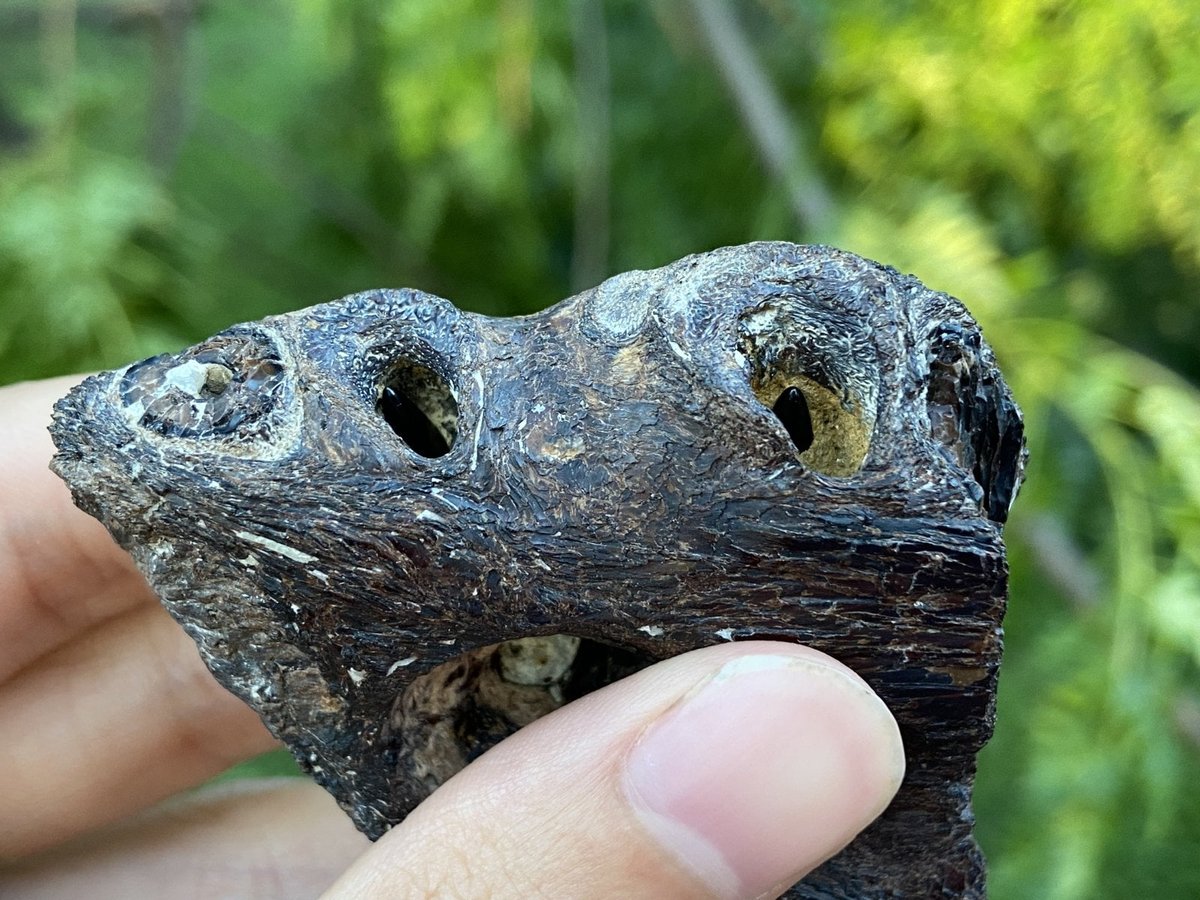
The fossil record of Sebecus icaeorhinus is geographically restricted to the Patagonia region of southern Argentina, specifically within the Eocene-aged deposits of the Casamayor Formation (Sarmiento Formation). While Sebecus is one of the best-known sebecosuchians, its fossils are still considered relatively rare. The known specimens primarily consist of cranial material, including the nearly complete holotype skull and lower jaw, as well as isolated teeth and fragmentary postcranial elements. The preservation quality of the cranial material is generally good, allowing for detailed anatomical studies of the skull structure, dentition, and even endocranial features through modern CT scanning techniques. However, the scarcity of complete, articulated postcranial skeletons remains a significant limitation in fully understanding the locomotion and overall body proportions of Sebecus. The fossil sites in Patagonia, such as the Gran Barranca, are famous for their rich assemblages of endemic South American mammals, and the presence of Sebecus fossils in these same beds provides crucial context for reconstructing the terrestrial ecosystems of the Eocene. The isolated teeth of Sebecus, characterized by their distinctive serrations, are more commonly found than complete skulls and serve as important biostratigraphic markers for paleontologists working in the region.
While Sebecus may not enjoy the same level of global pop-culture recognition as dinosaurs like Tyrannosaurus rex or modern crocodilians, it holds a special place of fascination among paleontology enthusiasts and researchers. Its status as a "land crocodile" with dinosaur-like teeth makes it a compelling subject for educational outreach, illustrating the surprising diversity of past life and the concept of convergent evolution. Notable displays of Sebecus, including casts of the holotype skull, can be found in major natural history museums, such as the American Museum of Natural History in New York, where George Gaylord Simpson's legacy is preserved. In recent years, Sebecus and other notosuchians have increasingly appeared in paleoart, documentaries, and specialized literature, capturing the public imagination by challenging the conventional perception of crocodilians as strictly aquatic, sluggish reptiles. The story of Sebecus serves as a powerful reminder of the dynamic and ever-changing nature of life on Earth, highlighting a time when terrestrial crocodiles ruled the ancient landscapes of South America.
Classification
Time Period
Discovery
Location
Argentina
Formation
Casamayor Formation
Frequently Asked Questions
What is Sebecus?
Sebecus icaeorhinus is an extinct genus of sebecid crocodylomorph that inhabited South America during the Eocene epoch of the Paleogene period, approximately 49 to 39 million years ago. Unlike modern crocodilians, which are primarily semi-aquatic ambush predators, Sebecus was a fully terrestrial car...
When did Sebecus live?
Sebecus lived during the paleogene period of the cenozoic era approximately 49-39 million years ago.
Where was Sebecus discovered?
Fossils of Sebecus were discovered in Argentina in the Casamayor Formation.
What did Sebecus eat?
Sebecus was a carnivore. It lived in terrestrial habitats.
What type of fossil is Sebecus?
Sebecus is preserved as a body fossil. The preservation quality is good.
Related Specimens
From the cenozoic era · body fossils