Shonisaurus
Shonisaurus popularis
Image: File:Shonisaurus popularis.jpg - Wikimedia Commons (CC BY-SA)
About Shonisaurus
Shonisaurus, with its sole recognized species Shonisaurus popularis, was a colossal marine reptile that navigated the Panthalassic Ocean during the Late Triassic period, specifically the Carnian stage, approximately 237 to 227 million years ago. As one of the earliest truly gigantic vertebrates to evolve, its discovery in the arid mountains of Nevada provided a profound window into the nascent ecosystems of the Mesozoic seas and the remarkable evolutionary journey of the ichthyosaurs. This immense creature, Nevada's official state fossil, stands as a testament to the rapid diversification and gigantism achieved by marine reptiles long before large dinosaurs became the dominant terrestrial fauna.
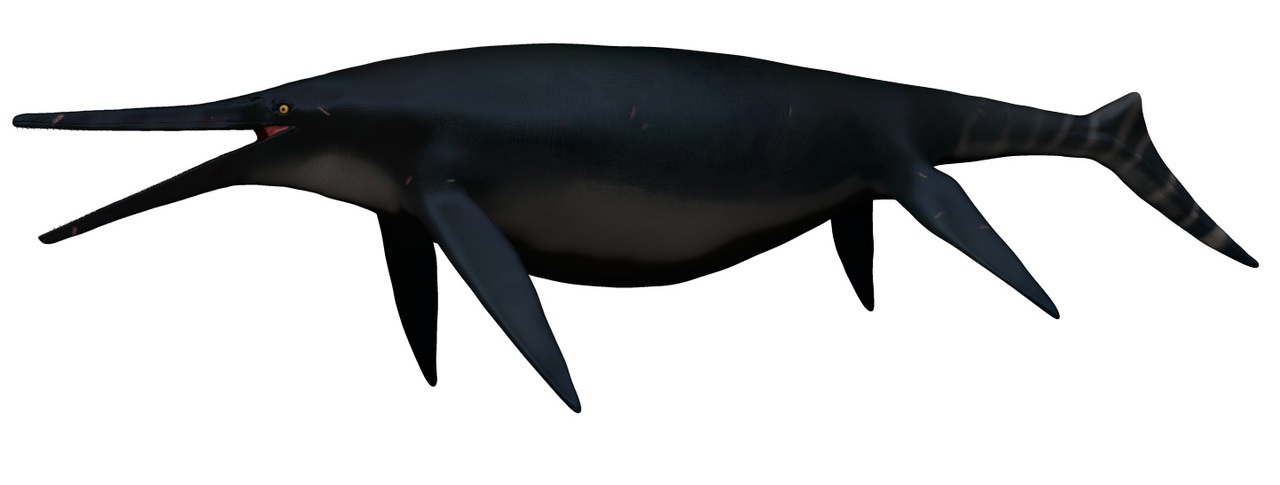
The physical stature of Shonisaurus popularis was truly immense, placing it among the largest marine animals of all time. Adults reached estimated lengths of 15 meters (about 50 feet), a size comparable to a modern sperm whale, with a corresponding body mass estimated to be between 30 and 40 metric tons. Unlike the sleek, dolphin-like or tuna-like bodies of later, more derived ichthyosaurs such as Ichthyosaurus or Ophthalmosaurus, Shonisaurus possessed a much more robust and deep-chested, almost barrel-shaped torso. This deep body plan suggests it was not built for extreme speed but rather for steady, powerful cruising through the open ocean. Its skull was proportionally large, featuring an elongated and remarkably narrow snout, or rostrum. A key distinguishing feature was its dentition; teeth were present only in the very front tip of the jaws and were socketed, a condition known as thecodonty. This dental arrangement was lost in adults, suggesting a significant shift in feeding strategy as the animal matured. Its eyes were large, though not as disproportionately so as in later ichthyosaurs, but still indicative of a reliance on vision in the marine environment. The four flippers were long and narrow, more paddle-like than the hydrofoil shapes of its later relatives, and its vertebral column terminated in a tail that had only a slight downward bend, supporting a relatively small, simple, and likely fleshy fluke. This tail morphology, combined with its bulky frame, reinforces the interpretation of Shonisaurus as a powerful but relatively slow-moving cruiser rather than a high-velocity pursuit predator.
The unique anatomy of Shonisaurus provides critical clues to its paleobiology and lifestyle. The peculiar dentition, with teeth confined to the jaw tips in juveniles and absent in adults, strongly suggests a specialized diet. Paleontologists theorize that Shonisaurus was a suction feeder, using its long snout and powerful hyoid apparatus to create negative pressure and inhale soft-bodied prey. Its primary food source was likely abundant Triassic cephalopods, such as squid-like coleoids and belemnites, which lacked the hard outer shells of ammonites. This feeding method would have been highly efficient for capturing large quantities of soft, slippery prey without the need for a full battery of grasping teeth. Its locomotion was likely characterized by undulations of its entire body and tail, with the long flippers used for steering and stability at lower speeds. The relatively simple tail structure indicates it was not capable of the rapid, high-frequency oscillations that powered later, faster ichthyosaurs. The mass mortality site in Nevada, where dozens of individuals perished together, has led to speculation about its social behavior. While the exact cause of the stranding is debated, the sheer number of individuals suggests that Shonisaurus may have traveled in social groups or pods, perhaps for protection, cooperative feeding, or during migrations to specific breeding or feeding grounds. This gathering behavior, whether seasonal or permanent, points to a complex social structure for these early marine giants.
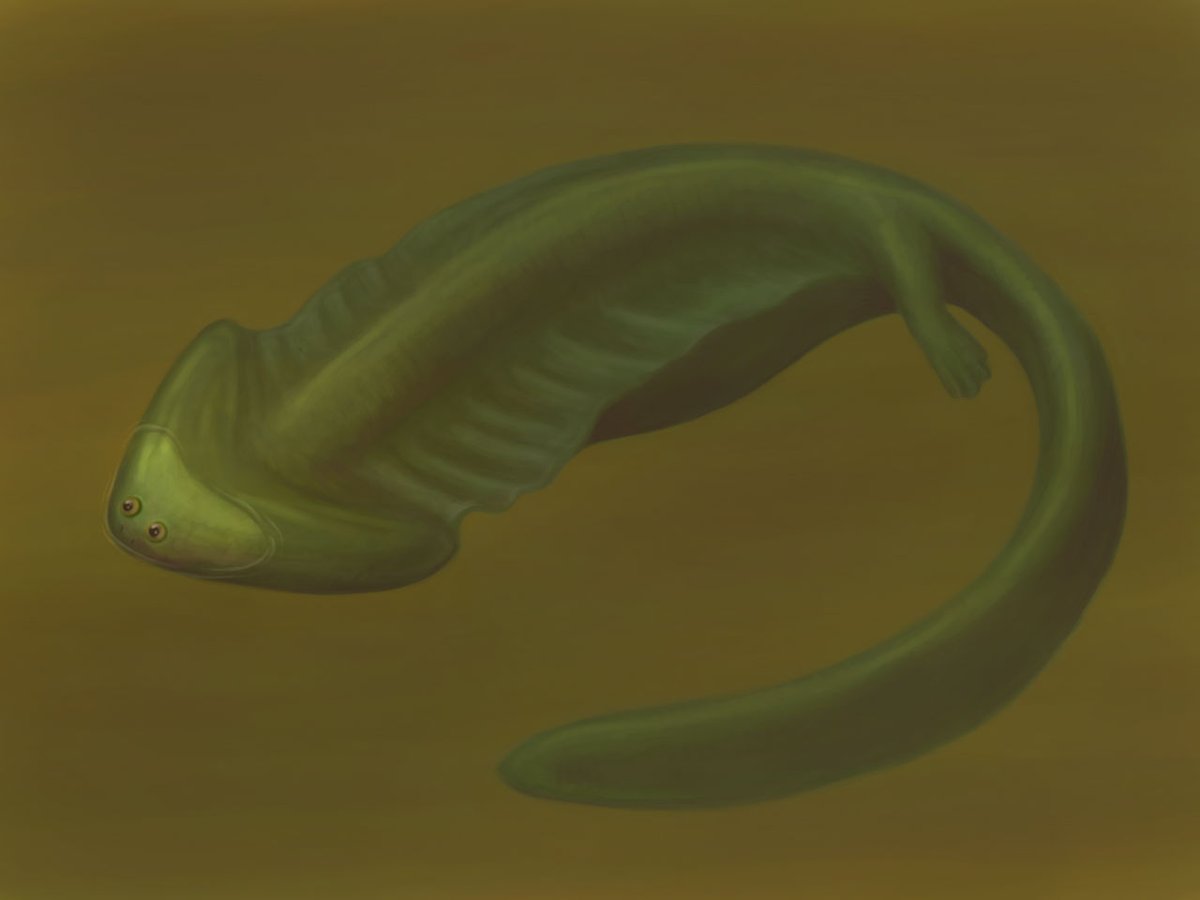
Shonisaurus lived in a world vastly different from our own. During the Late Triassic, the supercontinent of Pangaea was beginning to rift apart, and the fossil site in what is now Nevada was located on the western coast of North America, bordering the vast Panthalassic Ocean. This region was a shallow to deep marine shelf environment, part of a tropical volcanic island arc system. The climate was generally warm and arid. The waters Shonisaurus inhabited were part of a rich and developing marine ecosystem. It shared its environment with a variety of other marine life, positioning it as an apex predator within its food web. Its prey, as inferred from its anatomy, consisted primarily of cephalopods. The ecosystem also included various fish, conodonts (eel-like chordates), and other marine reptiles. Among its contemporaries were other, smaller ichthyosaurs like Cymbospondylus and Mixosaurus, as well as early sauropterygians, the group that would later give rise to plesiosaurs. The presence of such a large predator indicates a highly productive marine environment capable of supporting a substantial biomass at lower trophic levels. Shonisaurus, by virtue of its sheer size, likely had no natural predators as an adult, occupying the top of the food chain and exerting significant ecological pressure on the cephalopod populations it consumed.
The discovery of Shonisaurus is a cornerstone of American vertebrate paleontology. The story began in 1928 when M. E. Goranson, a mining geologist, first reported massive fossil bones in the Shoshone Mountains of central Nevada. However, it was not until 1954 that systematic excavations commenced under the leadership of paleontologists Dr. Charles Camp and Dr. Samuel Welles from the University of California, Berkeley. Over the next decade, their teams painstakingly excavated an extraordinary concentration of skeletons from the Luning Formation. The sheer scale of the bonebed was unprecedented, eventually revealing the remains of at least 37 colossal ichthyosaurs. In 1966, Charles Camp formally named the creature Shonisaurus popularis. The generic name "Shonisaurus" translates to "lizard from the Shoshone Mountains," honoring the location of its discovery, while the specific epithet "popularis" means "popular," reflecting the immense public and scientific interest the find generated. The primary specimen, designated as the holotype, is a partial skeleton that provided the basis for the original description. The incredible collection of fossils, many of which were left in situ for public viewing and protection, led to the establishment of Berlin-Ichthyosaur State Park in 1957, preserving this globally significant paleontological site.
In the grand narrative of evolution, Shonisaurus represents a critical chapter in the story of ichthyosaur diversification and the broader return of tetrapods to the sea. It belongs to the family Shonisauridae, a group of early, giant ichthyosaurs that demonstrate the first wave of gigantism in this lineage. Shonisaurus showcases a mosaic of primitive and derived features. Its deep, barrel-shaped body and relatively simple tail are considered more basal, or primitive, traits compared to the highly streamlined forms of later Jurassic and Cretaceous ichthyosaurs. However, its immense size and specialized toothless, suction-feeding apparatus in adults represent significant evolutionary innovations. It demonstrates that ichthyosaurs achieved whale-like proportions very early in their evolutionary history, only about 15-20 million years after the first ichthyosaurs appeared. This rapid evolution towards gigantism highlights the ecological opportunities available in the post-Permian extinction oceans. While ichthyosaurs have no direct modern descendants, having gone extinct in the Late Cretaceous, they represent one of the most successful and long-lived lineages of marine reptiles, and Shonisaurus stands as a key example of their early adaptive radiation and ecological dominance.
Despite its fame, Shonisaurus has been at the center of several scientific debates. One of the most significant controversies revolves around its taxonomy and relationship with other giant Triassic ichthyosaurs, particularly Shastasaurus from North America and Himalayasaurus from Tibet. Some researchers have proposed that Shonisaurus popularis should be reclassified as a species of Shastasaurus, arguing the differences are not significant enough to warrant a separate genus. However, detailed analyses of the skull and postcranial anatomy, especially the deep-chested body plan of Shonisaurus compared to the more slender body of Shastasaurus, have led most paleontologists to maintain them as distinct genera. Another enduring debate concerns the cause of the mass death event at the Nevada site. Camp's original hypothesis was a mass stranding in a shallow tidal flat. More recent and controversial theories have proposed other causes, including a toxic algal bloom or even predation by a colossal, undiscovered predator, a "Triassic kraken," though the latter idea has been widely dismissed by the scientific community due to a lack of direct evidence. The current consensus leans towards a multi-faceted environmental catastrophe, possibly involving anoxic waters or a sudden change in sea level, that trapped and killed the group in a deep-water basin.
The fossil record of Shonisaurus popularis is geographically restricted but paleontologically spectacular. All known and confirmed specimens have been unearthed from a single locality: the bonebed within Berlin-Ichthyosaur State Park in Nye County, Nevada. This site, within the Upper Triassic Luning Formation, has yielded an astonishing assemblage of at least 37 individuals, ranging from sub-adults to large, mature animals. The quality of preservation is variable but generally good, with many skeletons being partially or nearly completely articulated. This allows for detailed anatomical study and provides a rare opportunity to examine population-level variation in a fossil species. The sheer density of skeletons in one place makes it one of the most significant ichthyosaur fossil sites in the world. The decision by Charles Camp to leave several of the giant skeletons embedded in the rock face, protected by a large building, has created a unique in-situ fossil exhibit that allows visitors to see these magnificent creatures exactly as they were found. This concentration provides invaluable data not just on anatomy but also on taphonomy—the processes of death, decay, and fossilization.
The discovery of such a colossal and intriguing creature has had a lasting cultural impact. Shonisaurus popularis was designated the official state fossil of Nevada in 1977, a recognition of its scientific importance and its unique connection to the state's natural heritage. The primary repository and exhibition site, Berlin-Ichthyosaur State Park, is a major educational and tourist destination, offering the public a rare glimpse into the process of paleontological excavation and the sheer scale of prehistoric life. Casts and reconstructions of Shonisaurus skeletons are featured in major museums around the world, including the Natural History Museum of Los Angeles County and the Nevada State Museum, where they serve to educate and inspire awe in millions of visitors about the deep history of life on Earth. Its story, from discovery in a remote mountain range to its status as a celebrated icon of the Triassic period, continues to capture the public imagination.
Classification
Time Period
Discovery
Location
Berlin-Ichthyosaur State Park, Nevada, USA
Formation
Luning Formation
Frequently Asked Questions
What is Shonisaurus?
Shonisaurus, with its sole recognized species Shonisaurus popularis, was a colossal marine reptile that navigated the Panthalassic Ocean during the Late Triassic period, specifically the Carnian stage, approximately 237 to 227 million years ago. As one of the earliest truly gigantic vertebrates to e...
When did Shonisaurus live?
Shonisaurus lived during the triassic period of the mesozoic era approximately 237-227 million years ago.
Where was Shonisaurus discovered?
Fossils of Shonisaurus were discovered in Berlin-Ichthyosaur State Park, Nevada, USA in the Luning Formation.
What did Shonisaurus eat?
Shonisaurus was a carnivore. It lived in marine habitats.
What type of fossil is Shonisaurus?
Shonisaurus is preserved as a body fossil. The preservation quality is excellent.
Related Specimens
From the mesozoic era · body fossils