Fossil Araucaria
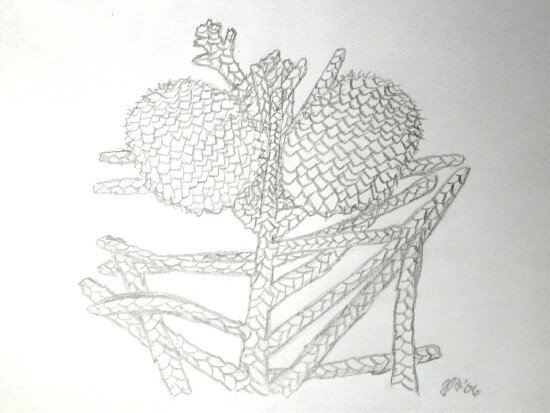
Araucaria mirabilis
Image: Image sourced via web search (Fair use / Educational)
About Fossil Araucaria
Araucaria mirabilis is an extinct species of coniferous tree from the Middle to Late Jurassic period, approximately 160 to 155 million years ago, whose exquisitely preserved fossils provide an unparalleled window into the ancient forests of Gondwana. These remarkable remains, found primarily in the petrified forests of Patagonia, Argentina, are so perfectly mineralized that they retain their three-dimensional structure down to the cellular level, making A. mirabilis one of the most significant and well-understood fossil plants in the world. Its study has been crucial for understanding the evolution of the Araucariaceae family, the paleoecology of Jurassic ecosystems, and the processes of fossilization itself. The species represents a direct ancestor to modern monkey puzzle trees and Norfolk Island pines, linking the flora of the age of dinosaurs to the present day.
The physical characteristics of Araucaria mirabilis are known in extraordinary detail thanks to the exceptional quality of its fossils. These were large trees, estimated to have reached heights of 30 to 50 meters (approximately 100 to 165 feet), with trunk diameters exceeding 1.5 meters. This stature would have made them a dominant component of the Jurassic canopy, comparable in size to large modern conifers like sequoias or Douglas firs. The tree's overall architecture was likely similar to its modern relatives, featuring a straight, columnar trunk with whorls of branches extending outwards. The leaves were scale-like, stiff, and sharply pointed, spirally arranged around the branches, forming a dense, protective armor. This morphology is a hallmark of the Araucaria genus, suggesting an adaptation to deter herbivores and conserve water. The most famous fossils are its seed cones, which were spherical and remarkably large, measuring up to 15 centimeters in diameter. These cones, often found detached from the trees, contained numerous winged seeds arranged in a compact spiral. The wood, preserved through permineralization with silica, shows clear growth rings, allowing paleobotanists to study the tree's life history and the climate in which it grew. The level of detail is so fine that individual cells, stomata, and even the delicate tissues of the embryos within the seeds are perfectly preserved.
As a photosynthetic organism, Araucaria mirabilis formed the base of its local food web, converting sunlight into energy through its tough, scale-like leaves. Its primary mode of life was static, growing slowly over centuries to reach its towering height. The presence of distinct growth rings in fossilized wood indicates that the trees experienced seasonal variations in climate, with periods of faster growth alternating with slower ones, likely corresponding to wetter and drier seasons. Reproduction was accomplished through the massive seed cones, which were pollinated by wind, a common strategy among conifers. Once mature, these heavy cones would fall to the ground, where they would either break apart to release their winged seeds or be consumed and dispersed by animals. The seeds themselves were nutritious and likely a food source for herbivorous dinosaurs, such as small ornithopods or early sauropods, as well as for insects and other invertebrates. The tree's formidable height and dense, spiky foliage would have provided it with significant protection from most ground-dwelling herbivores, with only the largest sauropods potentially able to browse on its higher branches. Its life cycle was one of slow, persistent growth, resilience to environmental pressures, and reliance on wind and gravity for propagation, a successful strategy that has defined the Araucariaceae for over 150 million years.
The ecological context of Araucaria mirabilis was a world vastly different from our own. During the Middle to Late Jurassic, Patagonia was part of the supercontinent Gondwana and situated at a more temperate latitude than it is today. The climate was generally warm and humid, but with distinct seasonal dry periods, as evidenced by the tree's growth rings. A. mirabilis grew in vast, dense forests that covered the landscape, forming a near-monoculture in some areas. These forests were part of a complex volcanic landscape. The very events that preserved them—massive volcanic eruptions—also shaped their environment. These eruptions would have periodically blanketed the region in silica-rich ash, which, when combined with water, created the perfect medium for permineralization. The ecosystem was rich with life; these conifer forests would have been home to a variety of dinosaurs. Herbivores like the early titanosaurs and other sauropods would have browsed on the vegetation, while predatory theropods hunted along the forest floor. The understory would have consisted of ferns, cycads, and other primitive plants. In this world, A. mirabilis was a keystone species, a primary producer that created the three-dimensional habitat structure for countless other organisms, from insects living on its bark to dinosaurs seeking shelter beneath its canopy. Its position in the food web was foundational, supporting a diverse array of herbivores which, in turn, supported a community of predators.
The discovery of Araucaria mirabilis is tied to the exploration of the incredible petrified forests of Patagonia. While local people had known of the fossilized trees for generations, their scientific significance was brought to the world's attention in the early 20th century. The key scientific description was published in 1924 by the German-Argentine botanist Anselmo Windhausen, who recognized the immense scientific value of the site now known as the Jaramillo Petrified Forest National Park (Parque Nacional Bosques Petrificados de Jaramillo). The specific name, *mirabilis*, is Latin for 'wonderful' or 'extraordinary,' a fitting tribute to the breathtaking quality of the fossils. The primary locality, Cerro Cuadrado ('Square Hill'), became famous for the sheer abundance of perfectly preserved cones, which litter the ground as if they fell from the trees only yesterday. These cones, often called 'Rosettes of Patagonia,' became prized collector's items. The initial research was furthered by paleobotanists like G. R. Wieland and later by Sergio Archangelsky, who conducted extensive studies on the anatomy and paleoecology of these fossil forests. There are no single, named specimens akin to dinosaur skeletons, but rather the entire fossil assemblage of the Cerro Cuadrado site stands as the type locality and the most important collection, providing a statistical and ecological sample of an entire ancient forest rather than just an individual organism.
Araucaria mirabilis holds immense evolutionary significance as it provides a crucial calibration point in the evolutionary history of conifers, particularly the family Araucariaceae. This family is a classic example of a 'Gondwanan distribution,' with its modern descendants—like the Monkey Puzzle Tree (*Araucaria araucana*) of Chile and Argentina, the Norfolk Island Pine (*Araucaria heterophylla*), and the Wollemi Pine (*Wollemia nobilis*) of Australia—found almost exclusively in the Southern Hemisphere. The discovery of A. mirabilis in Jurassic Patagonia provides direct fossil evidence that the ancestors of these modern trees were already well-established and thriving on Gondwana before the supercontinent broke apart. The fossils show a morphology that is remarkably similar to modern *Araucaria* species, particularly in the structure of the female cones and scale-like leaves. This indicates a profound evolutionary stasis within the genus; the basic body plan and reproductive strategy were so successful that they have changed very little over 160 million years. A. mirabilis thus serves as a textbook example of a 'living fossil' lineage, demonstrating the long-term stability of certain evolutionary designs and providing a tangible link between the ecosystems of the Mesozoic and the relictual conifer forests that survive today in places like South America, Australia, and New Caledonia.
Despite the exceptional preservation of Araucaria mirabilis, some scientific debates and areas of ongoing research persist. One area of discussion revolves around the precise mechanism of its extraordinary fossilization. While it is clear that silica-rich volcanic ash was the primary agent, the specific geochemical conditions and the speed required to achieve such perfect cellular-level preservation are still being studied. It is hypothesized that the trees were rapidly buried in ash falls, essentially being 'cooked' and then permeated by silica-rich water before any significant decay could occur. Another topic of research is the exact nature of the paleoenvironment. While a seasonally dry, warm-temperate climate is generally accepted, scientists continue to refine this picture by analyzing isotopic data from the fossil wood and studying the associated fossil pollen and spores. This helps to build a more nuanced understanding of the Jurassic climate and the ecological tolerances of the Araucariaceae. Furthermore, the exact relationship between A. mirabilis and other fossil and living species within the Araucaria genus is a subject of ongoing phylogenetic analysis, with new fossil discoveries continually helping to clarify the family tree.
The fossil record of Araucaria mirabilis is geographically concentrated but incredibly rich. The primary and most famous location is the Cerro Cuadrado Petrified Forest, part of the La Matilde Formation in Santa Cruz Province, Patagonia, Argentina. This site is a lagerstätte for fossil plants, renowned for its abundance of permineralized wood, foliage, and, most notably, complete, three-dimensional seed cones. Thousands of these cones have been found, alongside massive petrified trunks, some still standing upright as they were in life before being buried by volcanic ash. The preservation is so complete that the fossils are studied using anatomical techniques typically reserved for modern plants, including thin-sectioning for microscopic analysis. While the Cerro Cuadrado site is the most significant, related fossil Araucaria material has been found in other Jurassic formations across Gondwana, but none match the sheer quality and quantity of the Patagonian specimens. These fossils are a cornerstone of paleobotanical collections worldwide, providing an invaluable resource for research and education.
Araucaria mirabilis and the petrified forests it created have a significant cultural impact, particularly in Argentina, where the Jaramillo Petrified Forest is a national park and a major tourist and scientific destination. The beautifully preserved, geometrically intricate cones are often featured in museum exhibits on paleontology and evolution around the world, serving as striking visual examples of fossilization and ancient life. They are icons of the Mesozoic flora, as recognizable in their own right as a Tyrannosaurus rex skeleton is of the fauna. For the public, the image of an entire forest turned to stone captures the imagination, illustrating the immense timescale of geology and the dramatic environmental changes the planet has undergone. These fossils are crucial educational tools, teaching about deep time, evolution, and the ancient world of Gondwana in a tangible and visually stunning way.
Classification
Time Period
Discovery
Location
Patagonia, Argentina
Formation
Cerro Cuadrado Petrified Forest (part of the La Matilde Formation)
Frequently Asked Questions
What is Fossil Araucaria?
Araucaria mirabilis is an extinct species of coniferous tree from the Middle to Late Jurassic period, approximately 160 to 155 million years ago, whose exquisitely preserved fossils provide an unparalleled window into the ancient forests of Gondwana. These remarkable remains, found primarily in the ...
When did Fossil Araucaria live?
Fossil Araucaria lived during the jurassic period of the mesozoic era approximately 160-155 million years ago.
Where was Fossil Araucaria discovered?
Fossils of Fossil Araucaria were discovered in Patagonia, Argentina in the Cerro Cuadrado Petrified Forest (part of the La Matilde Formation).
What did Fossil Araucaria eat?
Fossil Araucaria was a photosynthetic. It lived in terrestrial habitats.
What type of fossil is Fossil Araucaria?
Fossil Araucaria is preserved as a permineralized fossil. The preservation quality is exceptional.
Related Specimens
From the mesozoic era · permineralized fossils
/09c845a0ecb7.png)