Tylosaurus
Tylosaurus proriger
Image: Image sourced via web search (Fair use / Educational)
About Tylosaurus
Tylosaurus was a colossal marine reptile that dominated the oceans during the Late Cretaceous Period, approximately 85 to 75 million years ago. As one of the largest members of the mosasaur family, it was an apex predator of the Western Interior Seaway, an immense inland sea that once bisected North America. Its fossils provide a crucial window into the structure of ancient marine ecosystems and the evolutionary radiation of squamate reptiles into fully aquatic apex predator roles.
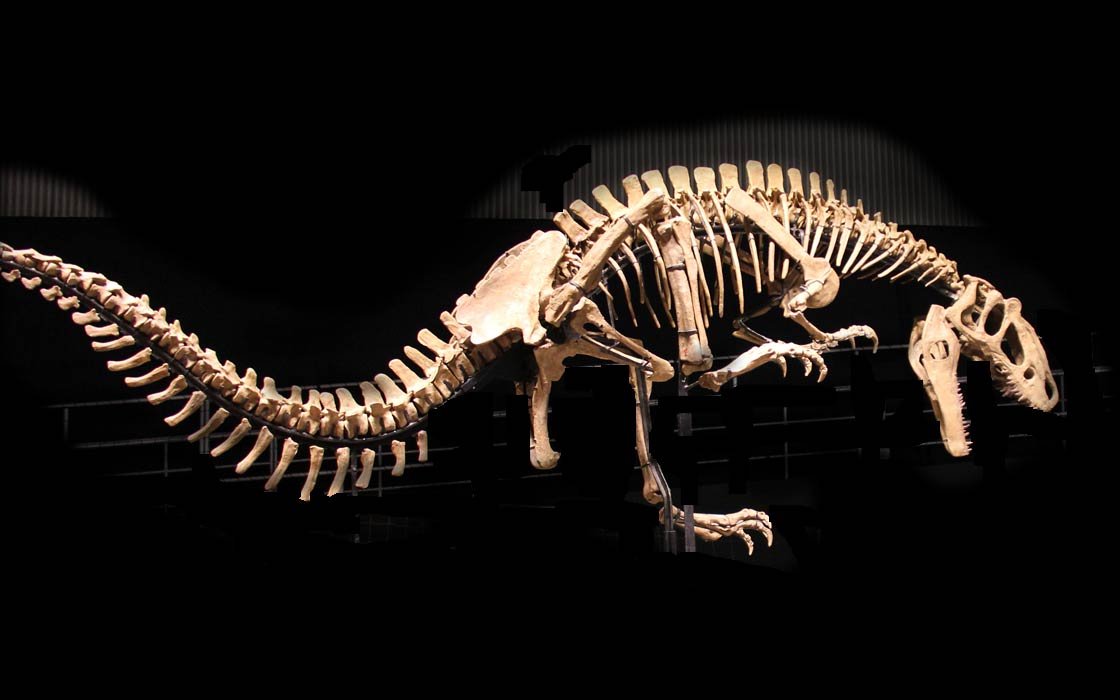
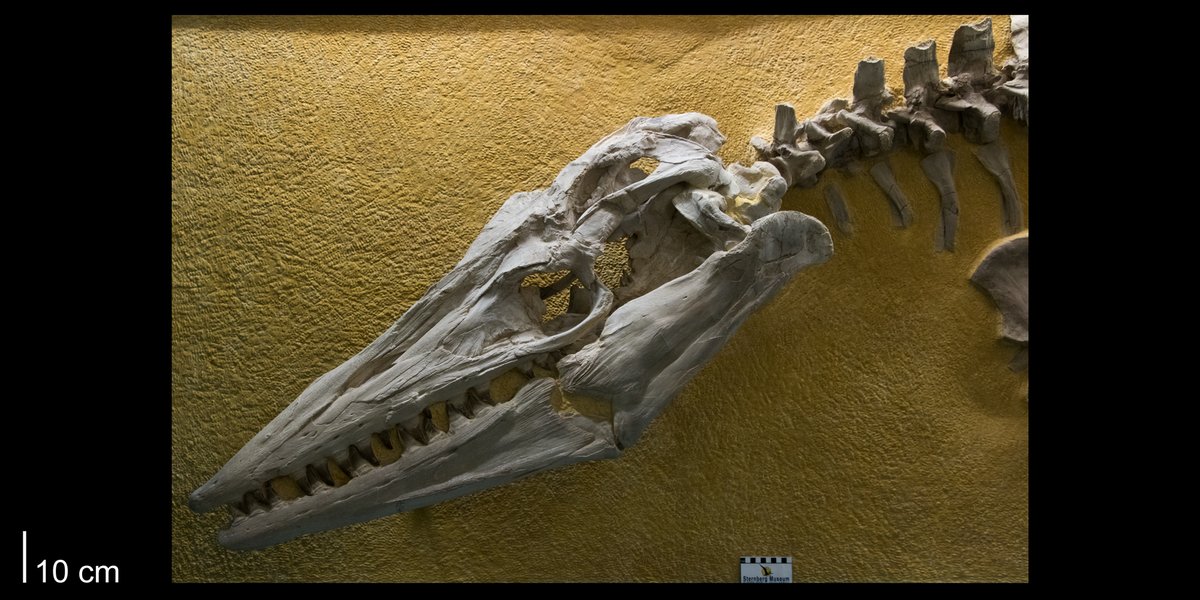
Tylosaurus was a truly immense animal, with mature individuals of the type species, Tylosaurus proriger, reaching lengths of 12 to 15 meters (40 to 50 feet), making it comparable in size to a modern humpback whale, though far more slender. Weight estimates for such a large predator are challenging but generally fall within the range of 7 to 14 metric tons. Its body was elongated and streamlined, powerfully built for aquatic life. The most defining characteristic was its elongated, cylindrical snout, which lacked teeth at its very tip. This bony rostrum, from which the name Tylosaurus ('knob lizard') is derived, is thought to have been a formidable weapon used for ramming and stunning prey. The skull was robust, measuring up to 1.8 meters (6 feet) long, and featured a kinetic, flexible structure common to squamates, allowing it to swallow large prey whole. Its jaws were lined with large, conical, slightly recurved teeth, perfectly suited for seizing and holding struggling victims. Like other mosasaurs, it possessed a second set of teeth on the pterygoid bones of its palate, which helped ratchet prey down its throat. Its body was propelled by a long, powerful tail that likely culminated in a crescent-shaped fluke, similar to that of a shark, an inference supported by rare soft-tissue fossils from related mosasaurs. Its four limbs had evolved into paddle-like flippers, used primarily for steering and stability rather than propulsion.
The paleobiology of Tylosaurus paints a picture of a fearsome and highly effective predator. Its diet was varied and opportunistic, as evidenced by fossilized stomach contents. These gut contents, or cololites, have revealed the remains of a wide array of marine life, including large fish like Xiphactinus, sea turtles, smaller mosasaurs (such as Clidastes), the flightless diving bird Hesperornis, and even plesiosaurs. This dietary breadth confirms its position as an apex predator capable of tackling almost any other animal in its environment. Its hunting strategy likely involved ambush tactics, using its powerful tail for rapid acceleration to surprise prey from below or in murky waters. The reinforced, toothless rostrum was likely a primary tool in subduing large or armored prey; a high-speed ramming attack could inflict massive internal trauma, incapacitating a victim before it was seized in the powerful jaws. Locomotion was primarily thunniform (tuna-like), with lateral undulations of the posterior body and tail providing the main propulsive force. While direct evidence of social behavior is scarce, the prevalence of fossils suggests they were solitary hunters, much like large modern marine predators such as great white sharks. Growth patterns, inferred from bone histology, indicate rapid growth to maturity, a common trait among apex predators in high-energy ecosystems.
Tylosaurus thrived in the warm, shallow waters of the Western Interior Seaway during the Santonian and Campanian stages of the Late Cretaceous. This epeiric sea was a vibrant and dangerous ecosystem, teeming with life. The climate was subtropical to tropical, with no polar ice caps and high sea levels. Tylosaurus shared this environment with a diverse cast of marine megafauna. Its primary food sources included the 5-meter-long predatory fish Xiphactinus, the giant turtle Archelon, and numerous species of sharks like Cretoxyrhina and Squalicorax. It competed for resources with other large marine reptiles, including the long-necked plesiosaur Elasmosaurus and other mosasaur genera. As the undisputed apex predator, a full-grown Tylosaurus had no natural enemies, occupying the highest trophic level in the food web. Its only potential threats would have been other, equally large Tylosaurus individuals in territorial disputes or cannibalistic encounters. The ecosystem was supported by a rich base of plankton, ammonites, belemnites, and smaller fish, creating a complex and dynamic food web that allowed for the evolution of such gigantic predators.
The discovery history of Tylosaurus is deeply intertwined with the 'Bone Wars' of the late 19th century, the famous rivalry between paleontologists Edward Drinker Cope and Othniel Charles Marsh. The first significant remains were found in the chalk beds of western Kansas. In 1868, Cope described a fragmentary fossil skull and vertebrae, naming it 'Macrosaurus' proriger. However, Marsh, working in the same region, discovered more complete specimens. In 1872, Marsh recognized that these animals were distinct from the European mosasaur material and coined the genus name Tylosaurus for his own specimens, including the iconic specimen YPM 1045, which remains a key reference. A bitter dispute ensued, but because the name 'Macrosaurus' was already in use for another animal, Cope's name was invalidated, and Marsh's Tylosaurus became the accepted scientific name. One of the most famous specimens is the 'Bunker' Tylosaurus (KUVP 5033), a nearly 14-meter-long skeleton housed at the University of Kansas Museum of Natural History, which was discovered by Charles Sternberg in 1911. This and other remarkably complete skeletons from the Niobrara Formation have made Tylosaurus one of the best-understood of all mosasaurs.
As a member of the family Mosasauridae, Tylosaurus represents a spectacular example of convergent evolution and adaptive radiation. Mosasaurs are not dinosaurs but are true lizards (squamates), most closely related to modern monitor lizards and snakes. Their evolutionary journey from terrestrial, lizard-like ancestors to fully aquatic, air-breathing leviathans occurred with remarkable speed, geologically speaking, over about 25 million years. Tylosaurus and its relatives in the subfamily Tylosaurinae showcase the peak of this adaptation. They independently evolved body plans remarkably similar to those of earlier ichthyosaurs and later cetaceans (whales and dolphins), with streamlined bodies, paddle-like limbs, and powerful tail flukes for propulsion—a classic case of different lineages arriving at the same optimal solution for life as a large, open-ocean predator. The study of mosasaurs like Tylosaurus provides critical insights into how terrestrial vertebrates can transition back to the sea and rapidly diversify to fill vacant ecological niches, in this case, the niches left open by the decline of ichthyosaurs and large pliosaurs.
Despite being a well-known genus, Tylosaurus is still the subject of scientific debate. The exact number of valid species within the genus has been a point of contention for decades, with many named species later being synonymized with T. proriger or reassigned to other genera. For instance, the giant mosasaur once known as 'Hainosaurus' bernardi from Belgium was, for a time, reclassified by some researchers as Tylosaurus bernardi, which would have extended the genus's size range to over 17 meters. However, more recent analyses suggest it is distinct enough to warrant its own genus. Another area of discussion revolves around the precise function of the rostrum. While the ramming hypothesis is widely accepted, some paleontologists suggest it may also have been used for grubbing in the seafloor sediment to uncover prey or for intraspecific combat, with individuals ramming each other during territorial or mating disputes. Ongoing research continues to refine our understanding of its taxonomy and behavior.
The fossil record of Tylosaurus is exceptionally rich, particularly in North America. The vast majority of high-quality, articulated skeletons have been unearthed from the Niobrara Formation, a Late Cretaceous marine deposit that outcrops across the American Midwest, most famously in the Smoky Hill Chalk Member of Kansas. Fossils are also found in the contemporary Pierre Shale formation. The preservation quality is often excellent, with complete or near-complete skeletons, including skulls, being relatively common. This abundance of well-preserved material has allowed for detailed anatomical studies and reconstructions. Beyond North America, fragmentary remains attributed to Tylosaurus have been reported from other parts of the world, including Europe and New Zealand, indicating a potentially global distribution in the Late Cretaceous oceans. Famous fossil sites include the chalk beds of Gove and Logan counties in Kansas, which have produced some of the most spectacular museum specimens in the world.
Tylosaurus has secured a prominent place in public consciousness as the archetypal giant sea monster of the Cretaceous. Its immense size and fearsome appearance have made it a popular subject in books, television documentaries like the BBC's 'Sea Monsters', and films. It is a staple exhibit in major natural history museums worldwide, with impressive skeletal mounts on display at institutions such as the University of Kansas Museum of Natural History, the Sternberg Museum of Natural History, and the American Museum of Natural History. These powerful displays serve as a dramatic educational tool, captivating the public and illustrating the incredible scale and diversity of prehistoric marine life.
Classification
Time Period
Discovery
Location
Kansas, USA
Formation
Niobrara Formation (also Pierre Shale)
Frequently Asked Questions
What is Tylosaurus?
Tylosaurus was a colossal marine reptile that dominated the oceans during the Late Cretaceous Period, approximately 85 to 75 million years ago. As one of the largest members of the mosasaur family, it was an apex predator of the Western Interior Seaway, an immense inland sea that once bisected North...
When did Tylosaurus live?
Tylosaurus lived during the cretaceous period of the mesozoic era approximately 85-75 million years ago.
Where was Tylosaurus discovered?
Fossils of Tylosaurus were discovered in Kansas, USA in the Niobrara Formation (also Pierre Shale).
What did Tylosaurus eat?
Tylosaurus was a carnivore. It lived in marine habitats.
What type of fossil is Tylosaurus?
Tylosaurus is preserved as a body fossil. The preservation quality is good.
Related Specimens
From the mesozoic era · body fossils