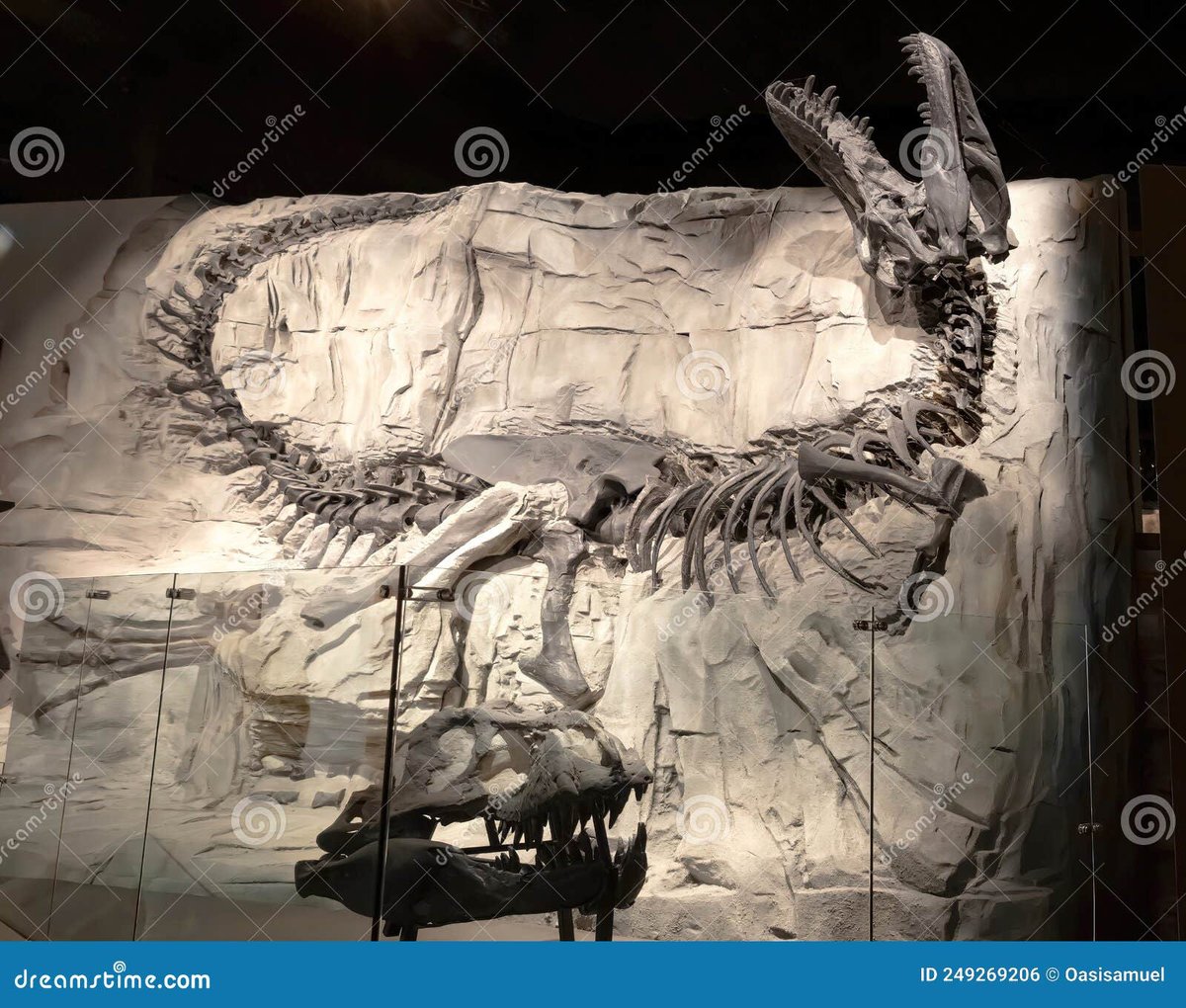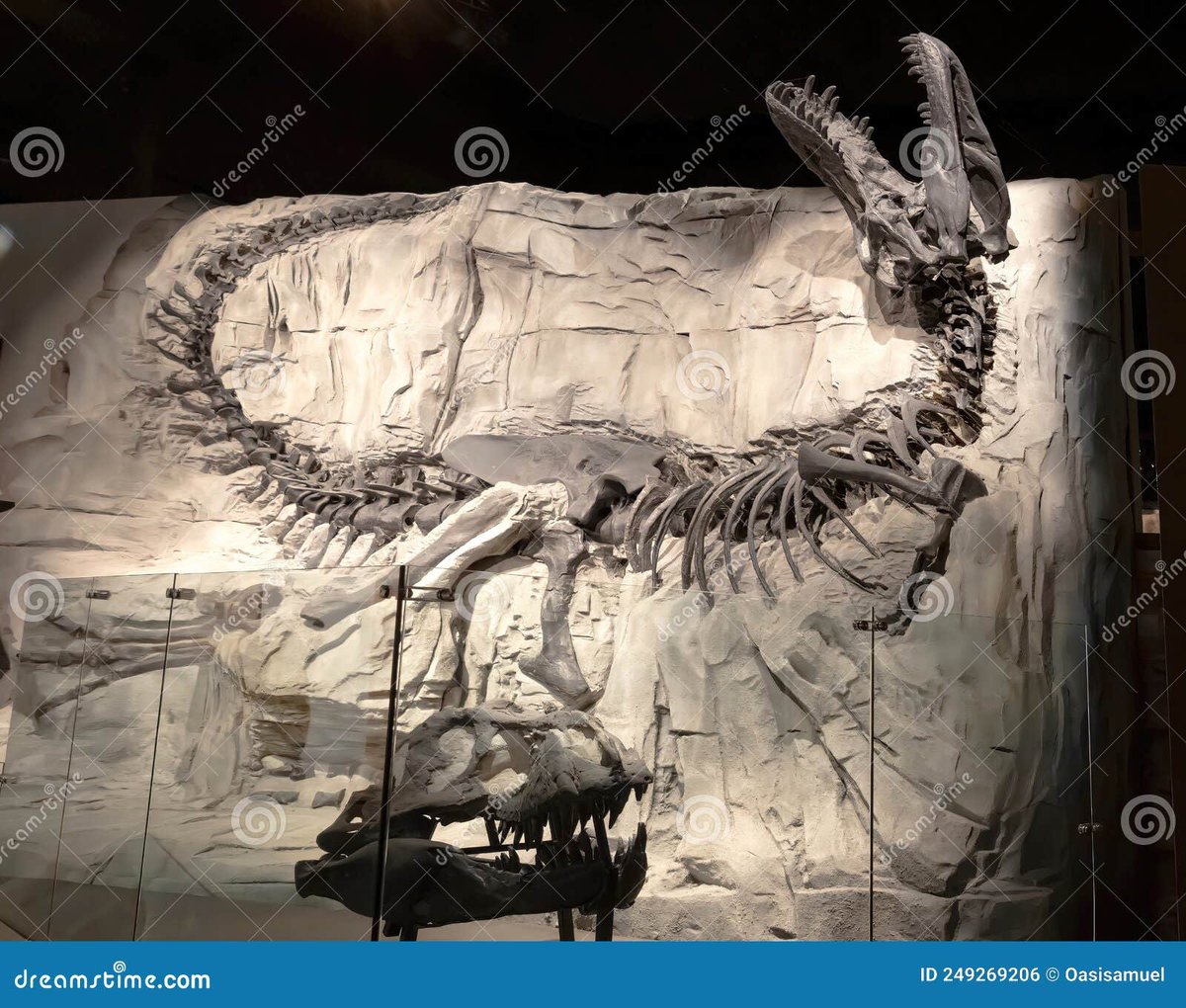
Sue the T. rex (FMNH PR 2081)
Tyrannosaurus rex
Image: Image sourced via web search (Fair use / Educational)
About Sue the T. rex (FMNH PR 2081)
Sue the T. rex, officially cataloged as FMNH PR 2081, represents one of the most significant paleontological discoveries of the twentieth century. As a specimen of Tyrannosaurus rex, an apex predator of the Late Cretaceous period, Sue lived approximately 67 million years ago in what is now the midwestern United States. This extraordinary fossil is celebrated not only for its immense size but also for its unprecedented completeness, with roughly ninety percent of its skeleton preserved by bulk. Sue's discovery revolutionized our understanding of tyrannosaurid anatomy, pathology, and biomechanics, providing a Rosetta Stone for dinosaur paleontology. The specimen stands as a testament to the biological reality of these massive theropods, bridging the gap between scientific inquiry and public imagination. By studying FMNH PR 2081, researchers have been able to answer fundamental questions about the life, death, and environment of the most famous dinosaur species to have ever walked the Earth.
The physical description of Sue is a study in evolutionary extremes, showcasing the absolute pinnacle of terrestrial predatory adaptation. Measuring approximately 12.3 meters, or forty feet, in length from snout to tail, and standing about 4 meters tall at the hips, Sue was a colossal animal. Weight estimates for this individual have varied over the years, but modern volumetric models and biomechanical analyses suggest a living mass of between 8,400 and 14,000 kilograms, making it one of the heaviest known theropods. The skull alone is a marvel of biological engineering, measuring over 1.5 meters in length and armed with dozens of serrated, banana-shaped teeth designed to crush bone. Unlike the blade-like teeth of earlier theropods, Sue's dentition was robust and deeply rooted, capable of withstanding immense bite forces estimated at over 35,000 newtons. The skeleton exhibits a massive, barrel-shaped ribcage, heavily muscled hind limbs built for bearing immense weight, and forelimbs that, while comically small compared to the rest of the body, were incredibly muscular and ended in two clawed digits. Soft tissue inferences, drawn from the exceptionally preserved bone surfaces, indicate a complex respiratory system with avian-like air sacs, and a brain with enlarged olfactory bulbs, suggesting an acute sense of smell. When compared to modern animals, Sue would have dwarfed the largest living terrestrial carnivores; a modern polar bear would barely reach its knee.
The paleobiology of Sue and its kin reveals a dynamic, active, and highly specialized predator. Tyrannosaurus rex was undoubtedly an obligate carnivore, and the evidence from Sue's skeleton strongly supports an active hunting lifestyle, supplemented by opportunistic scavenging. The binocular vision afforded by the forward-facing eyes allowed for excellent depth perception, a crucial trait for a pursuit or ambush predator. Biomechanical studies of Sue's leg bones suggest that while adult T. rex could not run at high speeds—likely maxing out at a brisk walk or slow jog of around 20 kilometers per hour—their immense stride length allowed them to cover ground efficiently. Sue's skeleton is also a medical chart of prehistoric trauma and disease. The bones show numerous pathologies, including fused vertebrae, a severely infected fibula, and multiple broken and healed ribs. The skull bears mysterious holes that were once thought to be bite marks but are now widely believed to be the result of a parasitic infection similar to modern Trichomonas gallinae, which affects birds. These injuries and infections indicate that Sue lived a long, violent life, surviving numerous encounters and hardships before dying at an estimated age of twenty-eight, making it one of the oldest known T. rex individuals. Growth patterns derived from bone histology show that T. rex experienced a massive growth spurt during its teenage years, packing on hundreds of kilograms annually, a metabolic feat that points to a warm-blooded, or endothermic, physiology.
The ecological context of Sue's existence was the lush, dynamic environment of the Late Cretaceous Hell Creek Formation. During this time, the North American continent was divided by the Western Interior Seaway, and Sue lived on the western landmass known as Laramidia. The climate was subtropical, warm, and humid, characterized by dense forests of conifers, ferns, and emerging flowering plants, interspersed with expansive floodplains and river deltas. In this vibrant ecosystem, Sue was the undisputed apex predator, sitting at the very top of the food web. The environment was shared with a diverse array of iconic dinosaurs. Massive herds of the ceratopsian Triceratops horridus and the hadrosaurid Edmontosaurus annectens roamed the landscape, serving as the primary prey items for adult Tyrannosaurus rex. The heavily armored Ankylosaurus and the dome-headed Pachycephalosaurus also shared this habitat, alongside a variety of smaller dromaeosaurs, ornithomimids, and early mammals. The predator-prey relationship between T. rex and Triceratops is one of the most famous in paleontology, supported by fossil evidence of healed tyrannosaur bite marks on Triceratops frills. In this ecosystem, Sue would have played a crucial role in regulating herbivore populations, functioning much like modern apex predators but on a vastly larger scale.
The discovery history of Sue is as dramatic and complex as the animal's life itself. The fossil was discovered on August 12, 1990, by commercial paleontologist Sue Hendrickson, after whom the specimen is affectionately named. Hendrickson was exploring the Cheyenne River Indian Reservation in South Dakota when she noticed a few large bones weathering out of a cliff face. Upon closer inspection, the team from the Black Hills Institute of Geological Research realized they had stumbled upon a remarkably complete Tyrannosaurus rex. The excavation was a monumental effort, yielding a skeleton that was over ninety percent complete by bone volume. However, the triumph of the discovery was quickly overshadowed by a bitter and unprecedented legal battle over the ownership of the fossil. The land on which Sue was found was owned by Maurice Williams, a member of the Cheyenne River Sioux Tribe, but the land was held in trust by the United States government. This complex jurisdictional web led to a federal raid on the Black Hills Institute, the seizure of the fossil, and years of litigation. Ultimately, the courts ruled that the fossil belonged to Williams, who decided to sell it at public auction. In 1997, the Field Museum of Natural History in Chicago, backed by corporate sponsors including McDonald's and the Walt Disney Company, purchased Sue at Sotheby's for a staggering 8.36 million dollars, the highest price ever paid for a dinosaur fossil at the time. This acquisition ensured that the specimen would remain in the public trust for scientific study and education.
The evolutionary significance of Tyrannosaurus rex, and Sue in particular, is profound. T. rex is the culminating species of the Tyrannosauroidea, a superfamily of theropod dinosaurs that originated in the Middle Jurassic as small, feathered, and relatively marginal predators. Over the course of nearly a hundred million years, tyrannosaurs evolved, growing larger and more specialized, eventually replacing the allosauroids and spinosaurids as the dominant apex predators of the Northern Hemisphere. Sue represents the extreme end-point of this evolutionary trajectory, showcasing the maximum biomechanical limits of a bipedal carnivore. The anatomy of Sue also provides critical insights into the evolutionary link between non-avian dinosaurs and modern birds. The presence of a furcula, or wishbone, in Sue's skeleton was one of the first definitive proofs that tyrannosaurs possessed this avian feature. Furthermore, the highly pneumatized skeleton, filled with air pockets to reduce weight, is a direct precursor to the respiratory systems of living birds. While Sue itself did not leave any modern descendants, as all non-avian dinosaurs perished in the end-Cretaceous mass extinction, its lineage is a crucial branch on the theropod family tree that helps scientists understand the broader patterns of dinosaur evolution and the origins of avian biology.
Scientific debates surrounding Tyrannosaurus rex have been numerous, and Sue has frequently been at the center of these controversies. For decades, a major debate raged over whether T. rex was an active predator or an obligate scavenger. Proponents of the scavenger hypothesis argued that its massive size, tiny arms, and bone-crushing teeth were better suited for processing carcasses than hunting live prey. However, the consensus has shifted heavily toward T. rex being an active predator that also scavenged, much like modern lions or hyenas. Evidence from Sue, including the binocular vision and the sheer mechanical power of its jaws, supports a predatory lifestyle. Another ongoing debate involves the integument of T. rex. While early tyrannosauroids like Yutyrannus are known to have been covered in feathers, skin impressions from T. rex and its closest relatives show scaly skin. The current consensus is that adult T. rex were largely scaly, though they may have retained sparse feathering, particularly as juveniles. Furthermore, the taxonomy of tyrannosaurids from the Hell Creek Formation is still debated, specifically whether the smaller tyrannosaur specimens represent a distinct genus, Nanotyrannus, or simply juvenile T. rex. The growth series data derived from specimens like Sue strongly supports the latter, suggesting that T. rex underwent dramatic morphological changes as it matured.
The fossil record of Tyrannosaurus rex is relatively robust for a large theropod, with over fifty partial specimens identified, but Sue remains the gold standard. Fossils of T. rex are exclusively found in the Late Cretaceous deposits of western North America, primarily in the Hell Creek Formation of Montana, North and South Dakota, and the Lance Formation of Wyoming. The preservation quality of Sue is exceptional; the bones were fossilized in a way that preserved microscopic details of the bone structure, allowing for groundbreaking histological studies. Typically, theropod fossils are found highly fragmented or missing delicate elements like the skull, ribs, and tail. Sue, however, preserves a nearly complete skull, a complete vertebral column, and the most complete tail of any T. rex. The taphonomy of the site suggests that the animal died near a river and was quickly buried by mud and sand, protecting the carcass from scavengers and the elements. This rapid burial is responsible for the extraordinary articulation and preservation of the skeleton, making the site in South Dakota one of the most famous and scientifically valuable dinosaur localities in the world.
The cultural impact of Sue the T. rex cannot be overstated. Since its unveiling at the Field Museum in 2000, Sue has become a global icon of paleontology, drawing millions of visitors and inspiring countless future scientists. The specimen's dramatic discovery, legal saga, and sheer physical presence have been the subject of numerous books, documentaries, and articles. Sue has transcended the realm of science to become a pop culture phenomenon, even maintaining a popular, humorous presence on social media. The educational importance of this single fossil is immense, serving as an ambassador for the natural world and a tangible connection to the deep history of our planet. Through Sue, the public is invited to marvel at the wonders of evolution, the reality of extinction, and the enduring power of scientific discovery.
Classification
Time Period
Discovery
Location
South Dakota, USA
Formation
Hell Creek Formation
Frequently Asked Questions
What is Sue the T. rex (FMNH PR 2081)?
Sue the T. rex, officially cataloged as FMNH PR 2081, represents one of the most significant paleontological discoveries of the twentieth century. As a specimen of Tyrannosaurus rex, an apex predator of the Late Cretaceous period, Sue lived approximately 67 million years ago in what is now the midwe...
When did Sue the T. rex (FMNH PR 2081) live?
Sue the T. rex (FMNH PR 2081) lived during the cretaceous period of the mesozoic era approximately 67-66 million years ago.
Where was Sue the T. rex (FMNH PR 2081) discovered?
Fossils of Sue the T. rex (FMNH PR 2081) were discovered in South Dakota, USA in the Hell Creek Formation.
What did Sue the T. rex (FMNH PR 2081) eat?
Sue the T. rex (FMNH PR 2081) was a carnivore. It lived in terrestrial habitats.
What type of fossil is Sue the T. rex (FMNH PR 2081)?
Sue the T. rex (FMNH PR 2081) is preserved as a body fossil. The preservation quality is exceptional.
Related Specimens
From the mesozoic era · body fossils