Entelodon
Entelodon magnus
Image: Image sourced via web search (Fair use / Educational)
About Entelodon
Entelodon was a genus of large, fearsome-looking artiodactyl mammals that roamed the woodlands and plains of Eurasia during the Paleogene period, from the Late Eocene to the Early Oligocene epochs, approximately 37 to 28 million years ago. Often dubbed 'hell pigs' or 'terminator pigs' for their intimidating appearance, these creatures were not true pigs but belonged to the extinct family Entelodontidae, more closely related to modern hippos and whales. Their robust skeletons and powerful jaws have made them a subject of significant paleontological interest, offering a window into the evolution of large mammalian omnivores in the Cenozoic era.
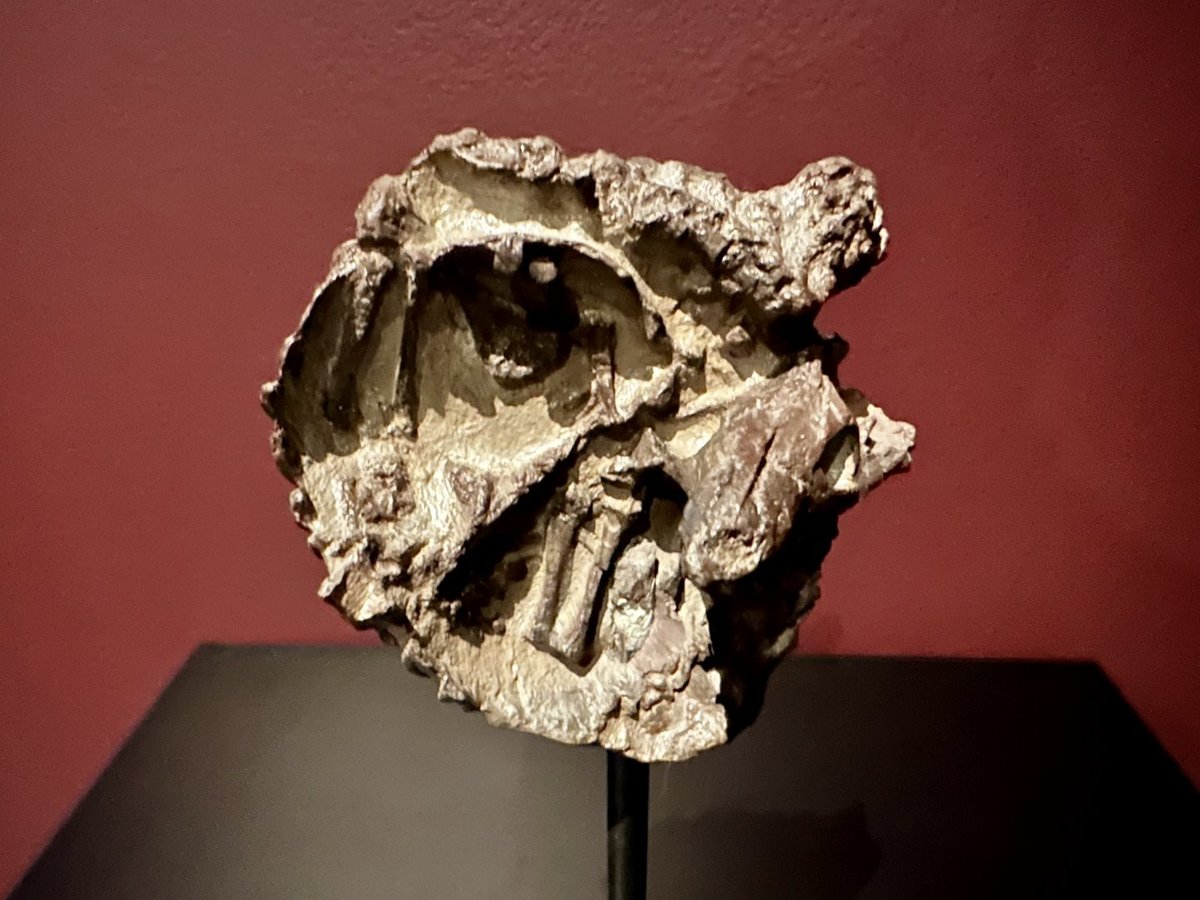
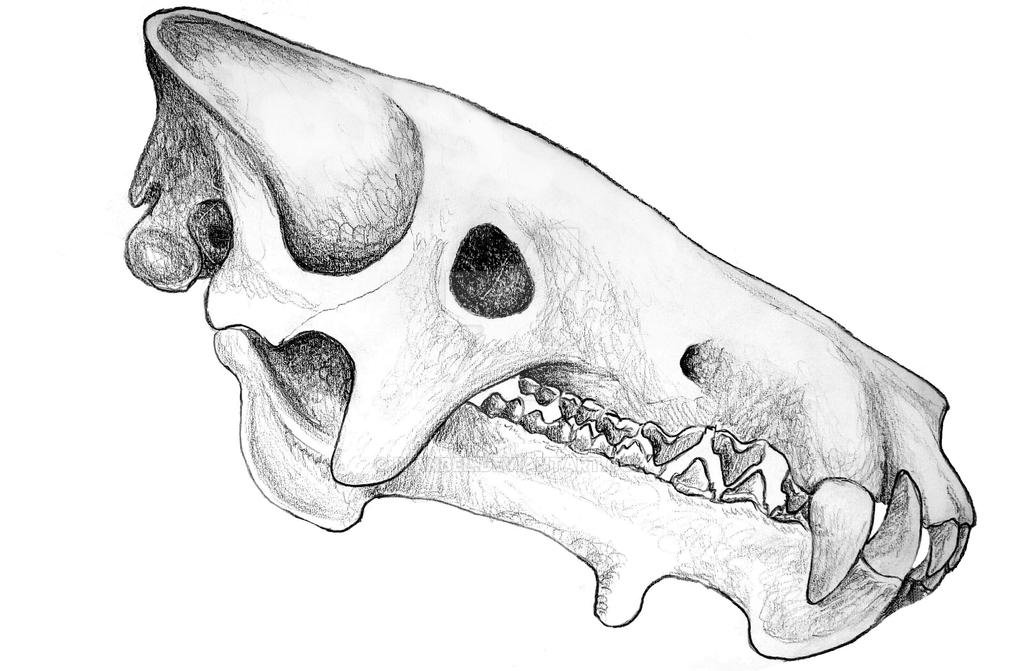
Entelodon was a formidable animal, characterized by its massive size and uniquely structured skull. A typical adult, such as a member of the type species *Entelodon magnus*, stood approximately 1.35 meters (4.4 feet) tall at the shoulder and measured around 3 meters (10 feet) in length, with an estimated body mass ranging from 600 to 1,000 kilograms (1,300 to 2,200 pounds), comparable to a modern American bison. Its most striking feature was its enormous, elongated skull, which could reach up to 65 centimeters (26 inches) long. The skull was adorned with prominent bony flanges, or tubercles, extending outwards from the cheekbones (zygomatic arches) and the lower jaw (mandible). These bony growths, which were larger in males, likely served as attachment points for powerful jaw muscles and may have also been used for display or intraspecific combat, similar to the facial bosses of modern warthogs. The dentition of Entelodon was equally impressive, featuring a full set of 44 teeth, including large, tusk-like canines, robust incisors for nipping and tearing, and broad, bunodont molars and premolars suited for crushing hard materials like bone and tough plant matter. Its postcranial skeleton was robust, with a powerful neck, a short, stocky body, and relatively long, slender legs for an animal of its size, ending in two-toed, cloven hooves. This combination of features suggests an animal built for both power and a surprising degree of mobility.
The paleobiology of Entelodon points to a highly adaptable and aggressive omnivore. Its dental morphology, combining sharp canines and incisors with heavy, grinding molars, indicates a varied diet. Isotopic analysis of their tooth enamel suggests they consumed a wide range of foods, including roots, tubers, fruits, and carrion. However, the powerful jaw musculature, bone-crushing molars, and evidence of healed bite marks on the skulls of other entelodonts strongly imply that they were also active predators or, at the very least, aggressive kleptoparasites, capable of driving other predators away from their kills. The long legs suggest a cursorial lifestyle, meaning they were capable of sustained running to chase down prey or traverse large territories in search of food. Evidence of deep, circular puncture wounds on the skulls of fellow entelodonts, matching the shape of another entelodont's canines, provides compelling evidence for intense, face-biting combat. This suggests a complex social structure, possibly involving territorial disputes or competition for mates, where individuals engaged in violent, ritualized aggression. Their growth was likely rapid, reaching adult size within a few years to compete in their harsh environment.
Entelodon lived in a world undergoing significant climatic and ecological change. During the Late Eocene and Early Oligocene, the global climate was cooling and drying, leading to the expansion of open woodlands and savannas at the expense of dense forests. This environmental shift, known as the Grande Coupure, favored the evolution of larger, more mobile mammals. In the ecosystems of Eurasia, Entelodon would have been a top-tier omnivore, occupying a niche similar to that of modern grizzly bears. It shared its habitat with a diverse array of fauna, including early rhinos like *Hyracodon*, chalicotheres (large, clawed herbivores), and various creodonts and nimravids ('false saber-toothed cats'), which would have been potential competitors or prey. As a powerful scavenger and predator, Entelodon likely played a crucial role in its ecosystem, cleaning up carcasses and keeping herbivore populations in check. Its ability to process both plant and animal matter would have given it a significant advantage in the seasonally variable environments of the Paleogene, allowing it to thrive where more specialized animals might have struggled.
The discovery and study of Entelodon began in the early days of paleontology. The genus was first named and described in 1847 by the French paleontologist Auguste Aymard, based on fragmentary fossils, including a partial skull, found in the Oligocene deposits near Ronzon, France. The name *Entelodon* derives from Greek, meaning 'perfect teeth' (*enteles* 'perfect' + *odous* 'tooth'), a reference to its complete eutherian dentition. The type species is *Entelodon magnus*. For many years, knowledge of the animal was based on these incomplete remains. However, subsequent discoveries throughout the 19th and 20th centuries across Europe and Asia, from Spain to China, gradually provided a more complete picture of its anatomy. Unlike some prehistoric animals with famous individual specimens, there is no single, widely-known 'celebrity' skeleton of Entelodon. Instead, our understanding has been built incrementally from numerous partial skeletons and skulls unearthed from various localities, which together have allowed paleontologists to reconstruct this imposing creature with a high degree of confidence. The North American relative, *Archaeotherium*, is often better represented in the fossil record and has helped inform reconstructions of Entelodon's biology and behavior.
Entelodon's position in the tree of life has been a subject of study and refinement. As a member of the order Artiodactyla (even-toed ungulates), it belongs to the same broad group as modern pigs, deer, cattle, and hippos. Initially, due to superficial similarities in skull shape and dentition, entelodonts were thought to be closely related to suids (pigs) and tayassuids (peccaries), leading to the common nickname 'hell pig'. However, more detailed anatomical studies, particularly of the ankle bones (astragalus), and subsequent molecular phylogenetic analyses have overturned this idea. Modern consensus places Entelodontidae within the clade Cetancodontamorpha, a group that includes hippos and cetaceans (whales and dolphins) as their closest living relatives. This surprising relationship highlights a deep evolutionary divergence, where the ancestors of graceful, aquatic whales and semi-aquatic hippos shared a common ancestor with these terrestrial, bone-crushing beasts. Entelodonts represent a highly successful but ultimately extinct side-branch of this lineage, showcasing an evolutionary experiment in large-bodied, terrestrial omnivory that lasted for nearly 20 million years before they were eventually outcompeted by other carnivores like bear-dogs (amphicyonids) and hyaenodonts.
While the general placement of Entelodontidae is now well-established, some scientific debates continue. The exact function of the prominent facial flanges remains a topic of discussion. While the primary hypothesis supports their role in muscle attachment and intraspecific combat or display, other possibilities, such as species recognition, cannot be entirely ruled out. Furthermore, the precise balance of their diet—whether they were primarily predators, scavengers, or opportunistic omnivores—is still debated, with different researchers emphasizing different aspects of their anatomy. Some paleontologists argue their limb structure was not optimized for long-distance pursuit predation, suggesting a greater reliance on scavenging and kleptoparasitism. Others contend that they were fully capable of hunting large prey. The taxonomy within the Entelodontidae family itself is complex, with ongoing revisions as new specimens are found. The relationship between the Eurasian *Entelodon* and the very similar North American *Archaeotherium* is a case in point, with some considering them to be closely related sister genera that evolved in geographic isolation.
Fossils of Entelodon are found in Late Eocene to Early Oligocene deposits across Eurasia. Significant remains have been unearthed in France, Germany, Spain, Romania, Georgia, Kazakhstan, and China. While complete, articulated skeletons are very rare, the fossil record includes numerous partial skeletons, isolated skulls, jaws, and teeth. The robust nature of the skull and jawbones means they are the most commonly preserved and discovered elements, providing paleontologists with a wealth of information about their diet and behavior. The quality of preservation is generally good, allowing for detailed anatomical study. Famous fossil localities that have yielded entelodont remains include the Phosphorites du Quercy in France and various sites in the Hsanda Gol Formation of Mongolia. The widespread geographic distribution of these fossils underscores the success and adaptability of this genus during its time on Earth, as it managed to colonize a vast range of habitats across two continents.
Entelodon has captured the public imagination, largely due to its intimidating appearance, earning it a prominent place in popular culture depictions of prehistoric life. It has been featured in numerous television documentaries, most notably BBC's 'Walking with Beasts', where it was portrayed as a brutish and aggressive bully of the Oligocene plains. This depiction, while dramatic, helped cement its image as the 'terminator pig' in the public consciousness. Museums around the world, including the Muséum national d'Histoire naturelle in Paris and the American Museum of Natural History in New York (which displays its relative *Archaeotherium*), feature impressive skeletal mounts and reconstructions that showcase its formidable size and unique anatomy. Its combination of familiar pig-like features with monstrous proportions makes it a compelling and memorable example of Cenozoic megafauna, serving as an important educational tool for illustrating mammalian evolution after the extinction of the dinosaurs.
Classification
Time Period
Discovery
Location
France
Formation
Various Eocene-Oligocene formations across Eurasia
Frequently Asked Questions
What is Entelodon?
Entelodon was a genus of large, fearsome-looking artiodactyl mammals that roamed the woodlands and plains of Eurasia during the Paleogene period, from the Late Eocene to the Early Oligocene epochs, approximately 37 to 28 million years ago. Often dubbed 'hell pigs' or 'terminator pigs' for their inti...
When did Entelodon live?
Entelodon lived during the paleogene period of the cenozoic era approximately 37-28 million years ago.
Where was Entelodon discovered?
Fossils of Entelodon were discovered in France in the Various Eocene-Oligocene formations across Eurasia.
What did Entelodon eat?
Entelodon was a omnivore. It lived in terrestrial habitats.
What type of fossil is Entelodon?
Entelodon is preserved as a body fossil. The preservation quality is good.
Related Specimens
From the cenozoic era · body fossils