Zamites
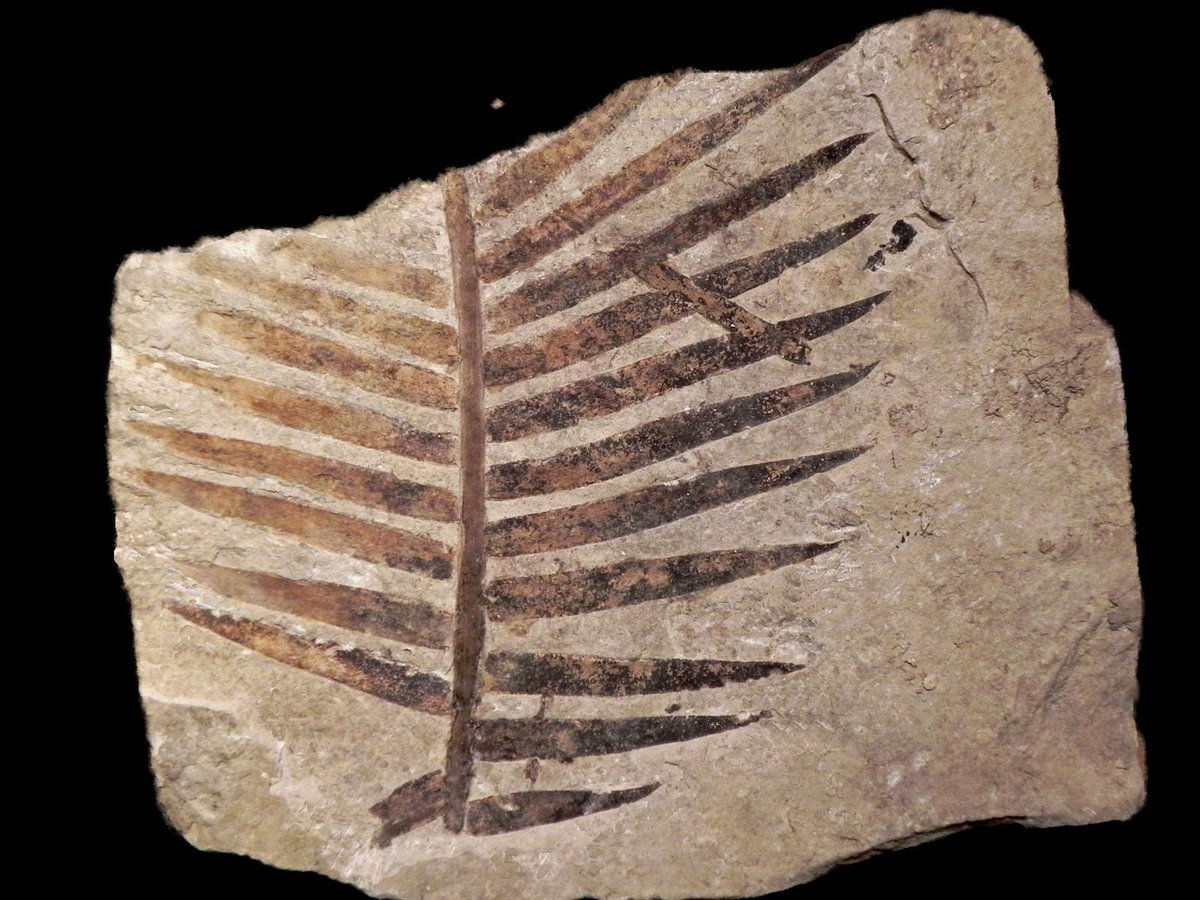
Zamites feneonis
Image: Image sourced via web search (Fair use / Educational)
About Zamites
Zamites is an extinct genus of Bennettitalean plant that flourished during the Mesozoic Era, particularly prominent throughout the Jurassic period. As a key component of the 'Age of Cycads,' its fossils provide a crucial window into the terrestrial ecosystems that supported the dinosaurs. The species Zamites feneonis, known from numerous well-preserved impression fossils across Europe, represents a classic example of this widespread and ecologically significant group of gymnosperms.
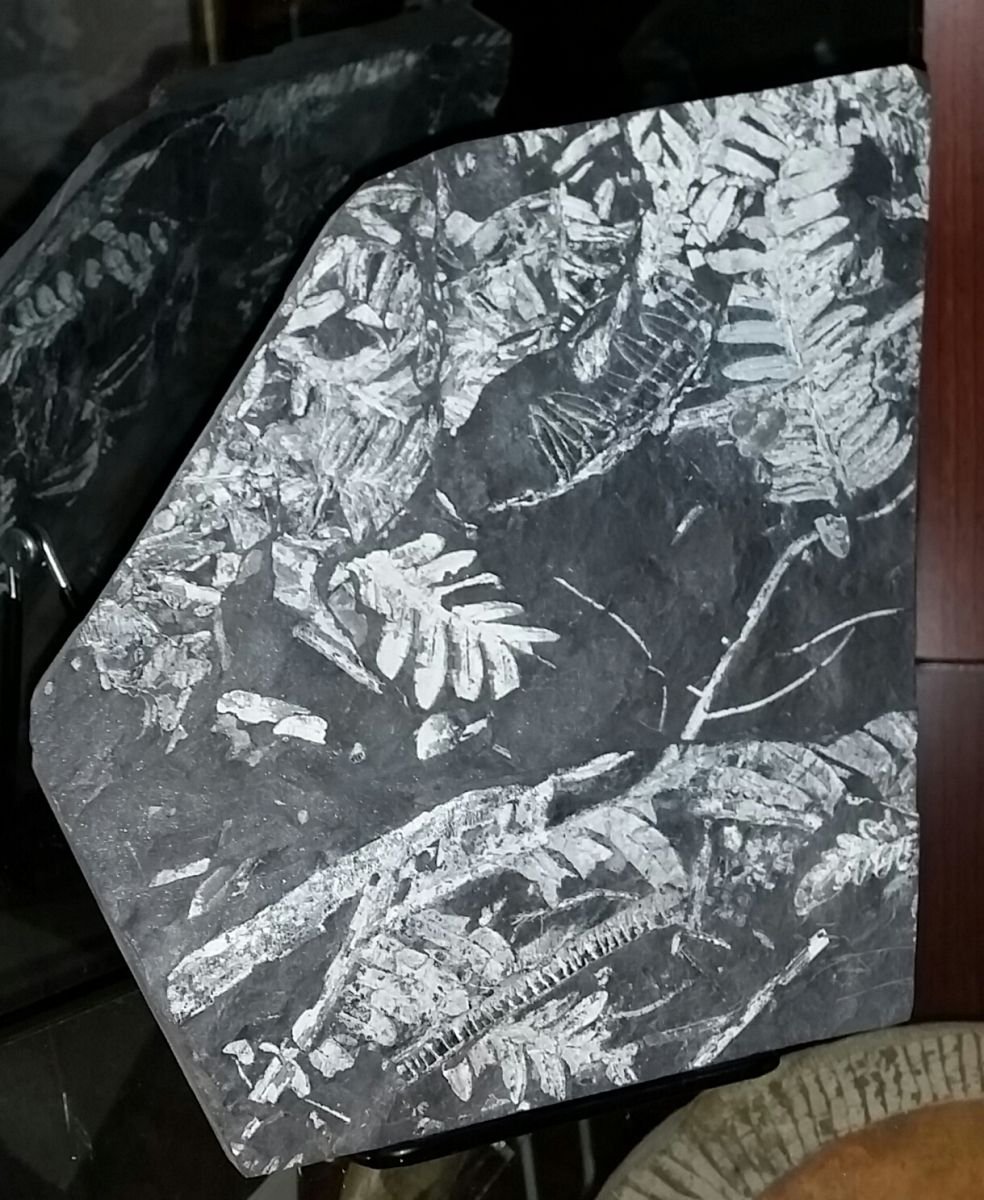
Zamites feneonis was a cycad-like plant, characterized by its distinctive pinnate fronds that resembled those of modern cycads or palms, though it belonged to the extinct order Bennettitales. The overall plant likely had a stout, often unbranched or sparsely branched trunk, which could be either short and subterranean or taller and columnar, depending on the species and environmental conditions. The trunk was typically covered in a persistent armor of old leaf bases. Crowning this trunk was a rosette of large, leathery fronds. Individual fronds of Z. feneonis could reach lengths of 50 to 200 centimeters. The central axis of the frond, the rachis, was robust and bore numerous linear to lanceolate leaflets, known as pinnae. A key diagnostic feature of Zamites is how these pinnae were attached to the rachis; they were constricted at the base, creating a distinct petiole-like attachment, and were inserted on the upper and lateral surfaces of the rachis, not strictly in a flat plane. The pinnae themselves were characterized by parallel venation, lacking a central midrib, a common trait among Bennettitales. The cuticle of the leaves was thick and waxy, an adaptation to prevent water loss in potentially seasonally dry climates. Unlike true cycads, which are dioecious (having separate male and female plants), Bennettitales like Zamites had flower-like reproductive structures that were typically bisexual, containing both pollen-producing and ovule-producing organs within a single structure, surrounded by protective bracts. These cones, or 'flowers,' were often embedded among the leaf bases at the apex of the stem.
As a photosynthetic organism, Zamites feneonis derived its energy from sunlight, converting carbon dioxide and water into organic compounds. Its robust, leathery leaves with a thick cuticle suggest it was well-adapted to environments with high solar radiation and periods of water stress, similar to many modern cycads found in subtropical and tropical regions. The plant's primary mode of feeding was autotrophic. Its growth was likely slow, a characteristic of many modern gymnosperms. The large, starchy trunk would have served as a significant storage organ for water and nutrients, allowing it to survive unfavorable conditions. Reproduction in Bennettitales is a subject of ongoing study, but the flower-like structures suggest a more complex reproductive strategy than simple wind pollination. It is widely hypothesized that these plants were pollinated by insects, such as early beetles, flies, or thrips, which would have been attracted to the cones by nectar or pollen. This represents one of the earliest examples of insect pollination in the plant kingdom, predating the rise of angiosperms. The seeds produced were relatively large and were likely dispersed by gravity or potentially by animals that consumed the fleshy outer layer of the cone, a role that could have been filled by small dinosaurs, mammals, or pterosaurs.
Zamites feneonis lived during the Jurassic period, a time when the supercontinent Pangaea was actively breaking apart, creating new seaways and influencing global climate. The climate was generally warm and humid, with no polar ice caps, creating vast expanses of suitable habitat for lush vegetation. Zamites was a dominant component of the understory and mid-canopy of these Jurassic forests, particularly in coastal plains, riverine environments, and open woodlands. It shared its habitat with a diverse array of other plants, including other Bennettitaleans, true cycads, conifers like Araucaria, ginkgoes, and vast forests of tree ferns. This flora supported an equally diverse fauna. Large herbivorous dinosaurs, such as the sauropods Brachiosaurus and Diplodocus, and the armored Stegosaurus, would have been the primary consumers of vegetation. Zamites, with its tough, possibly toxic leaves, may have been a food source for specialized herbivores capable of processing such foliage. Its position in the food web was foundational, as a primary producer converting solar energy into biomass that sustained the entire terrestrial ecosystem. The world of Zamites was one of giant reptiles, early mammals scurrying in the undergrowth, and the buzz of primitive insects, all set within a greenhouse world of verdant, gymnosperm-dominated forests.
The genus Zamites was first established by the French paleobotanist Adolphe-Théodore Brongniart in his seminal 1828 work, 'Prodrome d'une histoire des végétaux fossiles.' The name 'Zamites' reflects the plant's strong superficial resemblance to the modern cycad genus Zamia. The specific epithet 'feneonis' is also attributed to Brongniart. Early discoveries of Zamites fossils were concentrated in the rich Jurassic deposits of Europe, particularly the Yorkshire Jurassic Flora in England and the Stonesfield Slate. These sites, explored by naturalists and geologists in the early 19th century, provided the first glimpses into the Mesozoic 'Age of Cycads.' One of the most important figures in the study of these fossils was the British geologist John Phillips, who extensively documented the flora of the Yorkshire coast. Unlike animal fossils that receive popular names, individual plant fossils are rarely given such monikers. Instead, the significance of Zamites lies in the sheer abundance and quality of its fossil fronds, which have allowed for detailed anatomical and taxonomic studies for nearly two centuries, making it a cornerstone for understanding Mesozoic plant life and paleoecology.
Zamites holds immense evolutionary significance as a prime representative of the Bennettitales, an extinct order of seed plants that were among the most diverse and abundant plant groups of the Mesozoic Era. For a long time, Bennettitales were considered to be potential ancestors of the angiosperms (flowering plants) due to their flower-like reproductive structures. This 'Bennettitalean hypothesis' was based on the presence of bisexual cones with ovules enclosed by surrounding structures, seen as a precursor to the carpel of a true flower. However, detailed morphological and molecular studies have since shown that Bennettitales are more closely related to cycads, ginkgoes, and conifers, forming a distinct gymnosperm lineage. Their reproductive biology, particularly the inferred insect pollination, demonstrates a fascinating case of convergent evolution with angiosperms. They represent a successful evolutionary experiment in plant reproduction that ultimately went extinct at the end of the Cretaceous, leaving no direct modern descendants. Studying Zamites and its relatives thus provides critical insight into the diversity of reproductive strategies that existed before the global dominance of flowering plants and helps scientists understand the complex evolutionary pathways that shaped modern plant life.
Despite being a well-established genus, Zamites is still at the center of some scientific discussion, primarily concerning its precise taxonomic boundaries and the biology of the Bennettitales. The genus itself is a form genus, meaning it is defined based on the morphology of a specific plant part—in this case, the distinctive pinnate leaves. This can be problematic, as different parent plants might have produced morphologically similar leaves, or a single plant might have produced different-looking leaves at various stages of its life. Reconstructing the whole Zamites plant by associating fossilized leaves with fossilized trunks (like Williamsonia) and reproductive organs is a constant challenge for paleobotanists. Furthermore, the exact method of pollination remains a topic of debate. While insect pollination is the leading hypothesis, supported by the structure of the cones and the presence of contemporaneous insect fossils, direct evidence like pollen on a fossilized beetle is exceptionally rare. Recent discoveries continue to refine our understanding of the diversity within Bennettitales and their complex relationship with both early insects and the rise of angiosperms.
The fossil record of Zamites is extensive and geographically widespread, attesting to its success during the Mesozoic. Fossils are found in Mesozoic strata on every continent, including Antarctica. The most famous and productive localities are the Jurassic deposits of Europe, such as the Yorkshire Coast in the United Kingdom, the Solnhofen Limestone in Germany, and various sites in France. North American examples are found in the Morrison Formation. The typical preservation is as carbonaceous compressions or impressions in sandstone and shale. These fossils beautifully preserve the gross morphology of the fronds, including the shape, venation, and attachment of the pinnae. In some exceptional cases, particularly in fine-grained sediments like those at Solnhofen, the cellular detail of the leaf cuticle can be preserved. This allows for microscopic analysis of stomata (the pores for gas exchange), providing invaluable data for paleo-climatic reconstructions and understanding the plant's physiology. While complete plants are exceedingly rare, the abundance of isolated fronds makes Zamites one of the most commonly encountered and recognizable plant fossils from the Jurassic period.
Zamites, while not a household name like Tyrannosaurus rex, holds a significant place in paleontological education and museum displays. Its large, elegant fronds are visually striking and are frequently used in museum exhibits to reconstruct Jurassic landscapes, providing the essential green backdrop for dinosaur displays. Major natural history museums, including the Natural History Museum in London and the Field Museum in Chicago, feature specimens of Zamites in their paleobotany collections and Mesozoic halls. It serves as a key educational tool to illustrate that the world of the dinosaurs was not just about the animals, but was supported by a complex and alien-looking plant ecosystem. For fossil collectors, the common and well-preserved fronds of Zamites are often a prized and accessible find, representing a tangible piece of the lost world of the Jurassic.
Classification
Time Period
Discovery
Location
Europe (specifically France and England)
Formation
Yorkshire Jurassic Flora, Stonesfield Slate, Solnhofen Limestone
Frequently Asked Questions
What is Zamites?
Zamites is an extinct genus of Bennettitalean plant that flourished during the Mesozoic Era, particularly prominent throughout the Jurassic period. As a key component of the 'Age of Cycads,' its fossils provide a crucial window into the terrestrial ecosystems that supported the dinosaurs. The specie...
When did Zamites live?
Zamites lived during the jurassic period of the mesozoic era approximately 200-145 million years ago.
Where was Zamites discovered?
Fossils of Zamites were discovered in Europe (specifically France and England) in the Yorkshire Jurassic Flora, Stonesfield Slate, Solnhofen Limestone.
What did Zamites eat?
Zamites was a photosynthetic. It lived in terrestrial habitats.
What type of fossil is Zamites?
Zamites is preserved as a impression fossil. The preservation quality is good.
Related Specimens
From the mesozoic era · impression fossils