Wiwaxia
Wiwaxia corrugata
About Wiwaxia
Wiwaxia corrugata is an extinct, slug-like animal that inhabited the seafloor during the Middle Cambrian period, a pivotal time in Earth's history known for the rapid diversification of complex life. Its exceptionally preserved fossils, most notably from the Burgess Shale in British Columbia, Canada, reveal a bizarre creature armored with scales and spines, offering a crucial window into the early evolutionary experiments that shaped modern animal body plans. As a member of the enigmatic Cambrian fauna, Wiwaxia's unique anatomy has fueled decades of scientific debate regarding its place in the tree of life, making it a key subject for understanding the origins of major animal groups like molluscs and annelid worms.
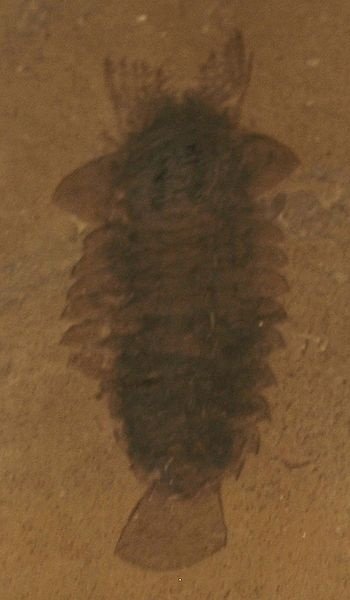
The physical appearance of Wiwaxia was truly unique, bearing little resemblance to any living animal. Its soft, bilaterally symmetrical body was dorsoventrally flattened, creating a low-slung profile well-suited for a benthic existence. Ranging in size from just 3 millimeters to over 5 centimeters in length, the entire dorsal and lateral surface of the animal was covered by a protective coat of armor composed of hundreds of individual, overlapping plates known as sclerites. These small, carbonaceous, leaf-shaped sclerites were arranged in distinct zones across the body, forming a flexible, chainmail-like covering that gave the animal its corrugated texture, as reflected in its species name, *corrugata*. The sclerites varied in shape and size depending on their position, from small, flattened plates on the underside to more robust, ridged ones on the back. The most striking feature of this armor was the presence of two rows of long, sharp, blade-like spines that projected upwards and outwards from the dorsal surface. These spines, which could be nearly as long as the body itself, were hollow, carbonaceous structures that likely served as a formidable defense mechanism. The underside of the animal was a soft, muscular, creeping foot, similar to that of a modern slug or chiton, which was devoid of armor. At the anterior end, Wiwaxia possessed a simple feeding apparatus, a retractable structure armed with two or, in some specimens, three rows of backward-pointing, conical teeth. This entire anatomical package—a soft-bodied crawler with a complex, multi-part scleritome and prominent defensive spines—represents a distinct and successful body plan during the Cambrian.
The paleobiology of Wiwaxia reveals an organism adapted to a life of slow, deliberate movement and grazing on the ocean floor. Its muscular, unarmored ventral surface functioned as a creeping foot, allowing it to move across the soft sediment in a manner analogous to modern gastropods. This mode of locomotion is consistent with its presumed diet as a detritivore or herbivore. The feeding apparatus, often compared to the radula of molluscs, was not used for active predation but for scraping and raking organic material from the substrate. Its backward-pointing teeth were ideal for pulling food towards a simple gut. The primary food source was likely the abundant microbial mats that carpeted the Cambrian seafloor, as well as other organic detritus. Evidence for this feeding strategy comes from the gut contents of some fossils and from associations with other organisms like the tube-dwelling worm *Polychaetaspina*, whose tubes have been found in the gut of a Wiwaxia specimen, suggesting it was incidentally ingested during grazing. The elaborate armor of sclerites and spines was almost certainly a defensive adaptation. The long dorsal spines would have made Wiwaxia a difficult and painful meal for the apex predators of the time, such as the formidable *Anomalocaris*. When threatened, it might have been able to press its body against the seafloor, presenting an impenetrable shield of spines to an attacker. Growth occurred through the molting of individual sclerites and spines, which were shed and replaced as the animal increased in size, rather than molting the entire scleritome at once.
Wiwaxia lived in a benthic marine environment at the base of a large submarine cliff, now preserved as the Burgess Shale's Phyllopod Bed in the Stephen Formation. During the Middle Cambrian, around 508 million years ago, this region was located in equatorial latitudes, characterized by warm, shallow tropical waters. The ecosystem was incredibly diverse, representing one of the earliest complex animal communities known. Wiwaxia shared its habitat with a wide array of now-famous Cambrian creatures. It crawled alongside various arthropods, including the ubiquitous trilobites like *Olenoides* and the bizarre, five-eyed *Opabinia*. In the water column above, predators like *Anomalocaris* hunted, while swimmers such as the chordate *Pikaia* navigated the waters. The seafloor was also home to numerous sponges, such as *Vauxia*, and a variety of worms and other enigmatic benthic organisms. Within this food web, Wiwaxia occupied the role of a primary consumer or detritivore, grazing on microbial mats and organic debris. Its position was crucial, as it converted low-level organic matter into a larger package of protein that could then be consumed by higher-level predators. Its defensive spines indicate that predation pressure was a significant evolutionary driver in this ecosystem. The exceptional preservation of this entire community allows paleontologists to reconstruct these ancient ecological interactions with remarkable detail, placing Wiwaxia firmly within its environmental and biological context as a well-defended, low-level grazer.
The discovery of Wiwaxia is intrinsically linked to the history of the Burgess Shale itself. The first specimens were found by the renowned American paleontologist Charles Doolittle Walcott in 1909 during his initial explorations of the fossil-rich site in the Canadian Rockies. However, the first formal description of the animal was published in 1899 by George Frederic Matthew, based on an isolated spine he had found in the older Ogygopsis Shale member of the Stephen Formation, which he mistakenly identified as a spine of a hyolithid, a type of shelled animal. He named this isolated fossil *Orthotheca corrugata*. It was Walcott who, upon finding complete articulated specimens, recognized it as a distinct animal. In 1911, he established the genus *Wiwaxia*, naming it after Wiwaxy Peaks, a mountain near the Burgess Shale quarry. He classified it as a polychaete annelid worm, comparing its sclerites to the elytra (scales) of certain scale worms. For decades, this interpretation was widely accepted. The key specimens, including the holotype, are housed at the Smithsonian National Museum of Natural History, where Walcott's extensive collection resides. It wasn't until the comprehensive re-examination of the Burgess Shale fauna, initiated by Harry Whittington in the 1960s and continued by his students Simon Conway Morris and Derek Briggs, that the true anatomical complexity and phylogenetic uncertainty of Wiwaxia were fully appreciated, sparking a new era of research and debate.
The evolutionary significance of Wiwaxia lies in its contentious position within the animal tree of life, which has made it a key subject in the study of the Cambrian explosion. Its combination of features—a slug-like body, a radula-like feeding apparatus, and a complex armor of sclerites—creates a mosaic of traits that blur the lines between major phyla, particularly Mollusca and Annelida. Walcott's initial classification of Wiwaxia as a polychaete annelid was based on the superficial resemblance of its sclerites to the scales of modern scale worms. This view was championed for many years, with some researchers arguing that its sclerites were homologous to the chaetae (bristles) of annelids. However, detailed ultrastructural studies revealed that the construction of Wiwaxia's sclerites was fundamentally different from annelid chaetae. The alternative hypothesis, first proposed in detail by Simon Conway Morris and later strongly advocated by paleontologist Nicholas Butterfield, places Wiwaxia within the mollusc total group. This argument is supported by the structure of its feeding apparatus, which is functionally and morphologically very similar to a molluscan radula, and by the nature of its scleritome, which can be interpreted as a precursor to the shells and plates of various mollusc groups. Under this interpretation, Wiwaxia is not a direct ancestor of modern snails or clams but rather a "stem-group" mollusc, an early offshoot from the lineage that would eventually give rise to all living molluscs. This placement helps illuminate the early stages of molluscan evolution before the group developed its characteristic calcareous shell.
The precise taxonomic placement of Wiwaxia remains a subject of vigorous scientific debate, highlighting the challenges of classifying organisms from a time before the body plans of modern phyla were firmly established. The primary controversy revolves around whether it is a stem-mollusc or a stem-annelid. Proponents of the annelid affinity point to its worm-like overall body plan and sclerites that could be considered highly modified chaetae. However, the mollusc hypothesis has gained considerable traction in recent years. Detailed analysis by Nicholas Butterfield in 2003 argued that the sclerites are structurally homologous with the chitinous cuticle of molluscs and that the feeding apparatus is a clear radula. Further research by Smith in 2012 on the development and arrangement of the feeding parts reinforced this molluscan connection. A third, less common view suggests that Wiwaxia belongs to its own distinct phylum or is part of a broader, extinct group of armored, slug-like animals known as the "halwaxiids," which also includes organisms like *Halkieria*. This group itself has a debated phylogenetic position, but is often considered to be related to the ancestry of both molluscs and brachiopods. These ongoing debates underscore Wiwaxia's importance as a transitional or experimental form, showcasing a combination of traits not seen in any living lineage and forcing paleontologists to continually refine their understanding of early animal evolution.
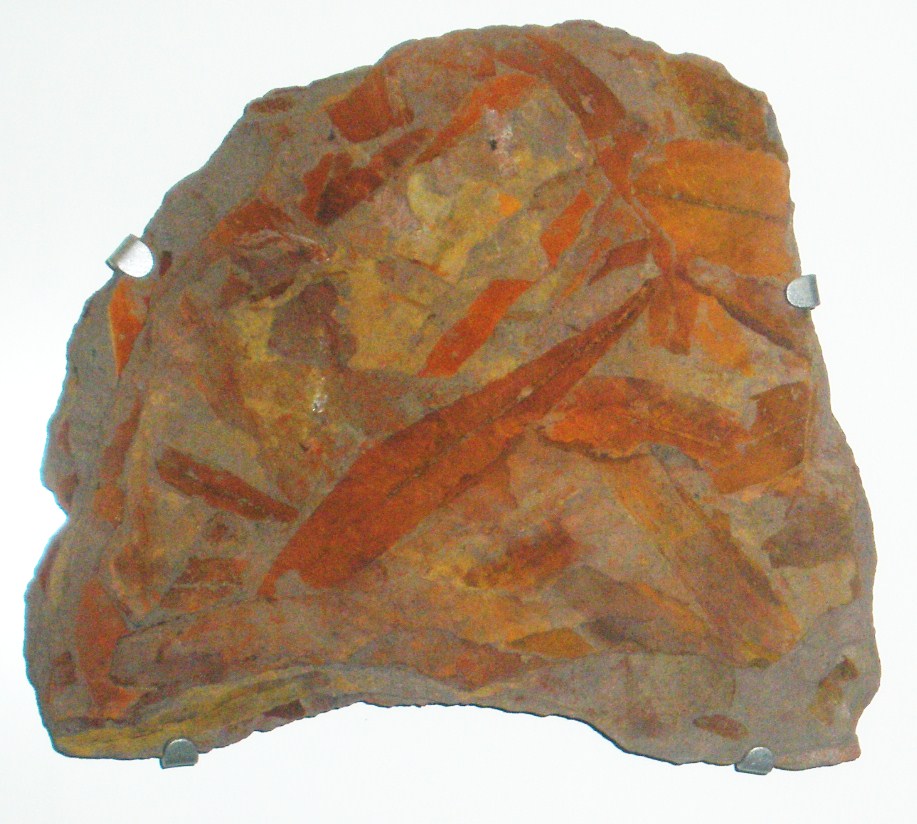
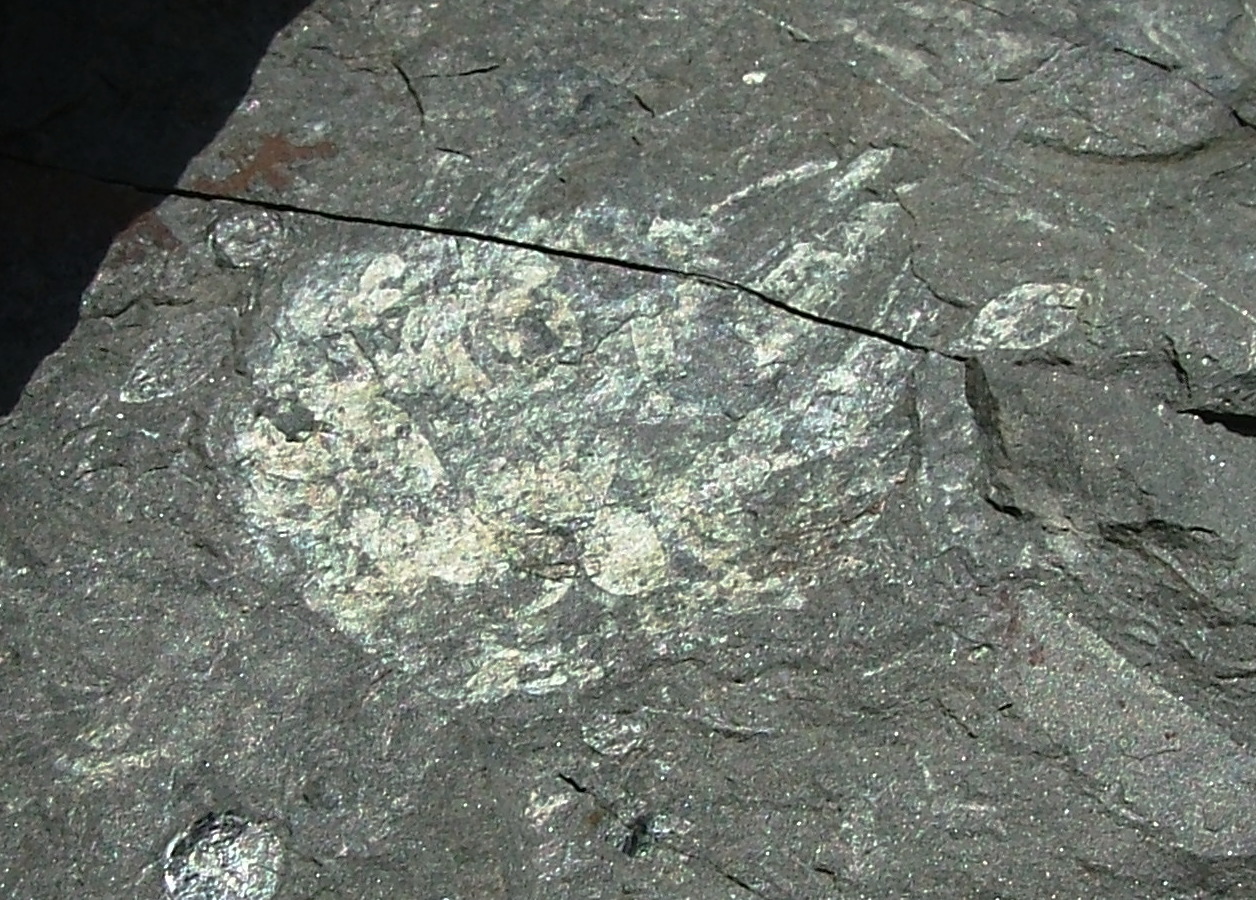
The fossil record of Wiwaxia, while geographically restricted, is remarkably rich in terms of the number and quality of specimens. The vast majority of the more than 500 known articulated specimens have been recovered from the Burgess Shale's Walcott Quarry and surrounding localities in British Columbia, Canada. The exceptional "Burgess Shale-type preservation" of this site, characterized by rapid burial in anoxic mud, has preserved not only the hard spines but also the soft, unarmored underside, gut traces, and the delicate feeding apparatus in exquisite detail. This allows for a near-complete reconstruction of the animal's anatomy. Beyond the Burgess Shale, fossils of Wiwaxia are much rarer. Disarticulated sclerites and spines attributed to the genus have been found in other Middle Cambrian deposits around the world, including sites in Utah (the Spence Shale and Marjum Formation), Australia, and potentially China, suggesting the genus had a broader, possibly global, distribution in equatorial waters. However, complete, articulated specimens remain almost exclusive to the Burgess Shale, making it the single most important location for understanding this enigmatic creature. The abundance of well-preserved fossils at this one site has provided a robust sample size for studying its growth, variation, and taphonomy.
Although not as famous as *Anomalocaris* or *Hallucigenia*, Wiwaxia has earned a significant place in popular and scientific culture as a quintessential example of Cambrian strangeness and evolutionary experimentation. It is prominently featured in museum exhibits on the Burgess Shale and the Cambrian explosion worldwide, including the Royal Ontario Museum in Toronto and the Smithsonian National Museum of Natural History in Washington, D.C. Reconstructions and fossil specimens of Wiwaxia appear in numerous paleontological textbooks and popular science books, most notably Stephen Jay Gould's "Wonderful Life," which used the Burgess Shale fauna to illustrate the concept of contingency in evolution. Its striking appearance, with its shimmering coat of mail and defensive spines, has also made it a subject for paleoartists and a feature in television documentaries about prehistoric life. For students of biology and paleontology, Wiwaxia serves as a perfect case study in phylogenetic debate and the challenges of interpreting the fossil record of early animal life.
Classification
Time Period
Discovery
Location
Burgess Shale, British Columbia, Canada
Formation
Burgess Shale (Stephen Formation)
Frequently Asked Questions
What is Wiwaxia?
Wiwaxia corrugata is an extinct, slug-like animal that inhabited the seafloor during the Middle Cambrian period, a pivotal time in Earth's history known for the rapid diversification of complex life. Its exceptionally preserved fossils, most notably from the Burgess Shale in British Columbia, Canada...
When did Wiwaxia live?
Wiwaxia lived during the cambrian period of the paleozoic era approximately 521 to 505 million years ago.
Where was Wiwaxia discovered?
Fossils of Wiwaxia were discovered in Burgess Shale, British Columbia, Canada in the Burgess Shale (Stephen Formation).
What did Wiwaxia eat?
Wiwaxia was a detritivore / herbivore (likely feeding on microbial mats on the seafloor). It lived in benthic marine (seafloor) habitats.
What type of fossil is Wiwaxia?
Wiwaxia is preserved as a carbonized fossil. The preservation quality is exceptional.
Related Specimens
From the paleozoic era · carbonized fossils