Sigillaria
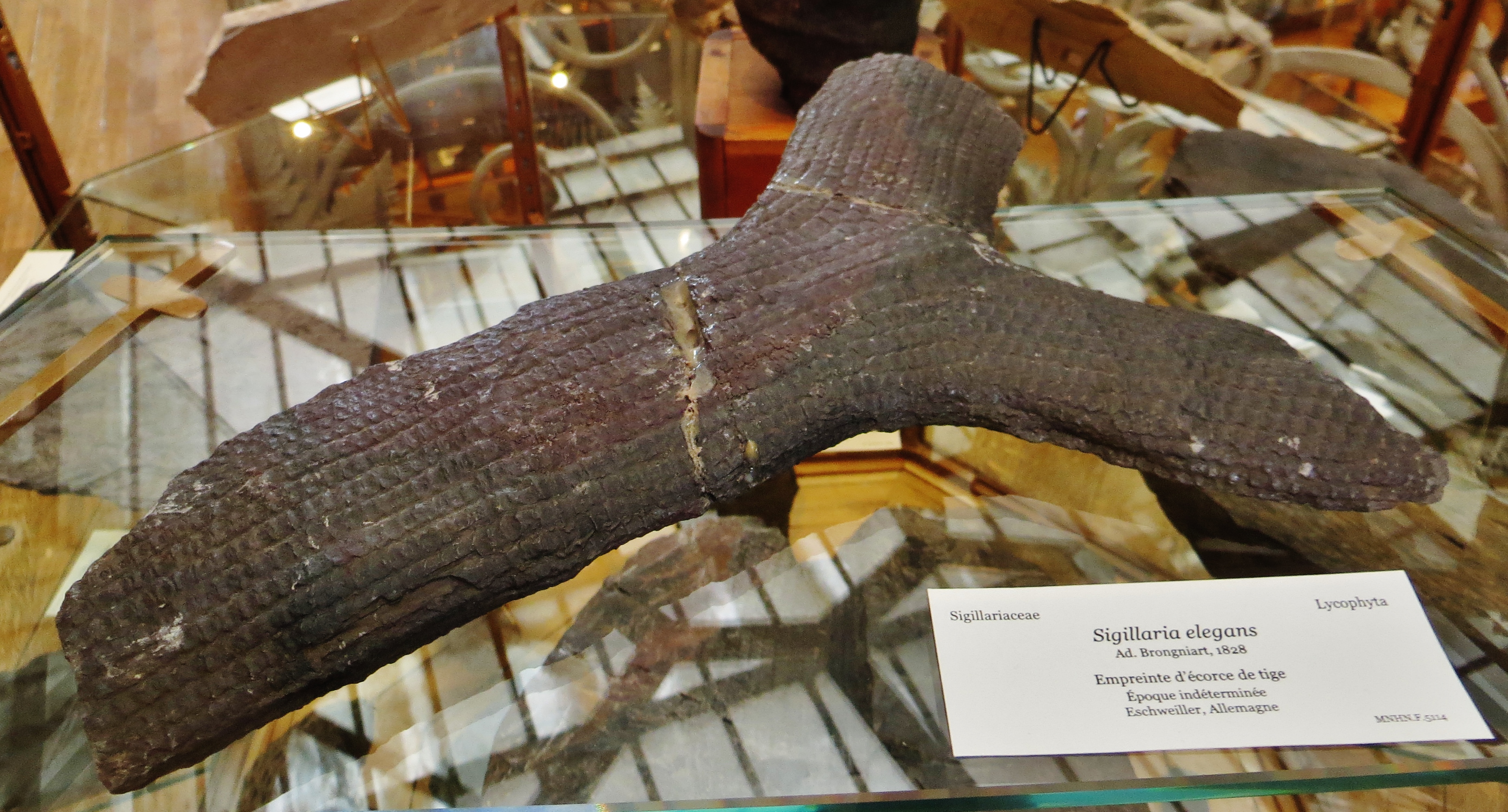
Sigillaria elegans
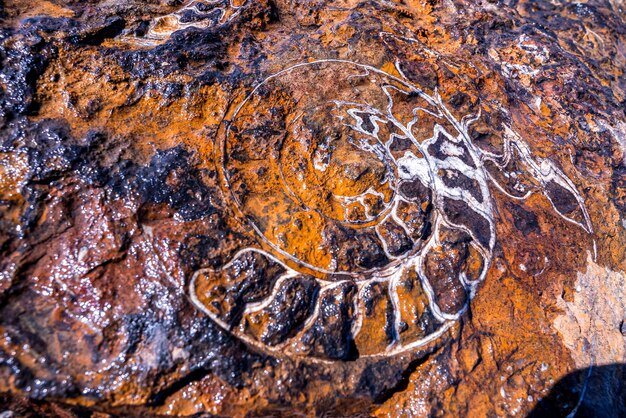
Image: File:Sigillaria elegans fossil.jpg - Wikimedia Commons (CC BY-SA)
About Sigillaria
Sigillaria, a monumental genus of tree-like lycopsid, was a defining feature of the late Paleozoic landscapes, flourishing predominantly during the Carboniferous Period, approximately 359 to 299 million years ago. Commonly referred to as the 'Seal Tree' due to the distinctive scars left on its trunk by shed leaves, this organism was a cornerstone of the vast, swampy coal forests that covered the tropical regions of the supercontinent Euramerica, which later separated into modern-day North America and Europe. Although it achieved the stature of a large tree, Sigillaria was not a true tree in the modern sense but rather a colossal, spore-bearing clubmoss, whose immense biomass became a primary contributor to the extensive coal seams that power our modern world.
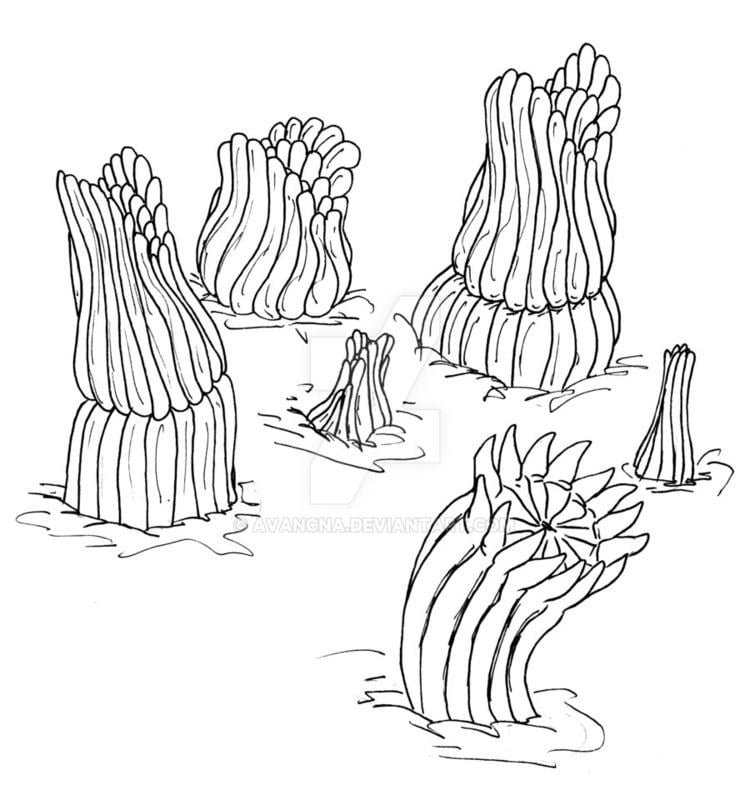
The physical appearance of Sigillaria was both simple and imposing, a testament to an early evolutionary experiment in achieving arborescence. A mature individual, such as a member of the species *Sigillaria elegans*, typically possessed a tall, columnar trunk that was usually unbranched, soaring to heights of over 30 meters (approximately 100 feet), with a basal diameter that could exceed one meter. This trunk, which was technically a stem, was not composed of true wood like that of modern conifers or flowering trees. Instead, its structural integrity was derived from a thick, bark-like periderm surrounding a relatively small core of vascular tissue. The most striking feature of the trunk was its surface, which was covered in a precise and repeating pattern of diamond-shaped or hexagonal leaf cushions, known as leaf scars. These scars were arranged in distinct vertical rows, or ribs, that ran the length of the trunk, giving it a fluted appearance. Each scar marked the point where a long, grass-like leaf, or microphyll, was once attached. At the apex of this towering column, the plant bore a dense crown of these slender, elongated leaves, which could reach up to a meter in length, creating a silhouette reminiscent of a giant bottlebrush. Unlike the deep, anchoring taproots of modern trees, Sigillaria was supported by a shallow, dichotomously branching underground system. These root-like structures, known as Stigmaria, radiated outwards from the base of the trunk, providing stability in the soft, waterlogged soils of its swamp habitat.
The paleobiology of Sigillaria reveals a life strategy geared towards rapid growth and reproduction in a highly competitive, resource-rich environment. As a photosynthetic organism, its entire existence was fueled by sunlight, which it captured through the dense foliage of its terminal crown. The plant's internal structure, with its limited amount of true wood, suggests a "live fast, die young" approach. It likely grew to its full, towering height in a remarkably short period, perhaps only a few decades, a growth rate far exceeding that of most modern trees. This rapid vertical growth was a crucial strategy to outcompete other swamp-dwelling plants like Lepidodendron and Calamites for access to sunlight. Sigillaria is believed to have been monocarpic, meaning it reproduced only once at the end of its life. Upon reaching maturity, it would produce large, cone-like structures, or strobili, which released vast quantities of spores into the environment before the entire plant senesced and died. This reproductive strategy, combined with its rapid growth, ensured the swift propagation of the species across the swampy lowlands. The shallow Stigmarian rooting system, while effective for anchorage in soft substrate, made the plant susceptible to being toppled by winds or floods, contributing to the massive accumulation of plant debris on the forest floor.
Sigillaria was an integral component of the unique and vibrant ecosystems of the Carboniferous coal swamps. These habitats were located in the humid, tropical belt near the paleo-equator, characterized by a hot, perpetually moist climate with little to no seasonality and significantly higher atmospheric oxygen levels, perhaps as high as 35% compared to today's 21%. This oxygen-rich air supported the gigantism seen not only in plants but also in arthropods. The swamp forests were a dense, multi-tiered environment where Sigillaria, along with its close relative Lepidodendron, formed the dominant canopy layer. The understory was populated by smaller lycopsids, towering horsetails like Calamites, and a variety of seed ferns such as Medullosa. As a primary producer, Sigillaria formed the base of the food web, converting solar energy into organic matter. This vast biomass supported a complex community of detritivores that fed on the accumulating plant litter, including giant millipedes like Arthropleura, which could reach over two meters in length. The swamps were also home to large amphibians, such as Eryops, and the earliest reptiles, which navigated the waterlogged terrain. When these giant lycopsids died and fell, their decomposition was inhibited by the anoxic, acidic water of the swamps, leading to the gradual buildup of peat, which over millions of years of burial and compression, transformed into the vast coal deposits for which the Carboniferous Period is named.
The discovery and study of Sigillaria fossils were foundational to the nascent science of paleobotany in the early 19th century. Its distinctive and abundant remains were frequently encountered by coal miners in Europe and North America, who often gave them local folk names. The formal scientific study began with figures like the French naturalist Adolphe-Théodore Brongniart, often called the "father of paleobotany." In his seminal work "Histoire des végétaux fossiles," published between 1828 and 1837, Brongniart provided one of the first systematic descriptions and classifications of Sigillaria, recognizing it as a distinct and extinct form of plant life. He established the genus name *Sigillaria*, derived from the Latin 'sigillum' (seal), in reference to the seal-like leaf scars on the trunk fossils. Throughout the 19th century, paleontologists like William Crawford Williamson in Britain and Leo Lesquereux in the United States meticulously documented the various fossilized parts of the plant—the trunk (Sigillaria), the roots (Stigmaria), and the cones (Sigillariostrobus)—and painstakingly pieced together the anatomy of the whole organism. These early investigations were crucial in demonstrating that Earth's past floras were vastly different from those of the present day and provided compelling evidence for the biological origin of coal.
In the grand tapestry of life, Sigillaria represents a pivotal branch in the evolution of vascular plants. It belongs to the phylum Lycopodiophyta, a lineage that diverged from the main line leading to ferns, gymnosperms, and flowering plants over 400 million years ago. While its modern relatives, the clubmosses, spike mosses, and quillworts (genus *Isoetes*), are small, herbaceous plants, Sigillaria and its kin were the products of the lycopsids' first and only experiment with achieving massive, tree-like size. This evolutionary path, which occurred independently of the evolution of true trees in other plant lineages, showcases a remarkable instance of convergent evolution. Sigillaria possessed several advanced features for its time, including a complex vascular system and the production of two different types of spores (heterospory), a key step towards the evolution of seeds. The quillworts are considered the closest living relatives of these Carboniferous giants. Despite their vastly different sizes, they share fundamental anatomical traits, including a similar method of secondary growth and the presence of a specialized organ called a ligule on their leaves, linking these diminutive modern plants directly to the colossal forest-formers of the Paleozoic. The ultimate extinction of Sigillaria at the end of the Permian was part of a broader environmental shift as the climate became cooler and drier, favoring the more drought-resistant seed plants like conifers.
Despite being studied for over two centuries, Sigillaria continues to be the subject of scientific discussion and revision. One of the primary areas of debate revolves around its taxonomy and the precise number of valid species. Early paleontologists, often working with fragmentary fossils, named hundreds of species based on slight variations in the shape and arrangement of the leaf scars. Modern paleobotanists, however, recognize that much of this variation could be due to the age of the plant, the position of the bark on the trunk, or the process of fossilization itself. Consequently, a significant effort has been made to consolidate these numerous form-taxa into a more manageable and biologically realistic number of species. Another area of ongoing research concerns the plant's life cycle and physiology. The monocarpic, or "big bang," reproductive strategy is a widely accepted hypothesis, but direct fossil evidence remains elusive. Scientists continue to model its growth rates and biomechanics to better understand how such a massive organism, lacking true wood, could remain structurally stable in its environment.
The fossil record of Sigillaria is exceptionally rich and widespread, providing a detailed window into the Carboniferous world. Its remains are found abundantly throughout the "Coal Measures" formations of Europe, particularly in the United Kingdom, Germany, Belgium, and Poland, as well as in the Appalachian Basin and the Midwest of the United States. Fossils are most commonly preserved as compressions or impressions in the shales and sandstones that lie above and below coal seams. These fossils beautifully preserve the intricate, geometric patterns of the bark. Three-dimensional preservation can also occur, where the hollow interior of the trunk was filled with sediment, creating a natural cast known as a pith cast. The underground Stigmaria systems are also extremely common fossils, often found in the clay layers directly beneath coal beds, representing the ancient soil in which these forests grew. Famous fossil sites like Joggins Fossil Cliffs in Nova Scotia, a UNESCO World Heritage Site, and the Mazon Creek fossil beds in Illinois have yielded exceptionally well-preserved specimens of Sigillaria and the entire swamp ecosystem it inhabited.
The striking and alien appearance of Sigillaria has secured its place not only in scientific literature but also in the broader cultural landscape. Its fossils are prominent displays in natural history museums worldwide, from the Smithsonian National Museum of Natural History in Washington, D.C., to the Natural History Museum in London. These towering, patterned trunk sections serve as powerful educational tools, illustrating the immense scale of prehistoric life and the ancient origins of fossil fuels. Sigillaria is frequently depicted in paleoart, books, and documentaries about the Carboniferous Period, often shown towering over giant dragonflies and primitive amphibians, helping to shape the public's perception of this strange and distant chapter in Earth's history. It stands as a potent symbol of a lost world, a time when the planet was dominated by giant arthropods and forests of plants fundamentally different from those we know today.
Classification
Time Period
Discovery
Location
Europe and North America
Formation
Coal Measures
Frequently Asked Questions
What is Sigillaria?
Sigillaria, a monumental genus of tree-like lycopsid, was a defining feature of the late Paleozoic landscapes, flourishing predominantly during the Carboniferous Period, approximately 359 to 299 million years ago. Commonly referred to as the 'Seal Tree' due to the distinctive scars left on its trunk...
When did Sigillaria live?
Sigillaria lived during the carboniferous period of the paleozoic era approximately 359-299 million years ago.
Where was Sigillaria discovered?
Fossils of Sigillaria were discovered in Europe and North America in the Coal Measures.
What did Sigillaria eat?
Sigillaria was a photosynthetic. It lived in terrestrial habitats.
What type of fossil is Sigillaria?
Sigillaria is preserved as a impression fossil. The preservation quality is good.
Related Specimens
From the paleozoic era · impression fossils