Alethopteris
Alethopteris serli
Image: Image sourced via web search (Fair use / Educational)
About Alethopteris
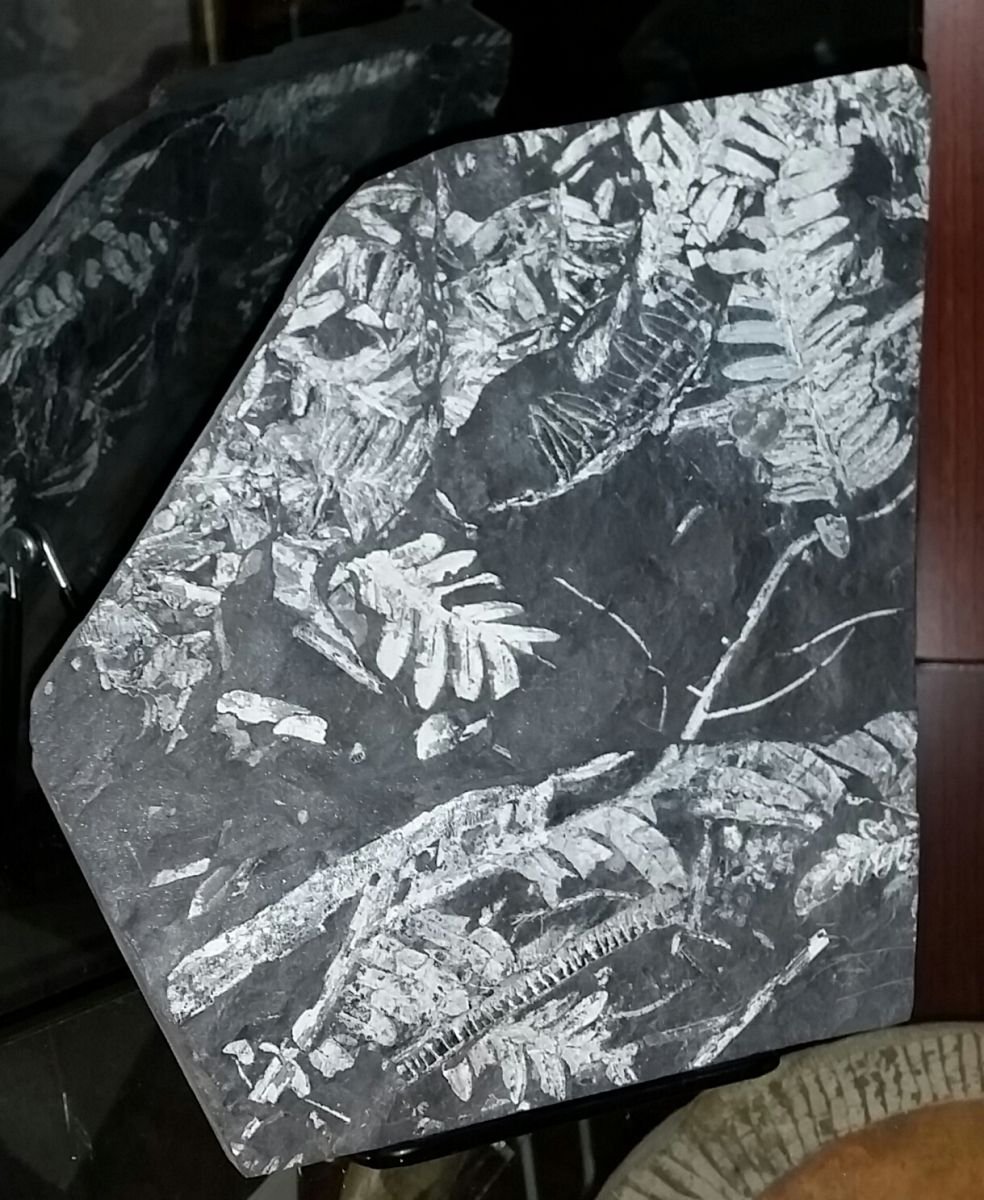
Alethopteris serli is a highly significant and widely recognized extinct species of seed fern, or pteridosperm, that flourished during the Middle to Late Pennsylvanian subperiod of the Carboniferous period, approximately 315 to 300 million years ago. As a prominent member of the order Medullosales, this prehistoric plant played a foundational role in the vast, swampy ecosystems that eventually formed the Earth's most extensive coal deposits. The organism is primarily known from its distinctive fossilized foliage, which is frequently discovered in the coal measures of North America and Europe. Its widespread distribution and recognizable morphology make it an essential index fossil for biostratigraphic dating and a vital subject for understanding the evolution of early seed-bearing plants. By studying Alethopteris serli, paleobotanists have gained profound insights into the reproductive strategies, ecological adaptations, and anatomical innovations that allowed plants to conquer terrestrial environments and establish complex forest ecosystems long before the advent of flowering plants. The physical description of Alethopteris serli is primarily based on its intricate and robust foliage, as is typical for many paleobotanical form taxa. The fronds of this seed fern were massive, highly compound, and could reach estimated lengths of several meters, resembling the large, sweeping leaves of modern tree ferns. The individual leaflets, known as pinnules, are the most diagnostic feature of the genus. In Alethopteris serli, these pinnules are relatively large, typically measuring between two to five centimeters in length, and are characterized by their broadly attached, decurrent bases that run down the rachis, or central stem of the frond. This broad attachment distinguishes them from true ferns and other seed ferns like Neuropteris, which have a more constricted, stalk-like attachment. The pinnules possess a strong, prominent midvein that extends nearly to the rounded or bluntly pointed apex, with numerous fine, lateral veins branching off at steep angles to meet the leaf margin. While the foliage is classified as Alethopteris, these leaves were borne on thick, structurally complex stems assigned to the form genus Medullosa. The entire plant is reconstructed as a small to medium-sized tree or a large, scrambling vine, potentially reaching heights of up to ten meters. The stems were supported by a mantle of adventitious roots and featured a unique vascular system composed of multiple distinct vascular cylinders, an adaptation that provided both structural support and efficient water transport. The paleobiology of Alethopteris serli reveals a highly adapted organism capable of thriving in the unique environmental conditions of the Carboniferous coal swamps. As a photosynthetic organism, its large, expansive fronds were perfectly evolved to capture sunlight in the dense, often shaded understory or mid-canopy of the swamp forests. The thick cuticles and sunken stomata observed on the microscopic level of some Alethopteris specimens suggest adaptations to manage water loss, a seemingly paradoxical feature in a swamp environment that may indicate periods of physiological drought or the need to survive in the highly acidic, nutrient-poor soils characteristic of peat-forming bogs. Unlike true ferns, which reproduce via spores, Alethopteris serli was a seed fern, meaning it reproduced using seeds and pollen. The seeds associated with Medullosalean plants, often assigned to the form genus Pachytesta or Trigonocarpus, were remarkably large, sometimes reaching the size of modern walnuts. These seeds possessed a fleshy outer layer and a hard inner shell, suggesting they may have been dispersed by water currents or perhaps by early terrestrial animals, though the latter remains speculative. The pollen organs, large and complex structures, produced prepollen, an intermediate evolutionary stage between the spores of lower plants and the true pollen of modern gymnosperms and angiosperms. The ecological context of Alethopteris serli is inextricably linked to the iconic Carboniferous rainforests, a biome unlike any that exists on Earth today. During the Pennsylvanian subperiod, the global climate was generally warm and humid, with high atmospheric oxygen levels that supported a spectacular array of flora and fauna. Alethopteris serli inhabited the vast, low-lying equatorial wetlands that stretched across the supercontinent of Euramerica. These swamps were dominated by towering lycopsid trees, such as Lepidodendron and Sigillaria, which formed the upper canopy. Alethopteris, along with other seed ferns, true ferns, and sphenopsids like Calamites, formed a dense, lush understory and mid-canopy layer. The high primary productivity of these plants, combined with the waterlogged, anoxic conditions of the swamp floor, prevented the complete decomposition of plant material, leading to the accumulation of massive peat deposits that would eventually lithify into coal. In this environment, Alethopteris serli coexisted with some of the largest terrestrial invertebrates in Earth's history, including the giant millipede-like Arthropleura and the massive griffinfly Meganeura. The plant likely served as a food source for various detritivores and early herbivorous arthropods, playing a crucial role in the complex food web of the Carboniferous rainforest ecosystem. The discovery history of Alethopteris serli is deeply intertwined with the Industrial Revolution and the extensive coal mining operations of the 18th and 19th centuries. As miners excavated deep into the earth to extract coal, they frequently encountered beautifully preserved plant fossils in the shale layers immediately above the coal seams, known as the roof shales. The genus Alethopteris was first formally established by the pioneering French paleobotanist Caspar Maria von Sternberg in the early 19th century, but it was Adolphe Brongniart, often considered the father of paleobotany, who significantly refined the classification of these ancient plants. The specific epithet 'serli' was named in honor of early fossil collectors and geologists who contributed to the burgeoning field of paleontology. Historically, paleobotany has relied on a system of form taxonomy, where different parts of the same plant—leaves, stems, roots, seeds, and pollen organs—were given different scientific names because they were almost always found detached and isolated from one another. It took decades of meticulous comparative anatomy and the rare discovery of organically connected specimens to realize that the foliage of Alethopteris serli belonged to the same biological plant as the Medullosa stems and the Trigonocarpus seeds. The evolutionary significance of Alethopteris serli and its fellow seed ferns cannot be overstated, as they represent a critical transitional phase in the history of plant life. The Pteridospermatopsida, or seed ferns, are an extinct group of plants that bore fern-like foliage but reproduced using seeds, bridging the evolutionary gap between the primitive, spore-bearing ferns and the more advanced, seed-bearing gymnosperms and angiosperms. The development of the seed was a monumental evolutionary innovation, allowing plants to reproduce without the need for standing water, which is required by the swimming sperm of true ferns. This adaptation enabled seed plants to colonize drier, more upland environments and eventually dominate the terrestrial biosphere. While the Medullosales, the specific order to which Alethopteris serli belongs, went extinct during the Permian period and left no direct living descendants, studying their anatomy and reproductive biology provides crucial clues about the early diversification of seed plants. The complex vascular architecture of their stems and the sophisticated structure of their large seeds demonstrate the incredible morphological experimentation that occurred during the Paleozoic era, laying the groundwork for the subsequent evolution of modern plant lineages. Scientific debates surrounding Alethopteris serli primarily focus on the complexities of paleobotanical taxonomy and the challenges of reconstructing whole plants from fragmented fossil remains. Because Alethopteris is a form genus based solely on foliage morphology, there is ongoing discussion about the biological species boundaries within the group. The size, shape, and venation of pinnules can vary significantly depending on their position on the frond, the age of the plant, and environmental factors, leading to the potential over-naming of species by early paleobotanists. Modern researchers use advanced statistical analyses and morphometric techniques to better define species limits and understand the natural variation within populations of Alethopteris serli. Another area of active research involves the precise nature of the attachment between Alethopteris foliage and Medullosa stems, as well as the specific correlation of various seed and pollen organ taxa to the parent plant. Furthermore, debates continue regarding the exact growth habit of these plants—whether they were primarily self-supporting trees or relied on surrounding vegetation for structural support as scrambling vines—with biomechanical studies of Medullosa stems providing conflicting interpretations. The fossil record of Alethopteris serli is exceptionally rich and geographically widespread, reflecting its abundance in the Carboniferous coal swamps of Euramerica. Fossils of this species are predominantly found in the coal-bearing strata of North America, particularly in the Appalachian and Illinois basins, as well as in the extensive coal measures of the United Kingdom, France, Germany, and Eastern Europe. The preservation quality is often excellent, with the fossils typically occurring as carbonaceous compressions or impressions in fine-grained shales and siltstones. In these types of fossils, the original plant material has been flattened and reduced to a thin film of carbon, preserving the intricate details of the leaf venation and sometimes even the cellular structure of the cuticle. Alethopteris serli is also famously found in the Mazon Creek fossil beds of Illinois, where the foliage is preserved in three-dimensional ironstone nodules, offering a different and highly detailed mode of preservation. The sheer abundance of Alethopteris fossils makes them invaluable tools for biostratigraphy, allowing geologists to correlate the ages of rock layers across vast distances based on the specific assemblages of plant fossils they contain. The cultural impact of Alethopteris serli is closely tied to the broader public fascination with the Carboniferous period and the origins of coal. While it may not possess the cinematic fame of a Tyrannosaurus rex, Alethopteris is a staple of natural history museums worldwide, often featured in dioramas and exhibits reconstructing the ancient coal swamps. These fossils serve as tangible, beautiful reminders of the deep history of our planet and the ancient origins of the fossil fuels that powered the modern industrial world. For amateur fossil collectors, finding a perfectly preserved frond of Alethopteris serli in a piece of coal shale is a thrilling experience, connecting them directly to a forest that grew over 300 million years ago. Educationally, the story of Alethopteris and the seed ferns is used to teach students about evolutionary transitions, the concept of form taxonomy, and the dramatic ways in which Earth's climate and ecosystems have changed over geological time.
Classification
Time Period
Discovery
Location
Europe and North America
Formation
Coal Measures
Frequently Asked Questions
What is Alethopteris?
Alethopteris serli is a highly significant and widely recognized extinct species of seed fern, or pteridosperm, that flourished during the Middle to Late Pennsylvanian subperiod of the Carboniferous period, approximately 315 to 300 million years ago. As a prominent member of the order Medullosales, ...
When did Alethopteris live?
Alethopteris lived during the carboniferous period of the paleozoic era approximately 315-300 million years ago.
Where was Alethopteris discovered?
Fossils of Alethopteris were discovered in Europe and North America in the Coal Measures.
What did Alethopteris eat?
Alethopteris was a photosynthetic. It lived in terrestrial habitats.
What type of fossil is Alethopteris?
Alethopteris is preserved as a impression fossil. The preservation quality is excellent.
Related Specimens
From the paleozoic era · impression fossils