Apatosaurus
Apatosaurus ajax
Image: Category:Apatosaurus fossils - Wikimedia Commons (CC BY-SA)
About Apatosaurus
Apatosaurus ajax, meaning 'deceptive lizard,' stands as one of the most iconic and thoroughly studied sauropod dinosaurs of the Late Jurassic period, a true titan that roamed the terrestrial landscapes of North America approximately 152 to 151 million years ago. This magnificent megaherbivore played a pivotal ecological role in its ancient environment, representing the zenith of sauropod evolution during a time when giant long-necked dinosaurs dominated the planet. Its discovery and subsequent taxonomic history are deeply intertwined with the foundational years of paleontology, offering invaluable insights into the scientific process itself and the ever-evolving understanding of prehistoric life.
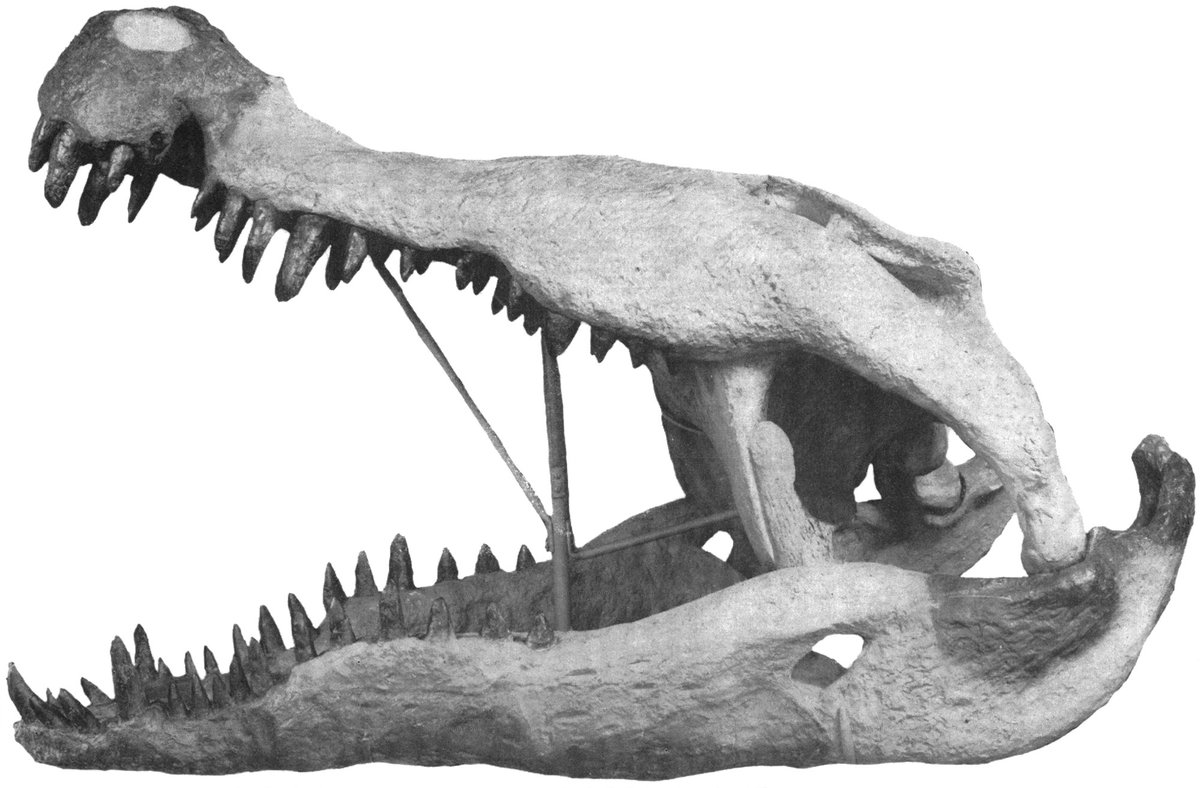
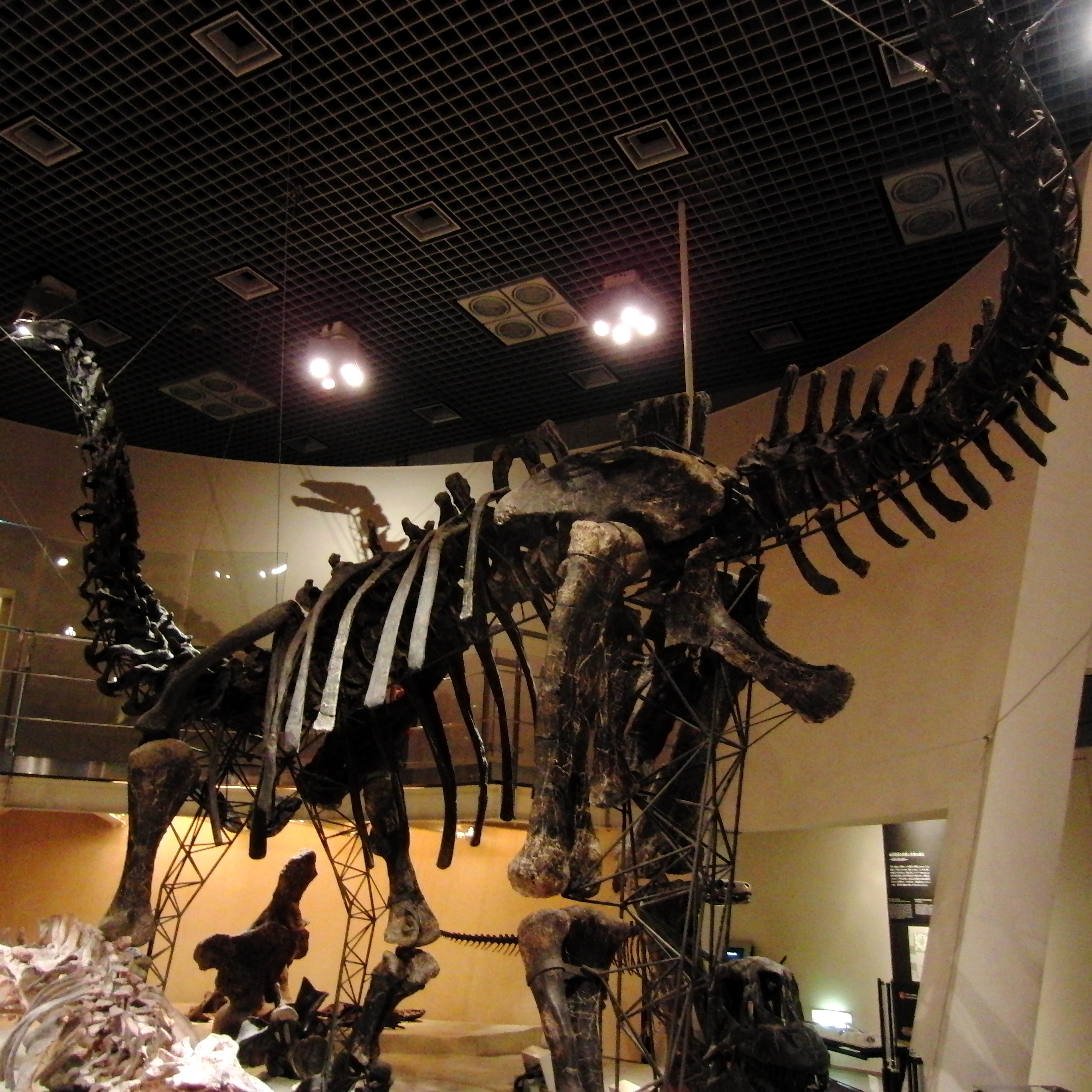
The physical description of Apatosaurus ajax immediately evokes a sense of immense power and scale. Reaching an impressive length of up to 22 meters (approximately 72 feet) and weighing an estimated 20 to 30 metric tons, this sauropod was a colossal creature, rivaling the largest land animals in Earth's history. Its most striking features included a long, robust neck composed of 13 massive cervical vertebrae, significantly thicker and more heavily built than those of its contemporary, Diplodocus. This robust neck structure suggests a powerful musculature, enabling it to lift its head to considerable heights or sweep a wide arc for foraging. The body was deep-chested and barrel-like, supported by four sturdy, pillar-like legs, with the forelimbs being slightly shorter than the hindlimbs, resulting in a somewhat sloped back. The feet were elephantine, featuring five toes on each, though only the inner three on the forefeet and the inner one on the hindfeet bore claws. Apatosaurus possessed a remarkably long, whip-like tail, comprising around 82 caudal vertebrae, tapering to an extremely slender tip. This tail, often exceeding half the animal's total length, was not merely for balance but likely served multiple functions, including defense and possibly communication. Unlike many other sauropods, Apatosaurus had a relatively small, boxy skull, often found disarticulated from the postcranial skeleton, leading to historical confusion. Its teeth were spatulate or peg-like, suited for stripping vegetation rather than chewing. The overall build of Apatosaurus was one of immense strength and resilience, a testament to the evolutionary pressures of its environment.
As a megaherbivore, Apatosaurus ajax occupied a critical position in the Morrison Formation ecosystem, primarily as a low to medium-height browser. Its diet likely consisted of abundant vegetation such as ferns, cycads, and conifers, which were prevalent during the Late Jurassic. The spatulate teeth were well-adapted for stripping leaves and fronds from branches, and like other sauropods, Apatosaurus probably employed gastroliths (stomach stones) to aid in the mechanical breakdown of tough plant material in its massive gut. Locomotion was quadrupedal, with its immense weight distributed across its four robust limbs. Trackway evidence from sauropods suggests a relatively slow, deliberate pace, but their sheer size would have made them formidable in their movements. Behavioral inferences, though speculative, suggest that Apatosaurus, like other large sauropods, may have lived in herds, offering protection against large predators and facilitating foraging. The whip-like tail is hypothesized to have been a potent defensive weapon, capable of producing a loud cracking sound when swung at high speeds, potentially deterring predators such as Allosaurus or Ceratosaurus. Growth patterns in sauropods indicate rapid initial growth, reaching sexual maturity relatively quickly, followed by continued growth throughout their lifespan, a strategy that allowed them to outgrow most predators and achieve their immense size.
The ecological context of Apatosaurus ajax was the Late Jurassic Morrison Formation, a vast floodplain environment characterized by a semi-arid to seasonal climate. This region, now encompassing parts of Colorado, Utah, Wyoming, and New Mexico, was a mosaic of rivers, floodplains, and scattered woodlands, supporting a rich and diverse fauna. The climate was generally warm, with distinct wet and dry seasons, leading to periods of lush growth followed by more arid conditions. Apatosaurus co-existed with a spectacular array of other dinosaurs, including other sauropods like Diplodocus, Camarasaurus, and Barosaurus, each likely occupying slightly different ecological niches to minimize competition. Ornithischians such as Stegosaurus and Camptosaurus were also present. The apex predators of this ecosystem were formidable theropods like Allosaurus, Ceratosaurus, and Torvosaurus, which would have posed a threat, especially to juvenile or infirm Apatosaurus. As a primary consumer, Apatosaurus played a crucial role in shaping the landscape through its extensive browsing, influencing plant distribution and nutrient cycling, and serving as a significant food source for scavengers after its death. Its sheer biomass would have been a dominant feature of the Morrison food web.
The discovery history of Apatosaurus is a captivating tale deeply embedded in the competitive and often contentious 'Bone Wars' of the late 19th century, primarily between Othniel Charles Marsh and Edward Drinker Cope. The first fossil remains attributable to Apatosaurus ajax were unearthed in 1877 by Arthur Lakes and H.C. Beckwith near Morrison, Colorado, within the prolific Morrison Formation. These initial finds, consisting of a partial skeleton, were quickly acquired by Marsh, who formally described and named the genus Apatosaurus, meaning 'deceptive lizard,' in 1877. The name alluded to the fact that its chevron bones were similar to those of mosasaurs, leading Marsh to initially believe it was a marine reptile. Just two years later, in 1879, a more complete skeleton was discovered by William Harlow Reed in Como Bluff, Wyoming, also within the Morrison Formation. Marsh, believing this to be a distinct genus due to its more complete nature and slight anatomical differences, named it Brontosaurus excelsus, meaning 'thunder lizard.' This decision would lead to over a century of taxonomic confusion. Key specimens include the holotype of Apatosaurus ajax (YPM 1860) and the holotype of Brontosaurus excelsus (YPM 1980), both housed at the Yale Peabody Museum. The lack of a skull associated with the initial Apatosaurus specimens further complicated matters, leading Marsh to famously mount a Camarasaurus skull on the Apatosaurus body, an error that persisted for decades and contributed to the Brontosaurus myth.
Apatosaurus holds a significant place in the evolutionary tree of life, belonging to the family Diplodocidae, a group of long-necked, whip-tailed sauropods. Within Diplodocidae, Apatosaurus is part of the subfamily Apatosaurinae, which also includes genera like Brontosaurus and Supersaurus. Its close relationship to Diplodocus is evident in their shared body plan, though Apatosaurus is generally considered more robust. The evolution of such massive body size in sauropods like Apatosaurus is a remarkable example of an evolutionary arms race, likely driven by selective pressures for defense against large predators and efficient processing of low-quality, abundant plant food. The specialized vertebral structure, particularly the robust cervicals and the unique caudal vertebrae that allowed for the whip-like tail, represent advanced adaptations within the Diplodocidae. While Apatosaurus itself is not considered a direct ancestor to modern animals, its lineage provides crucial insights into the broader evolutionary trends of large herbivorous animals and the biomechanical challenges of gigantism. Its success during the Late Jurassic highlights the adaptive radiation of sauropods and their dominance in terrestrial ecosystems for tens of millions of years.
The scientific debates surrounding Apatosaurus are perhaps its most famous contribution to paleontology, primarily centered on its taxonomic relationship with Brontosaurus. For over a century, from 1903 until 2015, Brontosaurus was considered a junior synonym of Apatosaurus. This synonymy was established by Elmer Riggs, who argued that the differences between Marsh's Apatosaurus and Brontosaurus specimens were insufficient to warrant separate genera. Riggs's influential 1903 paper, "Structure and Relationships of the American Jurassic Dinosaurs," consolidated the two under Apatosaurus, leading to the widespread belief that Brontosaurus never truly existed. However, a landmark phylogenetic study published in 2015 by Emanuel Tschopp, Octávio Mateus, and Roger Benson meticulously re-evaluated nearly 500 morphological characteristics across 81 diplodocid specimens. Their comprehensive analysis concluded that Brontosaurus possessed enough distinct anatomical features, particularly in its neck and limb proportions, to justify its re-establishment as a valid genus, separate from Apatosaurus. This revision, while celebrated by many, continues to be a topic of discussion among paleontologists, illustrating the dynamic and iterative nature of scientific classification. Other debates have focused on the precise posture of its neck, its feeding height, and the exact function of its tail, with ongoing research utilizing biomechanical modeling and comparative anatomy to refine our understanding.
The fossil record of Apatosaurus is extensive and geographically concentrated within the Morrison Formation of the western United States. Numerous specimens, ranging from isolated bones to relatively complete skeletons, have been unearthed, primarily from Colorado, Wyoming, Utah, and Oklahoma. The quality of preservation varies, but many specimens are remarkably well-preserved, providing a wealth of anatomical detail. Famous sites include Como Bluff in Wyoming, where the holotype of Brontosaurus excelsus was found, and Dinosaur National Monument in Utah, which has yielded numerous sauropod remains. The abundance of Apatosaurus fossils, along with other Morrison Formation dinosaurs, makes this region one of the richest dinosaur fossil localities in the world. The sheer number of specimens has allowed for detailed studies of ontogeny, individual variation, and population structure, offering a more complete picture of this ancient animal than is available for many other dinosaurs. The consistent presence of Apatosaurus in multiple localities across the Morrison Formation underscores its widespread distribution and ecological success during its relatively short geological age range of 152-151 Mya.
Apatosaurus, and its historically intertwined identity with Brontosaurus, holds an unparalleled cultural impact. It is one of the most recognizable dinosaurs globally, a staple in museums, books, films, and popular culture. The image of a long-necked, massive sauropod is often the first dinosaur many children learn about, fostering an early interest in paleontology and natural history. Its presence in institutions like the American Museum of Natural History and the Yale Peabody Museum, often represented by impressive skeletal mounts, continues to inspire awe and educate millions. The 'Brontosaurus' controversy itself has become a popular example of how scientific understanding evolves, making it a valuable teaching tool for illustrating the scientific method. From "The Land Before Time" to countless toys and illustrations, Apatosaurus (and its 'thunder lizard' alter ego) remains a beloved and enduring symbol of the Mesozoic Era's grandeur.
Classification
Time Period
Discovery
Location
Colorado, USA
Formation
Morrison Formation
Frequently Asked Questions
What is Apatosaurus?
Apatosaurus ajax, meaning 'deceptive lizard,' stands as one of the most iconic and thoroughly studied sauropod dinosaurs of the Late Jurassic period, a true titan that roamed the terrestrial landscapes of North America approximately 152 to 151 million years ago. This magnificent megaherbivore played...
When did Apatosaurus live?
Apatosaurus lived during the jurassic period of the mesozoic era approximately 152-151 million years ago.
Where was Apatosaurus discovered?
Fossils of Apatosaurus were discovered in Colorado, USA in the Morrison Formation.
What did Apatosaurus eat?
Apatosaurus was a herbivore. It lived in terrestrial habitats.
What type of fossil is Apatosaurus?
Apatosaurus is preserved as a permineralized fossil. The preservation quality is good.
Related Specimens
From the mesozoic era · permineralized fossils