Aysheaia
Aysheaia pedunculata
Image: File:Aysheaia pedunculata.jpg - Wikimedia Commons (CC BY-SA)
About Aysheaia
Aysheaia pedunculata is a remarkable extinct animal that inhabited the marine ecosystems of the Middle Cambrian period, approximately 505 million years ago. As one of the most iconic and well-studied members of the extinct lobopodians, or 'legged worms', its exquisitely preserved fossils from the Burgess Shale of British Columbia, Canada, provide a crucial window into the early evolution of Panarthropoda, the major animal group that includes today's arthropods, tardigrades, and onychophorans. The discovery and analysis of this small, soft-bodied creature have been fundamental to understanding the anatomy of early animal life and the explosive diversification of body plans that characterized the Cambrian Explosion.
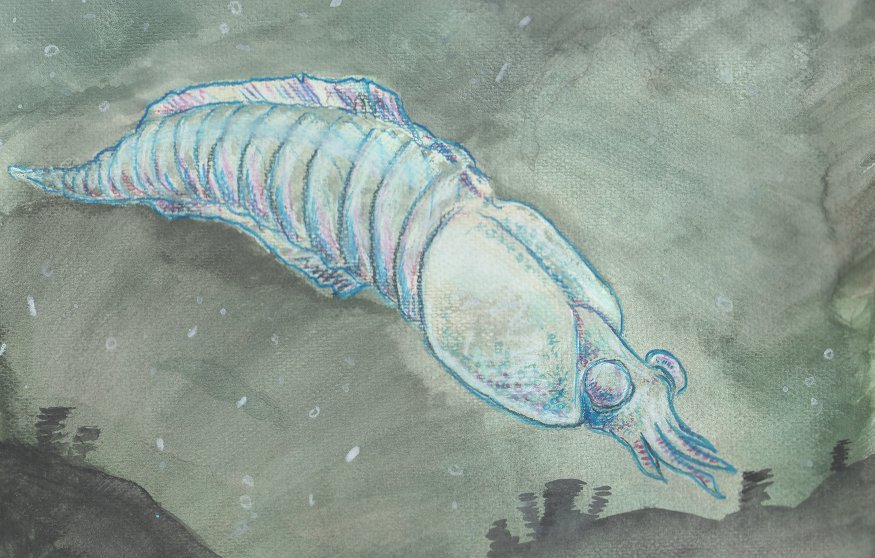
The physical appearance of Aysheaia was that of a robust, caterpillar-like organism, with a soft, unarmored body that typically ranged from one to six centimeters in length. Its body was cylindrical and annulated, showing faint, ring-like divisions that suggest a form of superficial segmentation, though it lacked the hardened exoskeleton, or cuticle, characteristic of true arthropods. It possessed ten pairs of stubby, conical limbs known as lobopods, which were fleshy, unjointed extensions of the body wall. These limbs were also annulated and terminated in a set of small, curved claws, likely used for gripping surfaces. The overall body plan bears a striking resemblance to modern onychophorans, or velvet worms, a comparison that has been central to understanding its evolutionary position. At the anterior end of the body, Aysheaia featured a pair of specialized appendages that were more slender and elongated than the walking lobopods. These frontal limbs were equipped with prominent spines, with some reconstructions showing up to six spines per appendage, suggesting they were adapted for grasping, defense, or manipulating food. The mouth was located terminally at the very front of the body, a primitive feature among panarthropods, and was surrounded by a ring of small, finger-like papillae. Unlike many of its arthropod relatives, Aysheaia lacked distinct eyes or a well-defined head capsule, indicating it may have relied on tactile and chemical senses to navigate its environment.
The paleobiology of Aysheaia has been inferred primarily from its unique anatomy and its consistent fossil association with other organisms. It is widely interpreted as a carnivorous or scavenging animal. Its specialized, spiny anterior appendages were likely used to grasp prey or anchor itself while feeding. The terminal mouth, equipped with papillae, could have been used to tear or suck tissues from its food source. Locomotion was achieved through the coordinated movement of its ten pairs of lobopods. While these limbs were not jointed like those of arthropods, muscular action would have allowed them to be extended and retracted, enabling a slow, crawling or inching movement across the seafloor or over other organisms. The claws at the tip of each lobopod would have provided excellent traction, particularly on the surfaces of sponges, with which Aysheaia fossils are very frequently found. This association is so strong that it forms the basis of the leading hypothesis about its lifestyle: that Aysheaia was a specialized sponge predator or an epibiont that lived upon and consumed sponge colonies. It would have used its claws to cling securely to the sponge's exterior, resisting water currents, while using its spiny frontal limbs to tear away at the sponge's tissues. This ecological specialization would have provided both a food source and a refuge from larger predators roaming the Cambrian seafloor.
Aysheaia lived in a temperate marine environment on a submerged continental shelf off the coast of the ancient continent of Laurentia. The Burgess Shale fauna inhabited a deep-water basin at the base of a massive submarine cliff, known as the Cathedral Escarpment. Periodic mudslides would rapidly entomb the local benthic community, leading to the exceptional soft-tissue preservation for which the site is famous. The ecosystem was incredibly diverse, representing one of the earliest complex animal communities known. Aysheaia shared its habitat with a wide array of now-extinct creatures, including the formidable apex predator Anomalocaris, various trilobites such as Olenoides, the five-eyed Opabinia, the bizarre Hallucigenia, and numerous species of sponges like Vauxia and Pirania. Within this intricate food web, Aysheaia occupied the role of a secondary consumer or a specialized predator. Its close association with sponge remains suggests it was a primary consumer of these sessile filter-feeders. In turn, its soft, unarmored body would have made it vulnerable to predation from larger, more mobile carnivores like Anomalocaris or the arthropod Sidneyia, forcing it to seek shelter among the sponge colonies it fed upon. This ecological niche highlights the complex interactions and predator-prey dynamics that had already evolved by the Middle Cambrian.
The discovery of Aysheaia is intrinsically linked to the pioneering work of American paleontologist Charles Doolittle Walcott. During his systematic excavations of the Burgess Shale in the Canadian Rockies, Walcott unearthed the first specimens of this unusual creature in 1911. He formally named the species Aysheaia pedunculata, deriving the genus name from "Aysha," the name of a nearby mountain peak (now named Mount Stephen), and the species name "pedunculata" from the Latin for "stalked," possibly referring to its leg-like appendages. Walcott initially recognized its unique, worm-like anatomy but struggled to place it within existing animal phyla, tentatively classifying it as an annelid worm. His initial descriptions, published in the Smithsonian Miscellaneous Collections, laid the groundwork for all future study. The holotype specimen, USNM 57657, housed at the Smithsonian National Museum of Natural History, remains a key reference. For decades, Aysheaia was viewed as an evolutionary puzzle, but the comprehensive re-examination of the Burgess Shale fauna, initiated in the 1970s by a team from Cambridge University led by Harry B. Whittington, Simon Conway Morris, and Derek Briggs, revolutionized its interpretation. It was during this period that its profound similarities to modern onychophorans were fully appreciated, recasting Aysheaia not as a strange worm, but as a crucial early member of the panarthropod lineage.
The evolutionary significance of Aysheaia cannot be overstated. It serves as a classic example of a "transitional" or, more accurately, a "stem-group" fossil, providing a tangible look at the morphology of early panarthropods before the lineage split into the three major modern phyla: Arthropoda, Onychophora, and Tardigrada. Its combination of features—a soft, segmented body, unjointed lobopod limbs with claws, and specialized frontal appendages—illuminates the probable body plan of the last common ancestor of this superphylum. Aysheaia and its fellow lobopodians demonstrate that fleshy, non-jointed limbs preceded the hardened, jointed appendages of arthropods. Its terminal mouth is a primitive trait compared to the ventral mouth seen in most modern onychophorans and arthropods. For many years, Aysheaia was considered a direct ancestor of onychophorans due to their striking resemblance. However, more recent phylogenetic analyses place it in a more basal position, as a stem-group onychophoran or even a stem-panarthropod, representing an early evolutionary experiment in legged, worm-like body forms. Its anatomy provides critical data points for calibrating molecular clocks and for understanding the step-by-step assembly of the arthropod body plan, one of the most successful designs in the history of life.
Despite being a well-studied fossil, Aysheaia has been at the center of several scientific debates. Its precise placement within the panarthropod family tree remains a subject of ongoing research. While early studies by researchers like Harry Whittington strongly allied it with onychophorans, some later cladistic analyses have suggested it may be more basal, branching off before the split between onychophorans and the lineage leading to arthropods and tardigrades. This debate hinges on the interpretation of subtle anatomical features and the coding of these characters for phylogenetic analysis. Another area of discussion involves its feeding behavior. The sponge-predation hypothesis, championed by Simon Conway Morris, is widely accepted due to the strong fossil association. However, some researchers have proposed alternative or supplementary roles, suggesting it might have been a more generalist scavenger or that its spiny appendages could have been used for defense against predators rather than exclusively for feeding. The function of the terminal mouth papillae is also debated, with interpretations ranging from sensory organs to structures for gripping or rasping food. These ongoing discussions highlight how new analytical methods continue to refine our understanding of even the most classic Cambrian fossils.
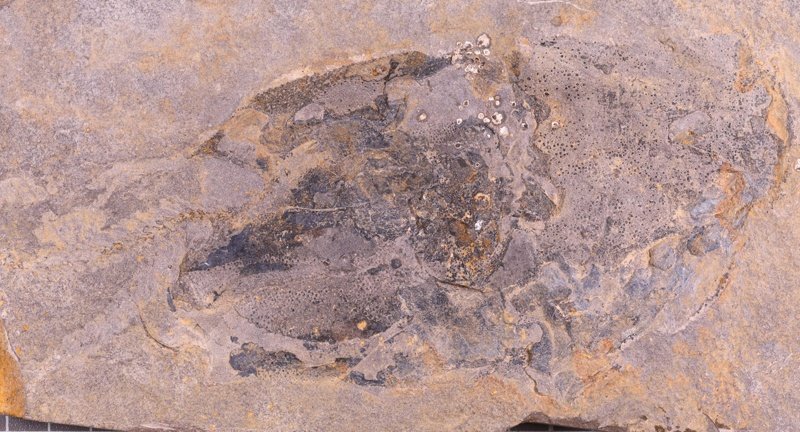
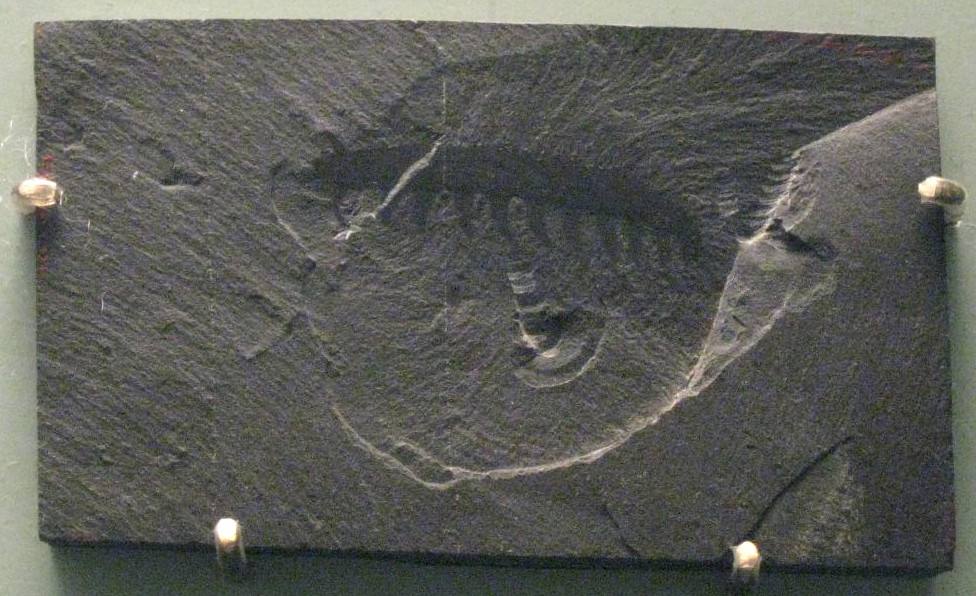
The fossil record of Aysheaia is geographically restricted but locally abundant, making it a cornerstone for understanding Cambrian ecosystems. To date, all confirmed specimens of Aysheaia pedunculata have been recovered from the Stephen Formation's Burgess Shale locality in British Columbia, Canada. Over one hundred specimens have been collected from the Walcott Quarry and surrounding sites, providing a robust sample size for morphological and statistical studies. The quality of preservation is often extraordinary, falling under the category of "Burgess Shale-type preservation." This process involved rapid burial in anoxic mud, which inhibited decay and allowed for the fossilization of not just hard parts, but also soft tissues like the body wall, gut tract, and musculature of the limbs. This exceptional detail allows paleontologists to reconstruct its internal and external anatomy with a high degree of confidence. While Aysheaia itself is known only from Canada, related lobopodians have been discovered in other Cambrian fossil deposits around the world, such as the Chengjiang biota in China (e.g., Luolishania, Microdictyon), demonstrating that this group of animals had a global distribution during the Cambrian period.
Due to its bizarre yet recognizable form and its importance in the story of evolution, Aysheaia has achieved a notable cultural impact beyond paleontological circles. It is frequently featured in museum exhibits on the Cambrian Explosion, with fossil casts and life-like reconstructions appearing in institutions like the Smithsonian National Museum of Natural History in Washington, D.C., and the Royal Tyrrell Museum of Palaeontology in Alberta, Canada. Aysheaia often appears in popular science books and television documentaries, such as the BBC's "Walking with Monsters," where it is depicted as a key inhabitant of the Cambrian seas. Its role as a "velvet worm ancestor" makes it an accessible and compelling example for teaching evolutionary concepts, illustrating the deep history of familiar animal body plans and the remarkable preservation of life from over half a billion years ago.
Classification
Time Period
Discovery
Location
Burgess Shale, British Columbia, Canada
Formation
Burgess Shale
Frequently Asked Questions
What is Aysheaia?
Aysheaia pedunculata is a remarkable extinct animal that inhabited the marine ecosystems of the Middle Cambrian period, approximately 505 million years ago. As one of the most iconic and well-studied members of the extinct lobopodians, or 'legged worms', its exquisitely preserved fossils from the Bu...
When did Aysheaia live?
Aysheaia lived during the cambrian period of the paleozoic era approximately 505 million years ago.
Where was Aysheaia discovered?
Fossils of Aysheaia were discovered in Burgess Shale, British Columbia, Canada in the Burgess Shale.
What did Aysheaia eat?
Aysheaia was a carnivore. It lived in marine habitats.
What type of fossil is Aysheaia?
Aysheaia is preserved as a carbonized fossil. The preservation quality is exceptional.
Related Specimens
From the paleozoic era · carbonized fossils