Brachiosaurus
Brachiosaurus altithorax
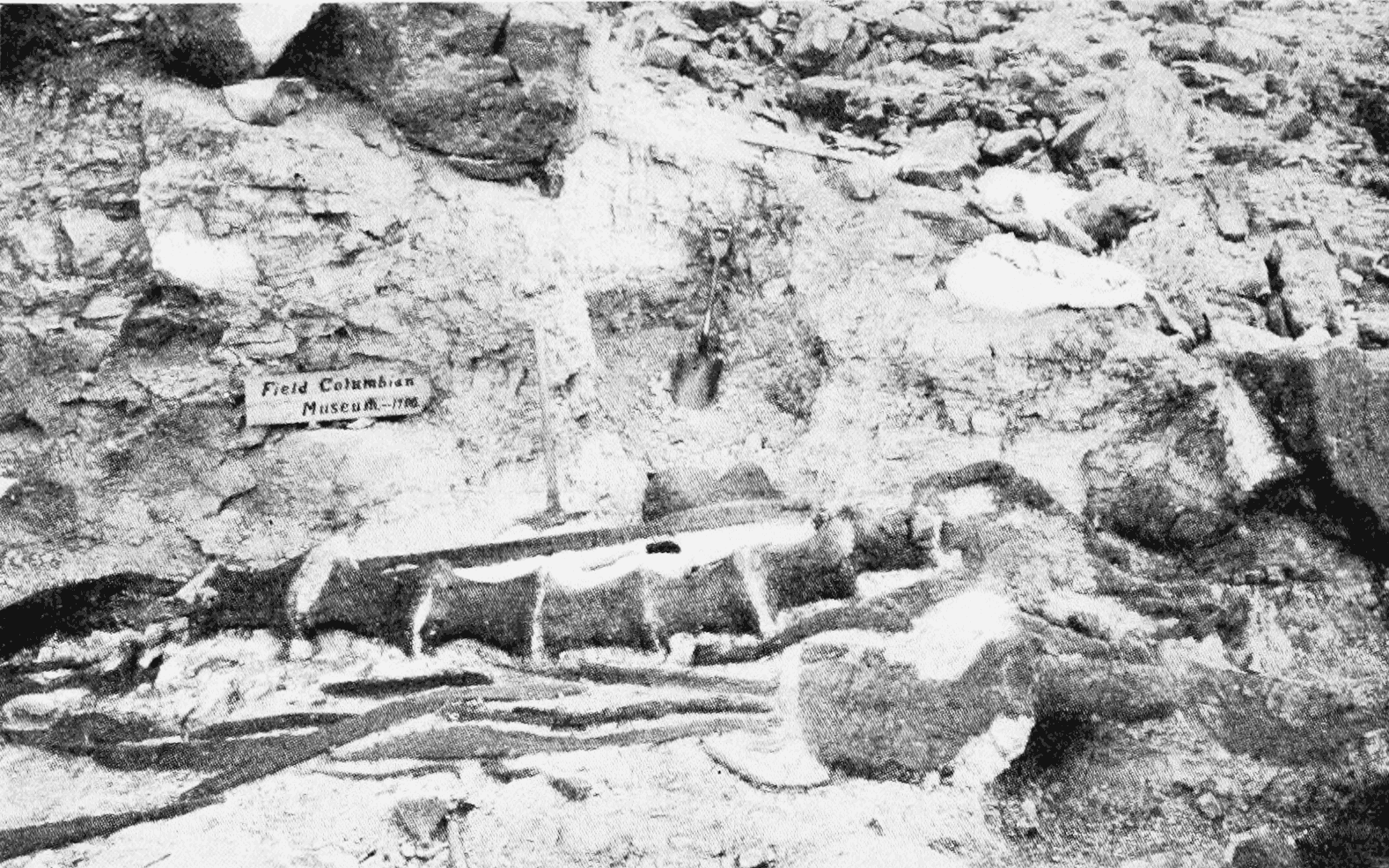
Image: File:PSM V67 D572 Fossil bones of the great brachiosaurus altithorax.png - Wikimedia Commons (CC BY-SA)
About Brachiosaurus
Brachiosaurus altithorax, translating to arm lizard with a deep chest, is one of the most iconic and recognizable dinosaurs of the Late Jurassic period, having lived approximately 154 to 153 million years ago. It was a colossal terrestrial herbivore that inhabited the vast, ancient floodplains of what is now the Morrison Formation in Colorado, United States. This magnificent creature stands as a profound testament to the extreme anatomical adaptations and unprecedented gigantism achieved by sauropod dinosaurs during the Mesozoic Era, representing a pinnacle of biological engineering in the history of life on Earth.
The physical description of Brachiosaurus reveals an animal of staggering proportions and highly specialized anatomy that set it apart from the vast majority of its sauropod contemporaries. Reaching estimated lengths of up to 2600 centimeters, or 26 meters, and weighing anywhere between 28 and 43 metric tons depending on the specific volumetric or allometric estimation methods used by paleontologists, it was a truly colossal terrestrial animal. Unlike most other sauropods, such as the diplodocids, which featured a relatively horizontal posture with the hips positioned higher than or level with the shoulders, Brachiosaurus possessed unusually long forelimbs compared to its hindlimbs. The humerus, or upper arm bone, was massive and elongated, measuring over two meters in length in adult specimens. This unique anatomical adaptation resulted in a steeply inclined trunk and a towering, giraffe-like posture. The chest was remarkably deep, housing massive lungs and a powerful heart necessary to sustain its massive bulk. The neck of Brachiosaurus was incredibly long, composed of elongated cervical vertebrae that were heavily pneumatized, meaning they contained extensive air sacs connected to the respiratory system. These air sacs significantly reduced the weight of the neck while maintaining structural integrity, a feature shared with modern birds. The skull, though rarely preserved in the fossil record for the North American species, is inferred to have been relatively robust with a high, vaulted snout and spoon-shaped teeth perfectly adapted for cropping vegetation. The overall silhouette of Brachiosaurus, with its sloping back, towering neck, and pillar-like legs, makes it one of the most visually distinct dinosaurs, functionally converging on the body plan of the modern giraffe but scaled up to an unimaginable magnitude.
In terms of paleobiology, Brachiosaurus was an obligate herbivore with a highly specialized feeding strategy that capitalized on its unique physical stature. Its towering posture allowed it to function as a high-level browser, reaching vegetation in the upper canopy of the Jurassic forests that was entirely inaccessible to lower-slung herbivores. The diet of Brachiosaurus consisted primarily of tough, fibrous plant material, including the foliage of conifers, ginkgos, cycads, and tree ferns. Because sauropods lacked the complex dental batteries required to chew and process food in the mouth, Brachiosaurus would have used its robust, chisel-like teeth to strip leaves and needles directly from branches, swallowing the plant matter whole. Digestion relied on a massive, fermenting gut vat, where symbiotic bacteria broke down the cellulose over several days. The biomechanics of Brachiosaurus have been a subject of intense study, particularly regarding the cardiovascular requirements of pumping blood up a neck that could reach heights of over 13 meters above the ground. It is estimated that the heart of Brachiosaurus would have had to be exceptionally large and powerful, possibly weighing up to 400 kilograms, to generate the immense blood pressure required to overcome gravity and supply the brain with oxygen. Locomotion was strictly quadrupedal and graviportal; the animal moved at a relatively slow, deliberate pace, supported by massive, columnar limbs equipped with fleshy foot pads to distribute its enormous weight. Growth patterns inferred from bone histology suggest that, like many other dinosaurs, Brachiosaurus grew at an astonishingly rapid rate during its youth, reaching its massive adult size in just a few decades, a strategy likely driven by the need to outgrow the vulnerability to predation.
The ecological context of Brachiosaurus places it within the Morrison Formation, a vast sequence of Upper Jurassic sedimentary rock that covered much of the western United States. During the Kimmeridgian and Tithonian ages, this region was characterized by a semi-arid climate with distinct wet and dry seasons. The landscape was a mosaic of expansive, fern-covered savannas intersected by lush gallery forests lining the banks of slow-moving rivers and shallow lakes. In this environment, Brachiosaurus co-existed with a diverse array of other iconic dinosaurs. The herbivorous guild was incredibly crowded, featuring heavily armored thyreophorans like Stegosaurus, small ornithopods like Camptosaurus, and a multitude of other sauropods including Diplodocus, Apatosaurus, and Camarasaurus. Brachiosaurus avoided direct competition with these contemporaries through strict ecological niche partitioning. While diplodocids swept their necks horizontally to graze on low-lying ferns and horsetails, and Camarasaurus browsed the mid-level foliage, Brachiosaurus monopolized the high canopy. This vertical stratification of food resources allowed the Morrison ecosystem to support a staggering biomass of megaherbivores. As an adult, the sheer size of Brachiosaurus likely rendered it entirely immune to predation. However, juveniles, sick, or elderly individuals would have been vulnerable to the apex predators of the time, such as the massive Allosaurus, the robust Torvosaurus, and the horned Ceratosaurus, all of which prowled the floodplains in search of prey.
The discovery history of Brachiosaurus is a fascinating chapter in the annals of American paleontology. The first fossils of this magnificent creature were discovered in the summer of 1900 by Elmer S. Riggs, an ambitious paleontologist working for the Field Columbian Museum, which is now the Field Museum of Natural History in Chicago. Riggs and his team were excavating in the Grand River Valley near Fruita, Colorado, a region rich in Morrison Formation exposures. The discovery site, later known as Riggs Quarry 13, yielded a partial postcranial skeleton that included the sacrum, several dorsal and caudal vertebrae, ribs, the coracoid, the ilium, a femur, and most notably, an exceptionally long humerus. It was this unusually elongated upper arm bone that immediately signaled to Riggs that he had found something entirely new to science. In 1903, Riggs formally described and named the type species Brachiosaurus altithorax. The genus name, derived from the Greek words brachion meaning arm and sauros meaning lizard, perfectly encapsulated the animal's most defining characteristic. The specific epithet, altithorax, translates to deep chest, referring to the massive and unusually deep ribcage. For decades, the holotype specimen, designated FMNH P 25107, remained the primary source of information for the genus. Riggs's meticulous excavation and subsequent publication challenged the prevailing views of sauropod anatomy, proving that not all giant long-necked dinosaurs shared the horizontal posture of Apatosaurus and Diplodocus.
The evolutionary significance of Brachiosaurus is profound, as it represents a highly specialized and successful branch of the sauropod family tree. Taxonomically, Brachiosaurus is a basal member of the Titanosauriformes, a diverse clade within the broader group known as Macronaria. The macronarians, characterized by their large nasal openings, diverged from the diplodocoids earlier in the Jurassic period. Brachiosaurus and its closest relatives, grouped within the family Brachiosauridae, represent a distinct evolutionary radiation that experimented with vertical neck feeding and forelimb elongation. This body plan was a significant evolutionary innovation that allowed them to exploit untouched ecological niches. Furthermore, the anatomical features seen in Brachiosaurus, such as the wide-gauge stance and the extensive pneumatization of the axial skeleton, are considered transitional traits that foreshadowed the evolutionary trajectory of the titanosaurs. The titanosaurs would eventually become the dominant group of sauropods globally during the subsequent Cretaceous period. By studying Brachiosaurus, paleontologists gain crucial insights into the evolutionary pathways that led to the largest terrestrial animals to ever walk the Earth, tracing the morphological changes that allowed these creatures to push the absolute biological limits of size and mass.
Despite its fame, Brachiosaurus has been the subject of numerous scientific debates and taxonomic revisions over the past century. The most significant of these controversies involves the relationship between the North American Brachiosaurus altithorax and a closely related African species. In the early 20th century, German paleontologist Werner Janensch led expeditions to the Tendaguru Formation in modern-day Tanzania, discovering spectacular, nearly complete skeletons of a brachiosaurid that he named Brachiosaurus brancai. Because the African material was far more complete, it became the global standard for what Brachiosaurus looked like, heavily influencing museum mounts and scientific illustrations. However, in 2009, paleontologist Michael Taylor published a detailed morphological analysis demonstrating that the African species possessed numerous anatomical differences from Riggs's North American holotype, particularly in the proportions of the vertebrae and the shape of the skull. Taylor successfully argued that the African material warranted its own genus, resurrecting the name Giraffatitan. This taxonomic split meant that true Brachiosaurus altithorax fossils were actually quite rare, and much of what was popularly known about the dinosaur was based on Giraffatitan. Other debates have centered on the placement of the animal's nostrils. Historically, the large nasal openings on the top of the skull led to the belief that Brachiosaurus had a trunk or used its nostrils as a snorkel in deep water. However, modern research by Lawrence Witmer in 2001 demonstrated that the fleshy nostrils were likely located near the front of the snout, dispelling the aquatic lifestyle myth and confirming Brachiosaurus as a fully terrestrial animal.
The fossil record of true Brachiosaurus altithorax remains surprisingly sparse, especially when compared to the abundant remains of other Morrison Formation sauropods like Camarasaurus and Diplodocus. The geographic distribution of confirmed Brachiosaurus fossils is primarily restricted to the western United States, with significant finds occurring in Colorado, Utah, and Wyoming. The holotype specimen discovered by Riggs in Colorado remains one of the most complete individuals ever found. Other notable discoveries include a massive humerus found in the Potter Creek quarry in western Colorado, and a partial skeleton unearthed in the Dry Mesa Quarry in Utah, which provided additional insights into the proportions of the limbs and the structure of the pelvic girdle. A famous skull found in the Felch Quarry in Colorado in 1883 was initially misidentified and later assigned to Brachiosaurus in 1998, providing a rare glimpse into the cranial anatomy of the North American genus, though even this assignment is occasionally debated. The preservation quality of Brachiosaurus fossils varies greatly; while limb bones and massive vertebrae often survive the fossilization process due to their sheer density, the delicate, highly pneumatized bones of the skull and cervical vertebrae are frequently crushed or destroyed. The rarity of Brachiosaurus in the Morrison Formation suggests that it may have preferred specific inland or drier habitats where fossilization potential was lower, or that it naturally existed at lower population densities than its contemporaries.
The cultural impact of Brachiosaurus is immeasurable, having captivated the scientific community and the public imagination for over a century. It is firmly entrenched as a symbol of prehistoric majesty and the sheer awe-inspiring scale of the dinosaur era. For decades, the towering skeletal mount at the Field Museum of Natural History in Chicago, and its replica at the O'Hare International Airport, served as the definitive image of a dinosaur for millions of visitors, even though these mounts were historically composites heavily reliant on Giraffatitan material. In popular culture, Brachiosaurus achieved unprecedented global fame through its appearance in the 1993 blockbuster film Jurassic Park. The iconic scene where the characters first encounter a towering, gentle giant rearing up on its hind legs to reach high branches cemented Brachiosaurus as a beloved cultural icon. Educationally, it remains a vital subject in museums and textbooks, used to teach concepts of biomechanics, paleoecology, and the evolutionary arms race between plants and herbivores. As a touchstone of paleontological wonder, Brachiosaurus continues to inspire new generations of scientists and enthusiasts, standing tall as one of the greatest triumphs of the natural world.
Classification
Time Period
Discovery
Location
Colorado, USA
Formation
Morrison Formation
Frequently Asked Questions
What is Brachiosaurus?
Brachiosaurus altithorax, translating to arm lizard with a deep chest, is one of the most iconic and recognizable dinosaurs of the Late Jurassic period, having lived approximately 154 to 153 million years ago. It was a colossal terrestrial herbivore that inhabited the vast, ancient floodplains of wh...
When did Brachiosaurus live?
Brachiosaurus lived during the jurassic period of the mesozoic era approximately 154-153 million years ago.
Where was Brachiosaurus discovered?
Fossils of Brachiosaurus were discovered in Colorado, USA in the Morrison Formation.
What did Brachiosaurus eat?
Brachiosaurus was a herbivore. It lived in terrestrial habitats.
What type of fossil is Brachiosaurus?
Brachiosaurus is preserved as a permineralized fossil. The preservation quality is good.
Related Specimens
From the mesozoic era · permineralized fossils