Castoroides
Castoroides ohioensis
Image: Image sourced via web search (Fair use / Educational)
About Castoroides
Castoroides ohioensis, commonly known as the giant beaver, represents one of the most fascinating and iconic members of the Pleistocene megafauna that once roamed the wetlands and waterways of North America. Living from approximately 1.8 million to about 10,000 years ago during the Quaternary period, this massive rodent was a prominent fixture of the Ice Age landscape. As the largest rodent to ever exist in North America, and one of the largest globally, Castoroides holds immense significance in the field of paleontology. It provides a crucial window into the evolutionary extremes of the rodent order and offers valuable insights into the ecological dynamics of Pleistocene wetland environments. The extinction of the giant beaver at the end of the last Ice Age, alongside other megafauna such as mastodons and saber-toothed cats, continues to be a subject of intense scientific study, helping researchers understand the complex interplay between climate change, habitat loss, and human expansion in prehistoric ecosystems.
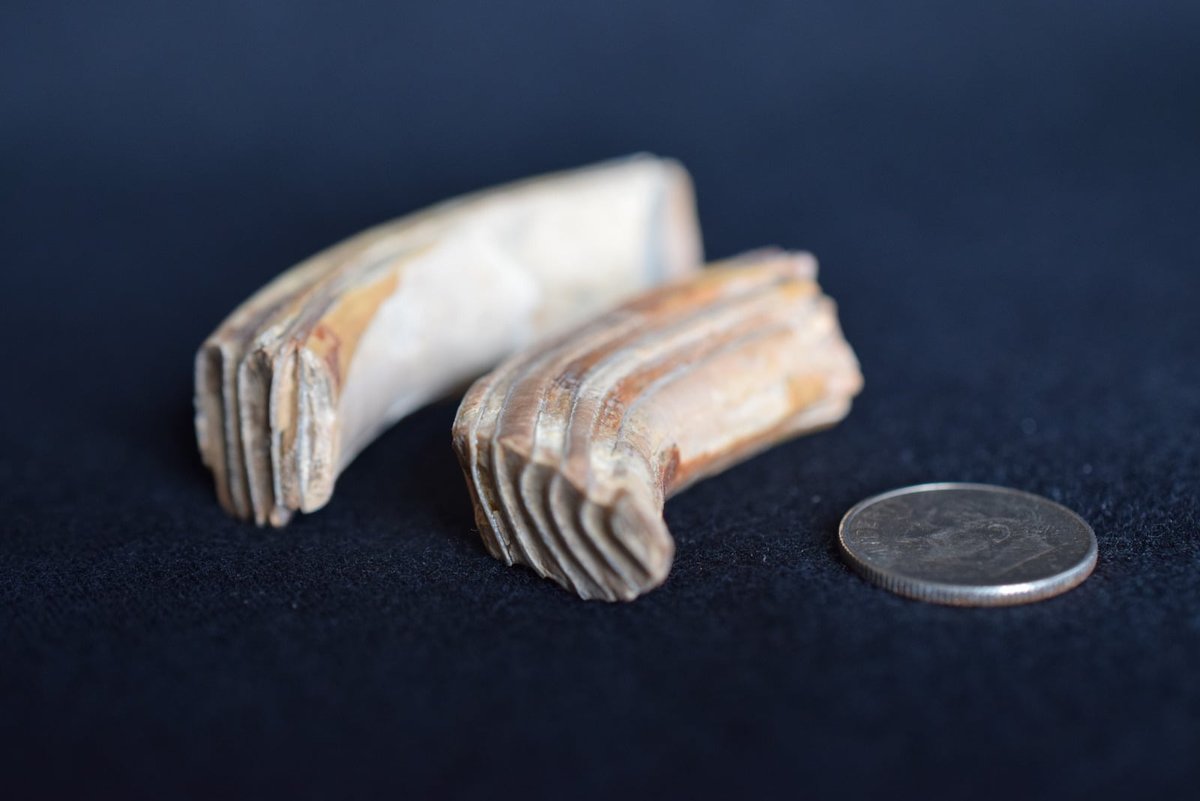
In terms of physical description, Castoroides ohioensis was a truly staggering creature, dwarfing its modern relatives. Estimates suggest that an adult giant beaver could reach lengths of up to 2.5 meters, or over 8 feet, from the tip of its snout to the end of its tail. Its weight is estimated to have been anywhere between 90 and 125 kilograms, making it roughly the size of a modern black bear. This is a stark contrast to the extant North American beaver, which typically weighs between 15 and 30 kilograms. The skeletal anatomy of Castoroides reveals several distinctive features that set it apart from modern beavers. Most notably, its incisors were massive, measuring up to 15 centimeters long. Unlike the smooth, chisel-like teeth of modern beavers, the incisors of Castoroides were heavily ridged and striated on the outer surface, and they grew in a more rounded, blunt shape. The skull was robust and elongated, with a proportionally smaller braincase. Post-cranial skeletal evidence indicates that its hind legs were relatively short but incredibly powerful, equipped with large, webbed feet for swimming. Interestingly, skeletal analysis of the caudal vertebrae suggests that the tail of the giant beaver was not the broad, flat, paddle-like structure seen in modern beavers. Instead, it was likely narrower, thicker, and more rounded, perhaps functioning more like a rudder than a propulsive paddle.
The paleobiology of Castoroides presents a fascinating departure from the behaviors typically associated with modern beavers. For decades, scientists assumed that the giant beaver, like its extant cousins, felled large trees and constructed massive dams and lodges. However, modern paleontological research, particularly stable isotope analysis of fossilized teeth, has fundamentally altered this view. Studies analyzing the carbon and nitrogen isotopes in Castoroides enamel indicate a diet consisting almost entirely of submerged and emergent aquatic macrophytes, such as pondweeds and water lilies, rather than the bark and cambium of terrestrial trees. Because they did not consume wood, it is highly unlikely that they possessed the instinct or the necessity to fell trees. Consequently, there is no geological or fossil evidence to suggest that Castoroides built dams or lodges. Instead, they likely lived in existing natural wetlands, lakes, and slow-moving rivers, perhaps constructing simple nests out of reeds and mud. Their locomotion was highly specialized for a semi-aquatic lifestyle; while they were powerful and graceful swimmers, their massive bulk and short limbs would have made them relatively clumsy and slow-moving on land. Their growth patterns, inferred from the continuous eruption of their massive incisors, suggest a relatively long lifespan for a rodent, with a metabolism adapted to the cold, nutrient-rich waters of Pleistocene North America.
The ecological context in which Castoroides lived was characterized by the dramatic climatic fluctuations of the Pleistocene epoch. This era was marked by advancing and retreating continental ice sheets, which continuously reshaped the geography and hydrology of North America. During interglacial periods, vast networks of lakes, bogs, and marshlands spread across the continent, creating the ideal habitat for the giant beaver. They shared these lush, temperate, and boreal wetland ecosystems with a diverse array of Pleistocene megafauna. Castoroides would have foraged alongside American mastodons, Jefferson's ground sloths, and stag-moose in the shallow waters. As a primary consumer of aquatic vegetation, the giant beaver played a significant role in its ecosystem, likely helping to keep waterways clear of choking plant growth and cycling nutrients through the wetland food web. Despite its massive size, Castoroides was not immune to predation. Young, sick, or terrestrial-bound individuals would have been vulnerable to formidable Ice Age predators, including dire wolves, American lions, and perhaps even the saber-toothed cat Smilodon, particularly when the beavers ventured onto land or when their wetland habitats shrank during periods of intense glaciation or drought.
The discovery history of Castoroides ohioensis dates back to the early 19th century, marking it as one of the earlier recognized extinct megafauna of North America. The first scientifically documented fossils were discovered in 1837 in a peat bog near Nashport, Ohio, by a man named S.R. Ward. These initial remains consisted of a partial skull and the characteristic ridged incisors. The specimens were subsequently examined by geologist J.W. Foster, who formally described and named the species Castoroides ohioensis in 1838, the specific epithet honoring the state of its discovery. Following this initial find, numerous other specimens were unearthed across the eastern and midwestern United States, particularly in regions that were once covered by extensive Pleistocene lakes and bogs. Notable discoveries include well-preserved skulls found in New York state and extensive post-cranial material recovered from the Sheriden Cave in Ohio and various sinkholes in Florida. While complete, articulated skeletons remain exceedingly rare, the abundance of isolated teeth and jaw fragments has allowed paleontologists to piece together a highly accurate picture of the animal's anatomy and distribution over the past century and a half.
The evolutionary significance of Castoroides lies in its position within the broader family tree of the Castoridae. The giant beaver is not a direct ancestor of the modern North American beaver (Castor canadensis). Instead, it belongs to an entirely different, extinct subfamily known as the Castoroidinae, which diverged from the lineage leading to modern beavers millions of years ago during the Miocene epoch. This divergence highlights a remarkable instance of evolutionary radiation within the rodent order. While the Castor lineage evolved towards the highly specialized, wood-eating, dam-building niche we see today, the Castoroidinae lineage evolved towards massive body size and a diet strictly focused on soft aquatic vegetation. The existence of Castoroides demonstrates that the semi-aquatic rodent body plan can be scaled up to megafaunal proportions under the right environmental conditions. Its eventual extinction at the end of the Pleistocene, alongside the survival of the smaller, more adaptable Castor, provides a classic evolutionary case study in how extreme specialization can become a fatal liability when environments change rapidly.
Scientific debates surrounding Castoroides have evolved significantly over the decades, primarily driven by advances in analytical techniques. The most prominent historical controversy centered on the animal's behavior: did the giant beaver build giant dams? Early 20th-century paleontologists often assumed they did, extrapolating from modern beaver behavior. However, the lack of fossilized giant beaver lodges and the recent isotopic dietary evidence have largely settled this debate, leading to a scientific consensus that they were non-dam-building aquatic grazers. Currently, the most active debate concerns the precise cause of their extinction. Like many Pleistocene megafauna, Castoroides disappeared around 10,000 years ago. Some researchers argue that rapid climate change at the end of the Last Glacial Maximum, which caused the widespread drying of their vital wetland habitats, was the primary driver. Others suggest that the arrival of Paleo-Indians in North America played a crucial role, either through direct hunting or through human-induced environmental changes. Most modern paleontologists lean towards a synergistic model, where climate-induced habitat fragmentation severely weakened the population, making them highly susceptible to the added pressure of human hunting.
The fossil record of Castoroides is relatively robust compared to some other Pleistocene mammals, though it is heavily biased towards specific geographical regions and skeletal elements. Fossils are most abundantly found in the Great Lakes region of the United States and Canada, particularly in Ohio, Indiana, Illinois, and southern Ontario. Another significant concentration of fossils has been found in the Pleistocene deposits of Florida, indicating that the species had a wide latitudinal range. Because they lived and died in aquatic environments, their remains were often quickly buried in anoxic mud and peat, leading to good preservation quality. The most commonly preserved parts are the massive, durable incisors, lower jaws, and robust cranial fragments. Complete skulls are less common but well-documented, while fully articulated post-cranial skeletons are exceptionally rare. Famous fossil sites yielding Castoroides remains include the Old Crow Basin in the Yukon, which provides evidence of their northernmost range, and various submerged sinkholes in Florida, which have yielded beautifully preserved, albeit isolated, bones.
The cultural impact of the giant beaver extends far beyond the walls of natural history museums, deeply permeating the folklore and mythology of Indigenous peoples of North America. Long before Western scientists discovered Castoroides fossils, Algonquian and Iroquoian oral traditions featured prominent stories of giant beavers. For instance, in the mythology of the Mi'kmaq and Maliseet peoples, the cultural hero Glooscap is said to have battled massive beavers that created huge lakes by damming rivers; the geological formations left behind by these battles are still pointed out today. The Pocumtuck ridge in Massachusetts is traditionally viewed as the petrified remains of a giant beaver killed by a spirit. Today, Castoroides remains a popular subject in paleontology exhibits. Notable displays can be found at the Field Museum in Chicago and the Ohio History Center, where life-sized reconstructions and fossil mounts capture the public's imagination. The giant beaver serves as an excellent educational tool, illustrating the dramatic changes in Earth's recent geological past and highlighting the rich, lost biodiversity of the North American continent.
Classification
Time Period
Discovery
Location
Ohio, United States
Formation
Various Pleistocene deposits
Frequently Asked Questions
What is Castoroides?
Castoroides ohioensis, commonly known as the giant beaver, represents one of the most fascinating and iconic members of the Pleistocene megafauna that once roamed the wetlands and waterways of North America. Living from approximately 1.8 million to about 10,000 years ago during the Quaternary period...
When did Castoroides live?
Castoroides lived during the quaternary period of the cenozoic era approximately 1.8-0.01 million years ago.
Where was Castoroides discovered?
Fossils of Castoroides were discovered in Ohio, United States in the Various Pleistocene deposits.
What did Castoroides eat?
Castoroides was a herbivore. It lived in semi-aquatic habitats.
What type of fossil is Castoroides?
Castoroides is preserved as a body fossil. The preservation quality is good.
Related Specimens
From the cenozoic era · body fossils