Titanoboa
Titanoboa cerrejonensis
About Titanoboa
Titanoboa cerrejonensis represents one of the most astonishing discoveries in the history of paleontology, a colossal snake that slithered through the sweltering rainforests of South America long after the dinosaurs had vanished. As the largest known snake to have ever existed, its discovery fundamentally reshaped our understanding of the limits of reptilian growth and the climatic conditions of the Paleocene epoch. This immense predator lived approximately 58 to 60 million years ago in what is now the Cerrejón region of northeastern Colombia, a testament to a world far warmer and more biologically exuberant than our own.
The sheer scale of Titanoboa is difficult to comprehend, far surpassing any living snake. Based on the size of its fossilized vertebrae, paleontologists have estimated its total body length to be between 12.8 and 14.3 meters (approximately 42 to 47 feet), with the most commonly cited figure being around 13 meters. Its estimated weight was equally staggering, likely exceeding 1,135 kilograms (about 1.25 short tons or 2,500 pounds). At its thickest point, its body would have been nearly a meter in diameter, wide enough to reach a person's waist. In comparison, the modern green anaconda, one of the world's largest extant snakes, rarely exceeds 7.5 meters and 250 kilograms. The vertebrae of Titanoboa are robust and distinctively shaped, providing the structural support necessary for such a massive frame. Its skull, though incompletely known from fragmentary fossils, is inferred to have been proportionally large, equipped with powerful jaws capable of engulfing substantial prey. Unlike some modern constrictors, its anatomy suggests a creature built not for arboreal life but for a primarily aquatic or semi-aquatic existence, its immense bulk supported by the buoyancy of water.
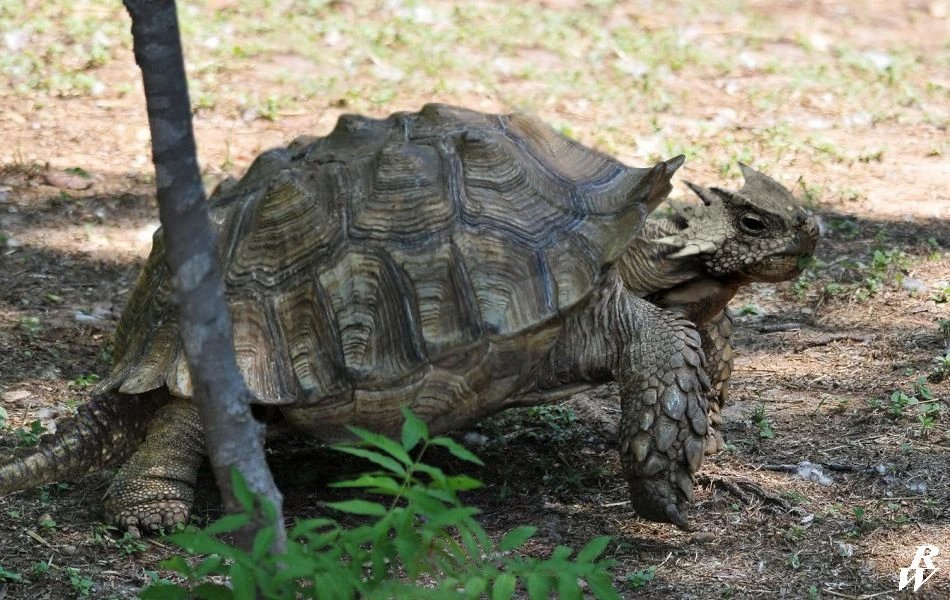
The paleobiology of Titanoboa reveals a creature perfectly adapted to its role as an apex predator in a hot, wet world. Its diet was carnivorous, and its immense size dictated the type of prey it could consume. Fossil evidence from the Cerrejón Formation, including bite-marked turtle shells and the remains of large crocodyliforms like Acherontisuchus and Cerrejonisuchus, strongly suggests these animals were regular parts of its diet. It was likely an ambush predator, using the murky, sediment-rich waters of its riverine and swamp habitat for concealment. Like modern anacondas, it would have waited, submerged and patient, for unsuspecting prey to approach the water's edge before launching a swift and powerful strike. While it was a constrictor, its primary feeding strategy for large prey may have involved drowning them or crushing them with the initial strike and immense pressure of its jaws and body. Its locomotion on land would have been slow and laborious due to its great weight, but in the water, it would have been a graceful and formidable swimmer, propelling its massive body with powerful, serpentine undulations. Its metabolism, like that of modern ectotherms, was directly linked to the ambient temperature, a factor that enabled it to achieve such a gigantic size.
Titanoboa inhabited a world vastly different from modern South America. During the middle Paleocene, about 5 to 8 million years after the Cretaceous-Paleogene extinction event, the Earth was experiencing a period of intense greenhouse conditions. The Cerrejón region was a sprawling, coastal neotropical rainforest, characterized by vast, slow-moving river systems, swamps, and floodplains. Global average temperatures were significantly higher than today, and this tropical ecosystem likely experienced mean annual temperatures between 30 and 34 degrees Celsius (86 to 93 degrees Fahrenheit). This extreme heat was crucial, as the body size of large ectothermic reptiles is constrained by ambient temperature; only in such a warm climate could a cold-blooded animal like Titanoboa maintain the necessary metabolic rate to sustain its colossal proportions. It shared this lush environment with a rich megafauna, including giant freshwater turtles like Carbonemys and Puentemys, and multiple species of dyrosaurid crocodyliforms. Titanoboa sat firmly at the top of this freshwater food web, an undisputed apex predator with no natural enemies in its adult stage, shaping the ecological dynamics of its ancient riverine world.
The discovery of this prehistoric giant is a relatively recent chapter in paleontology, intrinsically linked to the massive Cerrejón coal mine in La Guajira, Colombia, one of the largest open-pit mines in the world. For decades, miners had unearthed fossil leaves and other plant remains, but it was in the early 2000s that larger vertebrate fossils began to attract scientific attention. In 2002, a Colombian geology student, Jonathon Bloch, who was then a doctoral candidate at the University of Florida, and Carlos Jaramillo, a paleontologist from the Smithsonian Tropical Research Institute, initiated a systematic expedition to the mine. They were initially searching for fossil plants to understand the ancient rainforest ecosystem. During their fieldwork, they came across unusually large vertebrae that were first mistaken for those of a crocodile. However, after careful examination by Jason Head, a vertebrate paleontologist at the University of Toronto, the fossils were correctly identified as belonging to a snake of unprecedented size. The formal description of the new genus and species, Titanoboa cerrejonensis, was published in the journal Nature in 2009. The name itself is a portmanteau, combining "Titan" from Greek mythology with "Boa," referencing its relationship to modern boa constrictors, while "cerrejonensis" honors the Cerrejón mine where it was found.
Titanoboa's position in the evolutionary tree of life places it within the family Boidae, which includes modern boas and anacondas. Specifically, it is classified within the subfamily Boinae, making it a close relative of extant South American constrictors. Its discovery provided a crucial anchor point for understanding the diversification of these snakes in the aftermath of the K-Pg extinction. The existence of such a massive boid in the Paleocene of South America supports the hypothesis that the continent was a key center for the evolution and radiation of this group. Titanoboa does not represent a transitional form in the sense of linking major groups, but it serves as a spectacular example of evolutionary gigantism within a specific lineage. Its anatomy confirms that the fundamental body plan of large constrictors was well-established by 60 million years ago. Furthermore, its immense size has been used as a "paleothermometer," providing critical evidence for the high ambient temperatures of the Paleocene tropics, a finding that has significant implications for climate modeling and understanding the biological consequences of global warming.
Despite its sensational status, Titanoboa is not without scientific debates. One of the primary controversies revolves around its precise feeding behavior and ecological niche. While the consensus points to a semi-aquatic, anaconda-like ambush predator, some researchers have proposed alternative hypotheses. One early suggestion, based on the structure of its teeth and jaw, posited that Titanoboa might have been a specialized piscivore, preying primarily on the large lungfish that coexisted with it. However, subsequent analysis and the discovery of associated crocodyliform and turtle fossils have largely shifted the consensus back toward a more generalized diet of large vertebrates. Another area of discussion concerns the exact temperature estimates derived from its body size. While the initial calculations by Jason Head and his colleagues suggested a very high mean annual temperature, some climate modelers have argued that other factors could have allowed for such gigantism at slightly lower temperatures, though the general conclusion that the Paleocene tropics were exceptionally hot remains widely accepted. The precise taxonomic relationship of Titanoboa to other boine snakes is also a subject of ongoing phylogenetic analysis as more material is studied.
The fossil record of Titanoboa cerrejonensis is, to date, exclusively confined to the Cerrejón Formation in Colombia. This remarkable fossil site has yielded the remains of at least 28 individual snakes, making it a significant fossil assemblage for a single vertebrate species. The fossils consist primarily of vertebrae, which are the most robust and commonly preserved parts of a snake's skeleton, along with some rib fragments. Crucially, fragmentary cranial material, including parts of the maxilla and quadrate bones, has also been recovered, providing vital clues about its head structure and feeding mechanics. The preservation quality of the fossils is generally good, allowing for detailed anatomical study and size reconstruction. The concentration of so many individuals in one location suggests that the ancient river system was a prime habitat for the species. The Cerrejón mine continues to be an active site of paleontological research, holding the promise that a more complete skeleton, particularly a complete skull, might one day be unearthed, which would resolve many of the remaining questions about this incredible animal.
Since its unveiling to the world, Titanoboa has captured the public imagination in a way few fossil animals have. Its mind-boggling size and status as the "king" of snakes have made it a star attraction in museum exhibits worldwide. The Smithsonian National Museum of Natural History famously hosted a traveling exhibition featuring a life-sized, scientifically accurate model of the colossal snake, often depicted in the act of swallowing a crocodile. This powerful visual has been instrumental in conveying the scale of prehistoric life to the public. Titanoboa has also slithered into popular culture, appearing in documentaries, television shows, video games, and even a B-movie, cementing its place as an icon of prehistoric megafauna. Its discovery serves as a powerful educational tool, illustrating key concepts in evolution, paleoclimatology, and the interconnectedness of life and the environment.
Time Period
Discovery
Location
Cerrejón coal mine, La Guajira, Colombia
Formation
Cerrejón Formation
Frequently Asked Questions
What is Titanoboa?
Titanoboa cerrejonensis represents one of the most astonishing discoveries in the history of paleontology, a colossal snake that slithered through the sweltering rainforests of South America long after the dinosaurs had vanished. As the largest known snake to have ever existed, its discovery fundame...
When did Titanoboa live?
Titanoboa lived during the paleogene period of the cenozoic era approximately 58-60 million years ago.
Where was Titanoboa discovered?
Fossils of Titanoboa were discovered in Cerrejón coal mine, La Guajira, Colombia in the Cerrejón Formation.
What did Titanoboa eat?
Titanoboa was a carnivore (piscivore, crocodyliforms, turtles). It lived in tropical rainforest, freshwater swamps/rivers habitats.
Related Specimens
From the cenozoic era