Ceratosaurus
Ceratosaurus nasicornis
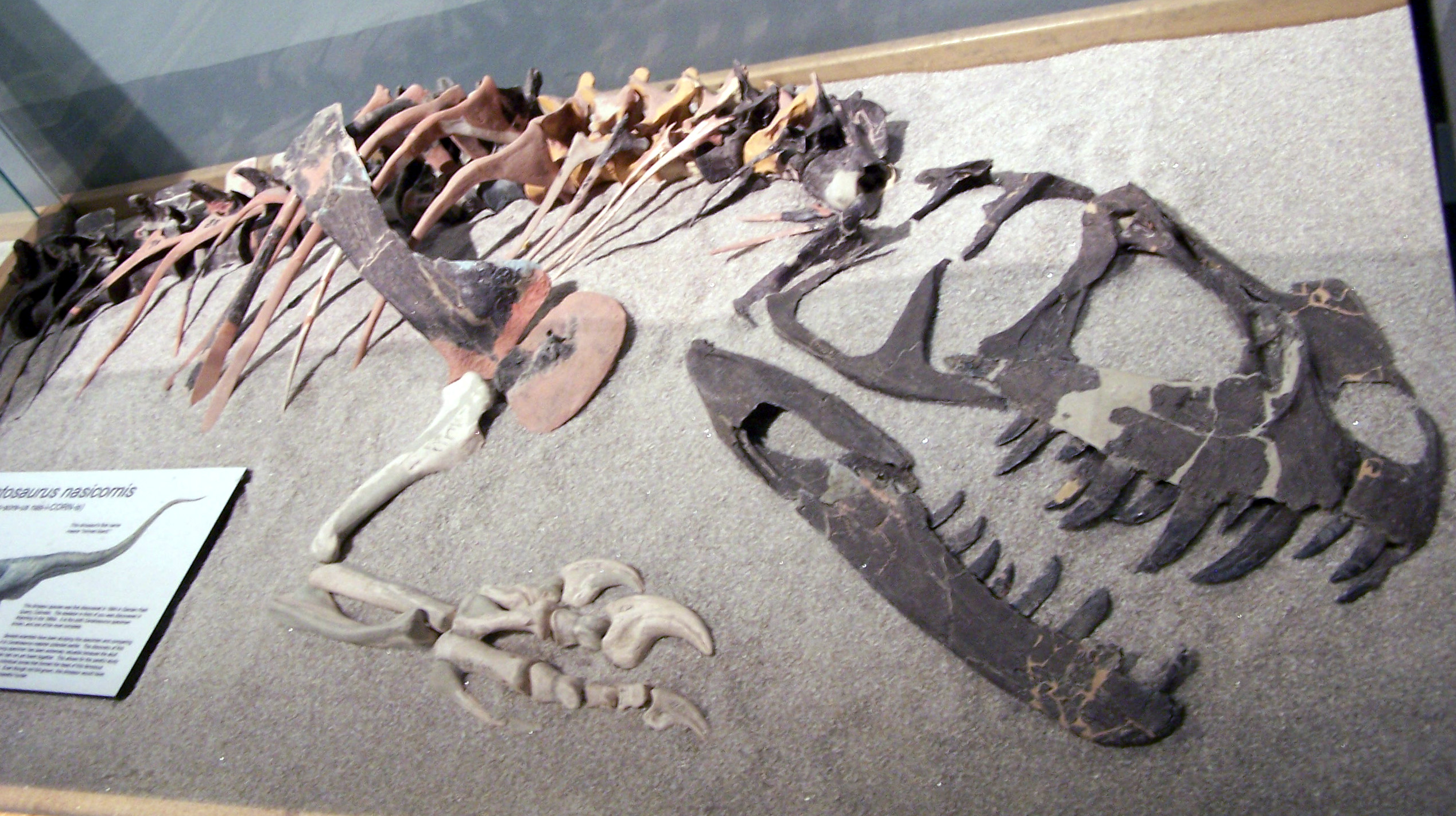
Image: File:Ceratosaurus nasicornis (partial fossil).jpg - Wikimedia Commons (CC BY-SA)
About Ceratosaurus
Ceratosaurus nasicornis was a formidable medium-to-large theropod dinosaur that inhabited the terrestrial ecosystems of North America during the Late Jurassic period, approximately 153 to 148 million years ago. Recognized instantly by the prominent blade-like horn on its snout and the unusual bony armor running down its back, this predator represents a crucial basal lineage in the evolutionary history of theropod dinosaurs. Its fossil remains, primarily recovered from the famous Morrison Formation of Colorado, provide invaluable insights into the complex ecological dynamics and evolutionary radiation of Mesozoic carnivores.
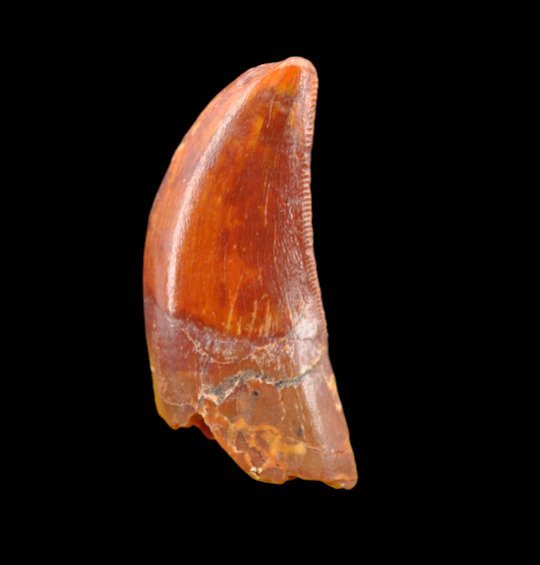
The physical anatomy of Ceratosaurus nasicornis presents a fascinating blend of primitive theropod characteristics and highly specialized adaptations. Measuring approximately 600 centimeters, or nearly twenty feet in length, and weighing an estimated five hundred to one thousand kilograms, it was a robustly built bipedal predator. The most striking feature of its skull was the prominent, laterally compressed horn positioned on the midline of its snout, formed by the fusion of the nasal bones. This central horn was complemented by a pair of smaller, horn-like ridges situated above the eyes, formed by the lacrimal bones. The skull itself was relatively large and deep, housing exceptionally long, blade-like teeth that were proportionately larger than those of almost any other theropod of its time. In fact, the upper teeth were so elongated that they extended well past the lower margin of the mandible when the jaws were closed. Postcranially, Ceratosaurus exhibited several unique traits. Unlike more derived theropods that typically possessed three-fingered hands, Ceratosaurus retained a primitive four-digit configuration on its relatively short but powerful forelimbs. Its hind limbs were heavily muscled and built for strong, sustained bursts of speed. Perhaps the most unusual feature of its postcranial skeleton was the presence of a row of small osteoderms, or bony armor plates, running down the midline of its neck, back, and tail. This dermal armor is exceedingly rare among theropod dinosaurs and gives Ceratosaurus a somewhat crocodilian appearance. The tail was deep and highly flexible, supported by elongated chevron bones, which has led to extensive speculation regarding its biomechanical function and the animal's overall physical capabilities.
The paleobiology of Ceratosaurus reveals a highly capable and adaptable predator equipped for a variety of feeding strategies. Its exceptionally long, serrated teeth were perfectly adapted for slicing through flesh, suggesting a hunting style that relied on delivering massive, bleeding wounds to its prey rather than crushing bone. The powerful neck muscles would have allowed the animal to drive its upper jaw downward with tremendous force, utilizing its teeth like a series of serrated daggers. While it was undoubtedly an active hunter of terrestrial prey, including small ornithopod dinosaurs like Dryosaurus and the juveniles of massive sauropods, its unique anatomy has led to alternative behavioral inferences. The deep, flexible tail and robust, low-slung body have prompted some paleontologists to suggest that Ceratosaurus may have been a capable swimmer, adopting a semi-aquatic lifestyle. In this scenario, it would have prowled the rivers, lakes, and floodplains of its habitat, preying upon heavily armored lungfish, turtles, and early crocodilians. This dietary flexibility would have been highly advantageous in an environment characterized by seasonal droughts and fluctuating food availability. Locomotion studies indicate that while it may not have been the fastest runner in its ecosystem, it possessed excellent agility and balance, aided by its heavy tail. Growth patterns derived from bone histology suggest that Ceratosaurus, like many theropods, experienced a period of rapid growth during its juvenile and subadult phases, reaching skeletal maturity within a decade or two. The prominent cranial ornamentation, including the nasal horn and brow ridges, likely developed more fully as the animal reached sexual maturity, strongly supporting the idea that these structures were used primarily for intraspecific display, species recognition, or ritualistic combat for mates and territory, rather than as primary weapons for hunting.
The ecological context of Ceratosaurus is deeply tied to the Morrison Formation, a vast sequence of Upper Jurassic sedimentary rock that spans much of the western United States. During the Kimmeridgian and Tithonian ages, this region was characterized by a semi-arid climate with distinct wet and dry seasons, featuring sprawling floodplains, meandering river systems, and scattered forests of conifers, ginkgos, and tree ferns. This rich environment supported an incredibly diverse megafauna, creating a complex food web in which Ceratosaurus played a significant role. It shared its habitat with an array of massive sauropods, including Diplodocus, Apatosaurus, and Camarasaurus, as well as heavily armored dinosaurs like Stegosaurus. However, Ceratosaurus was not the only apex predator in this ecosystem; it coexisted with the highly successful Allosaurus and the massive Torvosaurus. The presence of multiple large carnivores in the same environment strongly implies a degree of niche partitioning, a mechanism by which competing species avoid direct conflict by exploiting different resources or habitats. If Ceratosaurus did indeed utilize a semi-aquatic lifestyle or preferred hunting in dense, riparian vegetation along riverbanks, it could have successfully avoided direct competition with the larger, more open-country hunter Allosaurus. Furthermore, its ability to exploit aquatic prey like fish and crocodiles would have provided a reliable food source during times when terrestrial prey was scarce or monopolized by larger predators. This ecological flexibility likely allowed Ceratosaurus to maintain a stable population despite the presence of larger and more numerous competitors.
The discovery history of Ceratosaurus is inextricably linked to one of the most famous and tumultuous periods in the history of paleontology, known as the Bone Wars. The first major fossil remains of Ceratosaurus were discovered in 1883 by Marshall P. Felch, a dedicated fossil collector working in the Garden Park fossil area near Cañon City, Colorado. The specimen, a nearly complete and articulated skeleton including the iconic horned skull, was excavated from the sandstone of the Morrison Formation. Felch shipped the remains to the prominent paleontologist Othniel Charles Marsh at Yale University. In 1884, Marsh formally described and named the creature Ceratosaurus nasicornis, which translates to horn-nosed horned lizard. This discovery was a significant triumph for Marsh in his bitter and highly publicized rivalry with fellow paleontologist Edward Drinker Cope, as Ceratosaurus represented one of the most complete and bizarre theropod dinosaurs known at the time. The holotype specimen, designated USNM 4735, remains one of the most important dinosaur fossils ever collected and is currently housed at the Smithsonian Institution's National Museum of Natural History. Following this initial discovery, additional specimens of Ceratosaurus were unearthed over the next century, though they remained relatively rare compared to the abundant remains of Allosaurus. Significant later finds occurred at the Cleveland-Lloyd Dinosaur Quarry in Utah and the Agate Basin in Wyoming, gradually expanding the known geographic range and anatomical understanding of this remarkable predator.
In terms of evolutionary significance, Ceratosaurus occupies a pivotal position in the phylogenetic tree of theropod dinosaurs. It is the namesake and one of the most prominent members of the clade Ceratosauria, a basal lineage of theropods that diverged early in the evolutionary history of the group. Ceratosauria split from the main theropod lineage before the emergence of the Tetanurae, the highly successful clade that includes Allosaurus, tyrannosaurs, and ultimately, modern birds. Because of this early divergence, Ceratosaurus exhibits a fascinating mosaic of primitive and derived features. Its retention of four digits on the hand is a primitive trait reminiscent of the earliest dinosaurs from the Triassic period, contrasting sharply with the three-fingered or two-fingered hands of later tetanurans. Conversely, its extensive cranial ornamentation, highly specialized dentition, and unique dermal armor represent highly derived adaptations specific to its lineage. Understanding Ceratosaurus is crucial for paleontologists attempting to map the early evolutionary radiation of predatory dinosaurs. Furthermore, the Ceratosauria lineage did not end with Ceratosaurus in the Jurassic. Its descendants, particularly the abelisaurids like Carnotaurus and Majungasaurus, would go on to become the dominant apex predators of the southern continents that made up the supercontinent Gondwana during the Cretaceous period. Therefore, studying the anatomy and paleobiology of Ceratosaurus provides essential baseline data for understanding the evolutionary trajectory and eventual global success of this major dinosaurian group.
Despite being known to science for over a century, Ceratosaurus remains the subject of several ongoing scientific debates. One of the primary areas of contention involves its taxonomy and the potential existence of multiple species within the genus. In the year 2000, paleontologists James Madsen and Samuel Welles described two new species of Ceratosaurus based on larger, more robust specimens found in Utah and Colorado: Ceratosaurus dentisulcatus and Ceratosaurus magnicornis. However, many subsequent researchers have challenged this classification, arguing that the anatomical differences used to define these new species are merely the result of individual variation, sexual dimorphism, or different stages of growth within a single species, Ceratosaurus nasicornis. The debate over its behavior, particularly the semi-aquatic hypothesis championed by paleontologist Robert Bakker, also continues. While the deep tail and flexible body are suggestive, critics point out that the overall limb proportions and bone structure of Ceratosaurus are still fundamentally those of a terrestrial runner, and isotopic analysis of its teeth has yielded mixed results regarding a primarily aquatic diet. Additionally, the exact biomechanical function of the nasal horn remains a topic of discussion, with modern consensus leaning heavily toward visual display and species recognition, though occasional use in low-impact physical contests between rival males cannot be entirely ruled out.
The fossil record of Ceratosaurus, while not as overwhelmingly abundant as that of some of its contemporaries, is of exceptionally high quality and provides a detailed picture of the animal's anatomy. Fossils have been recovered primarily from the western United States, with significant concentrations in Colorado, Utah, and Wyoming. The Morrison Formation remains the primary source of these discoveries, with famous sites like the Garden Park area, the Cleveland-Lloyd Dinosaur Quarry, and the Dry Mesa Quarry yielding crucial specimens. The preservation quality of Ceratosaurus fossils is often excellent, with several nearly complete, articulated skeletons having been discovered, allowing for highly accurate skeletal reconstructions. Beyond North America, fragmentary remains and isolated teeth attributed to Ceratosaurus or closely related ceratosaurs have been reported from the Lourinhã Formation in Portugal and the Tendaguru Formation in Tanzania. If these identifications are accurate, it suggests that Ceratosaurus or its immediate relatives had a much wider geographic distribution than previously thought, potentially spanning across the interconnected landmasses of Laurasia and Gondwana during the Late Jurassic. However, the fragmentary nature of these international specimens means their exact taxonomic assignment remains a subject of caution and ongoing study among paleontologists.
The cultural impact of Ceratosaurus has been substantial, cementing its status as one of the most recognizable and iconic dinosaurs in the public consciousness. Its striking appearance, characterized by the prominent nasal horn and formidable teeth, has made it a popular subject in paleoart, literature, and film for decades. It famously appeared in the groundbreaking 1940 animated film Fantasia, where it was depicted battling a Stegosaurus, and it has been featured in numerous modern documentaries and cinematic franchises, including a memorable appearance in the film Jurassic Park III. In the realm of education and museum exhibition, Ceratosaurus plays a vital role. Prominent skeletal mounts at institutions like the Smithsonian National Museum of Natural History and the Natural History Museum of Utah serve as powerful educational tools, illustrating the concepts of evolutionary divergence, anatomical adaptation, and the complex ecological dynamics of the Mesozoic era to millions of visitors. Through its enduring presence in both scientific literature and popular culture, Ceratosaurus continues to inspire fascination and drive ongoing interest in the science of paleontology.
Classification
Time Period
Discovery
Location
Colorado, USA
Formation
Morrison Formation
Frequently Asked Questions
What is Ceratosaurus?
Ceratosaurus nasicornis was a formidable medium-to-large theropod dinosaur that inhabited the terrestrial ecosystems of North America during the Late Jurassic period, approximately 153 to 148 million years ago. Recognized instantly by the prominent blade-like horn on its snout and the unusual bony a...
When did Ceratosaurus live?
Ceratosaurus lived during the jurassic period of the mesozoic era approximately 153-148 million years ago.
Where was Ceratosaurus discovered?
Fossils of Ceratosaurus were discovered in Colorado, USA in the Morrison Formation.
What did Ceratosaurus eat?
Ceratosaurus was a carnivore. It lived in terrestrial habitats.
What type of fossil is Ceratosaurus?
Ceratosaurus is preserved as a permineralized fossil. The preservation quality is excellent.
Related Specimens
From the mesozoic era · permineralized fossils