Ichthyosaurus
Ichthyosaurus communis
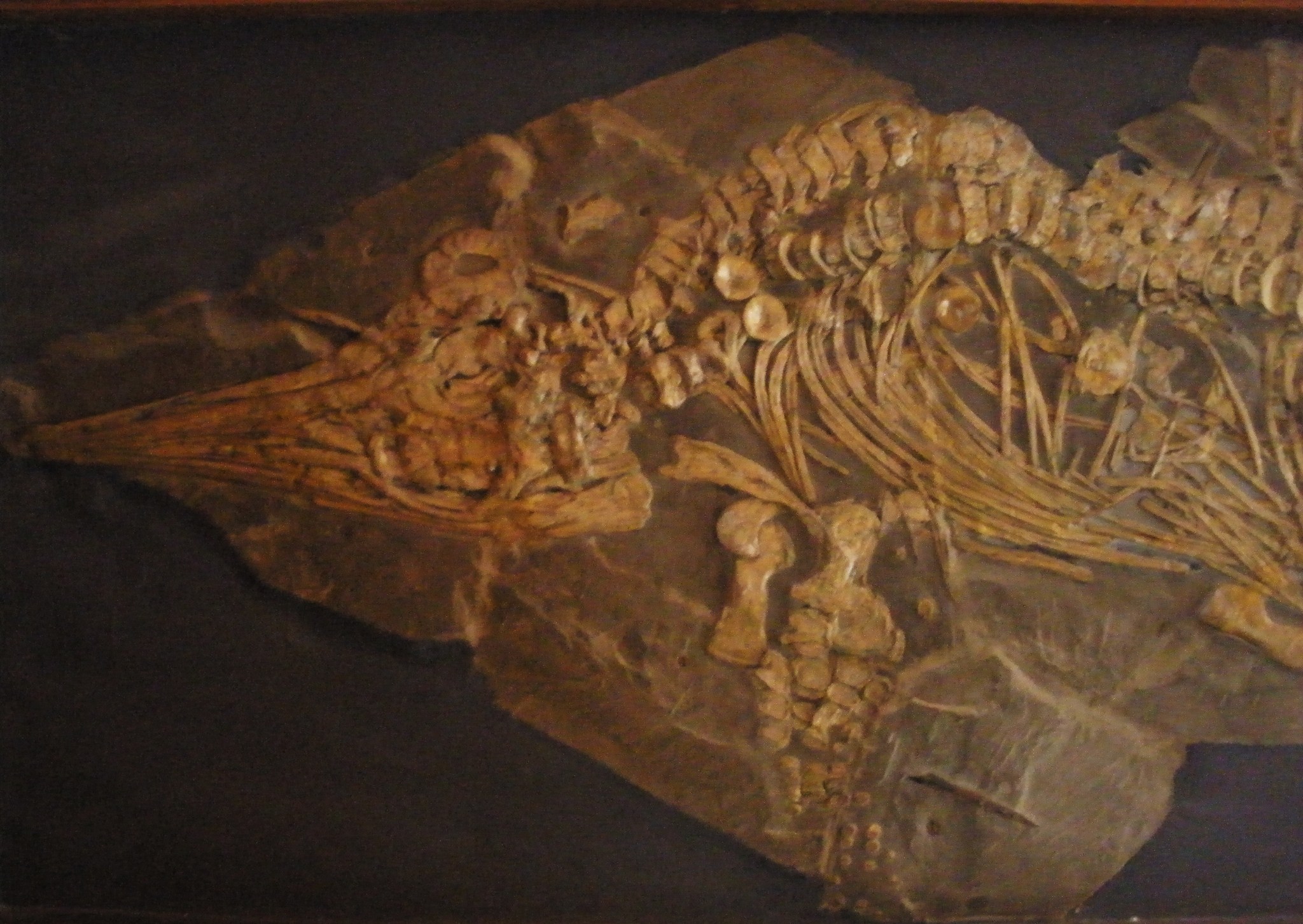
Image: File:Ichthyosaurus communis (fossil).jpg - Wikimedia Commons (CC BY-SA)
About Ichthyosaurus
Ichthyosaurus communis, whose name translates to 'common fish lizard,' is one of the most celebrated and scientifically significant marine reptiles of the Mesozoic Era. This remarkable creature thrived in the shallow seas of the Early Jurassic period, approximately 200 to 190 million years ago, and represents a quintessential example of convergent evolution, having developed a body plan strikingly similar to that of modern dolphins and tuna despite being a reptile. Its discovery in the early 19th century along the coast of Lyme Regis, England, was a watershed moment in the nascent field of paleontology, fundamentally altering humanity's understanding of prehistoric life and the concept of extinction.
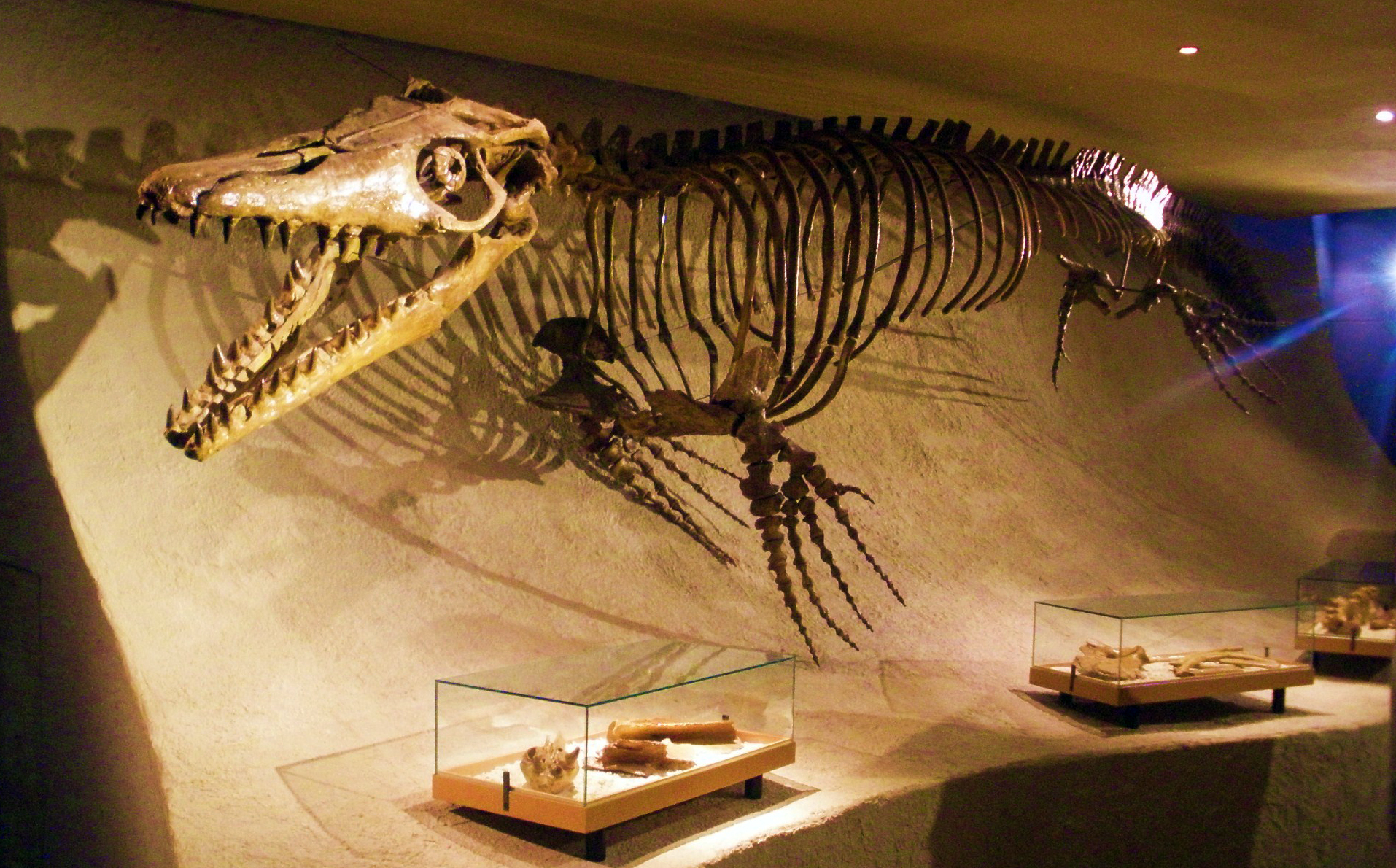
The physical anatomy of Ichthyosaurus communis was exquisitely adapted for a life of speed and efficiency in a marine environment. An adult typically measured around 2 meters (approximately 6.5 feet) in length, with an estimated body weight of about 90 kilograms (200 pounds), making it a relatively small to medium-sized member of the larger ichthyosaur family. Its most prominent feature was its streamlined, fusiform body, which minimized drag and allowed for rapid movement through the water. The head was characterized by a long, slender snout, or rostrum, armed with numerous small, sharp, conical teeth set within shallow grooves rather than individual sockets, a feature known as a 'cutting-edge' dentition ideal for grasping slippery prey. Perhaps its most striking cranial feature was its exceptionally large eyes, which could be up to 20 centimeters in diameter in some ichthyosaur species. These enormous orbits were reinforced by a ring of bony plates known as a sclerotic ring, a structure that helped maintain the eyeball's shape against the immense pressure of deep water and likely enabled excellent vision in low-light conditions, suggesting it could hunt at significant depths or during twilight hours. Its four limbs had evolved into rigid, paddle-like flippers, used primarily for steering and stability rather than propulsion. The primary propulsive force came from its powerful tail, which, unlike the eel-like tails of its earlier ancestors, featured a distinct downward bend in the vertebral column supporting a fleshy, crescent-shaped, or lunate, tail fluke, remarkably similar to that of a modern shark or dolphin. Soft tissue impressions preserved in some fossils have confirmed the presence of a triangular dorsal fin, which, like the tail fluke, was composed of cartilage and skin rather than bone, and would have provided crucial stability during high-speed swimming.
The paleobiology of Ichthyosaurus communis reveals a dynamic and highly active predator. Its streamlined body and powerful tail fluke indicate it was a fast and agile swimmer, capable of pursuing swift prey. Analysis of its body mechanics suggests it employed thunniform locomotion, a highly efficient swimming style where propulsion is generated almost exclusively by the tail, while the body remains relatively rigid—a method used by the fastest swimming fish today, such as tuna. This anatomical evidence is strongly supported by direct fossil evidence of its diet. Preserved stomach contents and coprolites (fossilized feces) associated with Ichthyosaurus are frequently filled with the hooklets of belemnites, a type of extinct squid-like cephalopod, and the crushed shells of ammonites. Fish scales and small vertebrate bones are also commonly found, confirming its role as an opportunistic carnivore that fed on the abundant nektonic life of the Jurassic seas. Its feeding strategy likely involved using its long, toothy snout to snap up smaller prey with quick, precise movements. Furthermore, exceptional fossil discoveries have provided unparalleled insights into its reproductive biology. Several specimens have been found with the fossilized remains of embryos inside their body cavities, and at least one famous fossil from the Holzmaden Shale in Germany captures a female dying in the process of giving birth. This irrefutable evidence demonstrates that Ichthyosaurus was viviparous, giving birth to live young tail-first to prevent them from drowning, a strategy also employed by modern cetaceans. This adaptation completely severed their ties to the land, allowing them to inhabit the open ocean throughout their entire life cycle.
During the Hettangian and Sinemurian ages of the Early Jurassic, Ichthyosaurus communis inhabited the warm, shallow epicontinental seas that covered much of what is now Europe. The geography of this period was dominated by the breakup of the supercontinent Pangaea, creating new seaways and marine basins. The Blue Lias Formation of Lyme Regis, where the most famous specimens have been found, represents a marine environment characterized by alternating layers of limestone and shale, indicative of fluctuating sea levels and cyclical changes in oxygen levels on the seafloor. In this vibrant ecosystem, Ichthyosaurus was a mid-level predator, occupying a niche similar to that of modern-day dolphins. It shared its habitat with a diverse array of marine life. The seas teemed with ammonites like Psiloceras and belemnites, which formed the base of its diet. It also hunted various species of fish, including Dapedium and Pholidophorus. Ichthyosaurus itself was not an apex predator and would have been prey for larger marine reptiles. Coexisting in these waters were the long-necked plesiosaurs, such as Plesiosaurus, and the formidable pliosaurs, like the early Temnodontosaurus, a massive ichthyosaur that could reach lengths of over 10 meters and would have easily preyed upon its smaller relative. This complex food web highlights a sophisticated and mature marine ecosystem where Ichthyosaurus played a crucial role in connecting lower trophic levels with the larger predators at the top.
The discovery of Ichthyosaurus is inextricably linked to the birth of paleontology as a scientific discipline and the pioneering work of Mary Anning (1799-1847). While isolated vertebrae and bones had been found for decades, the first complete skeleton of an ichthyosaur was discovered by Mary and her brother Joseph Anning around 1811 along the fossil-rich cliffs of Lyme Regis in Dorset, England. This remarkable specimen, now housed in the Natural History Museum, London, was sold to a private collector and eventually studied by the surgeon Everard Home, who initially mistook it for a type of fish or crocodile. The name Ichthyosaurus, meaning 'fish-lizard,' was first coined in 1817 by Charles Konig of the British Museum and later formally described by the anatomist William Conybeare and geologist Henry De la Beche in 1821. It was Conybeare who established the species Ichthyosaurus communis. Anning's subsequent discoveries of more complete and exquisitely preserved ichthyosaur and plesiosaur skeletons from the Blue Lias Formation provided incontrovertible evidence for a world inhabited by strange, extinct creatures, profoundly influencing the scientific thinking of luminaries like Georges Cuvier and William Buckland. These fossils were among the first to popularize the idea of an ancient "Age of Reptiles," challenging prevailing religious dogma and laying the groundwork for the theory of evolution.
In the grand tapestry of life, Ichthyosaurus holds a significant evolutionary position as a highly derived member of the Diapsida, the same major group of reptiles that includes modern lizards, snakes, crocodiles, and birds. Its ancestors were terrestrial, lizard-like reptiles that began to adapt to a marine lifestyle during the Early Triassic period, approximately 250 million years ago. These early ichthyosauriforms, such as Cartorhynchus, still possessed features indicative of a semi-aquatic, amphibious existence. Over millions of years, this lineage underwent a dramatic transformation, losing its terrestrial characteristics and becoming fully pelagic. By the Early Jurassic, Ichthyosaurus represented a highly specialized form, having perfected the fusiform body plan that would define the group for much of its existence. While it is a reptile, it is not closely related to dinosaurs, which belong to a separate branch of the diapsid tree called Archosauria. Instead, the precise placement of Ichthyosauria within the diapsid family tree has been a long-standing debate, though recent studies suggest they may be related to the lineage leading to turtles or lepidosaurs (lizards and snakes). Ichthyosaurus communis and its relatives are a textbook case of convergent evolution, independently evolving traits—such as the dorsal fin and crescent-shaped tail—that are analogous to those seen in fish and marine mammals, demonstrating how similar environmental pressures can shape disparate lineages into similar forms.
Despite its long history of study, Ichthyosaurus communis remains a subject of ongoing scientific debate and revision. For much of the 19th and 20th centuries, the genus Ichthyosaurus became a "wastebasket taxon," with dozens of species from across the globe being assigned to it. However, a major taxonomic revision in 2000 by paleontologists Christopher McGowan and Ryosuke Motani significantly restricted the genus. They determined that true Ichthyosaurus was confined to the Early Jurassic of England and was represented by only a few valid species, including I. communis, I. breviceps, and I. conybeari. Many specimens previously assigned to Ichthyosaurus were reclassified into other genera, such as Stenopterygius from Germany. Another area of debate concerns its physiology. While traditionally viewed as a cold-blooded reptile, the high-speed swimming capabilities, rapid growth rates inferred from bone histology, and its likely occupation of cool, deep waters have led some researchers to propose that ichthyosaurs may have been endothermic, or warm-blooded, capable of generating their own body heat to maintain a high metabolism, much like modern marine mammals and some sharks. This hypothesis remains an active area of research, with evidence from bone structure and isotopic analysis providing clues to the metabolic rates of these ancient marine reptiles.
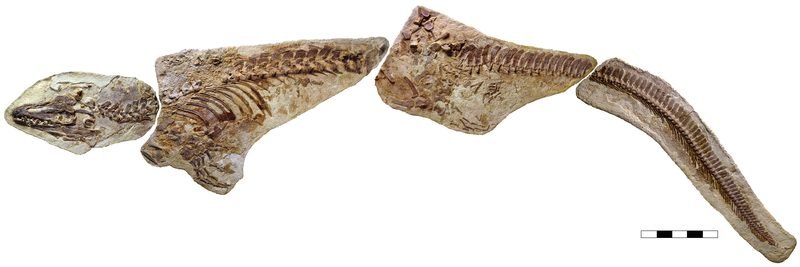
The fossil record of Ichthyosaurus communis is exceptionally rich, though geographically restricted. The vast majority of confirmed specimens have been unearthed from the Lower Jurassic marine deposits of southern England, particularly the Blue Lias and Charmouth Mudstone formations exposed along the Jurassic Coast, a UNESCO World Heritage Site. This region, especially the cliffs around Lyme Regis and Charmouth, has yielded hundreds of skeletons, ranging from isolated bones to complete, articulated individuals. The quality of preservation is often remarkable, with some fossils retaining skin impressions, stomach contents, and even embryos. The Holzmaden Shale in Germany has also produced stunningly preserved ichthyosaur fossils from the same time period, though most of these are now assigned to other genera like Stenopterygius. The abundance of well-preserved fossils has made Ichthyosaurus one of the most thoroughly studied of all extinct marine reptiles, providing an almost unparalleled window into the anatomy, biology, and evolution of a fully aquatic reptile.
From the moment of its discovery, Ichthyosaurus captured the public and scientific imagination, becoming a powerful symbol of the newly revealed prehistoric world. Its strange combination of fish-like and reptilian features made it a centerpiece in early paleontological art, such as the famous 1830 painting "Duria Antiquior – A More Ancient Dorset" by Henry De la Beche, which depicted Ichthyosaurus and Plesiosaurus in a dramatic struggle. Today, its skeletons are prized exhibits in natural history museums worldwide, including the Natural History Museum in London and the Sedgwick Museum of Earth Sciences in Cambridge. As one of the first major fossil reptiles to be described, it holds a foundational place in science education, often used to teach core concepts like evolution, adaptation, extinction, and the history of life on Earth. Its iconic, dolphin-like shape has ensured its enduring presence in popular culture, appearing in books, documentaries, and films about the age of dinosaurs.
Classification
Time Period
Discovery
Location
Lyme Regis, Dorset, England
Formation
Blue Lias Formation
Frequently Asked Questions
What is Ichthyosaurus?
Ichthyosaurus communis, whose name translates to 'common fish lizard,' is one of the most celebrated and scientifically significant marine reptiles of the Mesozoic Era. This remarkable creature thrived in the shallow seas of the Early Jurassic period, approximately 200 to 190 million years ago, and ...
When did Ichthyosaurus live?
Ichthyosaurus lived during the jurassic period of the mesozoic era approximately 200-190 million years ago.
Where was Ichthyosaurus discovered?
Fossils of Ichthyosaurus were discovered in Lyme Regis, Dorset, England in the Blue Lias Formation.
What did Ichthyosaurus eat?
Ichthyosaurus was a carnivore. It lived in marine habitats.
What type of fossil is Ichthyosaurus?
Ichthyosaurus is preserved as a permineralized fossil. The preservation quality is exceptional.
Related Specimens
From the mesozoic era · permineralized fossils