Leptomeryx
Leptomeryx evansi
Image: Image sourced via web search (Fair use / Educational)
About Leptomeryx
Leptomeryx evansi is an extinct species of small, hornless artiodactyl mammal that lived in North America during the Paleogene period, specifically spanning the Late Eocene to the Late Oligocene epochs, approximately 38 to 24 million years ago. As a prominent member of the White River Fauna, this diminutive herbivore played a crucial role in the terrestrial ecosystems of prehistoric North America. Its abundant fossil remains have provided paleontologists with an exceptionally detailed window into the early evolution of ruminants, making it a cornerstone species for understanding the diversification of hoofed mammals.
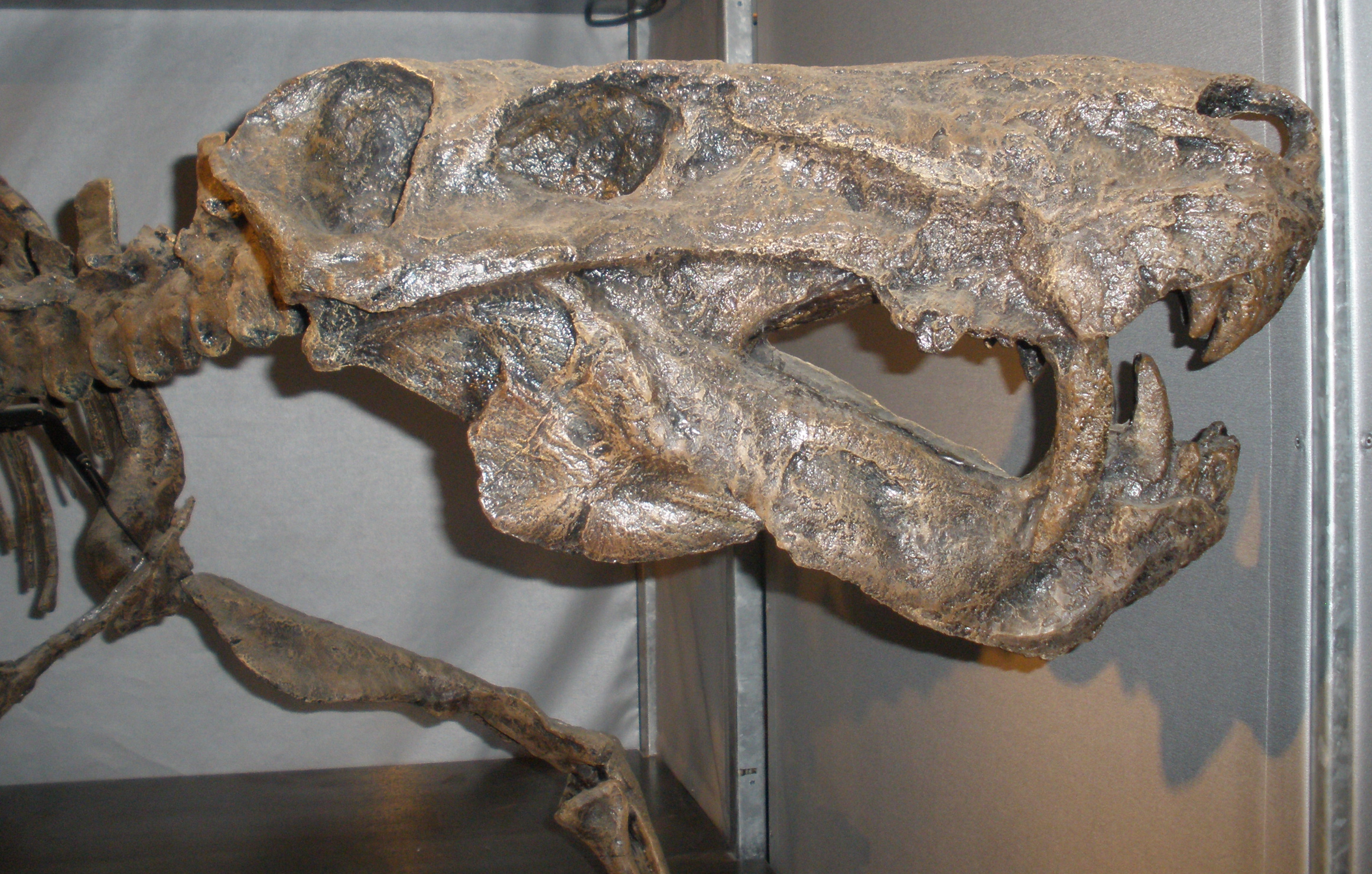
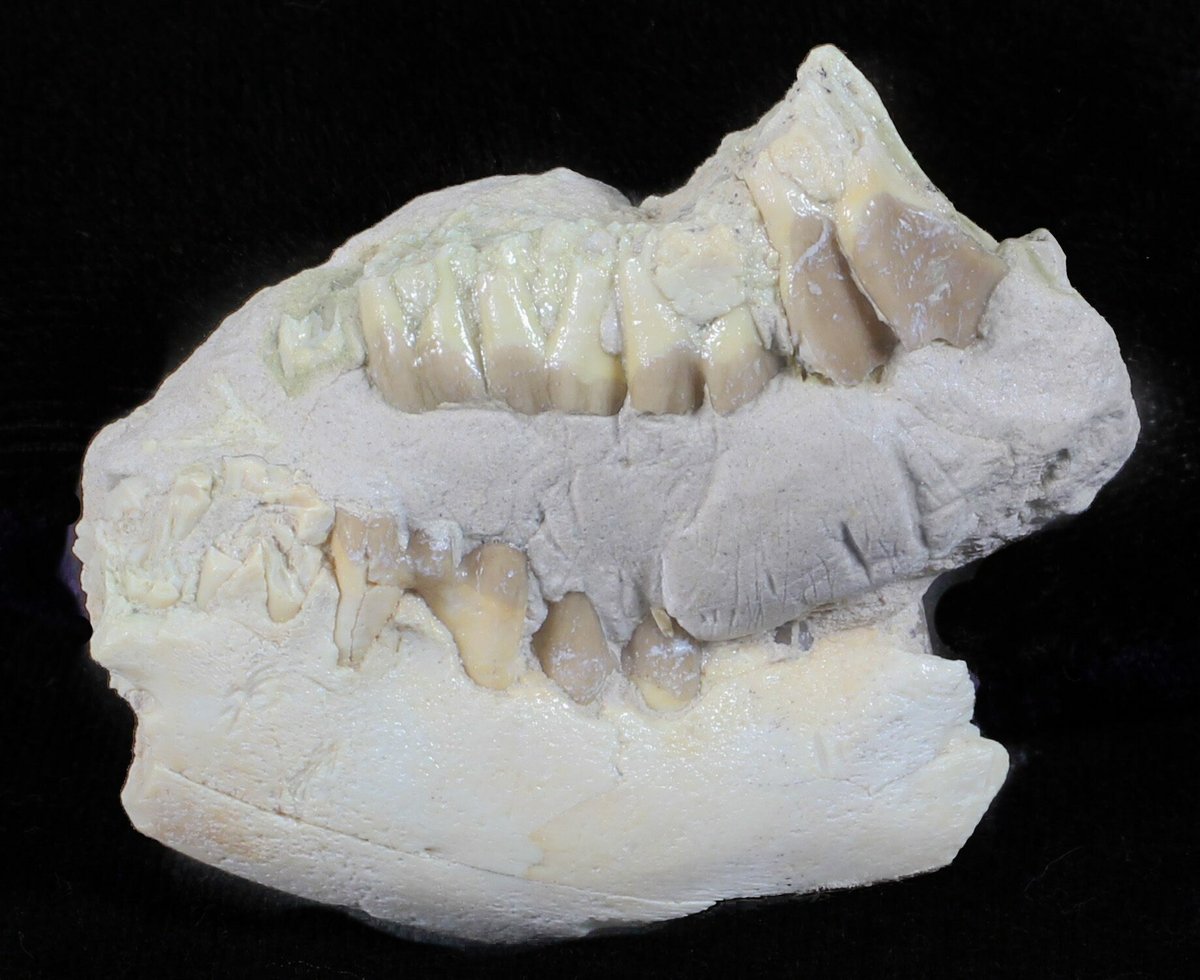
In terms of physical appearance, Leptomeryx evansi was a remarkably small and delicate creature, bearing a strong superficial resemblance to modern mouse deer or chevrotains. Adult individuals typically measured between sixty and ninety centimeters in total body length, standing roughly thirty to forty centimeters tall at the shoulder. Weight estimates suggest a living mass of merely five to eight kilograms, making it a lightweight and highly agile animal. The skeletal anatomy of Leptomeryx is characterized by its slender, elongated limbs, which were highly adapted for cursorial locomotion, allowing the animal to dart quickly through the underbrush to evade predators. Unlike many later artiodactyls, Leptomeryx lacked any form of cranial appendages; neither males nor females possessed horns, antlers, or ossicones. Instead, their skulls were relatively long and narrow, housing a set of teeth that are of particular interest to paleontologists. The dentition featured selenodont molars—teeth with crescent-shaped ridges—which were perfectly suited for grinding tough plant material. Interestingly, the upper canines were somewhat enlarged, particularly in males, a trait shared with modern water deer and musk deer, suggesting they may have been used in intraspecific combat or display. Soft tissue inferences, guided by the skeletal muscle attachments and comparisons with extant analogs, suggest a lithe, muscular build covered in a short coat of fur, likely patterned with spots or stripes to provide camouflage in the dappled light of forested and brushy environments.
The paleobiology of Leptomeryx evansi paints a picture of a highly active, selective browser. Its selenodont dentition indicates a diet consisting primarily of soft leaves, young shoots, fruits, and perhaps some early grasses, though it was not a specialized grazer. The evolutionary development of its digestive system is a subject of great interest; as an early ruminant, Leptomeryx likely possessed a multi-chambered stomach, allowing it to ferment and extract maximum nutrition from fibrous plant matter through rumination, or chewing the cud. This digestive efficiency would have been a significant advantage in the changing flora of the Oligocene. Locomotor studies based on its limb proportions—specifically the elongated metapodials and the structure of its ankle joints—reveal that Leptomeryx was a fast, bounding runner. It likely utilized a leaping gait to navigate through dense vegetation and escape the numerous predators of its time. Socially, it is inferred that Leptomeryx may have lived in small family groups or as solitary individuals, rather than in the massive herds characteristic of later, open-plains bovids. This assumption is based on the behavior of modern forest-dwelling ruminants of similar size. Growth patterns analyzed from bone histology and tooth eruption sequences suggest a rapid maturation rate, a common life-history strategy for small prey animals that experience high mortality rates. Their metabolic rate was likely high, necessitating constant foraging to sustain their energetic needs in the temperate climates of the Paleogene.
The world inhabited by Leptomeryx evansi was one of profound climatic and ecological transition. During the Late Eocene and Early Oligocene, the Earth was experiencing a significant cooling and drying trend, shifting from the dense, continuous tropical forests of the early Eocene to more open, temperate woodlands and the very beginnings of savanna-like environments. Leptomeryx thrived in this transitional landscape, occupying the ecological niche of a small, understory browser. The geography of North America at this time featured vast floodplains and river systems, particularly in the region that is now the Great Plains. Leptomeryx shared its habitat with a diverse array of iconic Paleogene mammals. It browsed alongside massive brontotheres, early horses like Mesohippus, rhinoceros relatives such as Hyracodon, and the sheep-like oreodonts, which were among the most abundant herbivores of the era. However, this environment was also fraught with danger. Leptomeryx occupied a low position on the food web and was a primary prey item for a terrifying suite of predators. It was actively hunted by creodonts like Hyaenodon, early canids such as Hesperocyon, and the formidable nimravids, often referred to as false saber-toothed cats, like Dinictis and Hoplophoneus. The evolutionary arms race between the agile, fast-running Leptomeryx and these diverse predators drove the development of its cursorial adaptations and acute sensory systems.
The discovery history of Leptomeryx evansi is deeply intertwined with the early days of American vertebrate paleontology. The genus and species were first described in 1853 by the eminent paleontologist Joseph Leidy, who is often considered the father of American vertebrate paleontology. The type specimens were collected by Dr. John Evans, a geologist and explorer after whom the species evansi is named. Evans gathered these fossils during his pioneering expeditions to the White River Badlands of South Dakota, a region that would soon become world-famous for its incredibly rich Oligocene fossil deposits. The initial discoveries consisted primarily of fragmentary jaws and teeth, but the distinct selenodont pattern immediately signaled to Leidy that he was dealing with an early ruminant. In the decades that followed, particularly during the intense fossil-hunting periods of the late 19th and early 20th centuries, hundreds of complete and articulated skeletons of Leptomeryx were unearthed by various expeditions from institutions like the American Museum of Natural History and the Yale Peabody Museum. These subsequent discoveries provided a complete picture of the animal's osteology. The naming history has remained relatively stable, though various other species of Leptomeryx have been proposed over the years, with L. evansi remaining the most well-known and abundantly represented type species.
The evolutionary significance of Leptomeryx evansi cannot be overstated, as it occupies a critical basal position in the phylogenetic tree of the Artiodactyla, the even-toed ungulates. Specifically, Leptomeryx is a member of the family Leptomerycidae, which is part of the suborder Ruminantia. It represents one of the earliest and most primitive radiations of ruminants in North America. Studying Leptomeryx provides paleontologists with vital clues about the morphological transitions that occurred as early, pig-like artiodactyls evolved into the highly specialized, cud-chewing ruminants that dominate modern terrestrial ecosystems, such as deer, cattle, antelopes, and giraffes. One of the key transitional features observed in Leptomeryx is the structure of its feet; while it retained some primitive characteristics, such as the presence of four toes on the front feet (though the side toes were greatly reduced), its hind feet showed the fusion of the middle metatarsals into a single cannon bone, a hallmark of advanced cursorial ungulates. Furthermore, the dental evolution seen in Leptomeryx, with its fully developed selenodont molars, marks a definitive shift toward the specialized processing of fibrous vegetation. While the Leptomerycidae eventually went extinct without leaving direct modern descendants, they are closely related to the Tragulidae, the family that includes modern chevrotains. Thus, Leptomeryx serves as a crucial anatomical and ecological proxy for the ancestral stock from which the vast majority of today's hoofed mammals arose.
Despite its abundance in the fossil record, Leptomeryx evansi remains the subject of several ongoing scientific debates. One primary area of controversy involves its exact taxonomic placement within the Ruminantia. While generally accepted as a basal ruminant, the precise phylogenetic relationship between the extinct Leptomerycidae and extant families like Tragulidae (chevrotains) and Moschidae (musk deer) is continually refined as new cladistic analyses and morphological studies are published. Some researchers argue that leptomerycids are a sister group to all other ruminants, while others place them closer to the crown group. Another debate centers on species delimitation within the genus Leptomeryx. Because fossils are so numerous and span several million years, there is significant morphological variation. Paleontologists debate whether this variation represents multiple distinct species (a splitting approach) or simply chronological and geographical variation within a single, highly adaptable species lineage like L. evansi (a lumping approach). Additionally, interpretations of its paleobiology, specifically the extent of its reliance on open-habitat foraging versus closed-canopy browsing, are frequently re-evaluated using modern isotopic analysis of fossil tooth enamel, which sometimes yields conflicting results regarding its exact dietary niche.
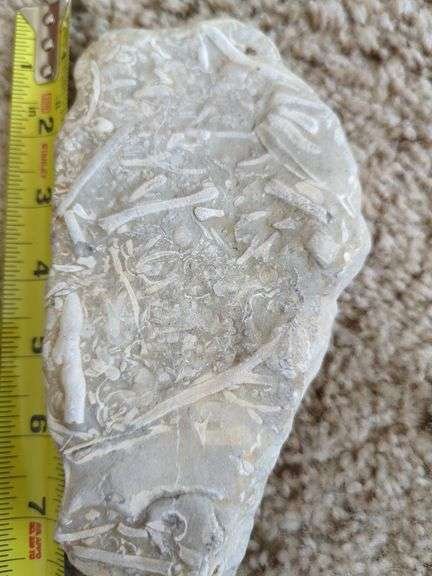
The fossil record of Leptomeryx evansi is nothing short of spectacular, making it one of the most thoroughly documented mammals of the Paleogene period. The vast majority of these fossils are found in the White River Formation, a geological sequence that spans across South Dakota, Nebraska, Wyoming, and Colorado. Within these deposits, Leptomeryx is incredibly abundant; it is often the most common small mammal found in these beds, second only to the oreodonts in overall large-mammal abundance. Thousands of specimens are known, ranging from isolated teeth and jaw fragments to perfectly articulated, complete skeletons. The preservation quality is frequently excellent, with the fine-grained silts and volcanic ashes of the White River Badlands entombing the animals rapidly, protecting them from scavenging and weathering. Skulls, complete dentitions, and delicate limb bones are typically preserved with remarkable fidelity, allowing for microscopic analysis of wear facets on teeth and muscle attachment scars on bones. Famous fossil sites like the Big Badlands of South Dakota have yielded massive concentrations of Leptomeryx, providing a statistically significant sample size that allows researchers to study population dynamics, sexual dimorphism, and ontogenetic growth series in a way that is impossible for rarer prehistoric taxa.
While perhaps not as culturally ubiquitous as dinosaurs or saber-toothed cats, Leptomeryx evansi holds a special place in the realm of paleontology and museum education. It is a staple of Cenozoic fossil exhibits in natural history museums worldwide, often featured in dioramas depicting the White River Badlands ecosystem. Its small, deer-like appearance makes it an accessible and relatable animal for the public, helping to illustrate the concept of evolutionary change and the deep history of familiar modern mammals. In regions like South Dakota, Leptomeryx is celebrated as a key component of the local natural heritage. Educational programs at Badlands National Park frequently highlight this diminutive survivor to teach visitors about the ancient environments of the Great Plains, ensuring that this ancient, slender ruminant continues to inspire curiosity about the prehistoric world.
Classification
Time Period
Discovery
Location
United States
Formation
White River Formation
Frequently Asked Questions
What is Leptomeryx?
Leptomeryx evansi is an extinct species of small, hornless artiodactyl mammal that lived in North America during the Paleogene period, specifically spanning the Late Eocene to the Late Oligocene epochs, approximately 38 to 24 million years ago. As a prominent member of the White River Fauna, this di...
When did Leptomeryx live?
Leptomeryx lived during the paleogene period of the cenozoic era approximately 38-24 million years ago.
Where was Leptomeryx discovered?
Fossils of Leptomeryx were discovered in United States in the White River Formation.
What did Leptomeryx eat?
Leptomeryx was a herbivore. It lived in terrestrial habitats.
What type of fossil is Leptomeryx?
Leptomeryx is preserved as a body fossil. The preservation quality is excellent.
Related Specimens
From the cenozoic era · body fossils