Columbian Mammoth
Mammuthus columbi
Image: Image sourced via web search (Fair use / Educational)
About Columbian Mammoth
The Columbian Mammoth, Mammuthus columbi, was one of the last and largest members of the mammoth lineage, a colossal herbivore that roamed North America during the Pleistocene epoch. It inhabited a vast range from the northern United States down to Central America, thriving in warmer, more southerly environments than its famous relative, the Woolly Mammoth. As a keystone species of the Pleistocene megafauna, its life and eventual extinction provide a crucial window into the dynamic ecosystems and climatic shifts that characterized the end of the last Ice Age.
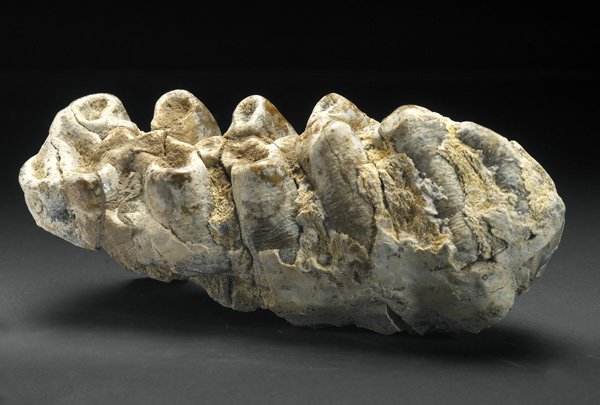
The physical presence of the Columbian Mammoth was truly awe-inspiring, making it one of the largest terrestrial mammals of its time. Adult males, or bulls, typically stood around 4 meters (13 feet) at the shoulder and weighed an estimated 8 to 10 metric tons (18,000 to 22,000 pounds), with some exceptional individuals potentially exceeding these figures. This stature made them significantly larger than modern African elephants, the largest living land animals. Their most striking features were their enormous, spiraling tusks, which were modified upper incisor teeth. In large males, these tusks could curve dramatically upwards and outwards, reaching lengths of over 4.9 meters (16 feet). Unlike the shaggy coat of the Woolly Mammoth, evidence from preserved skin fragments and climate modeling suggests the Columbian Mammoth had a much sparser covering of hair, an adaptation to the temperate and semi-arid climates it inhabited. Its skeleton was robust, with long, pillar-like legs to support its immense weight and a high, domed skull that housed complex, high-crowned molars designed for grinding tough vegetation. These teeth, which were replaced in a conveyor-belt-like fashion throughout the animal's life, are a hallmark of the species and crucial for paleontological identification.
The paleobiology of Mammuthus columbi reveals a highly adapted grazing specialist. Isotopic analysis of their teeth and the study of preserved stomach contents indicate a diet primarily composed of grasses, sedges, and other C4 plants typical of open grasslands and savanna-like environments. Their massive molars, with their numerous enamel ridges, were perfect for pulverizing abrasive, silica-rich vegetation. Like modern elephants, they were likely hindgut fermenters, requiring them to consume vast quantities of forage daily—perhaps over 200 kilograms (440 pounds)—to sustain their enormous bodies. Fossil trackways and mass-death sites, such as the famous Waco Mammoth National Monument in Texas, suggest they lived in complex, matriarchal social structures. These herds, likely composed of related females and their young, would have been led by an experienced older female, while adult males may have lived solitarily or in bachelor groups, similar to modern elephant societies. Their locomotion was graviportal, meaning their limbs were adapted for bearing great weight, allowing them to walk long distances across their expansive territories in search of food and water. Growth patterns, studied through tusk and bone histology, show a long period of development, with individuals reaching sexual maturity in their teens and continuing to grow for many years afterward, with a potential lifespan of 60 to 80 years.
The Columbian Mammoth was a dominant force in the Pleistocene ecosystems of North America, often referred to as the 'Mammoth Steppe'. This was not a single habitat but a mosaic of grasslands, savannas, and open woodlands that stretched across the continent. The climate was generally cooler and drier than today, but subject to dramatic fluctuations between glacial and interglacial periods. Mammuthus columbi shared this world with a spectacular array of other megafauna. It was preyed upon, particularly the young, old, or infirm, by formidable predators like the saber-toothed cat (Smilodon fatalis), the American lion (Panthera atrox), and packs of dire wolves (Aenocyon dirus). It competed for resources with other large herbivores such as ancient bison (Bison antiquus), horses (Equus), camels (Camelops), and giant ground sloths (Megalonyx). As a mega-herbivore, the Columbian Mammoth was an 'ecosystem engineer,' shaping its environment by toppling trees, creating clearings, and dispersing seeds over vast distances, thereby maintaining the open, grassy habitats on which many other species depended. Its position at the top of the herbivore food chain made it a critical component of the Pleistocene food web, and its eventual disappearance had cascading effects on the entire ecosystem.
The discovery history of Mammuthus columbi is intertwined with the early development of American paleontology. While mammoth bones had been unearthed for centuries, often being mistaken for the remains of biblical giants, the species was formally described by Scottish naturalist Hugh Falconer in 1857. Falconer based his description on molar fragments found in Mexico and along the Georgia coast, naming the species in honor of Christopher Columbus. However, some of the most significant discoveries that defined our understanding of the animal came later. The La Brea Tar Pits in Los Angeles, California, have yielded the remains of over 400 individual Columbian Mammoths, providing an unparalleled dataset on their anatomy, age distribution, and pathology. Another key site is the Waco Mammoth National Monument in Texas, which preserves the remains of a nursery herd that appears to have perished together in a single catastrophic event, likely a flash flood, around 65,000 years ago. This site, discovered in 1978 by Paul Barron and Eddie Bufkin, offers a poignant snapshot of their social behavior. The 'Huntington Mammoth,' a nearly complete skeleton found in Utah, is another spectacular specimen that has greatly informed our knowledge of their skeletal anatomy and overall size.
In the grand narrative of evolution, Mammuthus columbi represents a fascinating chapter in the history of the Proboscidea. The mammoth lineage is believed to have originated in Africa with Mammuthus subplanifrons around 5 million years ago. From there, they spread into Eurasia, giving rise to species like the Steppe Mammoth (Mammuthus trogontherii). It was from this Steppe Mammoth population that the Columbian Mammoth's ancestors are thought to have migrated into North America across the Bering Land Bridge approximately 1.5 million years ago. Once in the warmer, southern parts of North America, this lineage adapted and evolved into Mammuthus columbi. For a long time, it was believed that the Woolly Mammoth (Mammuthus primigenius) evolved separately and migrated into North America much later, remaining in the colder, northern regions. However, recent genetic studies have dramatically reshaped this understanding, suggesting that the Columbian Mammoth and Woolly Mammoth were not entirely separate species but were capable of interbreeding where their ranges overlapped. This places the Columbian Mammoth not as a simple descendant, but as part of a complex, intermingling web of mammoth evolution in the Americas, showcasing the dynamic nature of speciation.
One of the most significant scientific debates surrounding Mammuthus columbi revolves around its relationship with the Woolly Mammoth and the Jeffersonian Mammoth (Mammuthus jeffersonii). Traditionally, these were considered three distinct species occupying different niches. However, a groundbreaking 2021 study analyzing ancient DNA from various North American mammoth specimens revealed extensive hybridization. The evidence suggests that the Jeffersonian Mammoth was not a distinct species but rather a fertile hybrid of Columbian and Woolly mammoths. Furthermore, the study indicated that the Columbian Mammoth lineage itself was a hybrid, originating from an earlier cross between a Woolly Mammoth and a previously unknown mammoth lineage related to the Steppe Mammoth. This complex genetic history challenges the classic biological species concept and suggests that mammoth evolution in North America was driven by repeated waves of migration and interbreeding, a far more intricate picture than previously imagined. Another ongoing debate concerns the primary cause of their extinction around 11,000 years ago, with scientists weighing the relative impacts of rapid climate change at the end of the Pleistocene (the Younger Dryas event) versus the pressures of overhunting by newly arrived Paleo-Indian humans, known as the 'overkill hypothesis'.
The fossil record of the Columbian Mammoth is exceptionally rich and widespread, making it one of the best-represented Pleistocene megafauna. Its remains are found across a vast swath of North America, from the southern half of the United States (as far north as the Great Lakes during interglacial periods) through Mexico and into Central America as far south as Nicaragua. The sheer abundance of fossils is remarkable, with thousands of specimens known. The preservation quality is often excellent, particularly at sites like the La Brea Tar Pits, where asphalt seeps have preserved complete skeletons, skin impressions, and even stomach contents. Other key localities include the Hot Springs Mammoth Site in South Dakota (though primarily featuring M. columbi), the Tule Springs Fossil Beds in Nevada, and numerous river gravel deposits throughout the American West. Typically, the most commonly found remains are the most durable parts of the skeleton: the massive molars, tusks, and large limb bones. The discovery of nearly complete skeletons and entire herds, as seen at Waco, provides invaluable data that is rare for many other prehistoric animals.
The Columbian Mammoth holds a powerful place in the public imagination and has had a significant cultural impact. As the official state fossil of Washington, Nebraska, and South Carolina, it is a symbol of America's deep prehistoric past. Museums across North America feature impressive displays, with mounted skeletons at the American Museum of Natural History in New York, the Page Museum at the La Brea Tar Pits in Los Angeles, and the Denver Museum of Nature & Science. The Waco Mammoth National Monument provides a unique in-situ experience, allowing visitors to see the fossils exactly as they were discovered. This magnificent creature often appears in documentaries and popular science literature about the Ice Age, captivating audiences with its immense size and its role in a lost world of giants, serving as a potent educational tool for teaching about evolution, extinction, and climate change.
Classification
Time Period
Discovery
Location
United States (Georgia)
Formation
La Brea Tar Pits, various Pleistocene deposits
Frequently Asked Questions
What is Columbian Mammoth?
The Columbian Mammoth, Mammuthus columbi, was one of the last and largest members of the mammoth lineage, a colossal herbivore that roamed North America during the Pleistocene epoch. It inhabited a vast range from the northern United States down to Central America, thriving in warmer, more southerly...
When did Columbian Mammoth live?
Columbian Mammoth lived during the quaternary period of the cenozoic era approximately 1.5-0.011 million years ago.
Where was Columbian Mammoth discovered?
Fossils of Columbian Mammoth were discovered in United States (Georgia) in the La Brea Tar Pits, various Pleistocene deposits.
What did Columbian Mammoth eat?
Columbian Mammoth was a herbivore. It lived in terrestrial habitats.
What type of fossil is Columbian Mammoth?
Columbian Mammoth is preserved as a body fossil. The preservation quality is excellent.
Related Specimens
From the cenozoic era · body fossils