/c81e708ee030.png)
Coprolite (Fossilized dung)
Coprolite
About Coprolite (Fossilized dung)
Coprolites, the fossilized feces of ancient animals, represent a unique and invaluable category of trace fossils, offering direct evidence of the diet, behavior, and physiology of extinct organisms. Unlike body fossils, which preserve the physical remains of an animal, coprolites provide a snapshot of an organism's life activities, preserving undigested food remnants, parasite eggs, and biochemical markers that are otherwise lost to time. These remarkable fossils are found in geological strata spanning from the Cambrian Period to the Pleistocene, originating from a vast array of creatures including dinosaurs, prehistoric sharks, early mammals, and even invertebrates, making them a ubiquitous and crucial resource for paleontologists seeking to reconstruct ancient ecosystems.
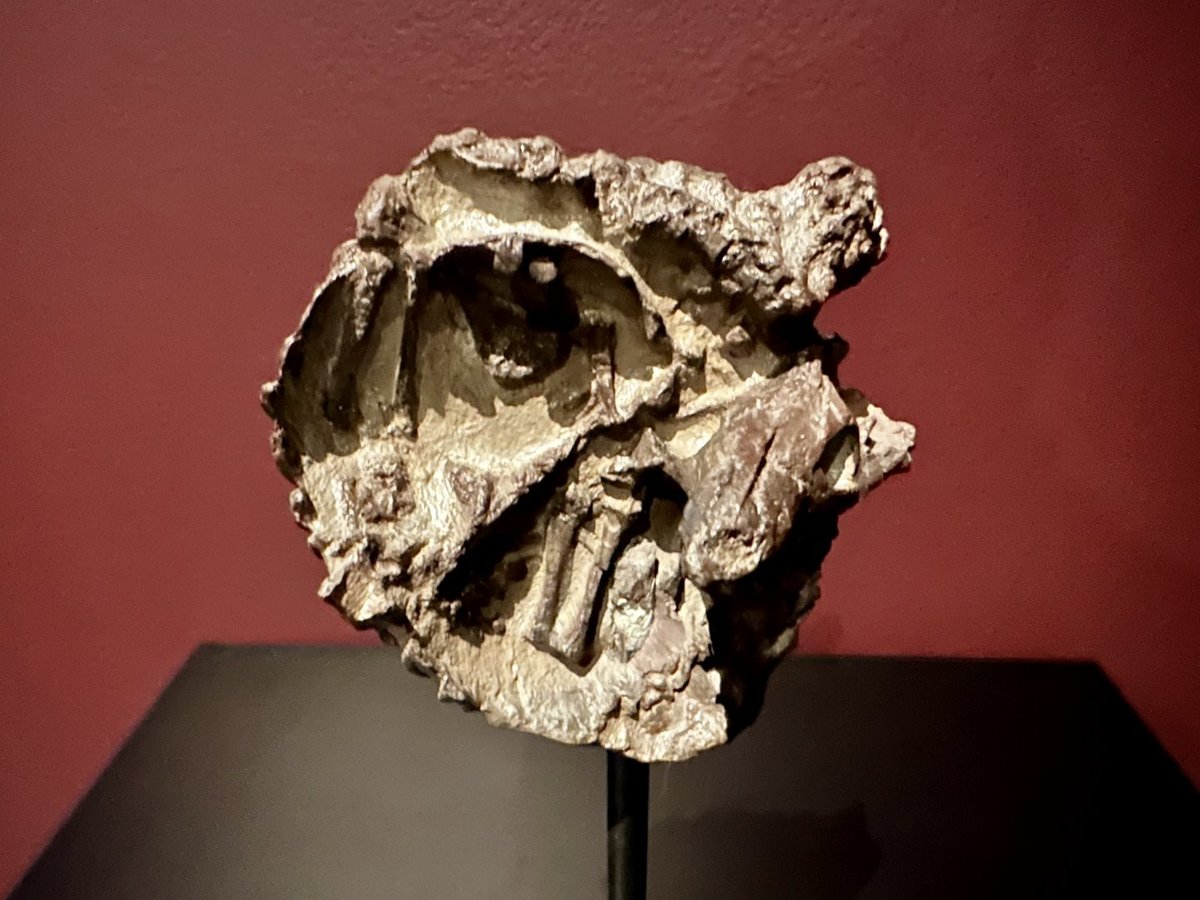
The physical characteristics of coprolites are extraordinarily diverse, reflecting the vast range of animals that produced them and the various geological processes that preserved them. Their size can range from mere millimeters, likely produced by small invertebrates or larval forms, to massive specimens exceeding 60 centimeters in length and weighing several kilograms, such as those attributed to colossal dinosaurs like Tyrannosaurus rex. Their shape is equally variable. Some, like the specimen described, are amorphous, rounded, or irregular masses, their original form often obscured by post-depositional compaction and mineralization. Others, however, retain a remarkable degree of morphological detail. The coiled, rope-like structure seen in the spiral specimen is a classic example of a heteropolar coprolite, a form produced by animals possessing a spiral valve intestine, such as ancient sharks, lungfish, and other primitive fish. This intestinal structure, a corkscrew-like fold within the gut, maximized nutrient absorption and imparted a distinctive spiral pattern to the resulting feces. The texture of coprolites can vary from smooth and polished to rough and coarse, depending on their composition and the grain size of the sediment in which they were buried. Coloration is a product of secondary mineralization, with common hues including shades of brown, gray, yellow, and orange, resulting from the replacement of organic matter with minerals like silica, calcite, and phosphate compounds, particularly calcium phosphate, which is abundant in the feces of carnivores due to digested bone.
The study of coprolites, known as paleoscatology, provides unparalleled insights into the paleobiology of extinct animals. The primary value of these fossils lies in their ability to reveal an animal's diet with certainty. Microscopic and chemical analysis of coprolite contents can identify undigested bone fragments, scales, teeth, muscle tissue, plant phytoliths, seeds, pollen, and insect exoskeletons. For instance, the famous "Lyme Regis" coprolites from the Jurassic of England, first studied by William Buckland, contained the scales and bones of smaller fish, confirming the predatory nature of the ichthyosaurs that produced them. Similarly, massive herbivorous dinosaur coprolites from the Cretaceous of North America have been found packed with chewed and partially digested plant matter, allowing paleobotanists to identify the specific types of cycads, ferns, and conifers that comprised their diet. Beyond diet, coprolites can reveal feeding strategies; the presence of crushed bone suggests powerful jaws, while whole, undigested prey items might indicate a strategy of swallowing food whole. Furthermore, the discovery of parasite eggs and larvae within coprolites provides direct evidence of ancient host-parasite relationships and sheds light on the internal health and diseases of prehistoric creatures.
Coprolites are crucial for reconstructing the ecological context of past environments, serving as direct links in ancient food webs. By identifying both the producer of the dung and the contents within it, paleontologists can definitively connect predator to prey and herbivore to plant. The chemical composition of a coprolite, particularly its isotopic signatures, can also provide data on the local environment and the trophic level of the producer. For example, a high concentration of phosphate in a terrestrial coprolite might indicate a diet rich in bone, placing the producer at a high trophic level, such as an apex predator. The distribution and abundance of coprolites in a particular geological formation can also inform paleoecological models. A "coprolite-Lagerstätte," or a layer with an exceptionally high concentration of fossilized feces, might indicate a latrine site, suggesting gregarious or herd behavior in the animals that used it. Such sites, found for animals like the dicynodonts of the Permian, provide powerful evidence for social behaviors that are nearly impossible to infer from skeletal remains alone. These fossils help populate ancient landscapes not just with lists of species, but with dynamic interactions, painting a much richer picture of life in the deep past.
The formal scientific study of coprolites began in the early 19th century with the pioneering work of the English geologist and paleontologist William Buckland. In the 1820s, while investigating the Jurassic marine deposits of Lyme Regis, England, Buckland encountered strange, stony objects known locally as "bezoar stones." Working alongside fossil collector Mary Anning, who first brought them to his attention, Buckland hypothesized that these were not mineral concretions but the fossilized excrement of ichthyosaurs and plesiosaurs. In his 1829 paper, "On the Discovery of Coprolites, or Fossil Faeces, in the Lias at Lyme Regis, and in other Formations," he meticulously described their spiral form, noted the presence of fish scales and bones within them, and formally coined the term "coprolite" from the Greek words "kopros" (dung) and "lithos" (stone). His groundbreaking analysis was initially met with ridicule from some of his contemporaries, but the overwhelming evidence he presented soon established coprolites as a legitimate and important field of paleontological inquiry. One of the most famous specimens from this era is the "Ashdown Coprolite," a large, well-preserved specimen that became a cornerstone of Buckland's research and is still studied today.
While coprolites themselves do not have an evolutionary lineage, their study is of immense evolutionary significance because they provide direct evidence for the evolution of diets, digestive systems, and ecological relationships through time. The distinctive spiral coprolites, for example, are a hallmark of early gnathostomes (jawed vertebrates), including many Paleozoic sharks and placoderms. The prevalence of this coprolite form in Paleozoic and Mesozoic strata, and its relative scarcity in Cenozoic deposits, tracks the evolutionary history of the spiral valve intestine. This anatomical feature, while still present in modern sharks, rays, and some primitive bony fish, was largely replaced in more advanced vertebrates by a longer, coiled intestine, a transition that is indirectly recorded in the changing morphology of fossil feces. The analysis of coprolite contents has also been instrumental in understanding major evolutionary dietary shifts, such as the transition of early tetrapods from aquatic to terrestrial food sources, or the rise of herbivory in different dinosaur lineages, evidenced by the appearance of coprolites containing newly evolved plant groups like angiosperms. In this way, coprolites serve as a proxy record for the co-evolution of predator and prey, and herbivore and plant, across geological time.
Despite their importance, the study of coprolites is fraught with scientific debates, primarily centered on the challenge of definitively identifying the producer of a given specimen. Unless a coprolite is found preserved within the gut cavity of a skeleton—an exceptionally rare occurrence—attribution is based on inference. Scientists use a combination of factors: the size and shape of the coprolite, its contents, and its association with nearby body fossils. However, this can be contentious, as different species could produce similar-looking feces, and a single animal's feces can vary in shape and content based on diet and health. A notable debate surrounds the massive coprolites attributed to Tyrannosaurus rex. While their immense size and high concentration of crushed bone from ornithischian dinosaurs make T. rex the most likely candidate, absolute proof is lacking, leaving room for alternative interpretations. Recent advancements in biochemical analysis, such as the search for ancient DNA and lipid biomarkers, offer a promising new avenue for more definitive producer identification, but this field is still in its infancy and faces challenges related to contamination and the degradation of organic molecules over millions of years.
The fossil record of coprolites is globally extensive, with specimens discovered on every continent, including Antarctica. They are found in a wide range of depositional environments, from marine shales and limestones to terrestrial sandstones and lakebed sediments, spanning nearly the entire Phanerozoic Eon. Preservation quality varies dramatically. The finest examples, like those from the Eocene Green River Formation in Wyoming or the Jurassic Solnhofen Limestone in Germany, retain exquisite morphological detail and sometimes even preserve delicate organic structures internally. Other famous localities include the aforementioned Lyme Regis coast in the UK, the Permian deposits of the Karoo Basin in South Africa, and the dinosaur-rich formations of the American West, such as the Morrison and Hell Creek Formations. While individual coprolites are relatively common fossils, large assemblages or layers rich in coprolites are less so, but provide invaluable paleoecological data when found. The sheer number of specimens collected worldwide is in the hundreds of thousands, housed in museum collections and providing a vast, if often challenging, dataset for understanding the biology of the past.
Although a subject of occasional schoolyard humor, coprolites have a significant cultural and educational impact. Major natural history museums, such as the Smithsonian National Museum of Natural History and the Natural History Museum in London, often feature coprolite displays to engage the public and illustrate the fascinating ways scientists learn about the past. Their tangible, and sometimes surprising, nature makes them an excellent tool for science communication, demonstrating that paleontology is about more than just bones. They highlight the process of scientific inference and show how even the most humble-seeming traces can unlock profound secrets about prehistoric life. The famous T. rex coprolite, for instance, is a popular exhibit that viscerally connects visitors to the biology of this iconic dinosaur, making ancient food webs and digestive processes accessible and memorable for audiences of all ages.
Time Period
Frequently Asked Questions
What is Coprolite (Fossilized dung)?
Coprolites, the fossilized feces of ancient animals, represent a unique and invaluable category of trace fossils, offering direct evidence of the diet, behavior, and physiology of extinct organisms. Unlike body fossils, which preserve the physical remains of an animal, coprolites provide a snapshot ...
When did Coprolite (Fossilized dung) live?
Coprolite (Fossilized dung) lived during the various period of the mesozoic era.
What type of fossil is Coprolite (Fossilized dung)?
Coprolite (Fossilized dung) is preserved as a trace fossil. The preservation quality is good.
Related Specimens
From the mesozoic era · trace fossils