Turkana Boy (KNM-WT 15000)
Homo ergaster
Image: Image sourced via web search (Fair use / Educational)
About Turkana Boy (KNM-WT 15000)
Turkana Boy, scientifically designated as KNM-WT 15000 and sometimes referred to as the Nariokotome Boy, represents one of the most extraordinary and pivotal discoveries in the entire history of paleoanthropology. This specimen is a nearly complete skeleton of a juvenile hominin belonging to the species Homo ergaster, or early African Homo erectus, who lived approximately 1.53 to 1.6 million years ago during the early Pleistocene epoch. Discovered in the arid, fossil-rich regions surrounding Lake Turkana in modern-day Kenya, this remarkable find provided the scientific community with an unprecedented look into the anatomy, growth, and evolutionary trajectory of early humans. Before the unearthing of Turkana Boy, our understanding of early Homo was largely pieced together from fragmentary remains, isolated skulls, and scattered teeth, leaving massive gaps in our knowledge regarding their postcranial anatomy and overall body proportions. The sheer completeness of KNM-WT 15000 shattered these limitations, offering a comprehensive biological snapshot of a species that had fully committed to terrestrial bipedalism and possessed a body plan strikingly similar to that of modern Homo sapiens. This individual serves as a crucial evolutionary bridge, documenting the critical transition from the more ape-like, tree-climbing australopithecines to the tall, wide-ranging, and highly adaptable members of the genus Homo who would eventually migrate out of the African continent and populate the globe.
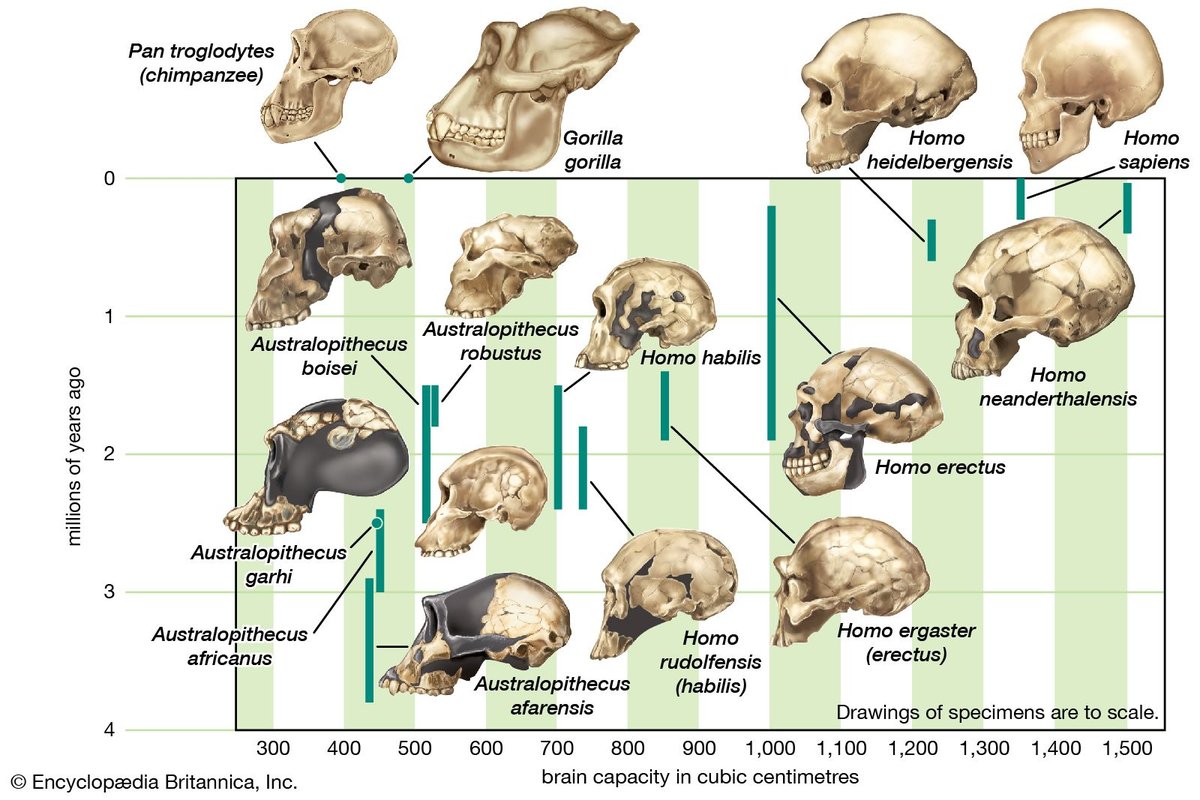
The physical description of Turkana Boy reveals an organism that had crossed a major anatomical threshold in human evolution, exhibiting a suite of traits that are distinctly modern in their overall configuration. At the time of his death, this juvenile male stood approximately 160 centimeters (about 5 feet 3 inches) tall, a startling stature that challenged previous assumptions about the size of early hominins. Had he reached full adulthood, researchers estimate he might have grown to a height of 185 centimeters (6 feet 1 inch) and weighed around 68 kilograms (150 pounds), though some recent re-evaluations suggest a slightly shorter adult height. His postcranial skeleton is characterized by long, slender limbs, particularly elongated femurs and tibias, which are classic adaptations for efficient bipedal locomotion and heat dissipation in a hot, open environment, much like the body proportions seen in modern human populations living in equatorial East Africa today. The rib cage of Turkana Boy is barrel-shaped, a significant departure from the funnel-shaped, ape-like rib cages of earlier hominins like Australopithecus afarensis, indicating a shift in digestive anatomy and a reduction in the size of the gut. His cranial capacity is estimated to have been around 880 cubic centimeters at the time of death, which is substantially larger than that of earlier hominins but still only about two-thirds the size of an average modern human brain. The skull features a prominent brow ridge, a low, sloping forehead, and a relatively prognathic face compared to modern humans, yet his teeth are noticeably smaller than those of his ancestors, reflecting a shift in diet and food processing. The pelvis is narrow, which would have made him an exceptionally efficient walker and runner, though it also implies constraints on the size of infants that could be born to females of this species.
The paleobiology of Homo ergaster, as illuminated by the Turkana Boy skeleton, paints a picture of a highly active, wide-ranging hominin that relied on a complex interplay of biology and behavior to survive. The narrow pelvis, long legs, and specialized foot anatomy strongly support the endurance running hypothesis, suggesting that these early humans were capable of running long distances to scavenge carcasses or engage in persistence hunting, running prey animals to exhaustion under the hot African sun. This highly active lifestyle would have required a significant amount of energy, and the reduced size of the gut, coupled with smaller teeth, indicates a diet that was increasingly reliant on high-quality, easily digestible foods, most notably meat and marrow. The acquisition of meat, likely facilitated by the use of Acheulean stone tools, provided the crucial caloric and nutritional fuel necessary to support their expanding brains. Furthermore, the loss of dense body hair and the development of a highly efficient sweating mechanism are inferred from their body proportions and the ecological demands of their environment, allowing them to remain active during the hottest parts of the day when apex predators were resting. The growth patterns of Turkana Boy have been a subject of intense study; microstructural analysis of his teeth indicates that he grew up much faster than modern humans, reaching his stature at an age of perhaps 8 or 9 years old, rather than the 11 to 13 years initially estimated based on modern human growth charts. This accelerated development suggests that while Homo ergaster had a prolonged childhood compared to chimpanzees, they had not yet evolved the extended period of adolescence and delayed maturation that characterizes modern Homo sapiens.
The ecological context in which Turkana Boy lived was one of profound environmental change and dynamic climatic fluctuations. During the early Pleistocene, approximately 1.6 million years ago, the African continent was experiencing a long-term cooling and drying trend, which led to the fragmentation and retreat of dense forests and the rapid expansion of open woodlands, grasslands, and savanna ecosystems. The Lake Turkana basin was a vibrant, mosaic environment, featuring a large, fluctuating freshwater lake bordered by gallery forests, which transitioned into vast stretches of open savanna. This landscape was teeming with a diverse array of megafauna, including massive elephants, ancient rhinoceroses, towering giraffes, and vast herds of grazing bovids. Homo ergaster shared this habitat with a formidable guild of predators, such as saber-toothed cats like Megantereon and Homotherium, giant hyenas, and large crocodiles that lurked in the waterways. In this highly competitive ecosystem, Homo ergaster occupied a unique ecological niche, transitioning from being primarily prey to becoming a formidable predator and scavenger. Their ability to utilize stone tools to butcher carcasses and extract nutrient-dense bone marrow allowed them to exploit food resources that were inaccessible to many other animals. The open environment also necessitated a high degree of social cooperation and group cohesion to defend against predators, locate water sources, and secure food, suggesting that these hominins lived in complex social groups with advanced communication skills, even if they lacked complex spoken language.
The discovery history of Turkana Boy is one of the most celebrated narratives in the annals of paleoanthropology, highlighting the meticulous and often grueling nature of fossil hunting. The extraordinary find was made in August 1984 by Kamoya Kimeu, a legendary Kenyan fossil hunter and a key member of the research team led by paleoanthropologist Richard Leakey and anatomist Alan Walker. The team was surveying the arid, sun-baked deposits of the Nachukui Formation near the Nariokotome River, just west of Lake Turkana. Kimeu initially spotted a small, unassuming fragment of a hominin skull resting on the surface of the pebbly ground. Recognizing its potential significance, the team initiated a massive, painstaking excavation that involved moving tons of earth and carefully sifting through the sediments. Over the course of several field seasons, they miraculously recovered over 100 individual bones belonging to a single individual, comprising roughly 40 percent of a complete skeleton, or about 80 to 90 percent if one accounts for bilateral symmetry. The sheer completeness of the skeleton was unprecedented for a hominin of this antiquity; prior to this, the famous 'Lucy' skeleton (Australopithecus afarensis) was the most complete early hominin known, but she was significantly older and much smaller. The discovery of KNM-WT 15000 provided an anatomical Rosetta Stone, allowing researchers to finally understand how the various isolated bones of early Homo fit together and functioned as a cohesive biological system.
The evolutionary significance of Turkana Boy cannot be overstated, as he represents a critical juncture in the hominin lineage where the fundamental blueprint of the modern human body was established. Homo ergaster is widely considered to be the direct ancestor of later hominin species, including Homo heidelbergensis, Homo neanderthalensis, and ultimately, Homo sapiens. The skeleton demonstrates that the transition to obligate, efficient bipedalism and a modern body size occurred relatively early in the history of our genus, predating the massive expansion of the brain that would characterize later stages of human evolution. This decoupling of brain size and body size evolution was a major revelation, showing that our ancestors first evolved the physical capacity to walk and run long distances before they developed the cognitive capacity for complex culture and symbolic thought. Furthermore, the modern body proportions and enhanced mobility of Homo ergaster are intrinsically linked to the first major dispersal of hominins out of Africa. The biological adaptations seen in Turkana Boy, combined with behavioral innovations such as advanced tool use and potentially the controlled use of fire, provided this species with the ecological flexibility required to colonize new environments across Eurasia, giving rise to the widespread populations of Homo erectus found in places like Georgia, China, and Indonesia.
Despite the wealth of information provided by Turkana Boy, the specimen remains at the center of several ongoing scientific debates and taxonomic controversies. One of the primary disputes revolves around the classification of the species itself. Many paleoanthropologists classify KNM-WT 15000 as Homo ergaster, arguing that the early African specimens possess distinct cranial features, such as a thinner cranial vault and a less pronounced brow ridge, that separate them from the classic Homo erectus specimens found in Asia. However, other researchers advocate for a broader, more inclusive definition of Homo erectus, viewing the African and Asian populations as regional variants of a single, highly variable, and widely dispersed species. Another significant debate concerns the linguistic capabilities of Turkana Boy. Early analyses of his thoracic vertebrae suggested that the spinal canal was too narrow to accommodate the complex nerve pathways required for the fine motor control of the intercostal muscles, which are essential for the breath control needed for complex spoken language. This led to the conclusion that Homo ergaster could not speak as we do. However, subsequent studies and the discovery of other, more complete vertebral columns have challenged this view, suggesting that the narrow canal in Turkana Boy might have been a pathological condition or simply a juvenile trait, leaving the question of early hominin language capacity unresolved. Additionally, the exact age at death and the specific growth trajectory of this individual continue to be refined as new histological techniques are applied to his dental remains.
The fossil record of early Homo is notoriously fragmentary, making the preservation and completeness of Turkana Boy all the more astonishing. Fossils of Homo ergaster and early Homo erectus are primarily found in East and South Africa, with significant sites including the Lake Turkana basin in Kenya, the Olduvai Gorge in Tanzania, and the Swartkrans caves in South Africa. Typically, the fossil record for this time period consists of isolated teeth, fragmented mandibles, and robust cranial vaults, which are more likely to survive the destructive processes of fossilization and scavenging. Postcranial remains are exceedingly rare, as the long bones and delicate ribs are often destroyed by predators or weathering before they can be buried and mineralized. The exceptional preservation of KNM-WT 15000 is thought to be the result of a rapid burial event; it is hypothesized that the boy died in or near a shallow, marshy area of the Nariokotome River, and his body was quickly covered by fine alluvial sediments, protecting his bones from scavengers and the elements. This rare taphonomic window has provided scientists with a baseline against which all other fragmentary early Homo fossils are compared, allowing researchers to estimate body size, limb proportions, and biomechanical capabilities from isolated bones found at other sites.
The cultural impact of Turkana Boy extends far beyond the confines of academic journals, as he has become a powerful symbol of human origins and a staple of science education worldwide. Casts of the KNM-WT 15000 skeleton are prominently displayed in major natural history museums across the globe, including the Smithsonian National Museum of Natural History in Washington, D.C., and the National Museum of Kenya in Nairobi, where the original fossil is carefully curated. The striking visual of this nearly complete, human-like skeleton standing tall has captivated the public imagination, helping to demystify the process of human evolution and providing a tangible connection to our deep ancestral past. Turkana Boy has been the subject of numerous documentaries, popular science books, and artistic reconstructions, which have brought the story of this ancient youth to life for millions of people. His discovery not only cemented the Leakey family's legacy in paleoanthropology but also underscored the critical importance of the African continent as the undisputed cradle of humankind, fostering a deeper appreciation for the shared evolutionary heritage that unites all modern humans.
Classification
Time Period
Discovery
Location
Lake Turkana, Kenya
Formation
Nachukui Formation
Frequently Asked Questions
What is Turkana Boy (KNM-WT 15000)?
Turkana Boy, scientifically designated as KNM-WT 15000 and sometimes referred to as the Nariokotome Boy, represents one of the most extraordinary and pivotal discoveries in the entire history of paleoanthropology. This specimen is a nearly complete skeleton of a juvenile hominin belonging to the spe...
When did Turkana Boy (KNM-WT 15000) live?
Turkana Boy (KNM-WT 15000) lived during the quaternary period of the cenozoic era approximately 1.6-1.6 million years ago.
Where was Turkana Boy (KNM-WT 15000) discovered?
Fossils of Turkana Boy (KNM-WT 15000) were discovered in Lake Turkana, Kenya in the Nachukui Formation.
What did Turkana Boy (KNM-WT 15000) eat?
Turkana Boy (KNM-WT 15000) was a omnivore. It lived in terrestrial habitats.
What type of fossil is Turkana Boy (KNM-WT 15000)?
Turkana Boy (KNM-WT 15000) is preserved as a body fossil. The preservation quality is exceptional.
Related Specimens
From the cenozoic era · body fossils