Dorudon
Dorudon atrox
Image: Image sourced via web search (Fair use / Educational)
About Dorudon
Dorudon atrox was an ancient species of cetacean that lived during the Eocene epoch of the Paleogene period, approximately 41 to 33 million years ago. Primarily found in the shallow seas that once covered modern-day Egypt and North America, this prehistoric whale represents a crucial chapter in the evolutionary transition of cetaceans from land-dwelling mammals to fully aquatic marine organisms. As a member of the family Basilosauridae, Dorudon lived alongside its much larger relative, Basilosaurus, but possessed a body plan much closer to that of modern dolphins and small whales. Its significance in paleontology cannot be overstated, as the exceptional preservation of its fossils has provided scientists with unparalleled insights into the anatomical adaptations required for a fully marine lifestyle, including the complete detachment of the pelvis from the vertebral column and the modification of forelimbs into flippers. This organism serves as a definitive anchor point in understanding how terrestrial artiodactyls successfully conquered the global oceans.
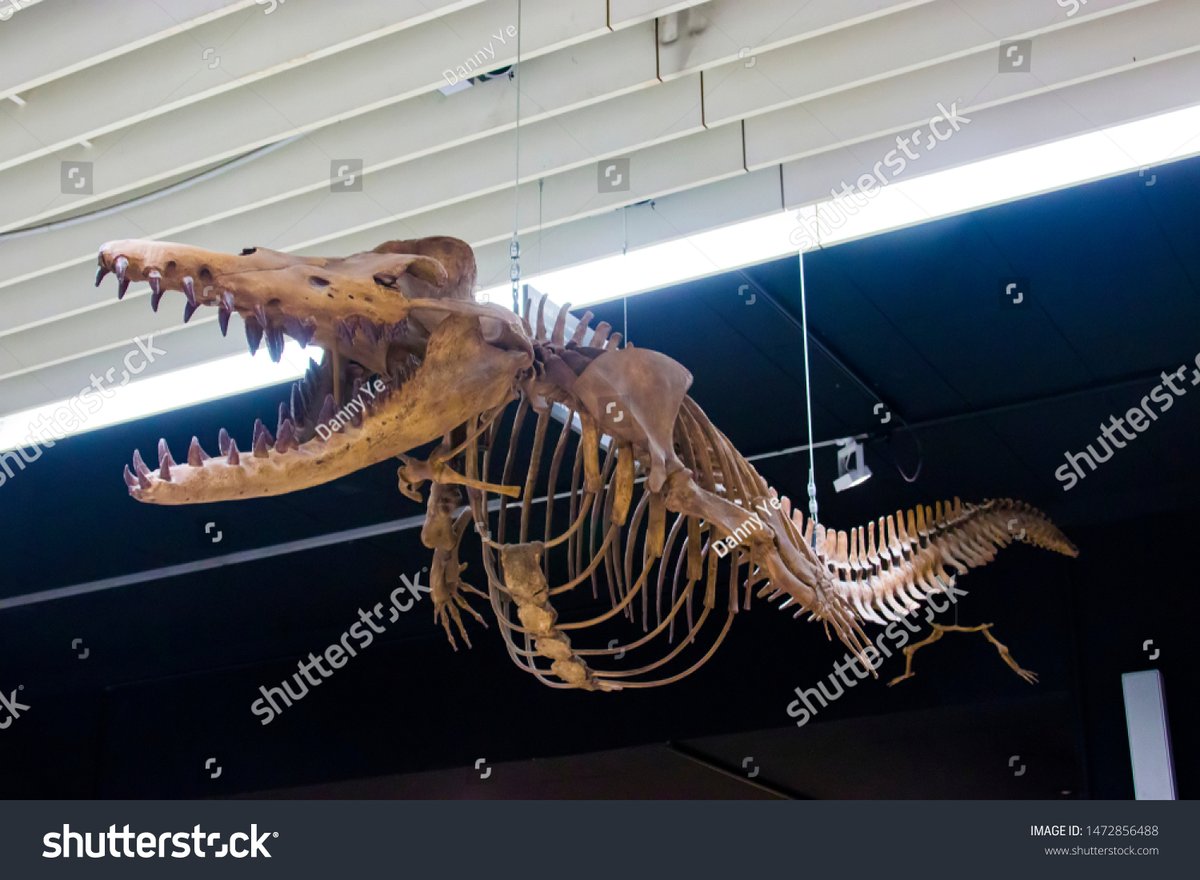
Measuring approximately five meters in length and weighing an estimated one thousand kilograms, Dorudon atrox was a moderately sized marine predator, roughly comparable in scale to a modern beluga whale or a large bottlenose dolphin. Unlike its elongated, serpentine contemporary Basilosaurus, Dorudon possessed a more compact, streamlined, and torpedo-shaped body that closely mirrors the hydrodynamic forms seen in extant cetaceans. Its skull was relatively large, making up nearly a fifth of its total body length, and housed a formidable array of heterodont teeth. The anterior teeth were conical and adapted for grasping slippery prey, while the posterior premolars and molars were heavily serrated and triangular, resembling the blades of a spear, a feature that gives the genus its name, which translates to spear-tooth. One of the most distinctive skeletal characteristics of Dorudon was the presence of vestigial hind limbs. These tiny legs, measuring only a few centimeters long, were completely enclosed within the body wall or barely protruded, and were detached from the spinal column, rendering them useless for locomotion. The forelimbs, meanwhile, had evolved into broad, paddle-like flippers with shortened arm bones and elongated finger bones, encased in soft tissue. Soft tissue inferences suggest the presence of a horizontal tail fluke, driven by powerful epaxial and hypaxial musculature along the robust lumbar vertebrae, providing the primary means of propulsion through the water.
As a dedicated carnivore, Dorudon atrox occupied a high trophic level in the Eocene marine ecosystem. Its dentition indicates a diet primarily composed of small to medium-sized fish and cephalopods, such as squid. The heavily serrated cheek teeth were not used for chewing in the mammalian sense, but rather for slicing captured prey into smaller, swallowable chunks, or for shearing flesh from larger carcasses. Locomotion was achieved through dorsoventral undulation, the up-and-down movement of the spine and tail fluke, which is the hallmark of modern cetacean swimming. The structure of its vertebrae suggests that Dorudon was a strong, agile swimmer capable of rapid bursts of speed to ambush prey. Social behavior inferences are drawn from the dense accumulations of fossils found in certain localities. The presence of numerous individuals of varying ages, including juveniles and calves, in close proximity suggests that Dorudon may have formed pods or social groups, similar to modern dolphins. Growth patterns analyzed through bone histology and tooth eruption sequences indicate a relatively rapid growth rate, with calves reaching maturity within a few years. Metabolism estimates suggest that, like modern whales, Dorudon was fully endothermic, relying on a thick layer of blubber to maintain its core body temperature in the marine environment, though the warm Eocene seas would have required less extreme thermoregulatory adaptations than those needed by today's polar species.
During the middle to late Eocene epoch, the Earth experienced a warm, greenhouse climate, with little to no permanent ice at the poles and significantly higher global sea levels. Dorudon atrox thrived in the Tethys Sea, a vast, shallow, and warm body of water that separated the continents of Laurasia and Gondwana, covering parts of what is now the Middle East, North Africa, and Southern Europe. This tropical to subtropical marine environment was incredibly rich in biodiversity, supporting extensive coral reefs, seagrass meadows, and mangrove forests along the coastlines. Dorudon shared its habitat with a wide array of marine life, including early sirenians or sea cows like Protosiren, giant marine turtles, numerous species of sharks such as the formidable Otodus, and a diverse assemblage of bony fishes. In the food web, Dorudon was a mid-to-apex predator, feeding on schooling fish and mollusks. However, it was not at the very top of the hierarchy. Fossil evidence, including bite marks on the skulls of juvenile Dorudon specimens, indicates that they were actively preyed upon by their massive relative, Basilosaurus isis, which could reach lengths of up to eighteen meters. This predator-prey relationship highlights a complex and dynamic ecosystem where early whales filled multiple ecological niches, from agile pursuit predators to massive apex scavengers and hunters.
The discovery history of Dorudon atrox is intimately tied to the exploration of the Fayum Depression in Egypt, specifically the renowned Wadi al-Hitan, or Valley of the Whales. The first fossils of Dorudon were discovered in the late nineteenth century, but it was the early twentieth-century expeditions led by paleontologist Charles William Andrews that brought significant attention to these ancient cetaceans. The genus Dorudon was formally named by Robert Gibbes in 1845 based on fragmentary remains found in North America, but the species Dorudon atrox was later established when more complete material was unearthed in Egypt. The name atrox translates to cruel or fierce, a nod to its formidable, serrated dentition. For decades, Dorudon was mistakenly believed to be the juvenile form of the larger Basilosaurus, due to their overlapping habitats and similar dental morphologies. It was not until the late twentieth century, through the meticulous fieldwork of paleontologist Philip Gingerich and his team at the University of Michigan, that this misconception was corrected. Gingerich's expeditions to Wadi al-Hitan in the 1980s and 1990s uncovered hundreds of exquisitely preserved skeletons, including adult Dorudon specimens with fully erupted permanent teeth and fused cranial sutures, proving definitively that they were a distinct, smaller species. These discoveries, particularly the nearly complete skeletons designated as UM 97512 and UM 101222, have become the global standard for understanding basilosaurid anatomy.
Dorudon atrox occupies a pivotal position in the evolutionary tree of life, serving as a textbook example of macroevolution and the transition of mammals from terrestrial to aquatic environments. Belonging to the family Basilosauridae, Dorudon represents the first group of cetaceans that were fully obligate marine organisms, completely incapable of supporting their weight on land or coming ashore to breed. This marks a significant evolutionary milestone from earlier, semi-aquatic archaeocetes like Ambulocetus and Remingtonocetus. Dorudon exhibits a fascinating mosaic of transitional features. While its overall body shape, flippers, and tail fluke anticipate the morphology of modern whales, it still retained primitive mammalian traits, most notably its heterodont dentition, having differentiated incisors, canines, premolars, and molars, and the presence of external, albeit vestigial, hind limbs complete with a femur, patella, tibia, fibula, and tiny toes. Furthermore, unlike modern toothed whales and baleen whales, Dorudon lacked the cranial telescoping, the overlapping of skull bones, that accommodates the blowhole at the top of the head in extant species. Instead, its nasal openings were situated midway down the snout. Phylogenetic analyses suggest that while the highly specialized Basilosaurus was an evolutionary dead end, a smaller, more generalized basilosaurid closely related to Dorudon was likely the direct ancestor of all modern cetaceans, making it a crucial link in understanding how today's whales and dolphins came to be.
Despite the wealth of fossil material, Dorudon atrox remains the subject of several ongoing scientific debates. One major area of contention involves the exact function of its vestigial hind limbs. While it is universally agreed that these limbs were useless for swimming or walking, some researchers, including Philip Gingerich, have hypothesized that they may have served a purpose during copulation, acting as claspers to help individuals align their bodies in the buoyant marine environment. Others argue that the limbs were entirely functionless evolutionary hangovers, slowly being phased out by natural selection. Another debate centers on the acoustic capabilities of Dorudon. Modern toothed whales use complex echolocation to navigate and hunt, relying on specialized structures in the skull and inner ear. While CT scans of Dorudon skulls reveal that their inner ears were adapted for directional hearing underwater, they lacked the melon, a fatty organ in the forehead, and the specific cranial asymmetry associated with high-frequency echolocation. The extent to which they could communicate vocally or perceive their acoustic environment remains a topic of active research and interpretation. Additionally, the precise taxonomic boundaries between various basilosaurid genera are periodically revised as new specimens are discovered across the globe, leading to ongoing discussions about species diversity in the Eocene oceans.
The fossil record of Dorudon atrox is among the most robust and spectacular of any prehistoric marine mammal. The vast majority of specimens, and certainly the best-preserved ones, originate from the Birket Qarun Formation and the Qasr el-Sagha Formation in the Fayum Depression of Egypt, particularly within the UNESCO World Heritage site of Wadi al-Hitan. Here, the arid desert winds have eroded the sandstone and shale to reveal hundreds of articulated skeletons lying exactly where they fell to the seafloor nearly forty million years ago. The preservation quality is often exceptional, with entire vertebral columns, complete skulls, delicate rib cages, and even the tiny bones of the vestigial hind limbs preserved in pristine condition. Beyond Egypt, fossils attributed to the genus Dorudon have been found in marine deposits across the globe, including the southeastern United States, Western Sahara, New Zealand, and parts of Europe, indicating a cosmopolitan distribution in the Eocene oceans. Typically, the dense, robust tympanic bullae, or ear bones, and the heavily enameled teeth are the most commonly preserved elements in less ideal depositional environments, as they are highly resistant to taphonomic degradation. The sheer volume of high-quality material from Wadi al-Hitan allows researchers to conduct population-level studies, a rarity in vertebrate paleontology.
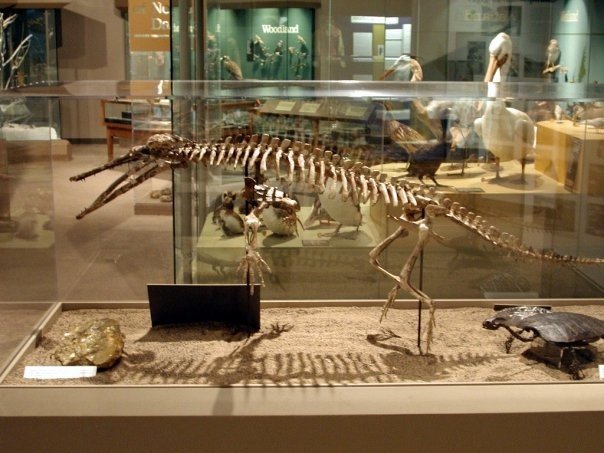
Dorudon atrox has made a significant impact on public understanding of evolution and paleontology. It frequently features in documentaries about the history of life, most notably appearing in the acclaimed series Walking with Beasts, where it was depicted navigating the dangerous Eocene seas alongside the predatory Basilosaurus. In the museum sphere, cast skeletons of Dorudon are prominent displays in major natural history institutions worldwide, including the Smithsonian National Museum of Natural History in Washington, D.C., and the University of Michigan Museum of Paleontology. These exhibits serve as powerful educational tools, visually demonstrating the concept of vestigial structures and the step-by-step evolutionary transition of whales from land to sea. The story of Wadi al-Hitan, with its surreal landscape of whale skeletons stranded in the Sahara Desert, continues to capture the public imagination, highlighting the dynamic and ever-changing nature of our planet's geography and the incredible resilience of life.
Classification
Time Period
Discovery
Location
Egypt
Formation
Birket Qarun Formation
Frequently Asked Questions
What is Dorudon?
Dorudon atrox was an ancient species of cetacean that lived during the Eocene epoch of the Paleogene period, approximately 41 to 33 million years ago. Primarily found in the shallow seas that once covered modern-day Egypt and North America, this prehistoric whale represents a crucial chapter in the ...
When did Dorudon live?
Dorudon lived during the paleogene period of the cenozoic era approximately 41-33 million years ago.
Where was Dorudon discovered?
Fossils of Dorudon were discovered in Egypt in the Birket Qarun Formation.
What did Dorudon eat?
Dorudon was a carnivore. It lived in marine habitats.
What type of fossil is Dorudon?
Dorudon is preserved as a body fossil. The preservation quality is exceptional.
Related Specimens
From the cenozoic era · body fossils