Kimberella
Kimberella quadrata
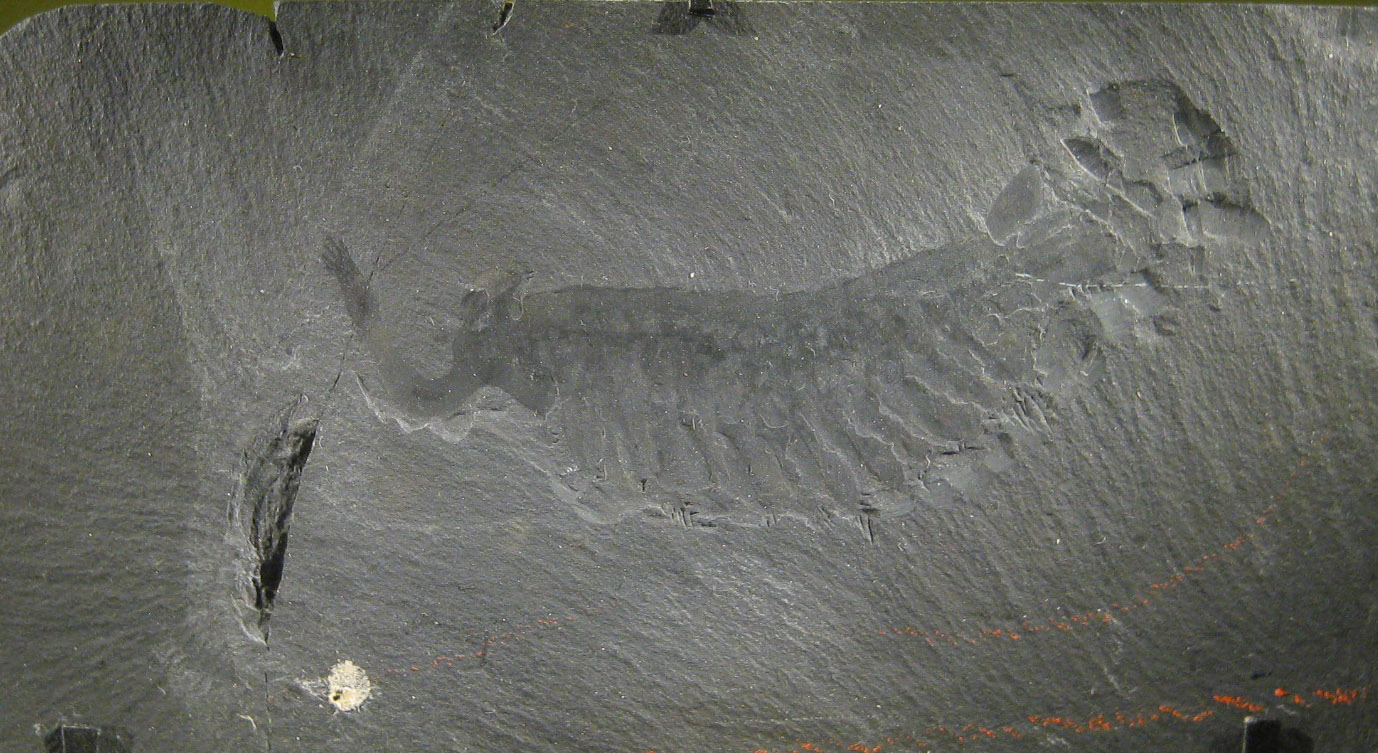
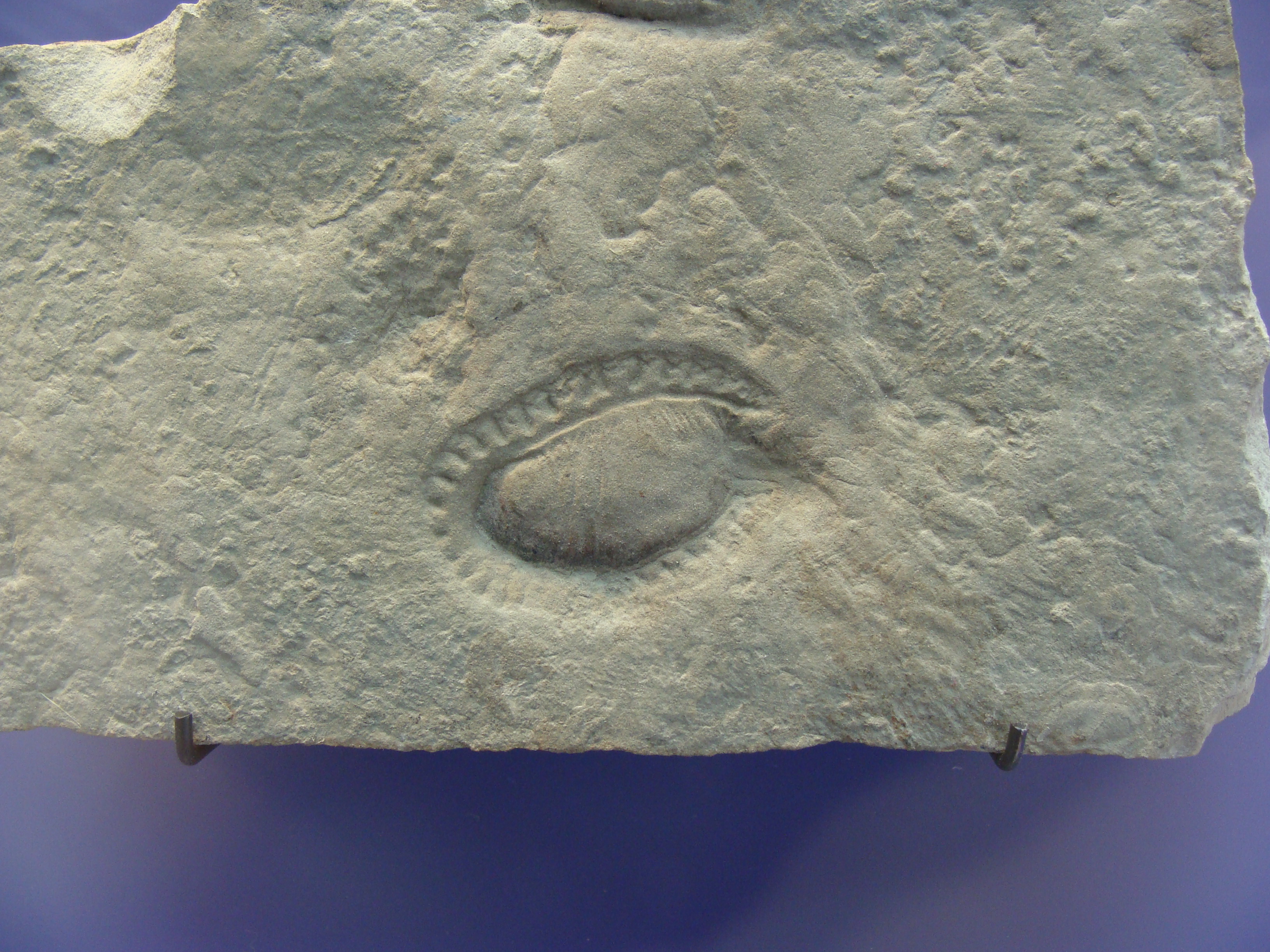
Image: File:Kimberella quadrata fossil.JPG - Wikimedia Commons (CC BY-SA)
About Kimberella
Kimberella quadrata stands as one of the most profoundly significant and rigorously studied organisms of the Ediacaran biota, thriving approximately 558 to 555 million years ago during the late Precambrian era. As a pioneering member of the early marine ecosystem, this remarkable creature provides some of the earliest and most compelling fossil evidence for the existence of complex, bilaterally symmetrical animal life long before the famed Cambrian Explosion. Originally unearthed in the rugged Ediacara Hills of South Australia and subsequently discovered in astonishing abundance along the White Sea coast of Russia, Kimberella represents a crucial biological bridge that connects the enigmatic, frond-like and quilted organisms of the Precambrian with the recognizable anatomical blueprints of modern animal phyla. By demonstrating that mobile, complex animals with specialized feeding structures existed millions of years prior to the Phanerozoic eon, this organism has fundamentally reshaped our understanding of early evolutionary timelines.
In terms of its physical description, Kimberella possessed a distinctively slug-like, bilaterally symmetrical body that reached up to 15 centimeters in length, though many specimens measure between 3 and 10 centimeters. Its width was typically about half of its length, and it is estimated to have stood roughly 3 to 4 centimeters high in life, giving it a robust, three-dimensional profile that contrasted sharply with the extremely flat bodies of many of its Ediacaran contemporaries. While it is impossible to determine its exact weight, paleontologists estimate that a fully grown adult might have weighed anywhere from 50 to 100 grams, depending on the density of its tissues. The most prominent anatomical feature of Kimberella was its tough, non-mineralized dorsal shell or hood-like covering. Unlike the hard, calcium carbonate shells of modern molluscs, this dorsal shield was likely composed of sclerotized or stiffened organic material, perhaps similar to chitin or tough proteinaceous cartilage. This flexible yet protective carapace was surrounded by a distinctive, crenulated or frilled margin. Beneath this protective dorsal hood lay a broad, muscular creeping foot, highly analogous to the muscular foot seen in modern terrestrial slugs and marine gastropods. The organism also featured a distinct anterior end, which likely housed a specialized feeding apparatus and rudimentary sensory organs, though no eyes or complex neural structures have been definitively preserved. When compared to modern animals, Kimberella most closely resembles a shell-less limpet or a primitive chiton, exhibiting a body plan that is unmistakably designed for directional movement and active grazing along the seafloor.
The paleobiology of Kimberella reveals a highly active and specialized organism, particularly when compared to the passive, sessile creatures that dominated the Ediacaran oceans. It was a benthic marine herbivore, and its feeding strategies are among the most fascinating aspects of its biology. Fossilized trace evidence, specifically fan-shaped arrays of microscopic scratch marks known as Radulichnus, have been found in direct association with Kimberella body fossils. These trace fossils strongly suggest that the organism possessed a radula-like feeding apparatus, a specialized, toothed ribbon of tissue used for scraping. Kimberella utilized this structure to systematically harvest the thick, nutritious microbial mats that blanketed the Ediacaran ocean floor. As it fed, it would anchor itself with its muscular foot, extend its proboscis or feeding organ, and scrape the substrate in sweeping, rhythmic arcs, leaving behind the telltale Radulichnus grooves. Its locomotion was achieved through the rhythmic, undulating contractions of its broad muscular foot, allowing it to creep slowly but deliberately across the undulating matgrounds. This mobility was a revolutionary adaptation, enabling Kimberella to actively seek out unexploited food sources rather than relying on passive filter feeding or osmotrophy. Analyses of various fossil sizes indicate that Kimberella grew isometrically, meaning its proportions remained relatively constant as it increased in size from a juvenile to an adult, suggesting a stable and continuous growth pattern throughout its life cycle.
The ecological context in which Kimberella lived was vastly different from modern marine environments. During the late Ediacaran period, the Earth was recovering from the severe global glaciations of the Cryogenian period, and the climate had stabilized into a relatively warm, temperate state. Kimberella inhabited shallow, sunlit, near-shore marine environments, primarily within the photic zone where photosynthetic cyanobacteria and algae could thrive. The seafloor of this era was characterized by the widespread presence of thick, leathery microbial mats, creating a unique ecosystem often referred to as the Ediacaran matgrounds. In this environment, Kimberella shared its habitat with a bizarre menagerie of early life forms, including the massive, flat, and segmented Dickinsonia, the frond-like Charniodiscus, and the enigmatic, crescent-shaped Spriggina. Within this ancient food web, Kimberella occupied the role of a primary consumer and an active grazer. Notably, the Ediacaran oceans were largely devoid of macroscopic predators; there were no fish, crustaceans, or large cephalopods to hunt Kimberella. Therefore, its tough dorsal hood likely evolved not as a defense against predation, but rather as a structural support system to protect its internal organs from the physical stresses of the environment, such as shifting currents and sediment loads, or to provide a rigid attachment point for its complex musculature.
The history of Kimberella's discovery is a testament to the evolving nature of paleontological science. The first specimens were discovered in 1959 in the Rawnsley Quartzite formation of the Ediacara Hills in South Australia. The organism was initially described by the pioneering paleontologist Martin Glaessner and his colleague Mary Wade in 1966. In 1972, Mary Wade formally named the genus Kimberella in honor of John Kimber, a student and collector who lost his life during an expedition to central Australia. For decades, Kimberella was misinterpreted; its fossils were often flattened and distorted, leading early researchers to classify it as a type of jellyfish or a siphonophore related to the modern Portuguese man o' war. However, this interpretation was radically overturned in 1997 following a series of spectacular discoveries in the White Sea region of Russia. Paleontologists Mikhail Fedonkin and Ben Waggoner analyzed hundreds of exceptionally well-preserved, three-dimensional specimens from the Russian deposits. These new fossils clearly revealed the organism's bilateral symmetry, its muscular foot, and its tough dorsal covering. Fedonkin and Waggoner's groundbreaking 1997 paper reclassified Kimberella as an advanced, bilaterally symmetrical animal, fundamentally altering the scientific consensus and establishing it as one of the most important fossils of the Precambrian era.
The evolutionary significance of Kimberella cannot be overstated, as it occupies a critical and highly informative position in the tree of life. Prior to the re-evaluation of Kimberella, many scientists believed that complex, bilaterally symmetrical animals did not evolve or diversify until the Cambrian Explosion, roughly 541 million years ago. Kimberella shatters this assumption, proving that the fundamental genetic and anatomical toolkits required for bilateral symmetry, directional locomotion, and specialized digestive systems were already well-established millions of years earlier. Most contemporary paleontologists consider Kimberella to be an early ancestor or a stem-group member of the phylum Mollusca, placing it within the broader superphylum Lophotrochozoa. Its possession of a muscular creeping foot, a non-mineralized but distinct dorsal mantle or shell, and a radula-like feeding structure strongly foreshadows the anatomical blueprints of later gastropods, chitons, and bivalves. Even if it is not a direct ancestor to modern molluscs, Kimberella represents a vital transitional form, illustrating the gradual, step-by-step assembly of complex animal body plans and serving as a crucial bridge in our understanding of early animal evolution and the deep origins of modern biodiversity.
Despite its extensive fossil record, Kimberella remains the subject of vigorous scientific debates and taxonomic controversies. While the consensus heavily favors a molluscan affinity, some researchers argue that the evidence is not entirely conclusive. Skeptics point out that the radula-like feeding traces, while compelling, do not definitively prove the existence of a true molluscan radula, suggesting instead that Kimberella might have possessed a convergent, analogous feeding structure. Consequently, some paleontologists prefer to classify Kimberella more conservatively as a basal bilaterian or a stem-group trochozoan, rather than a true stem-mollusc. Furthermore, there are ongoing debates regarding the exact nature of its dorsal covering. While early reconstructions sometimes depicted it with a rigid, almost turtle-like shell, recent taphonomic studies suggest the covering was much more flexible, perhaps functioning more like a stiffened, leathery mantle than a true shell. These debates highlight the inherent challenges of interpreting half-billion-year-old fossils and ensure that Kimberella remains at the forefront of research into Precambrian evolutionary biology.
The fossil record of Kimberella is exceptionally rich, particularly when compared to other Ediacaran organisms. While the initial discoveries in the Rawnsley Quartzite of South Australia yielded a modest number of flattened impressions, the fossil beds of the White Sea region in Russia have produced thousands of exquisitely preserved specimens. These Russian fossils are primarily found in fine-grained sandstones and siltstones, where they were often preserved through a process known as death mask preservation. In this taphonomic pathway, the rapid burial of the organism by storm sediments, combined with the precipitating action of the underlying microbial mats, created a rigid mold around the body before it could fully decay. This has resulted in remarkable three-dimensional casts that preserve the contours of the dorsal hood, the frilled margins, and occasionally the contracted muscular foot. The sheer volume and high preservation quality of the White Sea specimens have allowed scientists to conduct detailed statistical analyses of Kimberella populations, providing unprecedented insights into their growth rates, variations in body size, and spatial distribution on the ancient seafloor.
Beyond the confines of academic literature, Kimberella has made a notable cultural impact, serving as an emblem of the Ediacaran period and the deep history of life on Earth. It is prominently featured in major paleontological exhibits around the world, most notably at the South Australian Museum in Adelaide and the Paleontological Institute in Moscow, where spectacular slabs of Kimberella fossils draw thousands of visitors annually. In popular science media, documentaries, and educational textbooks, Kimberella is frequently highlighted as the quintessential precursor to the Cambrian Explosion, illustrating the concept that complex life has roots much deeper than previously imagined. By providing a tangible, recognizable link between the alien world of the Precambrian and the familiar animals of today, Kimberella plays a crucial educational role, inspiring public fascination with paleontology and the enduring mysteries of evolutionary history.
Classification
Time Period
Discovery
Location
Ediacara Hills, South Australia
Formation
Rawnsley Quartzite
Frequently Asked Questions
What is Kimberella?
Kimberella quadrata stands as one of the most profoundly significant and rigorously studied organisms of the Ediacaran biota, thriving approximately 558 to 555 million years ago during the late Precambrian era. As a pioneering member of the early marine ecosystem, this remarkable creature provides s...
When did Kimberella live?
Kimberella lived during the ediacaran period of the precambrian era approximately 558-555 million years ago.
Where was Kimberella discovered?
Fossils of Kimberella were discovered in Ediacara Hills, South Australia in the Rawnsley Quartzite.
What did Kimberella eat?
Kimberella was a herbivore. It lived in marine habitats.
What type of fossil is Kimberella?
Kimberella is preserved as a impression fossil. The preservation quality is excellent.
Related Specimens
From the precambrian era · impression fossils