American Mastodon
Mammut americanum
Image: Image sourced via web search (Fair use / Educational)
About American Mastodon
The American Mastodon, Mammut americanum, was a massive, elephant-like proboscidean that roamed North America during the late Pliocene and Pleistocene epochs. As one of the last surviving members of the ancient Mammutidae family, it represents a key component of the Ice Age megafauna and provides critical insights into the ecosystems that existed just before the rise of modern human civilization. Its extensive and well-preserved fossil record has made it one of the most studied prehistoric mammals, offering a detailed window into the life, environment, and eventual extinction of a truly iconic species.
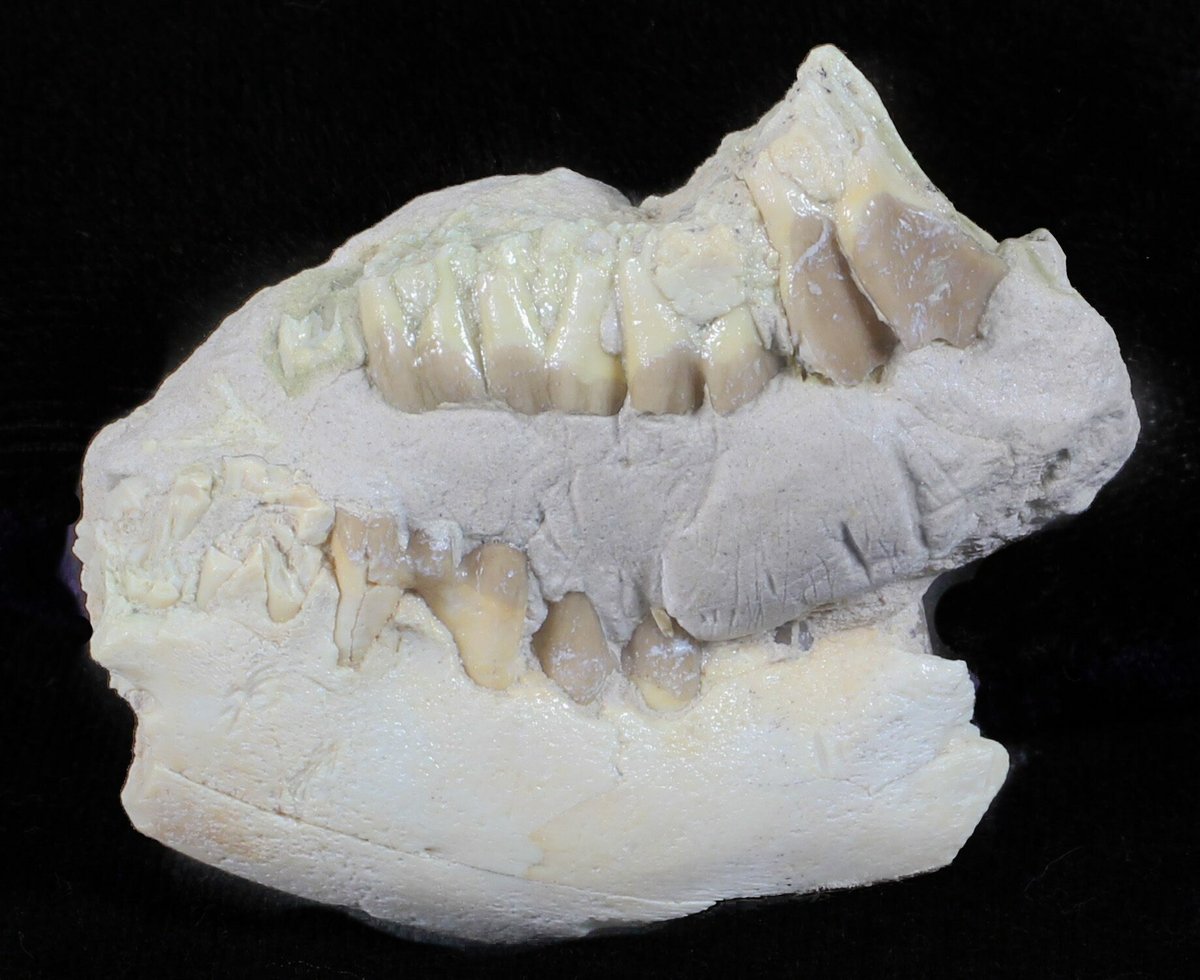
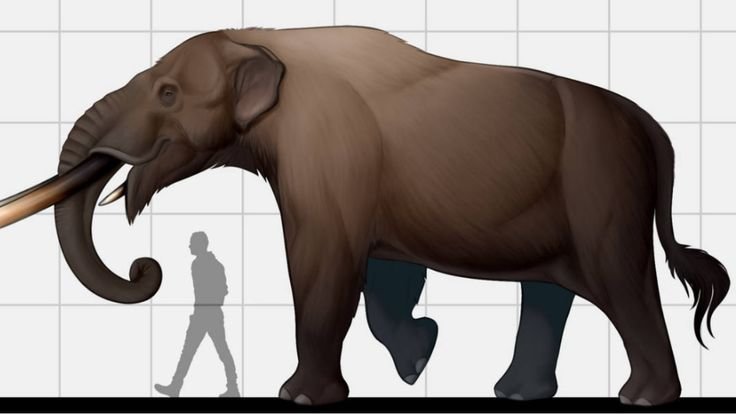
The American Mastodon was a powerfully built animal, distinct in its anatomy from its more famous contemporary, the woolly mammoth. Adult males typically stood between 2.4 and 3.0 meters (8 to 10 feet) at the shoulder and weighed an estimated 6 to 8 metric tons (13,000 to 17,500 pounds), with some exceptionally large individuals potentially exceeding 11 tons. Their bodies were long and low-slung compared to mammoths, supported by stout, pillar-like legs. The skull was lower and flatter than that of a mammoth, and their back sloped downwards from the shoulders to the hips. One of their most defining features was their dentition; their molar teeth featured distinctive cone-shaped cusps, which gave the mastodon its name (from Greek 'mastos' for breast and 'odon' for tooth). These teeth were well-suited for crushing tough plant material. They possessed a pair of large, curving tusks, which were modified upper incisors, that could reach lengths of over 2.5 meters (8 feet). Inferred from fossil impressions and preserved hair, mastodons were covered in a coat of shaggy, reddish-brown hair, similar to but likely less dense than that of the woolly mammoth, providing insulation in cool climates.
The paleobiology of the American Mastodon reveals a specialized browser adapted to forest and woodland environments. Analysis of their unique, cusped molars, along with preserved gut contents and dung deposits (coprolites), confirms a diet primarily consisting of woody vegetation. They were browsers, not grazers like mammoths. Their food sources included leaves, twigs, and bark from coniferous and deciduous trees, as well as shrubs and aquatic plants. Isotope analysis of their tusks, which grew in layers throughout their lives, shows seasonal shifts in diet and migration patterns. Locomotion was graviportal, meaning their limbs were adapted to support immense weight, allowing them to move deliberately through their forested habitats. Social behavior is inferred from fossil trackways and bonebed assemblages. Evidence suggests they lived in small, mixed-sex herds, likely led by a dominant female, similar to modern elephants. Growth patterns indicate a long lifespan, with individuals reaching sexual maturity in their early teens and continuing to grow for many years afterward, a life history strategy common among large, slow-reproducing mammals.
The ecological context of the American Mastodon was the dynamic environment of Pleistocene North America. They thrived in the cool, moist spruce woodlands and forests that covered much of the continent, particularly east of the Rocky Mountains and from Alaska down to central Mexico. This was the era of the Ice Ages, characterized by advancing and retreating glacial sheets that dramatically reshaped the landscape and climate. Mastodons shared this world with a spectacular array of other megafauna, including woolly mammoths, giant ground sloths (like Megatherium), saber-toothed cats (Smilodon), the short-faced bear (Arctodus simus), and dire wolves (Aenocyon dirus). In this ecosystem, the mastodon was a primary herbivore, a keystone species that shaped its environment by clearing vegetation. Healthy adult mastodons had few natural predators due to their immense size, but calves, the old, or the infirm would have been vulnerable to pack-hunting predators like dire wolves or the formidable Smilodon. Their primary competitors for resources were other large browsers, such as giant beavers and ground sloths.
The discovery history of the American Mastodon is deeply intertwined with the birth of American paleontology. The first scientifically documented remains were found in 1705 by Dutch farmers in Claverack, New York. A tooth and bone fragments were sent to London, where they were initially dubbed the 'incognitum' or 'unknown creature.' For decades, naturalists debated their identity, with some, like French anatomist Georges Cuvier, correctly identifying them as an extinct elephant-like animal, a revolutionary concept at the time. In 1801, Charles Willson Peale, a Philadelphia artist and naturalist, excavated a nearly complete skeleton from a marl pit in Newburgh, New York, an event funded in part by the American Philosophical Society. This specimen, dubbed the 'Mastodon of Peale,' became a national sensation and was one of the first fossil skeletons ever mounted for public display, helping to popularize the idea of extinction and deep time in the young United States. Cuvier formally named the genus Mammut in 1817, distinguishing it from the true elephants (Elephas) and mammoths (Mammuthus).
Evolutionarily, the American Mastodon represents a distinct and ancient lineage of proboscideans, the Mammutidae, which diverged from the lineage leading to mammoths and modern elephants (Elephantidae) over 25 million years ago. This makes them distant cousins, not direct ancestors, of mammoths. The family Mammutidae originated in Africa during the Oligocene and spread across Eurasia and North America. The American Mastodon, Mammut americanum, was the last and most successful species of this family. Its evolutionary history showcases a successful adaptation to browsing in forested environments, a niche that differed from the grazing specialization of mammoths. The study of mastodon evolution provides a classic example of adaptive radiation within the Proboscidea, demonstrating how different lineages evolved distinct feeding strategies and morphologies to exploit different ecological niches. Their eventual extinction marks the end of the entire Mammutidae family, a major branch on the tree of life that had persisted for millions of years.
Despite being a well-studied animal, several scientific debates surrounding the American Mastodon persist. The primary controversy revolves around the cause of its extinction approximately 11,000 years ago. The two leading hypotheses are climate change and human overhunting (the 'Pleistocene overkill' hypothesis). Evidence supports both: the end of the Pleistocene saw rapid warming and the collapse of the spruce forest habitats mastodons depended on. Simultaneously, the arrival of Paleo-Indian hunters, particularly the Clovis people, coincides with the mastodon's decline. Fossil sites like the Manis Mastodon in Washington and the Buesching mastodon in Indiana show direct evidence of human butchery, confirming they were hunted. Most scientists now favor a synergistic model where climate-induced habitat stress made mastodon populations more vulnerable to human predation. Another area of ongoing research is their social structure and migratory behavior, which is being refined through advanced isotopic analysis of tusk dentin, revealing life histories with unprecedented detail.
The fossil record of the American Mastodon is exceptionally rich and widespread. Fossils are found across North America, from Alaska and the Yukon in the north, down through the contiguous United States, and as far south as Honduras. The highest concentration of remains occurs in the Great Lakes region of the United States, particularly in Ohio, Indiana, Michigan, and New York, where bogs, peat deposits, and former glacial lakes provided ideal conditions for preservation. Thousands of specimens are known, ranging from isolated teeth to nearly complete skeletons. This abundance has allowed for detailed studies of population structure, age distribution, and sexual dimorphism. Famous fossil sites include the Diamond Valley Lake in California, the Aucilla River in Florida, and the many 'kettle lake' deposits of the Midwest. The preservation quality is often excellent, with not only bones and tusks but occasionally also hair, skin, and even gut contents being recovered, providing an invaluable, direct look into their biology.
The American Mastodon has had a significant cultural impact, particularly in the United States, where it is a symbol of the nation's deep prehistoric past. Its discovery captivated the minds of early American leaders like Thomas Jefferson, who was an avid fossil collector and hoped living specimens might be found in the unexplored West. Today, impressive mastodon skeletons are prominent exhibits in major natural history museums worldwide, including the American Museum of Natural History in New York and the Field Museum in Chicago. It is the official state fossil of Michigan. As a quintessential Ice Age animal, the mastodon frequently appears in documentaries, books, and educational materials, captivating the public imagination and serving as a powerful tool for teaching concepts of evolution, extinction, and climate change.
Classification
Time Period
Discovery
Location
USA (New York)
Formation
Various Pleistocene and Pliocene deposits; not a single type formation.
Frequently Asked Questions
What is American Mastodon?
The American Mastodon, Mammut americanum, was a massive, elephant-like proboscidean that roamed North America during the late Pliocene and Pleistocene epochs. As one of the last surviving members of the ancient Mammutidae family, it represents a key component of the Ice Age megafauna and provides cr...
When did American Mastodon live?
American Mastodon lived during the quaternary period of the cenozoic era approximately 3.7-0.011 million years ago.
Where was American Mastodon discovered?
Fossils of American Mastodon were discovered in USA (New York) in the Various Pleistocene and Pliocene deposits; not a single type formation..
What did American Mastodon eat?
American Mastodon was a herbivore. It lived in terrestrial habitats.
What type of fossil is American Mastodon?
American Mastodon is preserved as a body fossil. The preservation quality is excellent.
Related Specimens
From the cenozoic era · body fossils