Fossil Nipa Palm
Nypa burtinii
Image: Image sourced via web search (Fair use / Educational)
About Fossil Nipa Palm
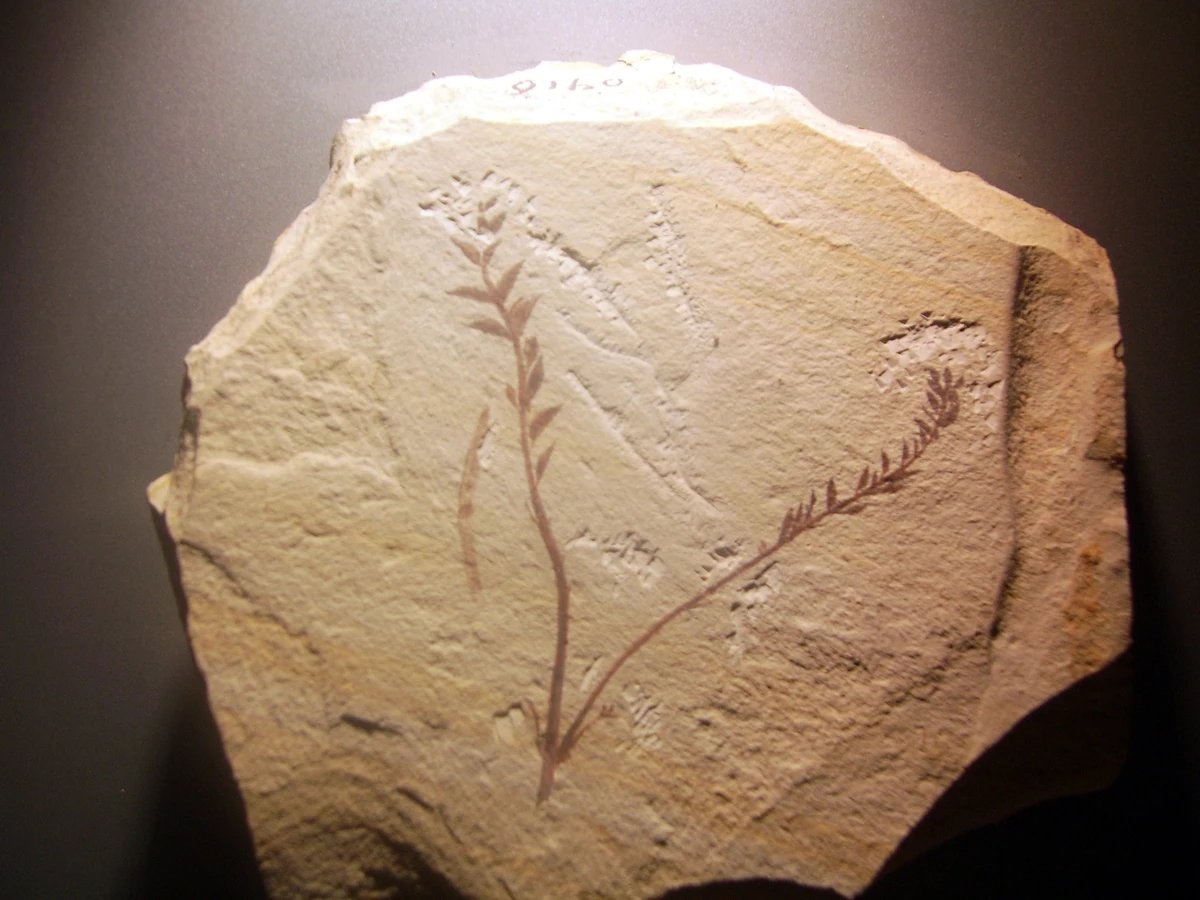
Nypa burtinii, commonly referred to as the fossil nipa palm, represents an extinct species of palm that thrived during the Paleogene period, specifically throughout the Eocene epoch approximately 56 to 34 million years ago. This remarkable paleobotanical specimen serves as a critical indicator of ancient climates, demonstrating that regions currently experiencing temperate weather patterns, such as northern Europe, once harbored lush, tropical mangrove ecosystems. The presence of Nypa burtinii in the fossil record is of profound significance to paleontology and paleoclimatology, as it provides undeniable evidence of the extreme greenhouse conditions that characterized the early Cenozoic era. By studying the distribution and morphology of these fossilized palms, scientists have been able to reconstruct the ancient coastlines of the Tethys Ocean and the expansive estuarine environments that dominated the landscape of Eocene Europe, offering a vivid window into a world drastically different from our own. The physical description of Nypa burtinii reveals a plant that was remarkably similar in structure and scale to its sole living relative, the modern nipa palm (Nypa fruticans). Unlike typical palm trees that feature tall, woody trunks, Nypa burtinii possessed a prostrate, dichotomously branching rhizome that grew horizontally beneath the mud of estuarine and mangrove habitats. From this submerged root system, massive pinnate fronds erupted directly from the water or mudline, likely reaching lengths of up to 900 centimeters (approximately 30 feet), creating dense, impenetrable thickets along ancient waterways. The fossilized impressions of these fronds showcase robust, parallel-veined leaflets that were adapted to withstand the dynamic forces of tidal currents and coastal winds. The most distinctive physical features preserved in the fossil record, however, are the reproductive structures. Nypa burtinii produced large, globular fruiting heads composed of tightly packed, angular, woody nuts. These individual drupes, often found fossilized as pyritized casts or carbonaceous impressions, measure several centimeters across and feature prominent longitudinal ridges. When compared to modern flora, the sheer size of the fronds and the robust nature of the fruiting bodies indicate a highly specialized, vigorous plant capable of dominating the biomass of its specific ecological niche, much like the modern nipa palms that currently choke the estuaries of Southeast Asia and Australasia. In terms of paleobiology, Nypa burtinii was a photosynthetic autotroph perfectly adapted to the challenging conditions of the intertidal zone. Its metabolic processes were finely tuned to handle the fluctuating salinity levels characteristic of estuarine environments, utilizing specialized cellular mechanisms to exclude or excrete excess salt, a vital adaptation for any mangrove species. The growth patterns of the plant were dictated by its rhizomatous nature, allowing it to spread vegetatively and rapidly colonize newly formed mudflats or stabilize eroding shorelines. This clonal growth strategy meant that a single genetic individual could potentially cover vast areas of the coastline. The reproductive strategy of Nypa burtinii was heavily reliant on hydrochory, or water dispersal. The large, buoyant nuts were designed to detach from the fruiting head and float on ocean currents or tidal flows for extended periods before washing ashore to germinate. This method of seed dispersal not only facilitated the widespread distribution of the species across the Tethys and Atlantic coastlines but also explains the frequent occurrence of these nuts in marine sedimentary deposits. The ecological context of the Eocene epoch, during which Nypa burtinii flourished, was defined by the Paleocene-Eocene Thermal Maximum and the subsequent Eocene Climatic Optimum. The global climate was exceptionally warm, with little to no polar ice, resulting in high sea levels that flooded continental margins and created expansive, shallow epicontinental seas. In regions like the London Basin and the Paris Basin, Nypa burtinii formed the backbone of dense mangrove forests that lined the shores of a warm, shallow sea. These coastal ecosystems were incredibly biodiverse, serving as crucial nurseries and habitats for a wide array of marine and terrestrial life. The nipa palm thickets co-existed with other tropical flora, including early relatives of cinnamon, magnolia, and diverse ferns. Within the tangled roots and submerged stems of Nypa burtinii, early marine life, such as ancient teleost fishes, crustaceans, and mollusks, found refuge and foraging grounds. The waterways were patrolled by large predators, including early crocodilians, marine turtles, and primitive cetaceans, while the muddy banks supported early perissodactyls and other ancestral mammals. As a primary producer, Nypa burtinii anchored the coastal food web, contributing massive amounts of organic detritus to the estuarine ecosystem, which fueled the complex trophic interactions of the Eocene coastal biome. The discovery history of Nypa burtinii is deeply intertwined with the early development of paleobotany as a rigorous scientific discipline. The first significant fossils of this organism were unearthed in the early 19th century from the rich fossil beds of the London Clay Formation in England, as well as contemporaneous deposits in the Paris Basin in France. Early naturalists and geologists, such as Adolphe Brongniart, often referred to as the father of paleobotany, were among the first to recognize the tropical affinities of these peculiar fossilized fruits and leaf impressions. The specific naming and classification of Nypa burtinii underwent several revisions as the understanding of plant taxonomy evolved. The species was initially described under various generic names before its undeniable morphological similarities to the modern Nypa genus were firmly established. Key specimens, particularly the exceptionally well-preserved pyritized fruits collected from the Isle of Sheppey in Kent, England, became foundational to the study of Eocene flora. Throughout the 19th and 20th centuries, pioneering paleobotanists like Eleanor Mary Reid and Marjorie Elizabeth Jane Chandler conducted exhaustive studies on the London Clay flora, meticulously cataloging the thousands of Nypa nuts recovered from the eroding coastal cliffs. Their monumental work provided the definitive proof that a tropical mangrove ecosystem once thrived at a latitude of 51 degrees north, a discovery that fundamentally altered the scientific community's understanding of Earth's climatic history. The evolutionary significance of Nypa burtinii is profound, as it occupies a unique and ancient branch on the evolutionary tree of the palm family (Arecaceae). The genus Nypa is considered a monotypic taxon today, represented solely by Nypa fruticans, and is placed in its own subfamily, Nypoideae. This isolated taxonomic position indicates that the lineage diverged very early in the evolutionary history of palms, likely during the Late Cretaceous period. Nypa burtinii, therefore, represents a crucial transitional link that demonstrates the deep antiquity and morphological conservatism of this lineage. The fact that a plant so anatomically similar to its modern descendant existed over 50 million years ago highlights a remarkable instance of evolutionary stasis, where the organism became so perfectly adapted to its specialized mangrove niche that little morphological change was required over tens of millions of years. Furthermore, the widespread fossil distribution of Nypa burtinii across the Northern Hemisphere contrasts sharply with the restricted Indo-Pacific range of the modern nipa palm, providing vital clues about the historical biogeography of tropical plants and the devastating impact of subsequent global cooling events, such as the Eocene-Oligocene transition, which eradicated these palms from Europe and North America. Scientific debates surrounding Nypa burtinii primarily focus on taxonomic boundaries and the interpretation of isolated fossil plant parts. Because paleobotany often relies on fragmented remains—such as isolated nuts, pollen grains (known as Spinizonocolpites when found dispersed), and leaf impressions—reconstructing the whole plant and determining species boundaries can be highly contentious. Some researchers argue that the minor morphological variations seen in fossil Nypa nuts from different geographical locations warrant the designation of multiple distinct species, while others contend that these differences merely represent natural intraspecific variation within a single, widespread species like Nypa burtinii. Additionally, there is ongoing debate regarding the exact physiological tolerances of these ancient palms; while they are universally accepted as indicators of warm climates, the precise temperature and salinity thresholds they could endure remain a subject of active isotopic and geochemical investigation, with new discoveries continually refining our understanding of Eocene coastal dynamics. The fossil record of Nypa burtinii is exceptionally rich, particularly concerning its reproductive structures. Fossils are predominantly found in Paleogene marine and estuarine deposits across Europe, North America, and parts of Asia. The most famous and prolific fossil site is the London Clay Formation in the United Kingdom, where tens of thousands of Nypa nuts have been collected over the past two centuries. The preservation quality varies depending on the taphonomic conditions; while leaf impressions are relatively rare and often poorly preserved due to the high-energy environments of ancient coastlines, the woody nuts are frequently found in excellent condition. In the London Clay, these nuts are often permineralized by iron pyrite, preserving exquisite three-dimensional cellular details, though this mode of preservation makes them susceptible to rapid decay (pyrite disease) when exposed to modern atmospheric humidity. Pollen attributed to the Nypa lineage is also globally ubiquitous in Eocene sediments, serving as a highly reliable biostratigraphic marker for oil exploration and geological dating. The cultural impact of Nypa burtinii, while perhaps less prominent than that of charismatic megafauna like dinosaurs, is nonetheless significant in the realm of science education and public awareness of climate change. Notable displays of these fossil palms can be found in major institutions such as the Natural History Museum in London, where they are utilized as powerful educational tools to illustrate the dramatic shifts in Earth's climate over geological time. The visceral realization that tropical palm trees once grew along the banks of the River Thames captures the public imagination, serving as a stark reminder of the planet's dynamic nature and providing a deep-time perspective on current global warming trends. Consequently, Nypa burtinii remains a cornerstone of paleobotanical education, symbolizing the intricate and ever-changing relationship between life and the global climate.
Classification
Time Period
Discovery
Location
Europe
Formation
London Clay Formation
Frequently Asked Questions
What is Fossil Nipa Palm?
Nypa burtinii, commonly referred to as the fossil nipa palm, represents an extinct species of palm that thrived during the Paleogene period, specifically throughout the Eocene epoch approximately 56 to 34 million years ago. This remarkable paleobotanical specimen serves as a critical indicator of an...
When did Fossil Nipa Palm live?
Fossil Nipa Palm lived during the paleogene period of the cenozoic era approximately 56-34 million years ago.
Where was Fossil Nipa Palm discovered?
Fossils of Fossil Nipa Palm were discovered in Europe in the London Clay Formation.
What did Fossil Nipa Palm eat?
Fossil Nipa Palm was a photosynthetic. It lived in semi-aquatic habitats.
What type of fossil is Fossil Nipa Palm?
Fossil Nipa Palm is preserved as a impression fossil. The preservation quality is good.
Related Specimens
From the cenozoic era · impression fossils