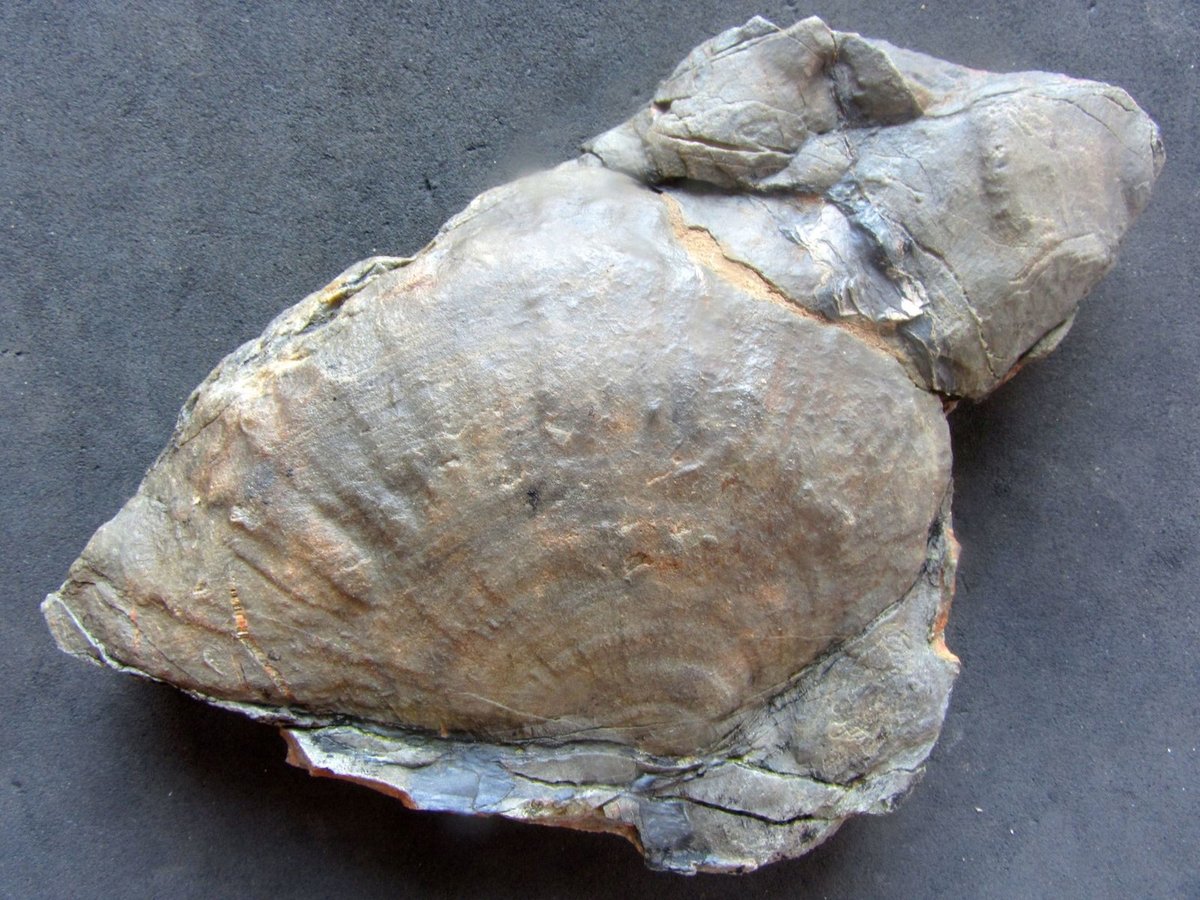
Ediacaria
Ediacaria flindersi
Image: Image sourced via web search (Fair use / Educational)
About Ediacaria
Ediacaria flindersi represents one of the most iconic and historically significant organisms of the late Precambrian era, specifically thriving during the Ediacaran period approximately 560 to 550 million years ago. Discovered in the ancient marine strata of South Australia, this enigmatic organism is a quintessential representative of the Ediacara biota, a unique assemblage of soft-bodied macroscopic life forms that predate the Cambrian explosion. As a fossil impression, Ediacaria provides a crucial window into the early evolution of complex multicellular life on Earth, standing at the precipice of animal evolution before the advent of biomineralized skeletons and complex predatory behaviors. Its significance in paleontology cannot be overstated, as it was among the first Precambrian fossils to be widely recognized and accepted by the scientific community, fundamentally altering our understanding of the timeline of life and proving that complex organisms existed long before the Cambrian period began. The study of Ediacaria flindersi continues to inform our understanding of the biological and environmental conditions that fostered the initial diversification of macroscopic life.
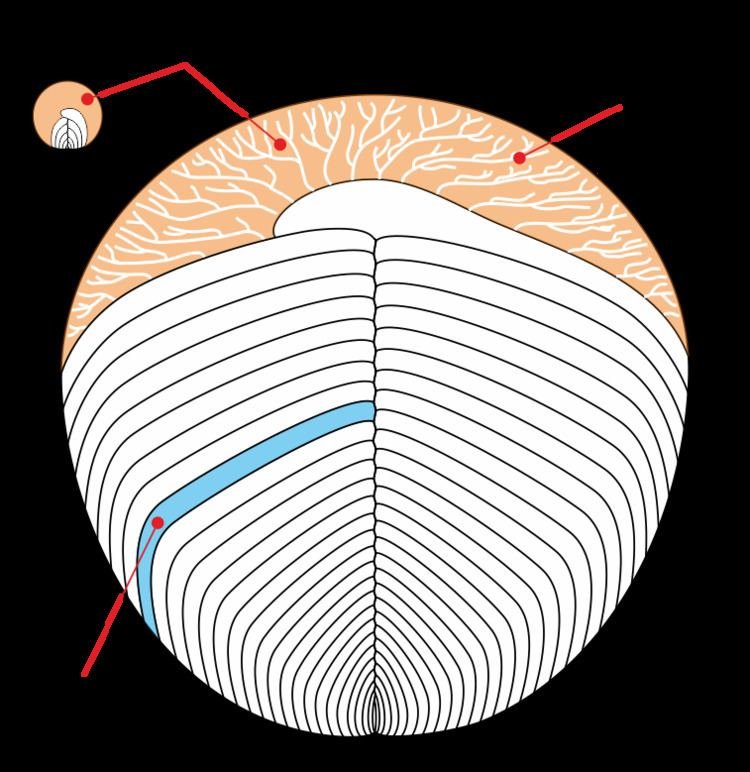
In terms of physical description, Ediacaria flindersi is primarily known from circular to sub-circular discoidal impressions preserved in sandstone, ranging dramatically in size from a mere centimeter to over fifty centimeters in diameter. The anatomy of these impressions is characterized by a distinct central depression or boss, surrounded by a series of concentric rings and, in some exceptionally preserved specimens, faint radial striations that extend outward toward the margin of the disc. Unlike modern animals, Ediacaria possessed no hard skeletal parts, teeth, or biomineralized tissues; its entire body was composed of soft tissue that was likely gelatinous or highly compressible. The concentric corrugations suggest a relatively tough outer integument or a hydrostatic skeleton that allowed the organism to maintain its shape against the gentle currents of its shallow marine environment. When compared to modern organisms for scale and morphology, Ediacaria superficially resembles the bell of a modern scyphozoan jellyfish, which led early researchers to misidentify it as a pelagic medusa. However, modern biomechanical and taphonomic analyses indicate that it was a benthic organism, likely possessing a relatively flat, pancake-like profile in life, resting upon or partially embedded within the microbial mats that carpeted the Ediacaran seafloor. The weight of the organism is difficult to estimate due to its soft-bodied nature and the likelihood of a high water content, but even the largest specimens likely weighed no more than a few kilograms. The lack of distinct mouthparts, digestive tracts, or locomotory appendages in the fossil impressions further underscores the alien nature of its anatomy, distinguishing it sharply from the bilaterian body plans that would come to dominate the subsequent Phanerozoic eon.
The paleobiology of Ediacaria flindersi remains a subject of intense scientific inquiry, particularly regarding its diet, feeding strategies, and overall metabolism. Lacking any evidence of a mouth, gut, or specialized feeding appendages, it is highly unlikely that Ediacaria was an active predator or even a conventional herbivore. Instead, paleontologists hypothesize that it employed a passive feeding strategy, most likely osmotrophy, absorbing dissolved organic nutrients directly from the surrounding seawater across its extensive surface area. Alternatively, it may have functioned as a passive filter-feeder, utilizing microscopic cilia to direct suspended organic particles toward specialized feeding grooves, or it could have harbored symbiotic chemoautotrophic or photoautotrophic microorganisms within its tissues, similar to modern giant tube worms or certain species of giant clams. Locomotion was entirely absent; Ediacaria was a strictly sessile, benthic organism that lived its entire life anchored to a single spot on the seafloor. Social behavior, in the traditional sense, was non-existent, though fossil assemblages often show numerous individuals clustered together, suggesting that they reproduced via broadcast spawning or localized budding, leading to dense, gregarious populations in favorable environments. Growth patterns inferred from a series of differently sized fossils indicate a simple isometric growth trajectory, where the organism expanded its diameter continuously by adding new concentric rings or simply inflating its hydrostatic structure as it aged. The metabolism of Ediacaria was likely very slow, adapted to the low-oxygen conditions of the Ediacaran oceans and requiring minimal energy expenditure due to its sessile lifestyle and lack of complex internal organs.
The ecological context of Ediacaria flindersi paints a picture of a world vastly different from our own, situated in the shallow, sunlit marine environments of the late Neoproterozoic era. During this time, the Earth was recovering from the severe global glaciations of the Cryogenian period, and the climate was generally warm and stabilizing. The seafloor was not churned by burrowing organisms as it is today; instead, it was covered by extensive, cohesive microbial mats composed of cyanobacteria and other microorganisms. Ediacaria lived directly upon or partially embedded within these mats, occupying a fundamental position in a relatively simple, low-tier benthic ecosystem. It co-existed with a bizarre menagerie of other Ediacaran organisms, such as the frond-like Charnia, the segmented Dickinsonia, and the triradial Tribrachidium. The food web was remarkably flat, dominated by primary producers and passive consumers like Ediacaria. Crucially, the Ediacaran period is often characterized as a time before the evolution of macroscopic predators. There is no evidence of predation, shell-crushing, or active hunting in this ecosystem; Ediacaria lived its life free from the threat of being eaten, which explains why such defenseless, soft-bodied organisms could thrive and reach such large sizes. The primary threats to its survival were likely environmental, such as burial by sudden influxes of sediment during storms, which paradoxically is the very mechanism that allowed for its exceptional preservation in the fossil record.
The discovery history of Ediacaria flindersi is a landmark narrative in the annals of paleontology, beginning in 1946 with the pioneering work of Australian geologist Reginald Sprigg. While exploring the rugged terrain of the Ediacara Hills in the Flinders Ranges of South Australia, Sprigg was tasked with assessing the region's potential for abandoned mine reworking. Instead, he stumbled upon a series of faint, circular impressions in the Rawnsley Quartzite. Recognizing their biological nature, Sprigg initially interpreted them as the remains of ancient jellyfish and published his findings in 1947, formally naming the genus Ediacaria and the type species Ediacaria flindersi in honor of the Flinders Ranges. This discovery was initially met with skepticism by the global scientific community, as the prevailing dogma of the time held that no complex life existed prior to the Cambrian period. However, subsequent expeditions by paleontologists such as Martin Glaessner in the 1950s and 1960s uncovered thousands of additional specimens, vindicating Sprigg's initial assessments and firmly establishing the Ediacara Hills as one of the most important fossil sites on Earth. The naming history of Ediacaria has been relatively stable, though its classification has undergone numerous revisions as our understanding of Precambrian life has evolved. Key specimens of Ediacaria are housed in major institutions worldwide, with the South Australian Museum holding the most extensive and historically significant collection, including Sprigg's original holotypes, which continue to be studied by modern researchers using advanced imaging techniques.
The evolutionary significance of Ediacaria flindersi lies in its position near the very base of the macroscopic tree of life, serving as a critical data point in our understanding of how complex multicellularity evolved. For decades, Ediacaria was confidently classified as a primitive cnidarian, specifically a scyphozoan jellyfish, suggesting a direct evolutionary lineage to modern marine invertebrates. However, this view has been heavily challenged, and its exact phylogenetic placement remains one of the great mysteries of evolutionary biology. Some researchers argue that Ediacaria represents an extinct, early experiment in multicellularity, part of a forgotten kingdom of life known as the Vendobionta, which left no modern descendants and was entirely wiped out at the Precambrian-Cambrian boundary. Others suggest it may be a stem-group metazoan, possessing some but not all the characteristics of true animals, or perhaps a highly specialized colonial organism related to modern sea pens or microbial colonies. Regardless of its exact taxonomic affinity, Ediacaria demonstrates that large, complex biological structures evolved millions of years before the Cambrian explosion. It provides evidence of transitional ecological strategies, showing how early life forms adapted to the unique matground environments of the Neoproterozoic. The study of Ediacaria and its kin forces scientists to reconsider the definitions of animal life and the various pathways that evolution can take, highlighting a period of rapid morphological experimentation that set the stage for the modern biosphere.
Scientific debates surrounding Ediacaria flindersi are vibrant and ongoing, reflecting the inherent difficulties of interpreting soft-bodied fossils from over half a billion years ago. The most significant controversy involves its taxonomy and functional morphology. In recent years, a growing consensus among paleontologists suggests that many of the discoidal fossils traditionally assigned to Ediacaria may not represent independent, jellyfish-like organisms at all. Instead, they are increasingly interpreted as the basal holdfasts of larger, frond-like organisms such as Charniodiscus or Arborea. When the stalk and frond of these organisms decayed or were sheared off by ocean currents, only the tough, circular holdfast remained embedded in the sediment, fossilizing as a simple disc. This hypothesis has led to proposals that Ediacaria flindersi might be a junior synonym of other Ediacaran taxa, such as Aspidella terranovica, a similar discoidal fossil found in Newfoundland. Furthermore, debates continue regarding the taphonomic processes that preserved these soft tissues in coarse sandstone, a phenomenon known as death mask preservation. Some argue that the rapid precipitation of iron minerals or silica, facilitated by the decay of the organism and the surrounding microbial mat, created a rigid mold before the tissue completely collapsed. These ongoing revisions and controversies highlight the dynamic nature of Precambrian paleontology, where new discoveries and advanced analytical techniques continually challenge long-held assumptions.
The fossil record of Ediacaria flindersi is remarkably robust for a soft-bodied Precambrian organism, with thousands of individual specimens having been collected and cataloged. The geographic distribution of these fossils is primarily centered in the Flinders Ranges of South Australia, specifically within the Ediacara Member of the Rawnsley Quartzite formation. However, similar discoidal fossils, often attributed to the genus Ediacaria or closely related forms, have been discovered in other global Ediacaran localities, including the White Sea region of Russia, the Nama Group in Namibia, and the Avalon Peninsula in Newfoundland, Canada. The quality of preservation varies from poor, indistinct smudges to exceptionally well-preserved impressions that capture sub-millimeter details of the concentric rings and radial striations. Because Ediacaria lacked hard parts, the fossils are entirely composed of epireliefs and hyporeliefs formed on the bedding planes of sedimentary rocks. Typically, only the tough, lower surface of the organism or the holdfast is preserved, as it was the part in direct contact with the microbial mat and the burying sediment. The famous fossil sites of the Ediacara Hills, now protected within the Ediacara Conservation Park and the Nilpena Ediacara National Park, remain the most prolific and important sources of Ediacaria fossils, providing an unparalleled archive of this ancient ecosystem.
The cultural impact of Ediacaria flindersi is profound, particularly in Australia, where it is celebrated as a symbol of the nation's rich geological heritage. The discovery of Ediacaria and its associated fauna was so groundbreaking that it led to the official ratification of the Ediacaran period in 2004, the first new geological period to be declared in over a century. Ediacaria flindersi has been featured on Australian postage stamps, and its distinctive concentric shape is frequently used in logos and educational materials related to paleontology. Museums worldwide, most notably the South Australian Museum in Adelaide, feature prominent displays of Ediacaria fossils, drawing public fascination to the bizarre and alien world of the Precambrian. These exhibits play a crucial educational role, illustrating the vastness of geological time and the incredible diversity of life's evolutionary history.
Classification
Time Period
Discovery
Location
Flinders Ranges, South Australia
Formation
Rawnsley Quartzite
Frequently Asked Questions
What is Ediacaria?
Ediacaria flindersi represents one of the most iconic and historically significant organisms of the late Precambrian era, specifically thriving during the Ediacaran period approximately 560 to 550 million years ago. Discovered in the ancient marine strata of South Australia, this enigmatic organism ...
When did Ediacaria live?
Ediacaria lived during the ediacaran period of the precambrian era approximately 560-550 million years ago.
Where was Ediacaria discovered?
Fossils of Ediacaria were discovered in Flinders Ranges, South Australia in the Rawnsley Quartzite.
What did Ediacaria eat?
Ediacaria was a osmotroph. It lived in marine benthic habitats.
What type of fossil is Ediacaria?
Ediacaria is preserved as a impression fossil. The preservation quality is good.
Related Specimens
From the precambrian era · impression fossils

/cc86f4a1bc00.jpg)