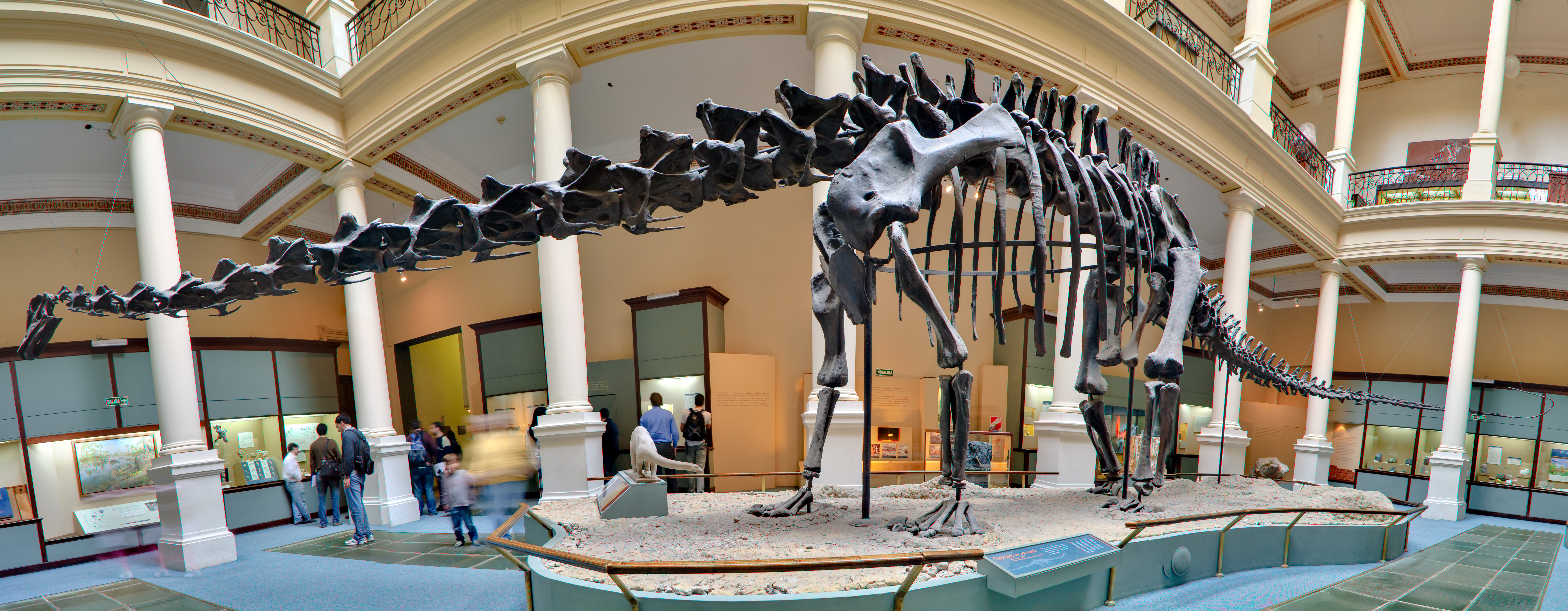
Tyrannosaurus rex
About Tyrannosaurus rex
Tyrannosaurus rex, whose name translates to 'King of the Tyrant Lizards,' stands as arguably the most iconic and recognizable dinosaur to have ever existed. This colossal theropod was one of the last non-avian dinosaurs, inhabiting the planet during the final two million years of the Cretaceous Period, from approximately 68 to 66 million years ago. As the apex predator of its ecosystem, it roamed the forested river valleys and subtropical plains of what is now western North America, a formidable carnivore whose legacy has captured the human imagination for over a century.
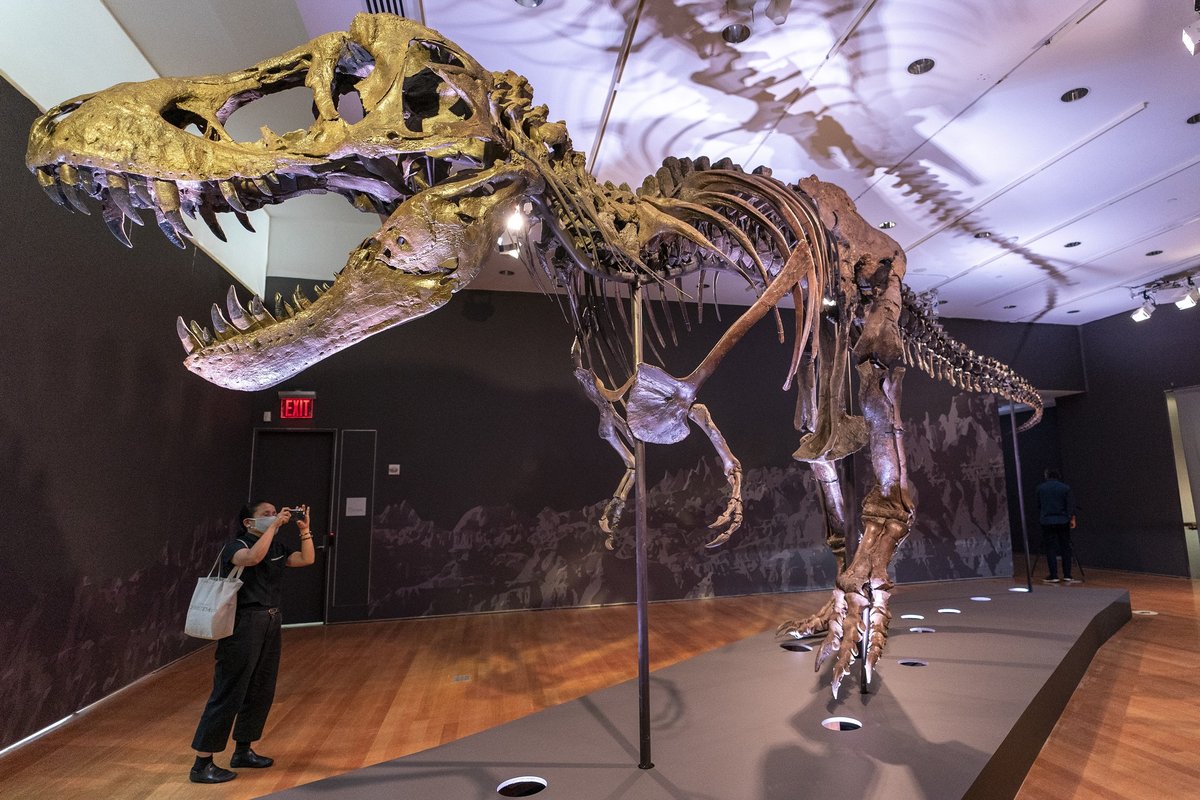
The physical presence of Tyrannosaurus rex was nothing short of awe-inspiring, representing a pinnacle of theropod evolution. Adult individuals reached lengths of 12 to 12.4 meters (approximately 40 feet) from snout to tail tip and stood an imposing 3.6 to 4 meters (12 to 13 feet) tall at the hips. Estimates of its body mass have varied over the years with advancing analytical techniques, but modern consensus places a healthy adult between 8 and 10 metric tons, with some exceptional specimens potentially exceeding this. Its most dominant feature was its massive skull, which could measure up to 1.5 meters (5 feet) in length. This cranium was not a delicate structure; it was a robust, akinetic (largely immobile) framework of fused and thickened bones designed to withstand immense stress. Its teeth were equally formidable: up to 60 in number, they were not blade-like like those of many other theropods, but thick, conical, and serrated, with deep roots anchoring them into the jaw. The largest of these teeth could project over 30 centimeters (12 inches) from the gumline, functioning as bone-pulverizing spikes. In stark contrast to its powerful head and hindquarters were its famously diminutive forelimbs. These two-fingered arms, though small relative to its body size, were not vestigial; bone analysis reveals robust muscle attachment points, suggesting they were capable of lifting several hundred pounds and may have been used to grasp struggling prey or to help the animal push itself up from a prone position. The entire animal was balanced by a long, heavy, and muscular tail that acted as a crucial counterbalance to its enormous head and torso.
The paleobiology of Tyrannosaurus rex reveals a creature finely tuned for predation. Its diet consisted primarily of large herbivorous dinosaurs, with direct fossil evidence, such as bite marks on Triceratops and Edmontosaurus bones, confirming its role as an active hunter of megafauna. The immense power of its jaws allowed it to employ a "puncture-pull" feeding strategy, driving its teeth deep into its victim to inflict catastrophic damage and shatter bone. The estimated bite force of an adult T. rex, potentially exceeding 35,000 newtons, is among the strongest of any terrestrial animal known to science. While undoubtedly a formidable hunter, many paleontologists believe it was also an opportunistic scavenger, using its size to intimidate smaller predators and its highly developed sense of smell to locate carcasses from miles away. Studies of its braincase endocasts reveal large olfactory bulbs, supporting this hypothesis. Locomotion was bipedal, with powerful hind limbs propelling its massive frame. While early depictions showed it running at high speeds, modern biomechanical models suggest a top speed closer to 17-25 kilometers per hour (10-15 mph), more of a brisk, bone-jarring trot than a sprint. Growth studies based on bone histology show that T. rex experienced a dramatic adolescent growth spurt, packing on an average of 2 kilograms (nearly 5 pounds) per day between the ages of 14 and 18, reaching sexual maturity around this time and full adult size in its early twenties.
Tyrannosaurus rex lived in a humid, subtropical environment on the western landmass of North America known as Laramidia. This continent was characterized by coastal plains, forested river valleys, swamps, and open woodlands, a landscape teeming with life. The climate was warmer than today's, with mild seasons and abundant rainfall supporting lush vegetation, including ferns, cycads, and flowering plants. T. rex occupied the top of the food web in what is known as the Hell Creek Formation ecosystem. Its primary prey included the heavily armored, three-horned ceratopsian Triceratops horridus and the large, duck-billed hadrosaur Edmontosaurus annectens. It also shared its habitat with other formidable dinosaurs, such as the armored Ankylosaurus magniventris, the dome-headed Pachycephalosaurus wyomingensis, and smaller theropods like Dakotaraptor. This complex ecological network placed immense selective pressure on both predator and prey, driving an evolutionary arms race of greater armor and weaponry in herbivores and more powerful bites and hunting strategies in carnivores like Tyrannosaurus. The presence of such a large apex predator would have had a profound regulatory effect on herbivore populations, shaping the structure and dynamics of its entire ecosystem right up until the cataclysmic Cretaceous-Paleogene extinction event.
The history of Tyrannosaurus rex's discovery began in the late 19th and early 20th centuries during the "Bone Wars" and their aftermath. While isolated teeth and vertebrae that likely belonged to the genus were found earlier, the first significant partial skeleton was discovered by Barnum Brown of the American Museum of Natural History in eastern Wyoming in 1900. A second, more complete skeleton was unearthed by Brown in the Hell Creek Formation of Montana in 1902. This second specimen, designated AMNH 973, became the holotype. In 1905, Henry Fairfield Osborn, president of the American Museum of Natural History, formally described and named the animal. He coined the name Tyrannosaurus rex, combining the Greek "tyrannos" (tyrant) and "sauros" (lizard) with the Latin "rex" (king). Osborn had initially named Brown's first find "Dynamosaurus imperiosus," but upon realizing both specimens represented the same species, he retained Tyrannosaurus rex due to its appearance first in the publication. The discovery of more complete skeletons throughout the 20th century, most notably "Sue" (FMNH PR 2081) in 1990 and "Stan" (BHI 3033) in 1987, has provided an unprecedented wealth of information, transforming our understanding of this magnificent animal from a collection of bones into a well-studied biological entity.
Within the grand tapestry of life, Tyrannosaurus rex represents the culmination of a long evolutionary lineage of tyrannosauroids. This superfamily of coelurosaurian theropods originated in the Jurassic period as small, long-armed predators. Over tens of millions of years, this group evolved, with later members showing a trend towards increased body size, larger and more robust skulls, and a reduction in the size and number of fingers on their forelimbs. T. rex and its closest relatives, such as Tarbosaurus and Zhuchengtyrannus, form the family Tyrannosauridae, the last and largest members of this lineage. Key transitional features seen in earlier tyrannosauroids, like Dilong and Guanlong from China, include primitive feathers. While no direct fossil evidence of feathers has been found for T. rex itself, skin impressions show scaly skin on parts of its body, leading to the hypothesis that if it had feathers, they were likely sparse, perhaps present on its back or in a downy coat when young. As a coelurosaur, Tyrannosaurus is more closely related to modern birds than to other large dinosaurs like Allosaurus or Spinosaurus. This relationship is a cornerstone of modern paleontology, highlighting that the fearsome "tyrant king" is, in an evolutionary sense, a distant cousin to the birds we see today.
Despite its fame, Tyrannosaurus rex remains the subject of vigorous scientific debate. One long-standing controversy revolves around its feeding strategy: was it primarily an active predator or an obligate scavenger? While most paleontologists now accept a mixed model of active hunting supplemented by scavenging, the debate has sharpened our understanding of its sensory capabilities and biomechanics. Another area of contention is its taxonomy. Some researchers have proposed that certain specimens represent distinct species or even genera. For instance, the more gracile specimens have been suggested to belong to a separate species, "Nanotyrannus lancensis," though the prevailing view is that these are likely juvenile or subadult T. rex individuals undergoing ontogenetic changes. More recently, a 2022 study proposed splitting the genus into three species—T. rex, T. imperator, and T. regina—based on variations in femur robustness and tooth count, though this proposal has not been widely accepted by the paleontological community and awaits further evidence and scrutiny. These ongoing discussions are a healthy sign of a dynamic scientific field continually refining its understanding of this prehistoric icon.
The fossil record of Tyrannosaurus rex, while containing no complete, 100% intact skeletons, is more extensive than that of many other large dinosaurs. Over 50 partial specimens have been discovered, providing a robust dataset for studying its anatomy, growth, and variation. These fossils are found exclusively in Late Cretaceous geological formations of western North America, most famously the Hell Creek Formation of Montana, Wyoming, and the Dakotas, but also in the Lance Formation, Scollard Formation, and Frenchman Formation. The quality of preservation varies dramatically, from isolated teeth to remarkably complete skeletons. The specimen known as "Sue," housed at the Field Museum in Chicago, is over 90% complete by bone volume and has been instrumental in studies of T. rex's biomechanics and pathology, revealing evidence of injuries and diseases. Similarly, "Stan," another highly complete specimen, has provided numerous high-fidelity casts for research and museum displays worldwide. These key sites and exceptional fossils continue to be the primary sources of new information, allowing each generation of paleontologists to ask more detailed questions about the life of the tyrant king.
The cultural impact of Tyrannosaurus rex is unparalleled among prehistoric animals. Since its initial description, it has been cemented in the public consciousness as the ultimate symbol of prehistoric power and ferocity. It is the star attraction in natural history museums around the globe, from the American Museum of Natural History in New York to the Field Museum in Chicago. Its appearance in popular culture, most notably in the "Jurassic Park" franchise, has solidified its status as a household name and sparked an interest in paleontology for millions. As a powerful educational tool, T. rex serves as a gateway for teaching complex scientific concepts, from evolution and extinction to biomechanics and deep time, ensuring its reign continues not in the prehistoric world, but in the enduring landscape of human curiosity and imagination.
Classification
Time Period
Discovery
Location
Western North America
Formation
Hell Creek Formation
Frequently Asked Questions
What is Tyrannosaurus rex?
Tyrannosaurus rex, whose name translates to 'King of the Tyrant Lizards,' stands as arguably the most iconic and recognizable dinosaur to have ever existed. This colossal theropod was one of the last non-avian dinosaurs, inhabiting the planet during the final two million years of the Cretaceous Peri...
When did Tyrannosaurus rex live?
Tyrannosaurus rex lived during the cretaceous period of the mesozoic era approximately 68-66 million years ago.
Where was Tyrannosaurus rex discovered?
Fossils of Tyrannosaurus rex were discovered in Western North America in the Hell Creek Formation.
What did Tyrannosaurus rex eat?
Tyrannosaurus rex was a carnivore. It lived in forested river valleys, swamps, and open woodlands habitats.
What type of fossil is Tyrannosaurus rex?
Tyrannosaurus rex is preserved as a permineralized fossil. The preservation quality is excellent.
Related Specimens
From the mesozoic era · permineralized fossils
/c81e708ee030.png)