/e07139fdd52e.jpg)
Charnia masoni (Ediacaran biota)
Charnia masoni
About Charnia masoni (Ediacaran biota)
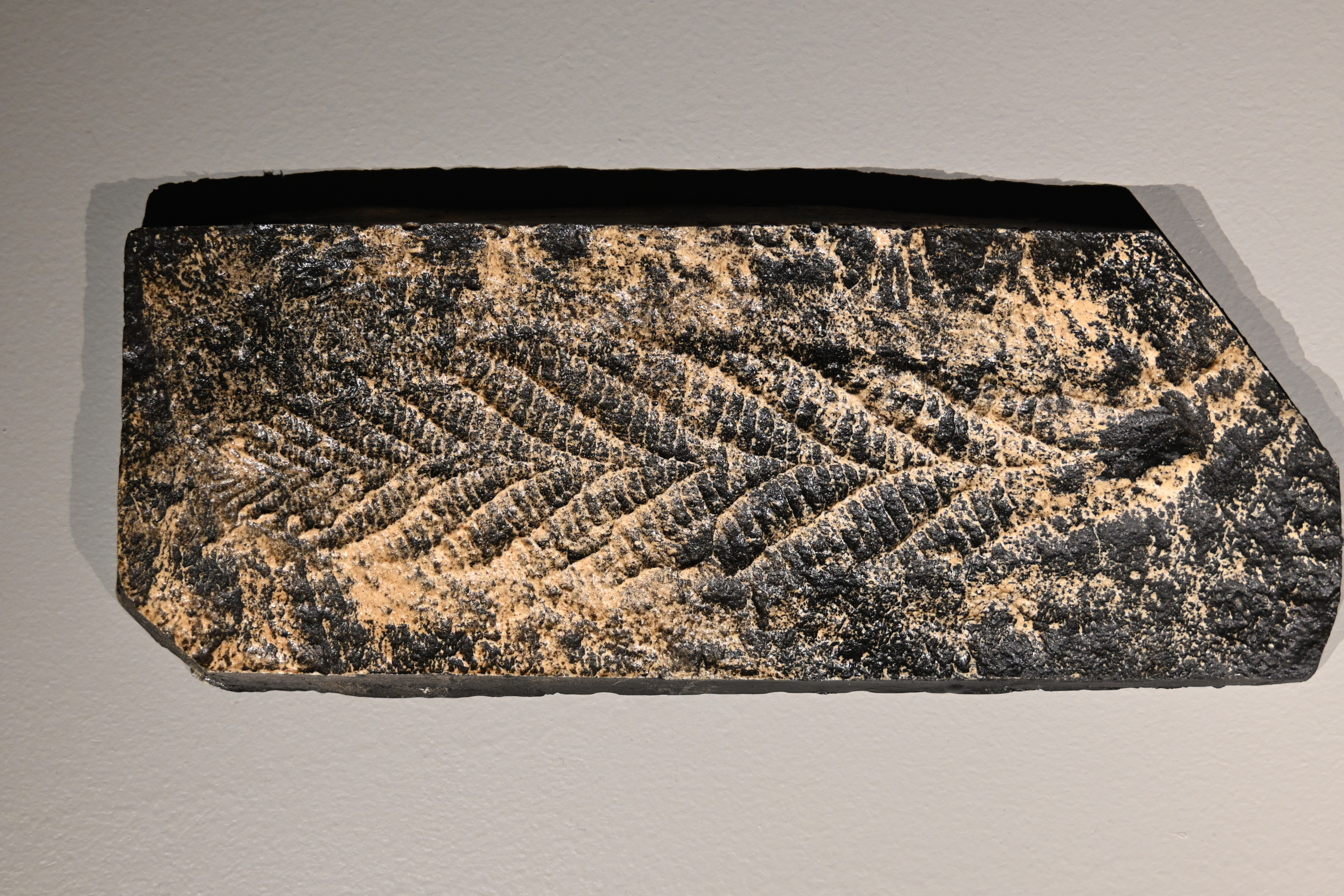
Charnia masoni is one of the most iconic and enigmatic fossils from the Ediacaran Period, representing a pivotal moment in the history of life on Earth. This frond-like organism, which lived in the deep, dark oceans between approximately 580 and 541 million years ago, provides a crucial window into the world's first large, multicellular ecosystems that emerged before the Cambrian Explosion. Its discovery in Charnwood Forest, England, fundamentally altered our understanding of Precambrian life, proving that complex organisms existed long before the first shelled animals appeared.
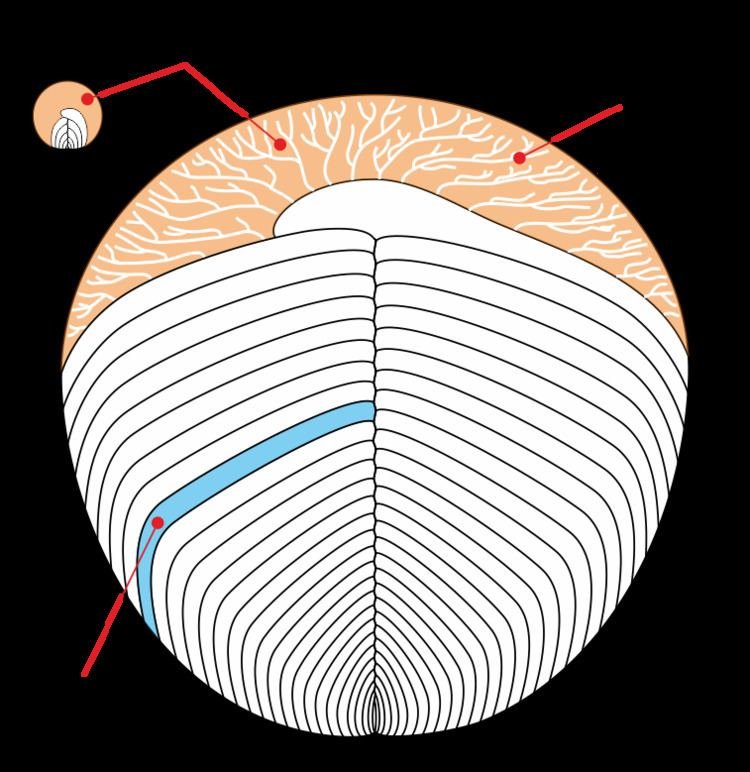
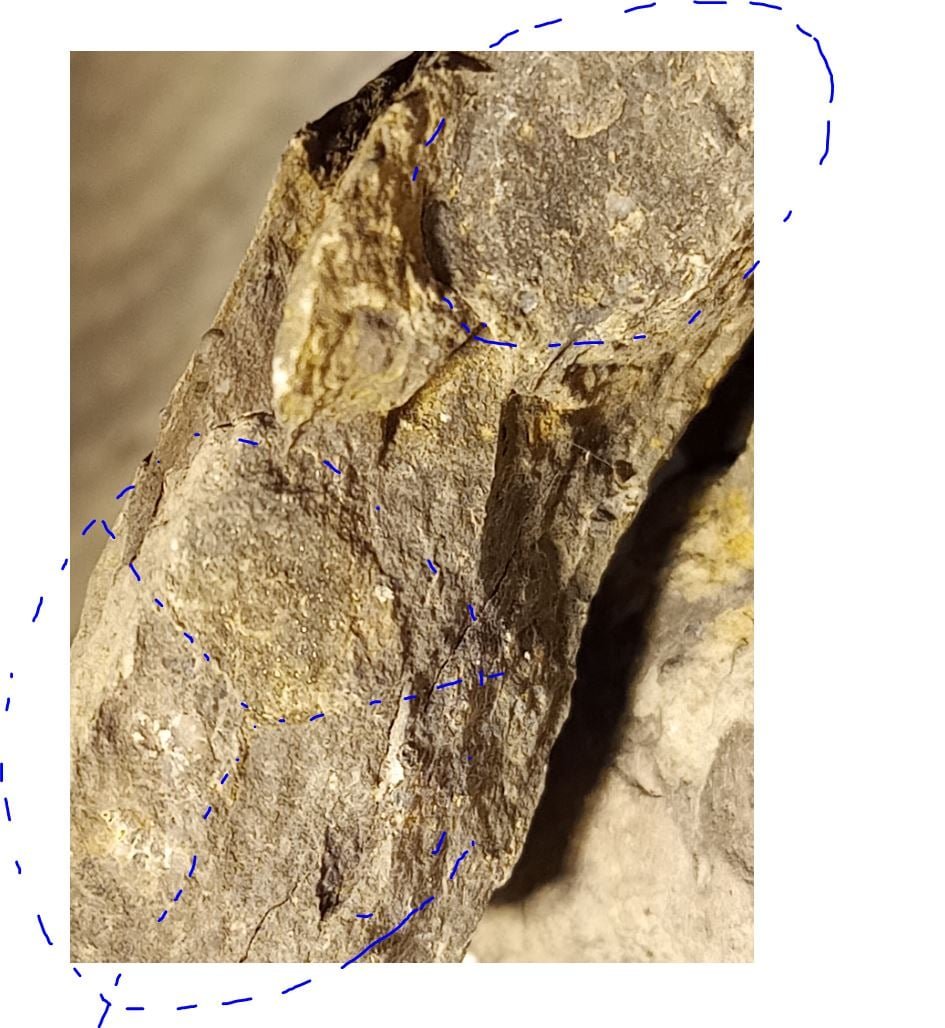
The physical structure of Charnia masoni is both simple and profoundly alien compared to modern life forms. It possessed a bilaterally symmetrical, leaf-like or frond-like body, which was anchored to the seafloor by a small, disc-shaped holdfast. From this holdfast, a slender stalk or stem extended upwards, supporting the main frond. The frond itself was composed of numerous primary branches that extended out from a central midline or rachis. These primary branches were themselves subdivided into smaller, self-similar secondary and tertiary branches, creating a complex, fractal-like pattern. This modular, repetitive construction is a hallmark of a group of Ediacaran organisms known as Rangeomorphs, of which Charnia is a prime example. The entire structure was quilted or segmented, lacking any obvious signs of a mouth, gut, or internal organs. The largest known specimens, such as the holotype, reached lengths of around 20 to 25 centimeters, though related forms could grow much larger, with some reaching up to two meters. Its overall appearance has been compared to a sea pen or a fern, but this resemblance is purely superficial, as its internal biology and evolutionary origins are vastly different.
The paleobiology of Charnia masoni is a subject of intense scientific study, primarily because its anatomy offers few clues to its lifestyle. As a sessile organism, it was permanently fixed to the seabed, unable to move. Lacking a mouth or digestive tract, it could not have consumed particulate food in the conventional sense. The prevailing hypothesis is that Charnia was an osmotroph, absorbing dissolved organic carbon and other nutrients directly from the surrounding seawater through its vast, finely branched surface area. This high surface-area-to-volume ratio, created by its fractal branching, would have been exceptionally efficient for this mode of feeding, especially in the nutrient-rich deep-sea environments it inhabited. Some researchers have also proposed that it may have engaged in a form of filter-feeding, trapping microscopic particles on its surface, or even harbored symbiotic microbes that could chemosynthesize or photosynthesize, although the latter is unlikely given its deep-water habitat far below the photic zone. Its growth pattern was apical, meaning it grew by adding new branches at the tip of the frond, allowing it to extend upwards into the water column to access nutrients more effectively.
Charnia lived in a world vastly different from our own. During the late Ediacaran Period, the Earth's continents were configured into the supercontinent of Pannotia, and the oceans were still largely anoxic in their deeper regions. Charnia fossils are consistently found in deep-water marine sediments, such as turbidites, which are deposits from underwater avalanches of sediment. This indicates it thrived in quiet, dark environments below the storm wave base, far from the light-filled shallows. It was a key member of the Avalon assemblage, one of the three major ecological groupings of Ediacaran biota, characterized by deep-sea, sessile organisms. It shared its habitat with other rangeomorphs like Bradgatia and Charniodiscus, as well as enigmatic forms like the disc-shaped Dickinsonia and the bizarre, three-lobed Tribrachidium. As a primary producer or, more likely, a primary consumer of dissolved nutrients, Charnia would have formed the base of these early, complex food webs. These communities were unlike anything that exists today, dominated by stationary, frond-like and mattress-like organisms that passively absorbed nutrients, with little evidence of predation or active locomotion.
The discovery of Charnia masoni is a landmark event in the history of paleontology. For decades, the Precambrian was considered devoid of any large, complex life. This view was challenged in 1957 when a local schoolboy named Roger Mason, climbing with friends in Charnwood Forest, Leicestershire, noticed a peculiar leaf-like impression in a slab of rock in an old quarry. He showed the rubbing to his father, a local minister and geology enthusiast, who in turn brought it to the attention of Trevor Ford, a geologist at the University of Leicester. Ford immediately recognized its significance. Because the fossil was found in rocks that were indisputably Precambrian in age, it provided the first definitive proof of complex pre-Cambrian life in the world. The organism was formally described by Ford in 1958 and named Charnia masoni, honoring both the Charnwood Forest locality and its young discoverer. The holotype specimen remains on display at the New Walk Museum in Leicester and is considered one of the most important fossils in the British Isles.
The evolutionary significance of Charnia is profound, as it forces us to reconsider the very origins of animal life. Its placement on the tree of life is highly contentious. Initially, it was thought to be a type of alga or perhaps an early cnidarian relative, like a sea pen. However, its unique rangeomorph body plan, with its fractal branching and lack of clear organs, does not fit neatly into any modern phylum. This has led many scientists, including Adolf Seilacher, to propose that Charnia and its kin were not animals at all, but belonged to a completely extinct kingdom of life, the Vendobionta, which experimented with a different form of multicellularity before being wiped out at the end of the Ediacaran. Other researchers argue that rangeomorphs represent an early, failed experiment on the animal stem-lineage, meaning they were very early offshoots of the branch that would eventually lead to true animals (Eumetazoa). In this view, they may be related to the ancestors of sponges or cnidarians but represent an evolutionary dead end. Regardless of its precise classification, Charnia demonstrates that large, architecturally complex, and ecologically successful multicellular life had evolved millions of years before the Cambrian Explosion.
Scientific debate continues to surround nearly every aspect of Charnia's existence. Its taxonomic placement remains the most significant controversy: is it a stem-group animal, a proto-fungus, a protist, or a member of the extinct kingdom Vendobionta? Each hypothesis has its proponents and evidence, but without preserved soft tissues or genetic material, the question is difficult to resolve definitively. Its feeding method is also debated, with osmotrophy being the leading theory, but alternative ideas like suspension feeding or symbiosis are still considered. Furthermore, recent studies on growth patterns and community assemblages have led to revisions in how we understand Ediacaran ecosystems. For instance, analysis of fossil beds at Mistaken Point in Newfoundland suggests that these organisms were organized into complex, tiered communities, with different species occupying different heights in the water column, much like a modern forest.
The fossil record of Charnia masoni, while not abundant in terms of sheer numbers, is globally significant. The first and most famous specimens come from the Charnian Supergroup in Charnwood Forest, England. However, since its initial discovery, Charnia fossils have been identified in Ediacaran-aged rocks around the world, confirming its widespread distribution. The most spectacular and well-preserved examples are found at Mistaken Point, Newfoundland, Canada, a UNESCO World Heritage Site. There, entire seafloor communities are preserved in exquisite detail on large bedding planes, buried in-situ by volcanic ash. These surfaces show hundreds of Charnia and other Ediacaran organisms exactly as they lived, providing unparalleled insight into their community structure. Other notable occurrences include the White Sea region of Russia and parts of Australia. The quality of preservation is typically as an impression or cast in sandstone or siltstone, capturing the external morphology of the organism with remarkable fidelity.
Charnia masoni has had a notable cultural impact, symbolizing the dawn of complex life and the thrill of scientific discovery. The holotype is a prized exhibit at the Leicester Museum & Art Gallery, and casts of the Charnwood Forest fossils are displayed in museums worldwide, including the Natural History Museum in London. Its discovery by a schoolboy is often cited as an inspirational story for young, aspiring scientists. The organism has been featured in numerous documentaries about prehistoric life, including David Attenborough's "First Life," where it is brought to life through computer-generated imagery. As one of the first large, multicellular organisms known, it serves as a vital educational tool for teaching about deep time, the strangeness of early evolution, and the processes by which scientists piece together the history of life from the faintest of rock impressions.
Time Period
Discovery
Location
Charnwood Forest, Leicestershire, England
Formation
Charnian Supergroup
Frequently Asked Questions
What is Charnia masoni (Ediacaran biota)?
Charnia masoni is one of the most iconic and enigmatic fossils from the Ediacaran Period, representing a pivotal moment in the history of life on Earth. This frond-like organism, which lived in the deep, dark oceans between approximately 580 and 541 million years ago, provides a crucial window into ...
When did Charnia masoni (Ediacaran biota) live?
Charnia masoni (Ediacaran biota) lived during the ediacaran period of the precambrian era approximately 580-541 million years ago.
Where was Charnia masoni (Ediacaran biota) discovered?
Fossils of Charnia masoni (Ediacaran biota) were discovered in Charnwood Forest, Leicestershire, England in the Charnian Supergroup.
What did Charnia masoni (Ediacaran biota) eat?
Charnia masoni (Ediacaran biota) was a osmotrophy / filter feeder. It lived in marine, sessile (attached to the seafloor), likely deep water habitats.
What type of fossil is Charnia masoni (Ediacaran biota)?
Charnia masoni (Ediacaran biota) is preserved as a mold fossil. The preservation quality is excellent.
Related Specimens
From the precambrian era · mold fossils