Yorgia
Yorgia waggoneri
Image: Image sourced via web search (Fair use / Educational)
About Yorgia
Yorgia is an extinct genus of bilaterally symmetrical, segmented organism that lived during the late Ediacaran Period, approximately 558 to 555 million years ago. As a member of the enigmatic Ediacara Biota, Yorgia represents one of the earliest known complex, multicellular life forms, providing critical insights into the dawn of animal life before the Cambrian Explosion. Its fossils, found primarily as impressions in sandstone beds in the White Sea region of Russia, showcase a unique body plan that continues to challenge and inform our understanding of early animal evolution.
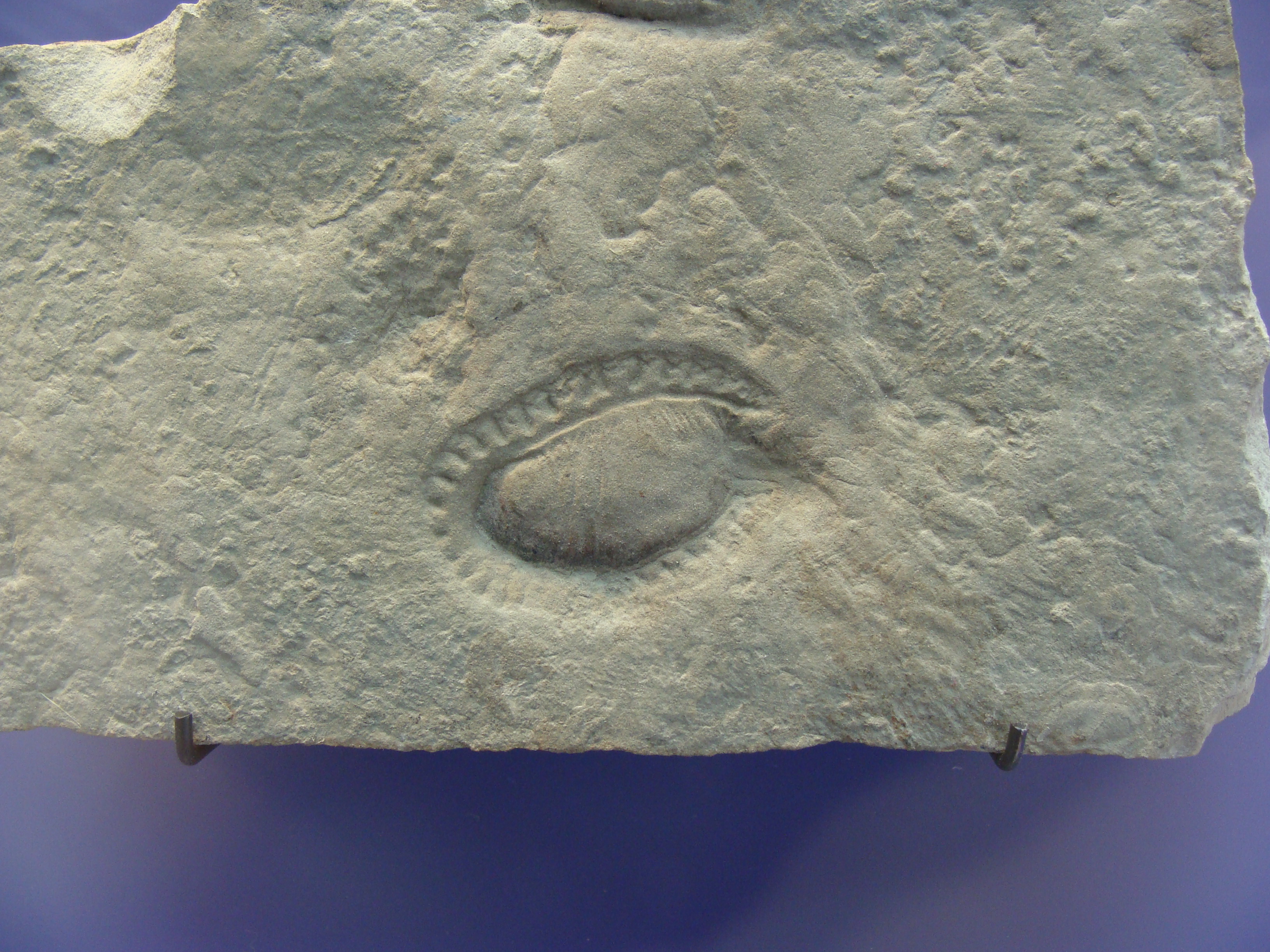
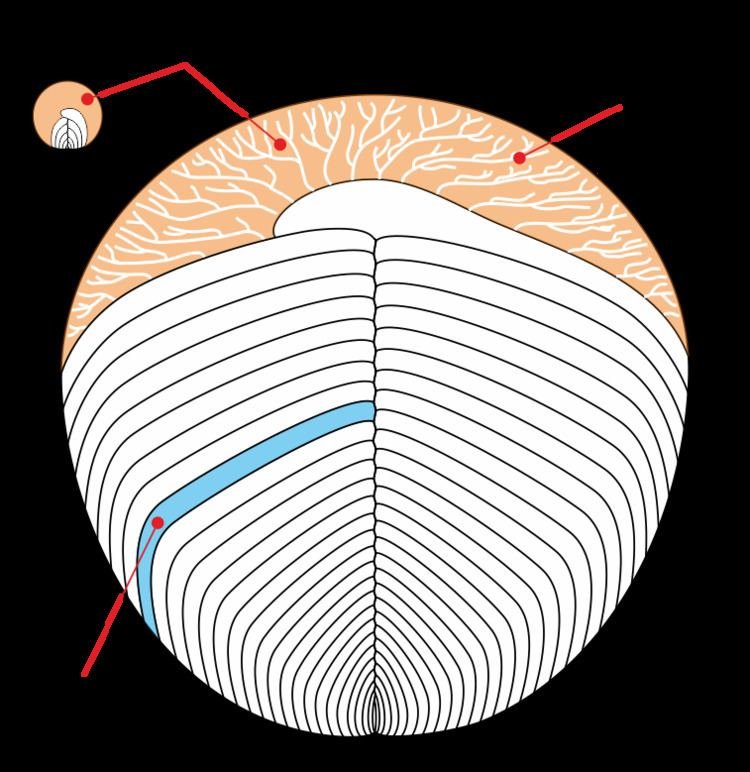
Physically, Yorgia was a flattened, roughly oval or shield-shaped organism, typically ranging from 1 to 25 centimeters in length, with the largest known specimen reaching 25 cm. For comparison, this is about the size of a small dinner plate. Its body plan was characterized by a distinct bilateral symmetry, though with a notable 'glide' reflection where segments on the right side were offset from those on the left, a feature common among many Ediacaran organisms in the Phylum Proarticulata. The body was divided into two main regions: a prominent, unsegmented, semi-circular 'head' shield at the anterior end, and a segmented posterior 'trunk' region. The trunk was composed of numerous segments, or isomers, that decreased in size towards the posterior end. These isomers were arranged in a V-shape, pointing away from a central axial zone. Unlike arthropods, Yorgia possessed no hard exoskeleton, limbs, or complex sensory organs like eyes. Its entire body was soft, and its anatomy is known exclusively from the negative impressions it left on the fine-grained sand of the ancient seafloor where it lived and died.
Investigating the paleobiology of Yorgia has revealed fascinating aspects of early animal behavior. The most compelling evidence for its lifestyle comes from unique trace fossils associated with its body impressions. These traces, known as 'Yorgia tracks', consist of a series of negative impressions of the organism's body, terminating in a final, deeper impression where the animal's fossil is found. This sequence is interpreted as a 'death march', evidence that Yorgia was motile. It is believed that Yorgia moved across the seafloor, grazing on the vast microbial mats that covered the sediment. The organism likely secreted digestive enzymes onto the mat, absorbed the resulting nutrients through its underside, and then moved on, leaving a depleted patch behind. The trackways suggest a form of locomotion involving gliding or shuffling across the substrate. The final, deep impression where the body is preserved is thought to represent the animal's last feeding spot before being buried by an influx of sediment, such as from a storm or underwater sand flow. There is no evidence of social behavior, and it is presumed Yorgia were solitary grazers. Their metabolism was likely slow, consistent with the lower oxygen levels of the Ediacaran seas.
During the Ediacaran Period, Yorgia inhabited a world vastly different from today's. It lived in shallow, quiet marine environments, likely in the photic zone where sunlight could sustain the thick microbial mats that formed its primary food source. The global climate was recovering from the massive 'Snowball Earth' glaciations of the Cryogenian, and the oceans were beginning to oxygenate, though levels were still significantly lower than in modern times. The seafloor was a strange landscape, dominated by the Ediacara Biota—a bizarre collection of frond-like organisms (rangeomorphs), quilted mattress-like forms (dickinsoniomorphs), and other enigmatic creatures. Yorgia shared its habitat with organisms like Dickinsonia, another large, flat grazer; Charnia, a frond-like organism that was likely a suspension feeder; and Kimberella, a mollusc-like animal that also grazed on microbial mats. Yorgia occupied the niche of a mobile detritivore or mat-grazer, placing it in the middle of a simple food web. True predators with guts, jaws, and claws had not yet evolved, so the primary threats to Yorgia would have been environmental, such as burial by sediment or changes in water chemistry, rather than predation.
Fossils of Yorgia were first discovered in the late 20th century in the rich fossil beds along the shores of the White Sea in the Arkhangelsk Oblast of northern Russia. The genus and its type species, Yorgia waggoneri, were formally described in 1997 by the Russian paleontologist Andrey Yu. Ivantsov. The genus name 'Yorgia' is derived from the Yorga River, which flows near the discovery site. The species name, 'waggoneri', honors American paleontologist Ben Waggoner for his significant contributions to the study of Ediacaran fossils. The discovery was part of a broader effort by Russian scientists, including Mikhail A. Fedonkin, to explore the extensive and exceptionally preserved fossil assemblages of the Ust-Pinega Formation. The holotype specimen, and many others, are housed at the Paleontological Institute of the Russian Academy of Sciences in Moscow. The most remarkable specimens are those found at the end of their own trackways, providing the 'smoking gun' evidence that linked a specific Ediacaran body fossil to a specific mode of locomotion and feeding, a breakthrough in understanding these mysterious organisms.
In the grand narrative of evolution, Yorgia holds a pivotal position. It is a prime example of the Proarticulata, a phylum of early, bilaterally symmetrical animals that represents a distinct evolutionary experiment preceding the Cambrian Explosion. While not a direct ancestor to any modern animal group, Yorgia and its relatives demonstrate that key animal traits—such as motility, bilateral symmetry, and segmented body plans—had evolved well before the Cambrian. The glide symmetry of Yorgia is a crucial feature, distinguishing it from the true bilateral symmetry seen in most modern animals (Bilateria). This suggests that Proarticulates like Yorgia may represent a sister group or an early offshoot from the lineage that led to true bilaterians. The study of Yorgia helps paleontologists understand the incremental steps and diverse pathways that evolution took in constructing the complex body plans that would later diversify into the phyla we recognize today, including arthropods, mollusks, and vertebrates. It is a testament to a lost world of animal forms that ultimately went extinct, paving the way for the Cambrian fauna to rise.
Despite the clarity provided by the trackway fossils, scientific debates surrounding Yorgia persist. Its precise placement within the animal kingdom remains a subject of discussion. While most researchers accept it as an early animal within the Proarticulata, some alternative hypotheses have been proposed, though they have less support. These include classifying it as a type of fungus, a protist, or a member of a completely extinct kingdom of life, Vendobionta, which is seen as a failed experiment in multicellularity separate from animals. However, the evidence for motility and digestive grazing strongly supports its classification as an animal. More recent debates focus on the exact nature of its relationship to the Bilateria. Was it a stem-group eumetazoan, a stem-group bilaterian, or part of a distinct clade that diverged before the last common ancestor of all modern bilaterians? The answers remain elusive, pending new fossil discoveries or novel analytical techniques.
The fossil record of Yorgia is geographically restricted but locally abundant. The vast majority of specimens have been recovered from the Ust-Pinega Formation in the White Sea region of Russia, particularly from localities on the Zimny Bereg (Winter Coast). Hundreds of specimens are known, making it one of the better-represented members of the Ediacara Biota from that region. The fossils are preserved as negative impressions on the undersides of sandstone beds. This type of preservation, known as 'taphonomic windows', occurred when the organisms were rapidly buried by sand, which then lithified. The soft body decayed, but its impression was perfectly preserved in the overlying sediment. The quality of preservation is generally good, capturing the fine details of the body segments and overall shape. The famous fossil sites of the White Sea are renowned for yielding not just body fossils but also the associated trace fossils, which are exceptionally rare for Ediacaran organisms and provide invaluable behavioral data.
While not a household name like Tyrannosaurus rex, Yorgia holds significant cultural and educational importance within the scientific community and among natural history enthusiasts. It is frequently featured in museum exhibits on early life and the Precambrian era, serving as a key example of the strange world that existed before the dinosaurs. Reconstructions of Yorgia and its environment help the public visualize this critical period in Earth's history. Notable displays can be found in major institutions like the Paleontological Institute in Moscow. Yorgia often appears in documentary films and books about the origin of life, symbolizing the mystery and wonder of the Ediacaran Biota and the profound evolutionary innovations that paved the way for the entire animal kingdom.
Classification
Time Period
Discovery
Location
White Sea Region, Russia
Formation
Ust-Pinega Formation
Frequently Asked Questions
What is Yorgia?
Yorgia is an extinct genus of bilaterally symmetrical, segmented organism that lived during the late Ediacaran Period, approximately 558 to 555 million years ago. As a member of the enigmatic Ediacara Biota, Yorgia represents one of the earliest known complex, multicellular life forms, providing cri...
When did Yorgia live?
Yorgia lived during the ediacaran period of the precambrian era approximately 558-555 million years ago.
Where was Yorgia discovered?
Fossils of Yorgia were discovered in White Sea Region, Russia in the Ust-Pinega Formation.
What did Yorgia eat?
Yorgia was a detritivore. It lived in shallow marine seafloor habitats.
What type of fossil is Yorgia?
Yorgia is preserved as a impression fossil. The preservation quality is good.
Related Specimens
From the precambrian era · impression fossils