Parvancorina
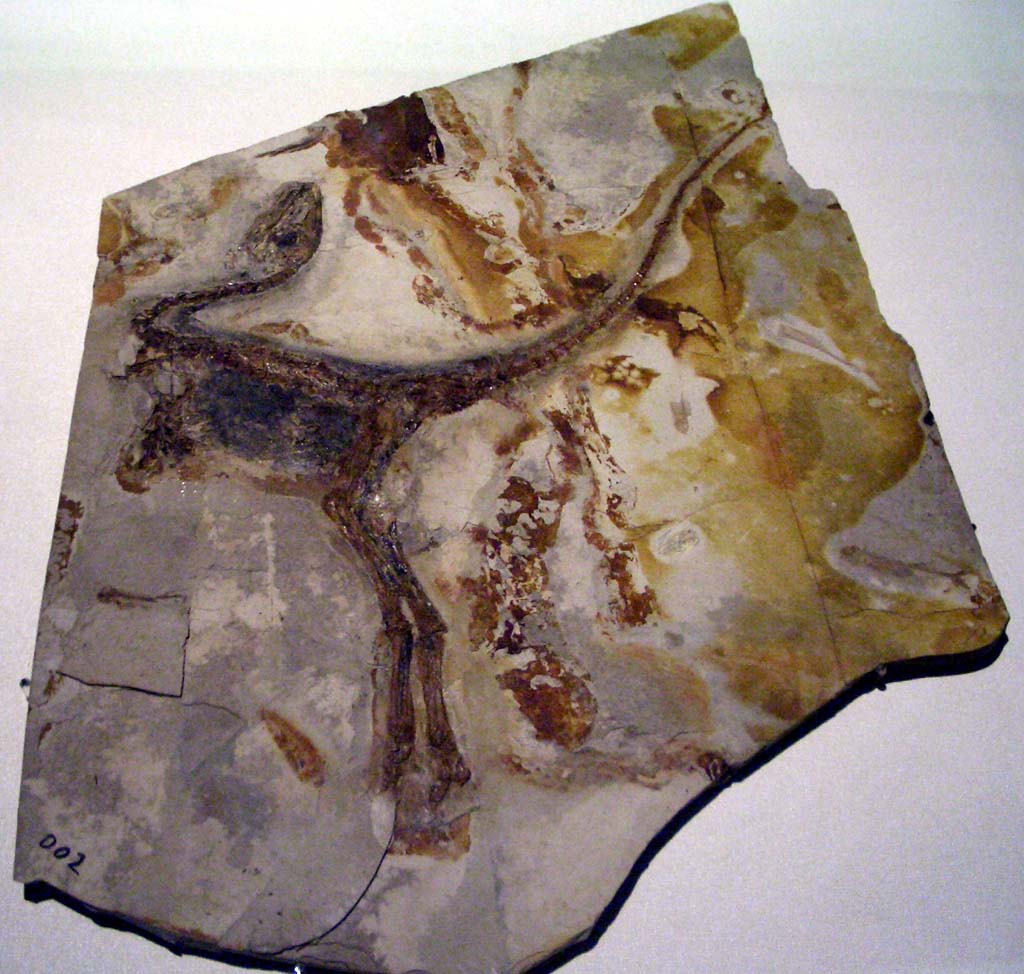
Parvancorina minchami
Image: Image sourced via web search (Fair use / Educational)
About Parvancorina
Parvancorina is an enigmatic, shield-shaped organism from the late Ediacaran Period, approximately 560 to 555 million years ago, representing one of the earliest complex multicellular life forms in the fossil record. Its fossils, found primarily in the famous Ediacara Hills of South Australia, offer a crucial but perplexing window into the dawn of animal life before the Cambrian Explosion. The unique anatomy and uncertain evolutionary relationships of Parvancorina make it a key subject in the ongoing scientific effort to reconstruct the base of the animal family tree and understand the environmental and biological dynamics of Earth's first macroscopic ecosystems.
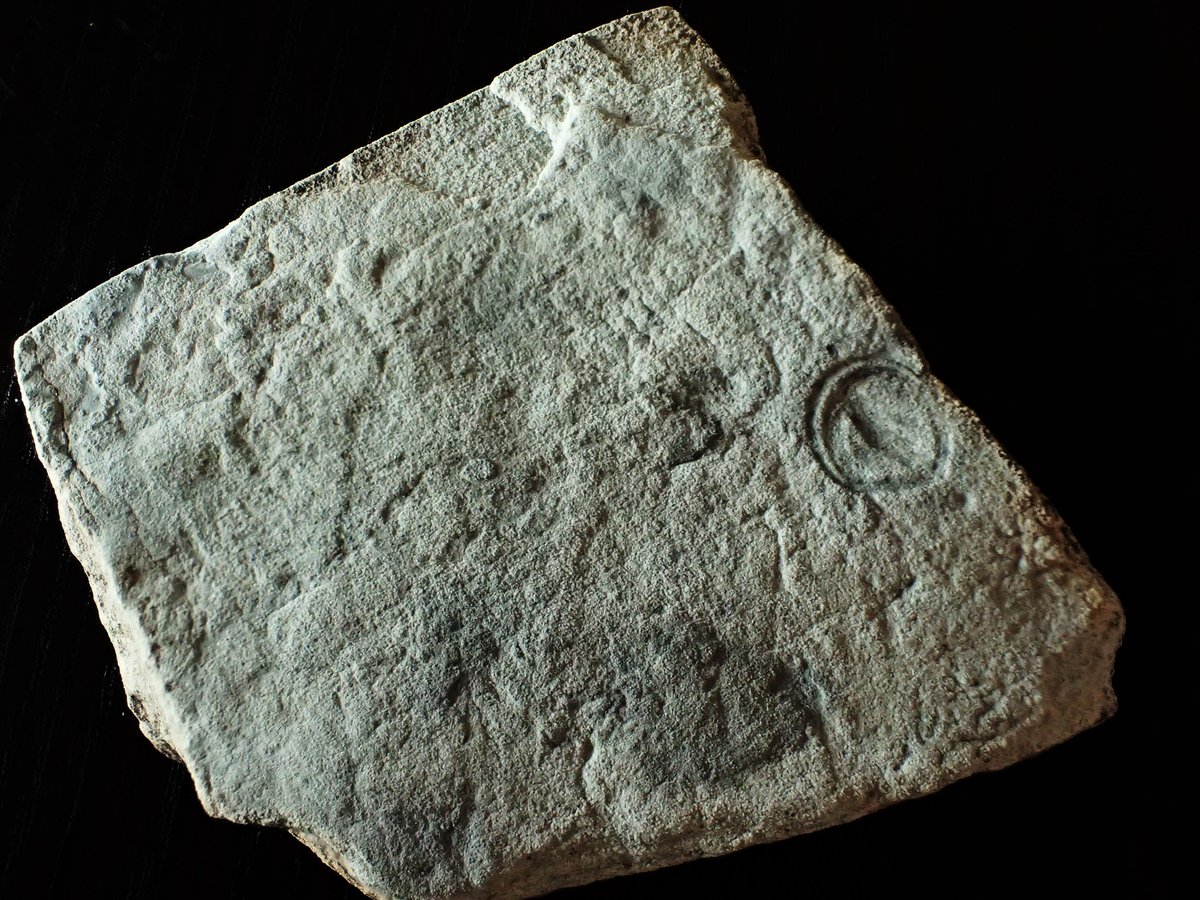
Parvancorina possessed a distinctive, bilaterally symmetrical body plan, resembling a small, flattened anchor or shield. Most specimens are diminutive, typically ranging from just 5 millimeters to about 2.5 centimeters in length and of a similar width. Its most prominent feature was a raised, median ridge running along the central axis of its body, which bifurcated at one end, often interpreted as the 'anterior' or head region, to form two curved, horn-like ridges. This structure gives the organism its characteristic anchor shape. The main body, or 'shield', was generally smooth, but some well-preserved fossils show faint transverse lines or segments, suggesting a metameric, or segmented, body construction. These segments, known as isomers, appear to be offset on either side of the central ridge, a condition called glide reflection symmetry, which is characteristic of the Proarticulata, the proposed phylum to which Parvancorina is often assigned. There is no evidence of limbs, sensory organs like eyes, or a mouth in the fossil impressions. Its entire structure was soft-bodied, lacking any biomineralized shell or skeleton, which is why it is only preserved as an impression in sandstone. For scale, an adult Parvancorina would be smaller than a modern-day fingernail, a tiny but structurally complex creature on the ancient seafloor.
The paleobiology of Parvancorina is a subject of intense scientific inference, as direct evidence of its life habits is scarce. Its flattened, shield-like morphology suggests it was a benthic organism, living on or partially buried in the microbial mats that covered the Ediacaran seafloor. Its locomotion, if any, was likely very limited. Some researchers propose it was sessile, remaining in one place for most of its life. However, studies of fossil assemblages have revealed current-aligned orientations of Parvancorina fossils, suggesting they may have been capable of orienting themselves to water currents, perhaps to aid in feeding. This rheotactic behavior implies some form of mobility and sensory perception of its environment. The absence of a discernible mouth or gut has led to several hypotheses about its feeding strategy. It may have been an osmotroph, absorbing dissolved organic nutrients directly from the water column through its body surface. Alternatively, it could have been a detritivore, grazing on the rich microbial mats beneath it. The central and branching ridges may have been part of a circulatory or nutrient-distribution system. There is no evidence of predation, and its growth pattern appears to have been isometric, meaning it maintained the same body proportions as it increased in size from juvenile to adult stages.
Parvancorina lived in the shallow, sunlit marine environments of the Ediacaran Period. The world at this time was vastly different from today; the continents were coalescing into the supercontinent of Pannotia, and the atmosphere was just beginning to accumulate significant levels of oxygen. The oceans were dominated by microbial life, with vast, thick microbial mats carpeting the seafloor, creating a unique ecosystem that has no modern analogue. Parvancorina shared this habitat with a diverse array of other enigmatic Ediacaran Biota, including the frond-like Charnia, the disc-shaped Dickinsonia, the segmented Spriggina, and the three-lobed Tribrachidium. The food web was likely simple and based on these microbial mats and dissolved organic carbon. Parvancorina, as a probable detritivore or osmotroph, would have occupied a low trophic level, feeding on the primary producing bacteria and algae within the mats. Predator-prey dynamics were likely rudimentary or non-existent in the modern sense; there is little evidence of predation in the Ediacaran, with no fossils showing bite marks, defensive armor, or specialized predatory appendages. The primary challenges for organisms like Parvancorina would have been environmental, such as being smothered by sediment from underwater avalanches, a common mode of preservation for these fossils.
The discovery of Parvancorina is intrinsically linked to the exploration of the Ediacara Hills in the Flinders Ranges of South Australia. The genus was first formally described in 1958 by paleontologist Martin Glaessner. The name 'Parvancorina' is derived from Latin, with 'parva' meaning small and 'ancora' meaning anchor, a direct reference to its characteristic shape. The species name, 'minchami', honors Mr. H. Mincham, a local amateur fossil collector and naturalist who was instrumental in bringing the Ediacaran fossils to the attention of the scientific community. The holotype specimen, SAM P12923, is housed at the South Australian Museum. Glaessner's initial work placed Parvancorina within a broader group of early metazoans, but its precise affinities were unclear. The discoveries at the Ediacara Hills were revolutionary, as they provided the first compelling evidence of large, complex, multicellular life long before the Cambrian Period, pushing back the known history of animal life by tens of millions of years. Parvancorina was one of the key and most recognizable members of this newly unveiled prehistoric assemblage, and its fossils helped define this critical chapter in Earth's history.
Parvancorina's evolutionary significance lies in its potential status as an early animal and its unique body plan, which challenges our understanding of early metazoan evolution. Initially, its shield-like shape led to speculation that it could be an ancestral arthropod, with the 'anchor' ridges being a primitive cephalic shield. This interpretation, proposed by Glaessner and others, suggested Parvancorina could be a distant relative of trilobites and crustaceans. However, this view has been largely superseded. More recent analyses, particularly by paleontologists like Mikhail Fedonkin and Ivantsov, place Parvancorina within the extinct phylum Proarticulata. This group is characterized by bilateral symmetry and a body constructed of isomers arranged in a pattern of glide reflection. If this classification is correct, Parvancorina represents a failed experiment in animal body plans—a distinct lineage of early animals that flourished in the Ediacaran but left no direct descendants in the Cambrian or modern eras. It demonstrates that the path to modern animal phyla was not a simple, linear progression, but involved a diverse radiation of now-extinct body plans. Parvancorina, therefore, is not a direct ancestor to any living group but rather a cousin, providing crucial data on the morphological diversity that existed just before the Cambrian Explosion reshaped the biosphere.
The precise classification of Parvancorina remains a topic of scientific debate. While the Proarticulata hypothesis is currently favored by many specialists in the field, it is not universally accepted. The lack of preserved soft tissues, such as a gut or nervous system, makes definitive phylogenetic placement difficult. Some researchers have maintained the possibility of an arthropod affinity, pointing to its bilateral symmetry and shield-like form as potential precursors to arthropod characteristics. Another debate revolves around its lifestyle. The interpretation of current-aligned fossils as evidence for rheotactic mobility has been challenged, with some arguing that the alignment is purely a result of post-mortem transport and burial by currents. Resolving these questions is critical for understanding the biology of Parvancorina and the ecology of the wider Ediacaran ecosystem. The discovery of a second species, *Parvancorina sagitta*, from the White Sea region of Russia, which has a more elongated, arrow-like shape, has added more data but also more complexity to the evolutionary picture of the genus, highlighting the geographical range and morphological diversity of these early organisms.
Fossils of Parvancorina are known primarily from two major geological regions that preserve the Ediacaran Biota. The type locality is the Rawnsley Quartzite in the Ediacara Hills of South Australia, where hundreds of specimens have been collected. These fossils are typically preserved as negative impressions on the undersides of sandstone beds. The quality of preservation is generally good, clearly showing the outline and the characteristic median and anterior ridges. The second major location is the Verkhovka Formation on the Winter Coast of the White Sea in the Arkhangelsk region of Russia. The Russian specimens, including the distinct species *P. sagitta*, are often exceptionally well-preserved in fine-grained sediments, sometimes revealing more subtle details of the body surface than the Australian fossils. While not as abundant as some other Ediacaran taxa like Dickinsonia, Parvancorina is a relatively common and recognizable component of these assemblages, making it a key index fossil for the late Ediacaran period. Its presence in both Australia and Russia, which were on opposite sides of the globe during the Ediacaran, indicates that Parvancorina was a geographically widespread and successful organism for its time.
Despite its scientific importance, Parvancorina has a limited cultural impact compared to dinosaurs or megafauna. It is not a staple of popular culture, but it holds a significant place in paleontological education and museum displays focused on the origin of life. Its distinctive and easily recognizable anchor shape makes it a visually compelling example of the strange life forms of the Ediacaran Period. Major natural history museums, such as the South Australian Museum in Adelaide, the Smithsonian National Museum of Natural History in Washington, D.C., and the Paleontological Institute in Moscow, feature casts or original specimens of Parvancorina in their exhibits on early life. It serves as a powerful educational tool, illustrating the immense antiquity of life and the fact that evolution has produced many bizarre and ultimately extinct lineages alongside the ones that led to modern animals.
Classification
Time Period
Discovery
Location
Ediacara Hills, South Australia, Australia
Formation
Rawnsley Quartzite
Frequently Asked Questions
What is Parvancorina?
Parvancorina is an enigmatic, shield-shaped organism from the late Ediacaran Period, approximately 560 to 555 million years ago, representing one of the earliest complex multicellular life forms in the fossil record. Its fossils, found primarily in the famous Ediacara Hills of South Australia, offer...
When did Parvancorina live?
Parvancorina lived during the ediacaran period of the precambrian era approximately 560-555 million years ago.
Where was Parvancorina discovered?
Fossils of Parvancorina were discovered in Ediacara Hills, South Australia, Australia in the Rawnsley Quartzite.
What did Parvancorina eat?
Parvancorina was a detritivore or osmotroph. It lived in marine, benthic habitats.
What type of fossil is Parvancorina?
Parvancorina is preserved as a impression fossil. The preservation quality is good.
Related Specimens
From the precambrian era · impression fossils