Rangea
Rangea schneiderhoehni
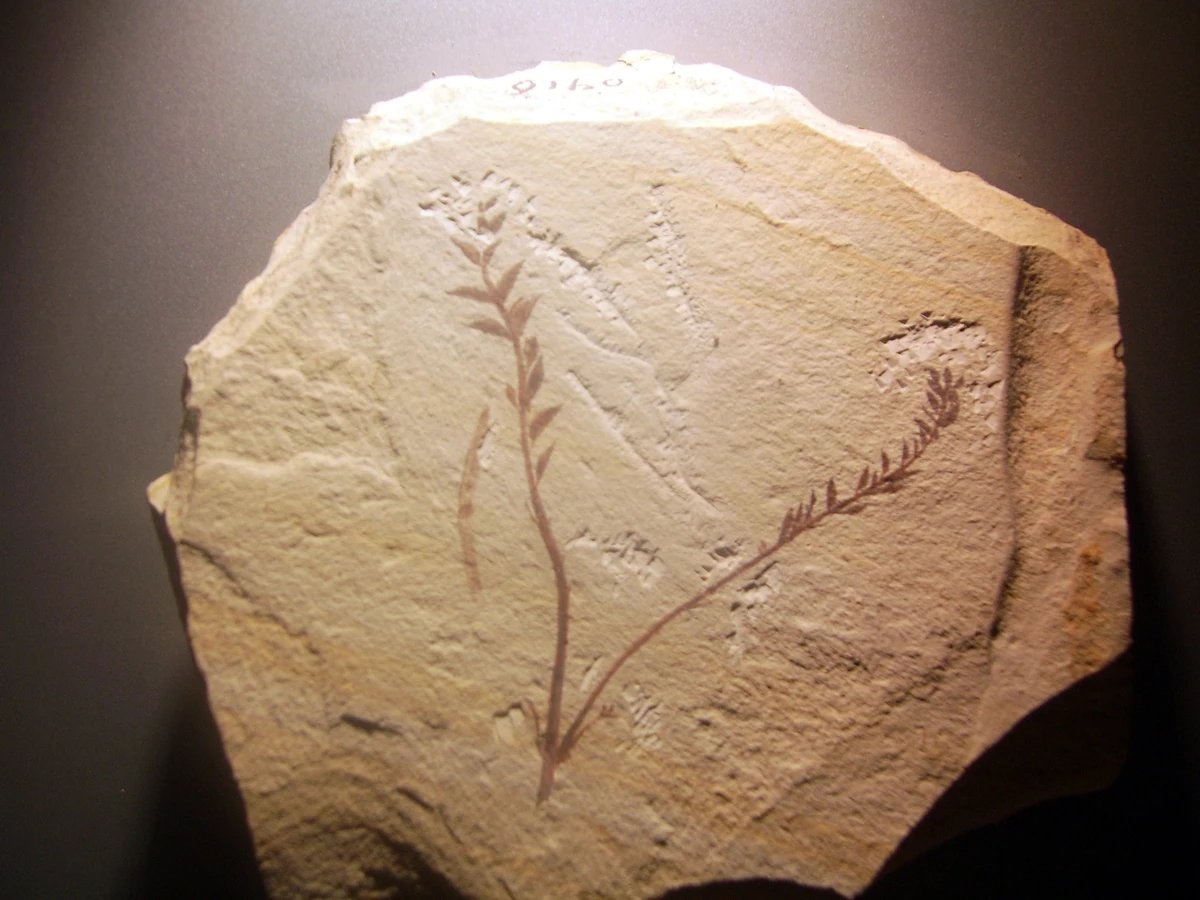
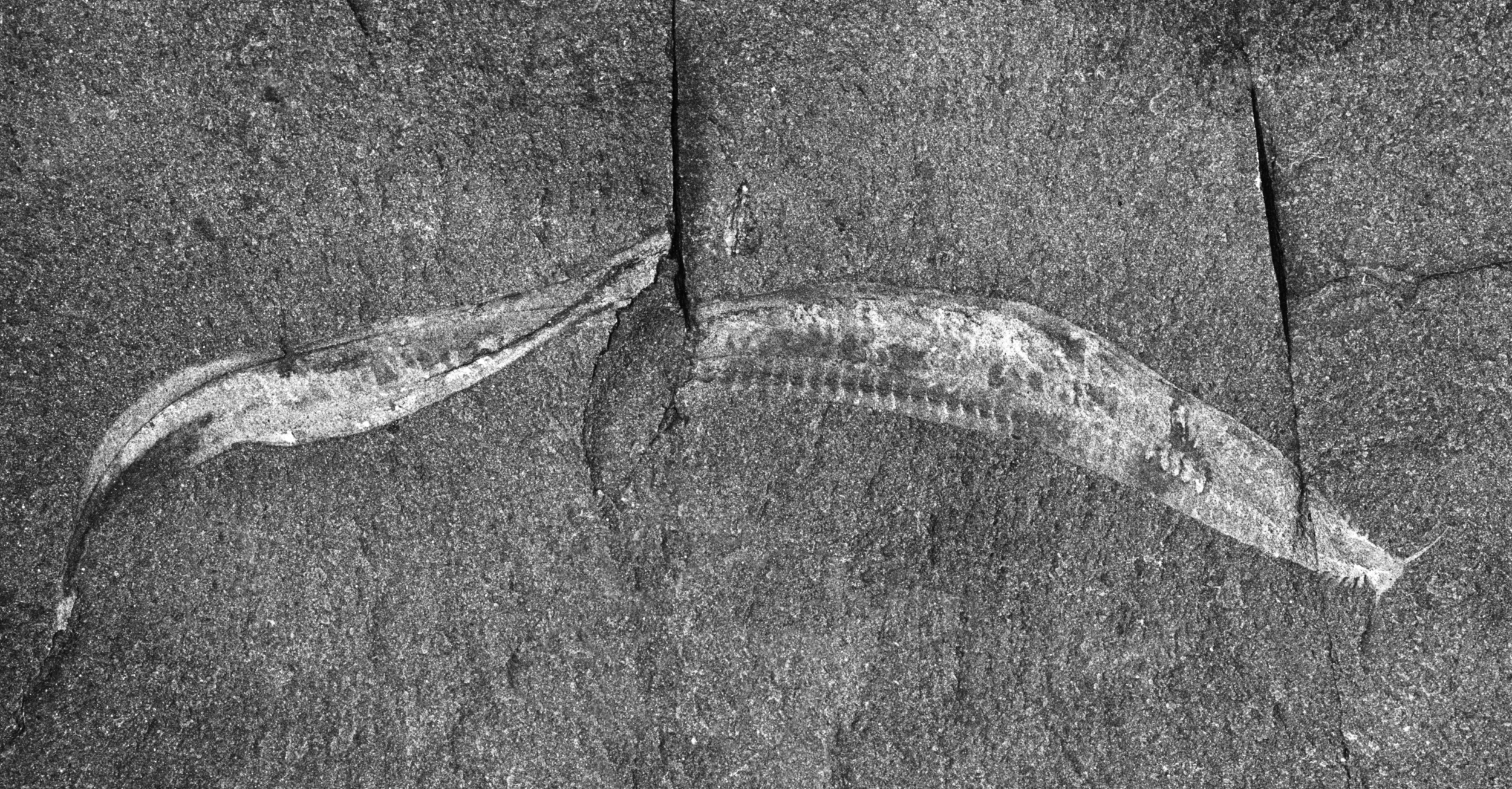
Image: Image sourced via web search (Fair use / Educational)
About Rangea
Rangea schneiderhoehni is an enigmatic, frond-like organism from the late Ediacaran Period, approximately 560 to 550 million years ago, representing one of the earliest known complex multicellular life forms. Its fossils, found primarily in Namibia, provide a crucial window into the strange ecosystems that preceded the Cambrian Explosion. As a type genus for the Rangeomorpha, Rangea is central to understanding the origins of animal life and the unique evolutionary experiments that characterized this pivotal moment in Earth's history.
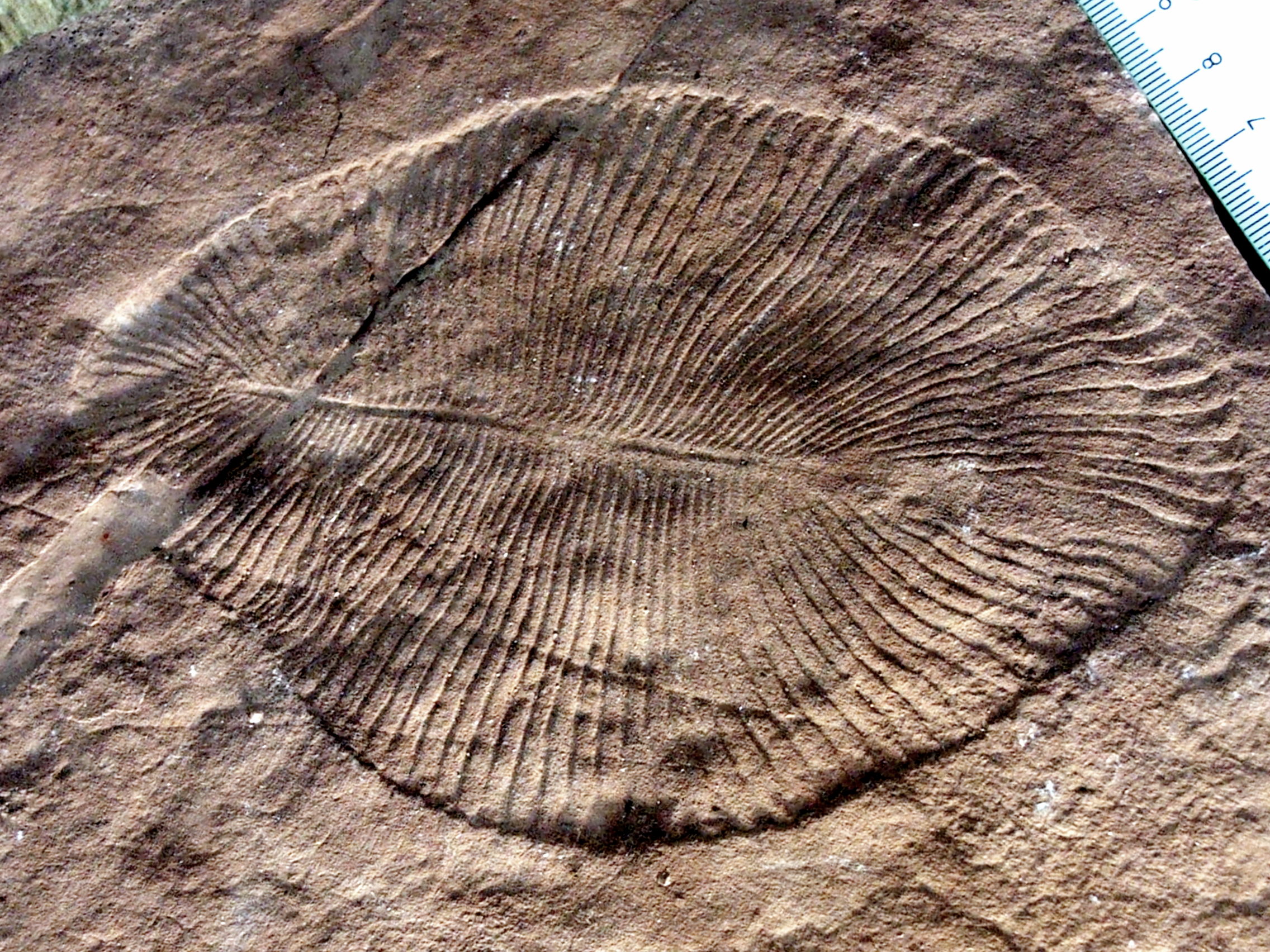
Rangea possessed a distinctive, bilaterally symmetrical, leaf-like or frond-like body, typically reaching lengths of 15 to 20 centimeters. Its overall structure was fractal, meaning it was composed of repeating, self-similar patterns at multiple scales. The main body, or 'frond', consisted of a central stalk from which primary branches emerged, and these primary branches, in turn, gave rise to smaller secondary and even tertiary branches. Each of these smallest units, often called 'frondlets', was a simple, inflated, quilt-like element. This modular, hierarchical construction created an extremely large surface area relative to its volume, a key feature of all rangeomorphs. Unlike a modern fern, Rangea's structure was three-dimensional, often described as a double-sided frond or a spindle-shaped organism with four vanes of frondlets radiating from a central axis. It lacked any discernible mouth, gut, anus, or specialized sensory organs. Its base likely featured a small, bulbous holdfast for anchoring itself to the seafloor sediment. The entire organism was soft-bodied, and its fossils are preserved as impressions in sandstone, capturing its external morphology but revealing little about its internal anatomy.
Given its complete lack of a digestive tract or feeding appendages, the paleobiology of Rangea is a subject of intense scientific interest and debate. The prevailing hypothesis is that it was an osmotroph, absorbing dissolved organic carbon directly from the surrounding seawater across its vast, fractal body surface. This feeding strategy would have been highly efficient in the nutrient-rich, pre-Cambrian oceans, which lacked significant competition from filter-feeders or grazers. Rangea was a sessile, or stationary, organism, anchored to the muddy or sandy substrate of the deep-sea floor, likely below the photic zone where sunlight could penetrate. As such, it was not photosynthetic. Its growth pattern was likely apical, with new fractal elements being added at the tips of its branches, allowing it to grow upwards into the water column to access more nutrients. There is no evidence of sexual reproduction, and it is theorized that Rangea may have reproduced asexually, perhaps by releasing small, spore-like propagules or through fragmentation, where a piece of the parent organism could break off and grow into a new individual. Its metabolism was likely very slow, consistent with a low-oxygen environment and a passive feeding strategy.
The world of Rangea was profoundly different from today. During the late Ediacaran, the supercontinent Pannotia was breaking apart, creating shallow epicontinental seas. The atmosphere and oceans were still relatively low in oxygen compared to modern levels, particularly in the deep-water environments Rangea inhabited. It lived in what is known as the 'Avalon Assemblage' or deep-sea Ediacaran community, characterized by a low-diversity but widespread group of organisms, primarily other rangeomorphs like Charnia and fractally-branching forms. The ecosystem lacked recognizable predators; there were no animals with teeth, claws, or shells. The food web was likely based on a 'rain' of dissolved organic matter and microbial mats on the seafloor. Rangea, as a primary consumer of this dissolved carbon, would have formed a foundational tier of this bizarre ecosystem. Its main ecological pressures would have been competition for space on the seafloor and access to nutrient-rich currents, rather than predation. This tranquil, predator-free environment allowed for the evolution of large, sessile, and undefended body plans like that of Rangea.
The discovery history of Rangea is intertwined with the very recognition of Precambrian life. The species was first described by the German geologist Georg Gürich in 1930, based on fossils he had found in the Nama Group of Namibia. He named the species Rangea schneiderhoehni in honor of his colleague, geologist Hans Schneiderhöhn. However, Gürich initially misinterpreted the fossils, believing them to be a type of gorgonian coral from the Cambrian Period. For decades, the true age and nature of Rangea remained unrecognized. It was not until the 1950s and 1960s, following the discovery of similar frond-like fossils in Charnwood Forest, England (Charnia), and the subsequent radiometric dating of Ediacaran strata worldwide, that scientists, notably Martin Glaessner, correctly identified Rangea as a Precambrian organism. This re-evaluation was a critical step in establishing the existence of the Ediacaran biota, proving that complex, macroscopic life existed long before the Cambrian. The holotype specimen and other key fossils from Namibia remain the definitive reference material for the genus.
Rangea's evolutionary significance is immense, as it represents a completely extinct body plan and a failed experiment in early multicellular life. As a prime example of a rangeomorph, it showcases a fractal architecture that is not seen in any living animal group. This has led to a major debate about its place in the tree of life. Some paleontologists, like Adolf Seilacher, argued that rangeomorphs and other Ediacaran organisms belong to an extinct kingdom, Vendobionta, which was entirely separate from modern animals and left no descendants. This view proposes that they were a distinct evolutionary radiation that vanished at the end of the Precambrian. However, more recent research, particularly by Guy Narbonne and colleagues, suggests that rangeomorphs are likely stem-group animals—early offshoots from the lineage that would eventually lead to Eumetazoa (animals with true tissues). In this interpretation, their fractal construction was an early evolutionary solution to maximizing surface area for nutrient absorption in a world without guts, before the evolution of more complex internal organ systems. Thus, Rangea is not a direct ancestor to any modern animal but is considered a very early 'aunt' or 'cousin' to the entire animal kingdom.
The primary scientific debate surrounding Rangea and its relatives is their precise phylogenetic placement. The Vendobionta hypothesis, while less favored now, still highlights the genuine strangeness of these organisms. The prevailing view places them as early animals, but their relationship to specific phyla like Cnidaria (corals and jellyfish) or Ctenophora (comb jellies) is unresolved and highly contentious. Another area of debate concerns their construction; initially thought to be hollow and gas-filled like a quilt, some recent studies using computational fluid dynamics suggest their fractal branching was optimized to withstand gentle deep-sea currents and shed sediment, implying a more robust but still flexible structure. The discovery of three-dimensionally preserved Rangea fossils in Canada has provided new insights into their four-vaned, spindle-like shape, challenging earlier two-dimensional interpretations based solely on the Namibian impressions. These findings continue to refine our understanding of how these organisms lived and were built.
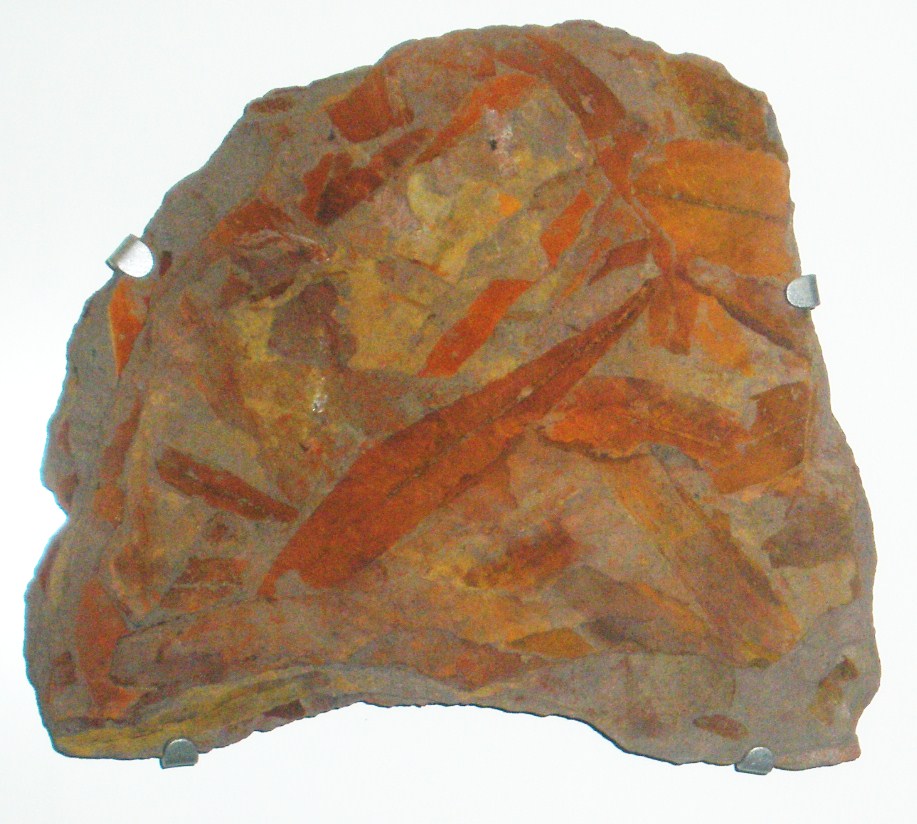
The fossil record of Rangea is geographically restricted but locally significant. The most important and historically significant fossils are found in the Nama Group of southern Namibia, where they are preserved as negative impressions on the undersides of sandstone beds. These sites have yielded hundreds of specimens, providing a robust sample size for studying population structure and morphology. Similar or identical fossils have also been reported from the Ediacaran of the Ural Mountains in Russia and potentially from other locations, suggesting a widespread, though not global, distribution in deep-water environments. The preservation is typically of good quality, capturing the fine details of the fractal branching, but as they are impressions of soft-bodied organisms, no organic material remains. The Namibian sites, alongside Mistaken Point in Newfoundland, Canada (which preserves a related rangeomorph community), are among the most important Ediacaran fossil localities in the world for understanding the dawn of animal life.
While not a household name like Tyrannosaurus or Triceratops, Rangea holds a significant place in paleontological and evolutionary science. It is a key taxon featured in museum exhibits on early life around the world, including the Natural History Museum in London and the Smithsonian National Museum of Natural History. Its bizarre, alien-like appearance often serves as a powerful educational tool to illustrate that the history of life was not a simple, linear progression towards modern forms, but included entire groups of complex organisms that have no living counterparts. Rangea represents a fundamental chapter in the story of life's origins, challenging our very definition of what an animal is and demonstrating the innovative, and sometimes bizarre, pathways that evolution can take.
Classification
Time Period
Discovery
Location
Namibia
Formation
Kuibis Group (specifically, the Kliphoek Member of the Dabis Formation)
Frequently Asked Questions
What is Rangea?
Rangea schneiderhoehni is an enigmatic, frond-like organism from the late Ediacaran Period, approximately 560 to 550 million years ago, representing one of the earliest known complex multicellular life forms. Its fossils, found primarily in Namibia, provide a crucial window into the strange ecosyste...
When did Rangea live?
Rangea lived during the ediacaran period of the precambrian era approximately 560-550 million years ago.
Where was Rangea discovered?
Fossils of Rangea were discovered in Namibia in the Kuibis Group (specifically, the Kliphoek Member of the Dabis Formation).
What did Rangea eat?
Rangea was a osmotroph. It lived in deep-sea marine habitats.
What type of fossil is Rangea?
Rangea is preserved as a impression fossil. The preservation quality is good.
Related Specimens
From the precambrian era · impression fossils
/e07139fdd52e.jpg)