Ernietta
Ernietta plateauensis
Image: Image sourced via web search (Fair use / Educational)
About Ernietta
Ernietta plateauensis is an enigmatic, sessile organism from the late Ediacaran Period, approximately 549 to 543 million years ago, representing one of the last and most complex members of the Ediacara Biota before the Cambrian Explosion. Its fossils, found primarily in Namibia, offer a unique window into the structure of early multicellular life and the benthic ecosystems of the deep Precambrian oceans. The unusual biology and mode of life of Ernietta continue to challenge paleontological interpretations of early animal evolution, making it a key subject in the study of Earth's first large, complex organisms.
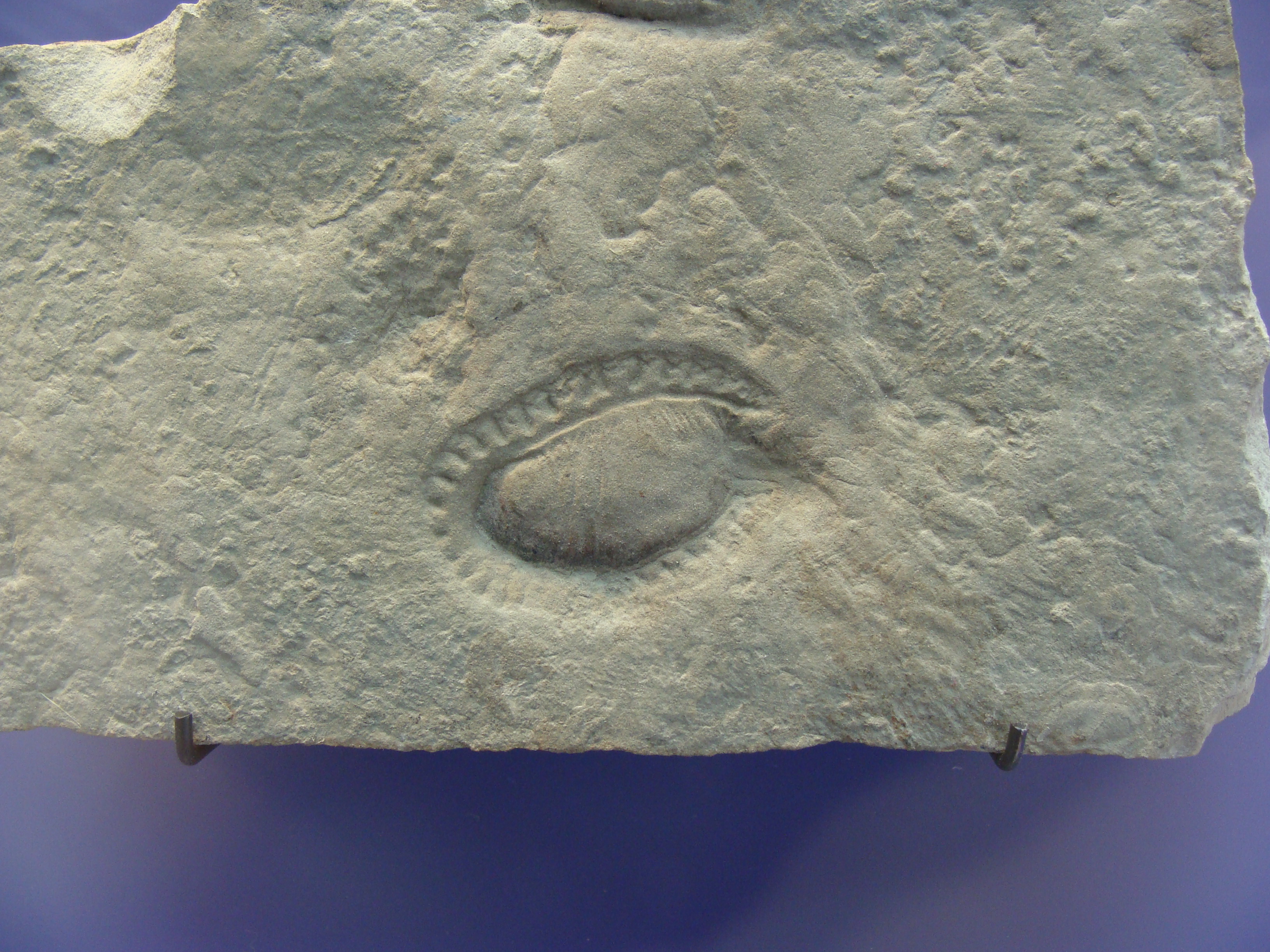
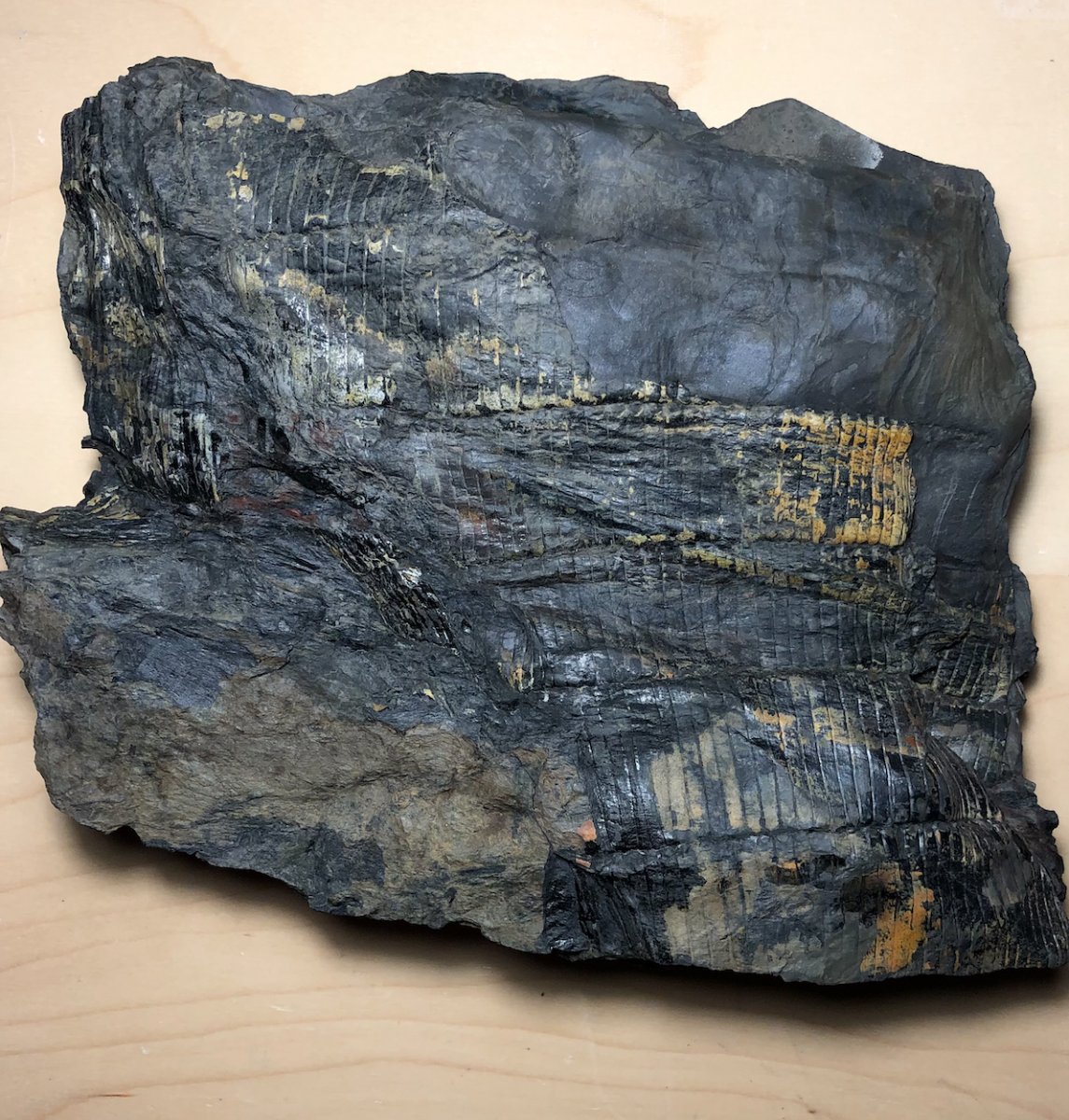
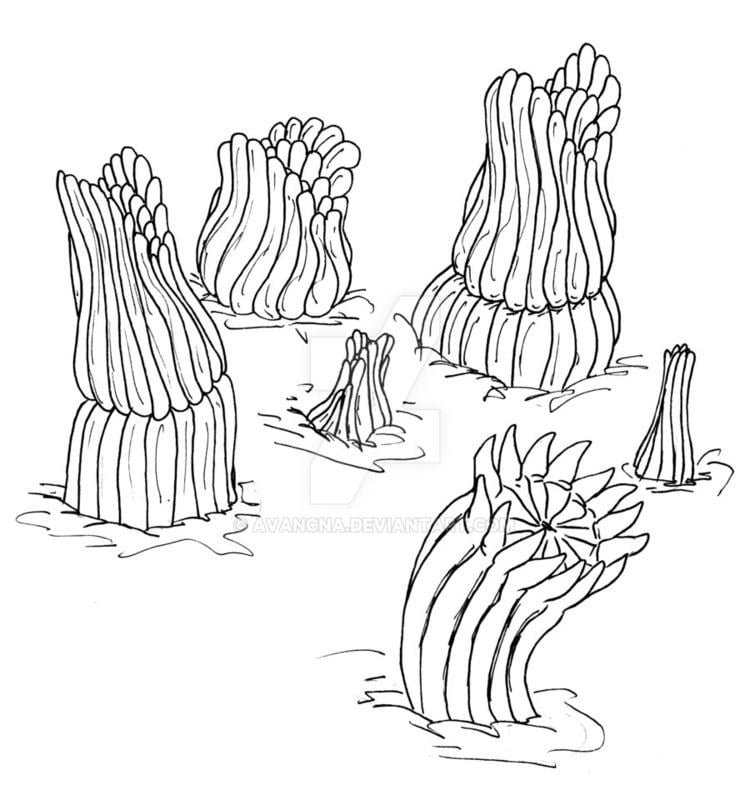
Ernietta was a relatively small but robust organism, typically forming a sack-like or bag-like structure that was anchored in the soft sediment of the seafloor. Most specimens measure between 10 and 20 centimeters in length, with some reaching up to 30 centimeters. Its body was composed of numerous, thin, parallel tubes or quilts, which were bundled together and inflated, giving it a ribbed or corrugated appearance. These tubes, which are the primary structures preserved in the fossil record, were likely hollow and filled with fluid, creating a turgid, upright structure. Unlike many other Ediacaran fronds, Ernietta lacked a distinct holdfast or stem, instead burying its lower portion directly into the substrate for stability. The overall shape has been compared to a deflated pouch or a beanbag chair, with a flexible but resilient construction. It possessed no discernible head, mouth, gut, or limbs, and its internal anatomy remains a subject of intense study. Its unique, quilted construction is a hallmark of the Erniettomorpha, a group of Ediacaran organisms characterized by this modular, tubular body plan. The lack of any mineralized skeleton means that all Ernietta fossils are preserved as impressions or casts in sandstone, capturing the external form but little of the internal soft tissue.
As a sessile, benthic organism without a mouth or digestive tract, Ernietta's paleobiology is inferred entirely from its morphology and the sedimentary context of its fossils. The prevailing hypothesis is that it was an osmotroph, absorbing dissolved organic carbon directly from the surrounding seawater across its vast, quilted surface area. The numerous thin-walled tubes would have maximized the surface-to-volume ratio, facilitating efficient nutrient uptake. This feeding strategy would have been viable in the nutrient-rich, deep-marine environments it inhabited. Some researchers have proposed alternative feeding methods, such as chemosynthesis via symbiotic bacteria housed within its tissues, similar to modern deep-sea tube worms, but direct evidence for this is lacking. Ernietta was immobile, living partially buried in the sandy seafloor. Fossil assemblages, often called 'Ernietta beds,' show hundreds or thousands of individuals preserved together in life position, suggesting they lived in dense, gregarious communities. This clustering may have been a strategy to alter local water flow to enhance nutrient capture or for reproductive purposes. Growth was likely achieved by adding new tubes or inflating existing ones. Its metabolism was almost certainly very slow, reflecting the low-oxygen conditions of the Ediacaran deep sea and a simple, non-predatory lifestyle.
Ernietta lived during the terminal Ediacaran, a time when Earth's oceans were beginning to host the first large, multicellular ecosystems. The planet was emerging from the massive 'Snowball Earth' glaciations, and the continental configuration was vastly different, with most landmasses collected into the supercontinent of Pannotia. Ernietta inhabited deep-water, low-energy marine environments, specifically the sandy bottoms of submarine canyons and distal turbidite fans, well below the photic zone where photosynthesis could occur. The water would have been cold, dark, and likely low in oxygen. Its ecosystem was dominated by other members of the Nama-type Ediacara Biota, a distinct assemblage characterized by organisms adapted to life in high-energy, sandy environments. Co-existing fauna included the frond-like Pteridinium, the slug-like Kimberella (though rarer in these specific assemblages), the enigmatic three-lobed Dickinsonia-like form Aspidella, and various other tubular or quilted organisms. Ernietta was a primary consumer, occupying a basal position in the food web by absorbing dissolved nutrients. There is no evidence of predation upon Ernietta, as the first true predators with guts and mineralized mouthparts had not yet evolved. Its primary ecological challenges were likely physical, such as being buried by sediment flows (which ironically led to its excellent preservation) or competing for space and nutrients within its dense communities.
The discovery of Ernietta is tied to the exploration of the rich Ediacaran fossil beds of Namibia. The genus was first formally described by the German paleontologist Georg Gürich in 1930, based on specimens he had collected from the Nama Group formations in southern Namibia. However, Gürich initially misinterpreted these strange impressions, not recognizing them as biological in origin. It was not until the work of Martin Glaessner and later Hans Pflug in the 1960s and 1970s that Ernietta and its relatives were correctly identified as fossils of Precambrian organisms. Pflug's extensive work on the Nama Group, particularly at the Farm Aar and Farm Kuibis sites, brought Ernietta to prominence. He named the type species Ernietta plateauensis in 1966. The most significant discoveries have been entire fossilized communities, or 'beds,' where thousands of individuals are preserved in situ. These remarkable fossil surfaces, studied extensively by paleontologists like Dolf Seilacher, Patricia Vickers-Rich, and Guy Narbonne, provide unparalleled snapshots of an ancient seafloor, showing the density and orientation of these early animal communities. Unlike fossils with popular nicknames, individual Ernietta specimens are not typically named, but the fossil beds themselves are of immense scientific importance.
Ernietta's evolutionary significance lies in its status as a representative of the Erniettomorpha, a major clade within the larger, enigmatic group known as the Petalonamae or Vendobionta. This group, proposed by Adolf Seilacher, is characterized by a unique 'quilted' construction, fundamentally different from the body plans of modern animals. Seilacher argued that the Vendobionta, including Ernietta, represented a failed experiment in multicellular life—a distinct kingdom of life that went extinct at the end of the Precambrian without leaving any modern descendants. This view places Ernietta on a completely separate branch of the tree of life from the Eumetazoa (true animals). However, other researchers, such as Guy Narbonne and Mary Droser, interpret Ernietta and its relatives as early, stem-group animals, possibly related to cnidarians or sponges, or perhaps representing an early form of animal that predates the divergence of these major phyla. Under this interpretation, its simple, sessile, osmotrophic lifestyle represents a primitive condition for large multicellular organisms before the evolution of guts, muscles, and nervous systems. Regardless of its precise phylogenetic placement, Ernietta is crucial for understanding the diversity of body plans that evolved during the Ediacaran Period and the ecological conditions that preceded the Cambrian Explosion of animal life.
Significant scientific debates surround Ernietta, primarily concerning its fundamental biology and classification. The central controversy is whether it belongs within the animal kingdom (Animalia) or represents an extinct, unrelated lineage of multicellular life (the Vendobionta theory). Proponents of the animal hypothesis point to its complex, organized structure as evidence of a metazoan grade of organization, while proponents of the Vendobionta theory emphasize its bizarre, quilted anatomy and lack of any features (like a gut) shared with modern animal phyla. Another area of debate is its mode of life. While osmotrophy is the most widely accepted feeding strategy, the possibility of chemosymbiosis remains an active area of research. Furthermore, the function of its gregarious, community-living behavior is not fully understood—whether it was for reproductive, feeding, or hydrodynamic purposes is still debated. Recent studies using computational fluid dynamics have attempted to model how water flowed around Ernietta communities to test these hypotheses, suggesting the clustering may have enhanced passive nutrient uptake from bottom currents. These ongoing discussions highlight how much is still unknown about these pioneering large organisms.
The fossil record of Ernietta is geographically restricted but locally abundant. The vast majority of specimens have been discovered in the late Ediacaran-aged sandstones of the Nama Group in southern Namibia. Important sites include the Kliphoek Member of the Dabis Formation and the Nasep Member of the Urusis Formation. At these locations, entire bedding planes have been uncovered, revealing dense populations of Ernietta preserved in three dimensions due to rapid burial by underwater sediment flows (turbidites). This taphonomic window is exceptional, as the sand filled the hollow, bag-like organisms before they could fully decay, creating detailed internal and external molds. While Namibia is the primary location, similar or related forms have been reported from other late Ediacaran successions globally, though these identifications are sometimes tentative. The sheer number of individuals found together—sometimes thousands on a single surface—makes Ernietta one of the best-represented members of the Nama-type biota, providing robust data for paleopopulation studies.
Ernietta has not achieved the same level of public recognition as dinosaurs or early hominids, but it holds a significant place in paleontological education and museum displays about the origin of life. Its strange, alien-like appearance makes it a compelling example of the bizarre life forms that populated Earth's earliest ecosystems. Major natural history museums, such as the Smithsonian National Museum of Natural History in Washington, D.C., and the Natural History Museum in London, often feature reconstructions or fossil casts of Ernietta and other Ediacaran biota in their exhibits on early life. It serves as a powerful educational tool to illustrate that the history of life was not a simple, linear progression and that many evolutionary experiments, some wildly different from modern life, have occurred throughout Earth's history. Its inclusion in documentaries and books on prehistoric life helps convey the profound mystery and scientific importance of the Ediacaran Period.
Classification
Time Period
Discovery
Location
Namibia
Formation
Kuibis Subgroup (Nama Group)
Frequently Asked Questions
What is Ernietta?
Ernietta plateauensis is an enigmatic, sessile organism from the late Ediacaran Period, approximately 549 to 543 million years ago, representing one of the last and most complex members of the Ediacara Biota before the Cambrian Explosion. Its fossils, found primarily in Namibia, offer a unique windo...
When did Ernietta live?
Ernietta lived during the ediacaran period of the precambrian era approximately 549-543 million years ago.
Where was Ernietta discovered?
Fossils of Ernietta were discovered in Namibia in the Kuibis Subgroup (Nama Group).
What did Ernietta eat?
Ernietta was a osmotroph. It lived in deep-sea, benthic habitats.
What type of fossil is Ernietta?
Ernietta is preserved as a impression fossil. The preservation quality is good.
Related Specimens
From the precambrian era · impression fossils
/cc86f4a1bc00.jpg)