Charniodiscus
Charniodiscus concentricus
Image: Image sourced via web search (Fair use / Educational)
About Charniodiscus
Charniodiscus is an enigmatic frond-like organism from the late Precambrian, representing one of the most iconic members of the Ediacaran Biota. Living in the dark, deep-sea environments between approximately 565 and 555 million years ago, its fossil impressions provide a crucial window into the earliest large, multicellular life on Earth, long before the Cambrian Explosion of familiar animal forms. Its unique body plan and global distribution make it a key subject for understanding the origins of complex life and the structure of Earth's first macroscopic ecosystems.
Charniodiscus possessed a distinctive, bipartite body structure consisting of a leaf-like frond and a stalk-like holdfast. The frond, which could range in size from a mere 10 centimeters to an impressive 2 meters in length, was composed of numerous primary branches that extended from a central stalk, with each primary branch supporting smaller, self-similar secondary branches. This fractal-like, quilted construction is characteristic of a group known as the rangeomorphs. The frond itself was often asymmetrical and slightly spiraled. At the base of the organism was a circular, disc-shaped holdfast, which anchored Charniodiscus to the seafloor sediment. The type species, Charniodiscus concentricus, is named for the concentric rings visible on these holdfast discs. The entire organism was sessile, meaning it was fixed in one place for its entire life. Unlike modern sea pens (pennatulaceans), to which it bears a superficial resemblance, Charniodiscus lacked any evidence of a mouth, gut, or other digestive organs, and its quilted construction suggests it was not made of individual, differentiated cells in the way modern animals are. Its overall appearance was that of a strange, underwater fern, swaying gently in the abyssal currents of the Ediacaran oceans.
As Charniodiscus lacked any discernible mouth or digestive tract, its method of feeding remains a subject of intense scientific study. The leading hypothesis is that it was an osmotroph, absorbing dissolved organic carbon (DOC) directly from the surrounding seawater across its vast, intricate surface area. The frond's complex, fractal branching pattern would have maximized the surface-area-to-volume ratio, making it an incredibly efficient structure for nutrient absorption in the nutrient-poor deep-sea environment. It was entirely sessile, anchored to the seafloor by its holdfast and unable to move. Its life was a passive one, dependent on ocean currents to deliver nutrients. Growth likely occurred from the tip of the frond, with new branches budding off in a pre-programmed, genetically determined pattern. There is no evidence of social behavior, but fossil beds show that these organisms often lived in dense, forest-like communities, suggesting they occupied specific, favorable patches of the seafloor. Their metabolism would have been very slow, consistent with life in a cold, dark, low-energy environment. The entire life cycle, from a microscopic spore or propagule to a full-grown, two-meter frond, remains speculative but was likely a simple process of growth and passive reproduction.
Charniodiscus lived during the Ediacaran Period, a time when the Earth was recovering from the massive 'Snowball Earth' glaciations. The supercontinent Pannotia was beginning to break apart, and the oceans were still largely anoxic in their depths, though shallow waters were becoming increasingly oxygenated. Charniodiscus, however, thrived in the aphotic zone, the deep, dark parts of the ocean below the reach of sunlight, where photosynthesis was impossible. It was a key component of the 'Avalon Assemblage,' a community of deep-water Ediacaran organisms characterized by rangeomorphs. It shared its habitat with other strange fronds like Charnia, the cabbage-like Bradgatia, and the spindle-shaped Fractofusus. These organisms formed the primary producers or primary consumers of their ecosystem, creating a bizarre, alien-looking 'garden' on the deep seafloor. The food web was simple; these sessile osmotrophs likely formed the base, with very few, if any, predators. The first potential motile animals, such as the slug-like Kimberella, lived in shallower environments and do not appear to have interacted with deep-sea communities where Charniodiscus was most abundant. Its world was quiet, dark, and dominated by stationary, frond-like lifeforms absorbing nutrients from the water column.
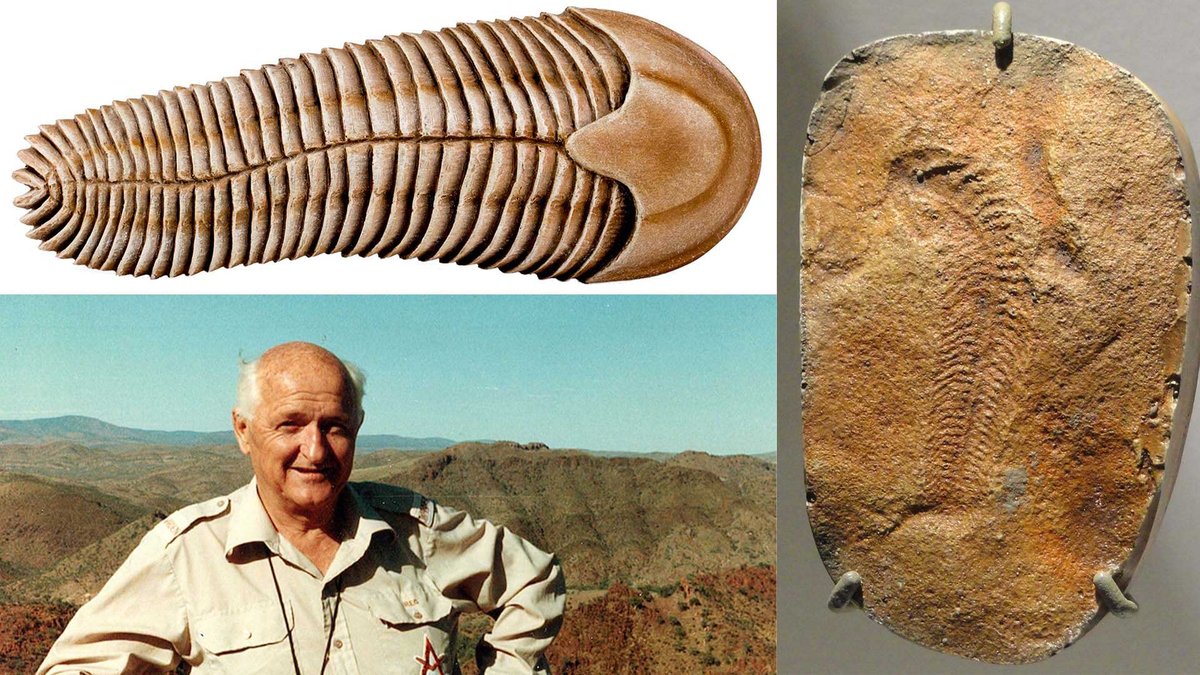
The discovery of Charniodiscus is intrinsically linked to the discovery of the Ediacaran Biota itself. The first fossil evidence, a holdfast disc, was found in Charnwood Forest, Leicestershire, England, by a local schoolboy named Roger Mason in 1957. He showed the impression to his geology teacher, who in turn brought it to the attention of paleontologist Trevor D. Ford. Ford initially described the disc in 1958, naming it Charniodiscus concentricus, believing it to be a type of jellyfish-like medusoid. For years, the disc was known, but its connection to a larger, frond-like body was not understood. The puzzle was solved by re-examining fossils from the Ediacara Hills in South Australia, which had been discovered by Reginald Sprigg in 1946. Paleontologist Martin Glaessner later connected similar disc fossils found in Australia to frond-like impressions, realizing they were two parts of the same organism. This crucial insight demonstrated that Charniodiscus was not a jellyfish but a complete, stalked organism. The holotype specimen, housed at the Leicester Museum & Art Gallery, remains a pivotal fossil in understanding Precambrian life, representing one of the first complex organisms ever found.
Charniodiscus is of immense evolutionary significance as it represents a very early, and ultimately failed, experiment in large-bodied multicellularity. It belongs to the Rangeomorpha, a group of organisms with a unique fractal body plan that has no direct modern analogue. For a long time, paleontologists debated whether these organisms were early animals, fungi, protists, or a completely extinct kingdom of life. The current consensus places them within the stem-group Eumetazoa, meaning they are related to animals but branched off the evolutionary tree before the last common ancestor of all modern animals (the crown-group). They show how life solved the problem of growing large without developing the complex internal transport and digestive systems seen in later animals. By maximizing their surface area, they could 'breathe' and 'eat' across their entire body. The extinction of Charniodiscus and most other Ediacaran organisms at the end of the Precambrian marks a major evolutionary turnover, paving the way for the Cambrian Explosion and the rise of bilaterally symmetric, mobile animals with mouths and guts that dominate the world today.
Significant scientific debates surround Charniodiscus and its relatives. Its precise phylogenetic placement remains contentious; while most researchers consider it a stem-animal, others have argued for affinities with fungi or protists, or have placed it in an entirely separate kingdom, Vendobionta, proposed by Adolf Seilacher. Another area of debate concerns its lifestyle. While osmotrophy is the most widely accepted feeding strategy, some researchers have proposed that it may have harbored chemosynthetic or photosynthetic symbionts, although its deep-water habitat makes photosynthesis unlikely. The function of the holdfast has also been questioned, with some suggesting it could have been a buoyant float rather than an anchor, though the evidence from fossil beds strongly supports a benthic, or seafloor-dwelling, lifestyle. The very nature of its 'quilted' construction continues to puzzle scientists, as it represents a biological architecture fundamentally different from anything alive today.
The fossil record of Charniodiscus is globally significant, with specimens found in rocks of the same age on multiple continents, which were once part of the microcontinent Avalonia. The most famous sites are the type locality in Charnwood Forest, England; Mistaken Point in Newfoundland, Canada (a UNESCO World Heritage Site); the Ediacara Hills of South Australia; and the White Sea region of Russia. Fossils are exclusively preserved as impressions, or molds and casts, in sandstone and siltstone. No organic material remains. The impressions are often detailed enough to show the fine, fractal branching of the frond and the concentric rings of the holdfast. Mistaken Point is particularly famous for its large bedding planes covered with thousands of Ediacaran fossils, including entire communities of Charniodiscus, preserved in situ by volcanic ash falls. These 'snapshots' of an ancient ecosystem provide unparalleled insight into the community structure and ecology of these enigmatic organisms.
Charniodiscus, along with its contemporary Charnia, has become a symbol of the mysterious and alien world of the Precambrian. While not a household name like Tyrannosaurus rex, it is frequently featured in documentaries about the origin of life, such as David Attenborough's 'First Life'. Major museum exhibits on early life, including those at the Royal Ontario Museum, the Natural History Museum in London, and the South Australian Museum, feature casts and reconstructions of Charniodiscus. Its discovery overturned the long-held belief that no complex life existed before the Cambrian, making it a cornerstone of modern paleontological education and a source of continuing public and scientific fascination with the dawn of life on Earth.
Classification
Time Period
Discovery
Location
Charnwood Forest, Leicestershire, England
Formation
Bradgate Formation
Frequently Asked Questions
What is Charniodiscus?
Charniodiscus is an enigmatic frond-like organism from the late Precambrian, representing one of the most iconic members of the Ediacaran Biota. Living in the dark, deep-sea environments between approximately 565 and 555 million years ago, its fossil impressions provide a crucial window into the ear...
When did Charniodiscus live?
Charniodiscus lived during the ediacaran period of the precambrian era approximately 565-555 million years ago.
Where was Charniodiscus discovered?
Fossils of Charniodiscus were discovered in Charnwood Forest, Leicestershire, England in the Bradgate Formation.
What did Charniodiscus eat?
Charniodiscus was a osmotroph. It lived in deep-sea habitats.
What type of fossil is Charniodiscus?
Charniodiscus is preserved as a impression fossil. The preservation quality is good.
Related Specimens
From the precambrian era · impression fossils
-bark/c858d48fc5cb.jpg)