Cyclomedusa
Cyclomedusa davidi
Image: Image sourced via web search (Fair use / Educational)
About Cyclomedusa
Cyclomedusa is one of the most enigmatic and widely distributed fossils from the Ediacaran Period, representing a crucial yet poorly understood chapter in the history of life on Earth. This organism, which lived approximately 560 to 550 million years ago, is known from circular impressions left on the sandy seabeds of ancient oceans. Its simple, disc-like shape has made it a focal point of scientific debate for decades, as paleontologists grapple with its fundamental identity: was it an early jellyfish, a microbial colony, a holdfast for a larger frond-like organism, or something else entirely, belonging to a failed experiment in multicellular life?
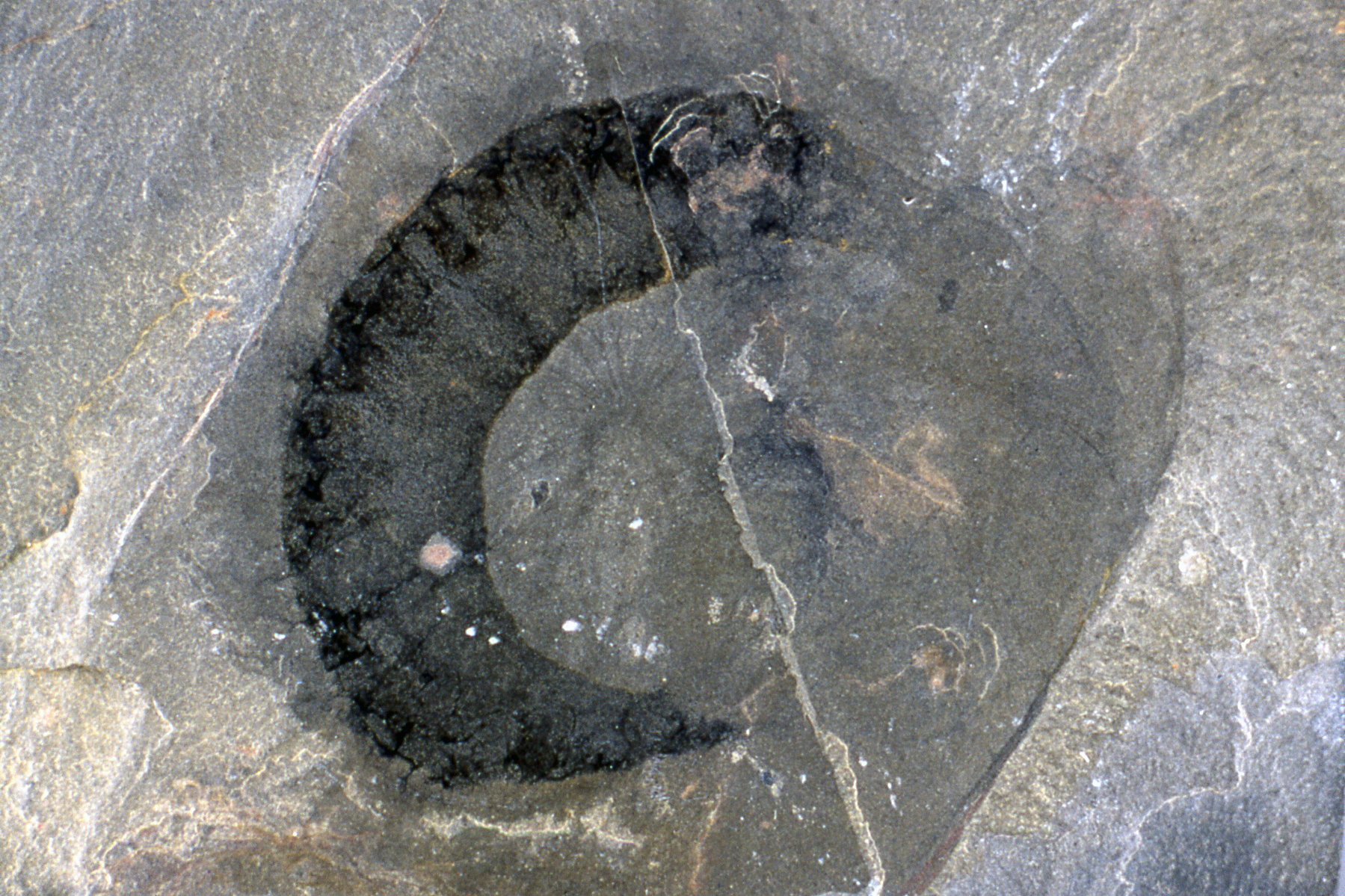
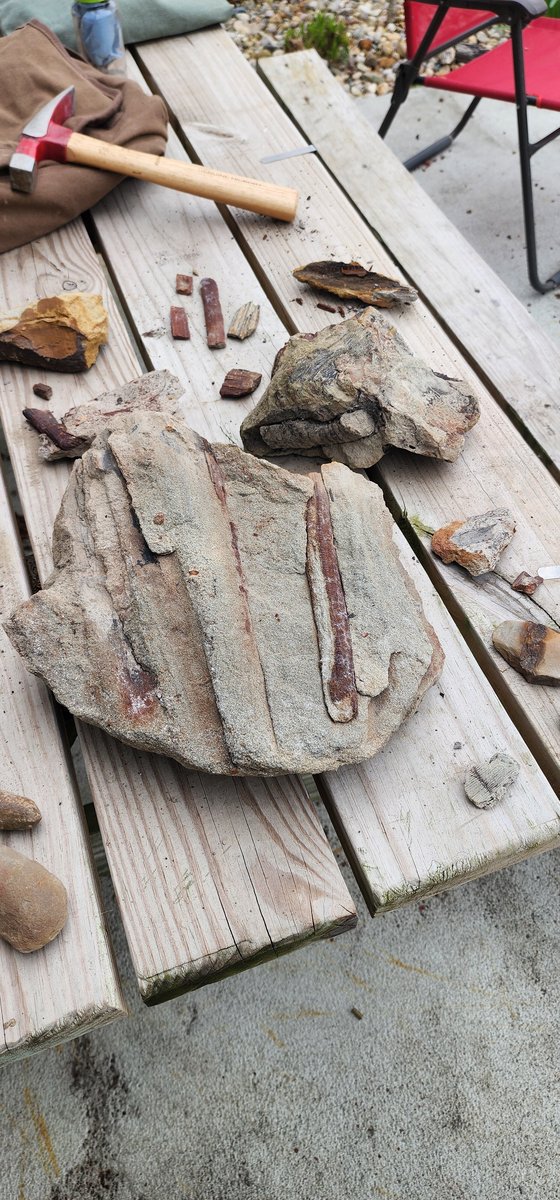
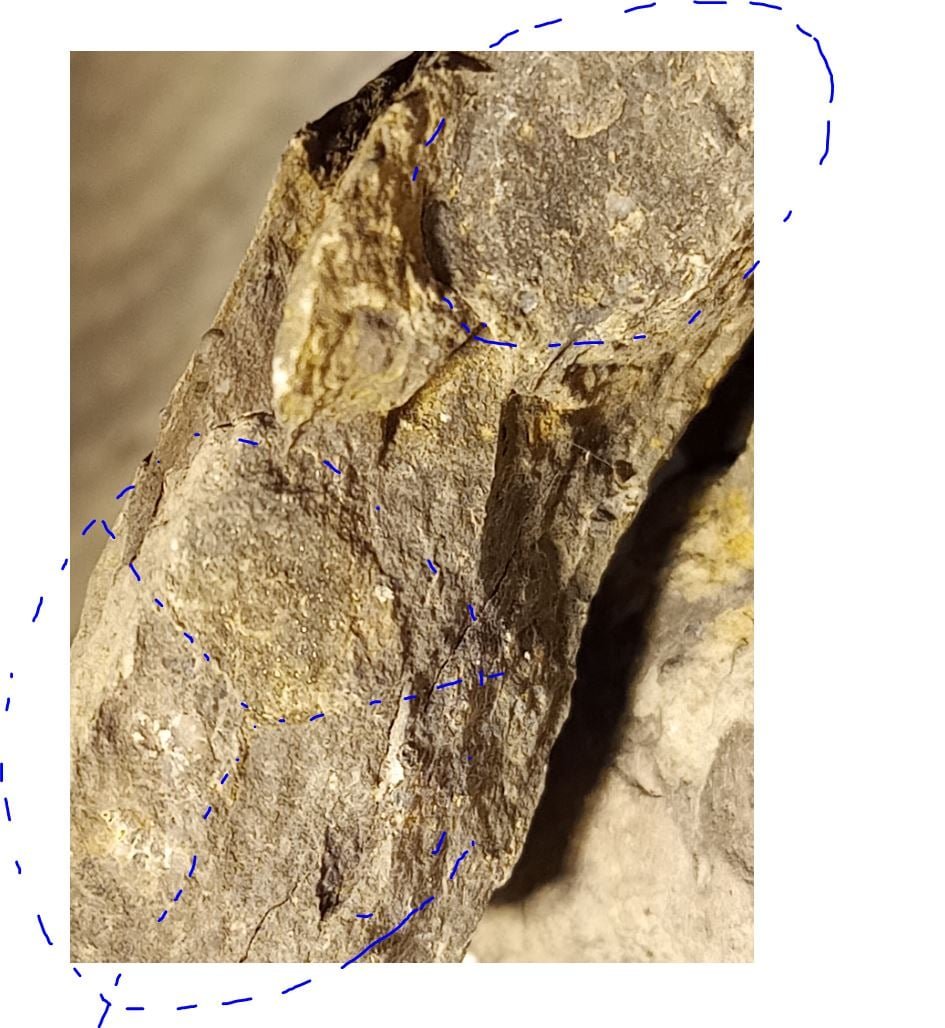
Cyclomedusa fossils present as circular to sub-circular impressions, typically ranging from a few millimeters to over 25 centimeters in diameter, though most specimens are between 1 and 10 centimeters. The fossils are characterized by a series of concentric rings or ridges surrounding a central, often raised or depressed, boss. The number and spacing of these rings can vary significantly between specimens. Unlike the clear bell-shaped impressions of true jellyfish medusae, Cyclomedusa fossils are generally flat discs without evidence of tentacles, oral arms, or a distinct manubrium (the central stalk-like structure in modern jellyfish). The concentric rings have been interpreted as growth lines or possibly internal structures related to support or nutrient distribution. The central boss could represent a point of attachment, a float, or a central digestive or reproductive organ. The overall morphology is simple, yet the variation in the number of rings, the prominence of the central boss, and the overall size has led to the naming of numerous species, many of which are now considered to be preservational variants or different growth stages of a few core types. The lack of any preserved soft tissues beyond the basic impression makes detailed anatomical reconstruction highly speculative. Its form is often compared to a modern sea anemone's pedal disc or the holdfast of a sea pen, rather than a free-swimming jellyfish.
Determining the paleobiology of Cyclomedusa is fraught with challenges due to its ambiguous anatomy and the absence of direct modern analogues. The prevailing hypothesis for many years was that it was a medusoid, a free-swimming jellyfish-like animal. However, the lack of features associated with locomotion or predation, such as tentacles, makes this interpretation unlikely. A more widely accepted modern view is that Cyclomedusa was a benthic, or seafloor-dwelling, organism. It may have been sessile, either attached to the substrate or partially buried within it. Its feeding strategy is a complete mystery. If it was an early animal, it might have been an osmotroph, absorbing dissolved organic nutrients directly from the surrounding seawater through its body wall. Alternatively, it could have been a detritivore, feeding on the rich organic microbial mats that carpeted the Ediacaran seafloor. Some researchers have proposed that it hosted photosynthetic or chemosynthetic symbionts, similar to modern corals. Growth patterns, inferred from the concentric rings, suggest that the organism grew by adding new material to its periphery, expanding outwards like a fungal fairy ring. There is no evidence of social behavior, though fossils are often found in large assemblages, suggesting they lived in dense communities on the seabed, a reflection of favorable environmental conditions rather than complex interaction.
The Ediacaran world that Cyclomedusa inhabited was profoundly different from today's. The planet was emerging from the massive 'Snowball Earth' glaciations, and the oceans were beginning to oxygenate more fully, at least in the upper layers. Continents were coalescing into the supercontinent of Pannotia. The seafloor was not yet subject to significant bioturbation (churning by burrowing animals), allowing for the exceptional preservation of microbial mats and the delicate impressions of the soft-bodied Ediacaran Biota. Cyclomedusa lived in shallow to mid-depth marine environments, sharing its habitat with a bizarre cast of characters like the frond-like Charnia, the segmented, mattress-like Dickinsonia, and the three-lobed Tribrachidium. The ecological food web was likely simple and based on the primary productivity of the extensive microbial mats. Cyclomedusa, as a probable benthic osmotroph or detritivore, would have occupied a low trophic level, essentially grazing on the microbial lawn or absorbing ambient nutrients. Predation was likely minimal or non-existent during this period; there is no fossil evidence of predators with shells, teeth, or claws, which allowed these soft, slow-moving, or sessile organisms to flourish in vast numbers across the globe.
The discovery history of Cyclomedusa is intertwined with the very recognition of Precambrian life. The genus was formally named by Australian paleontologist Reg Sprigg in 1947, based on fossils he found in the Ediacara Hills of the Flinders Ranges in South Australia. The species name, *Cyclomedusa davidi*, honors Sir Tannatt William Edgeworth David, a pioneering Australian geologist. Sprigg initially interpreted these circular fossils, along with others from the site, as jellyfish and related cnidarians, placing them in the Cambrian period. It was only through the later work of Martin Glaessner in the 1950s and 1960s that the true Precambrian age of the Ediacaran Biota was firmly established, a revolutionary concept that pushed back the record of complex life by tens of millions of years. The Ediacara Hills site, particularly the Ediacara Member of the Rawnsley Quartzite, remains the type locality for Cyclomedusa and has produced thousands of specimens. While no single specimen has achieved the fame of a 'Sue' or 'Lucy', the collective assemblages of Cyclomedusa from South Australia, Namibia, Russia, and elsewhere are iconic representations of the dawn of animal life.
The evolutionary significance of Cyclomedusa is a topic of intense and ongoing debate, centered on its placement within the tree of life. For many years, it was considered a stem-group cnidarian, an early ancestor of modern jellyfish, corals, and sea anemones. This interpretation places it firmly within the animal kingdom. However, paleontologist Adolf Seilacher proposed a radical alternative in the 1980s. He argued that Cyclomedusa and most of its Ediacaran contemporaries were not animals at all, but belonged to an extinct kingdom of life he named 'Vendobionta'. In this view, vendobionts were characterized by a quilted, fractal-like construction and represented a failed experiment in multicellularity that left no modern descendants. More recent interpretations have been less radical but equally diverse. Some researchers, like Mikhail Fedonkin, have suggested Cyclomedusa could be a type of polyp, similar to a sea anemone, preserved from the top-down. Another prominent hypothesis, advanced by Jim Gehling and others, posits that many Cyclomedusa fossils are not individual organisms but are actually the holdfasts, or attachment discs, of larger, frond-like organisms that have since decayed. In this scenario, the 'Cyclomedusa' fossil is merely the base of a Charnia-like or other frondose Ediacaran. This would explain its simple structure and its frequent association with other Ediacaran forms.
The primary scientific debate surrounding Cyclomedusa is its fundamental identity: is it a complete organism, a part of a larger organism, a jellyfish, a polyp, or not an animal at all? The holdfast hypothesis has gained considerable traction, as it elegantly explains the simple, robust morphology of the disc compared to the more delicate fronds that would be less likely to preserve. However, many Cyclomedusa fossils are found isolated, with no associated frond, challenging this interpretation. Furthermore, detailed studies of the fossil surfaces have sometimes revealed complex internal structures not easily reconciled with a simple holdfast. The classification remains entirely uncertain, with its position in the kingdom, phylum, and class all marked as 'incertae sedis' (of uncertain placement). The debate highlights the profound difficulty in interpreting fossils from a time before the evolution of familiar body plans, forcing paleontologists to reconsider the very definition of what constitutes an animal.
Cyclomedusa is one of the most globally widespread and common Ediacaran fossils. Major fossil sites are located in the Ediacara Hills of South Australia; the Nama Group in Namibia; the White Sea region of Russia; and Newfoundland, Canada. It is also found in deposits in England, Ukraine, and China. The fossils are almost exclusively preserved as impressions in sandstone and siltstone. They are negative impressions on the bases of sandstone beds, representing natural casts of the organism that was pressed into the underlying mud or microbial mat. The preservation quality is often good, capturing the concentric rings and central boss in fine detail, but it reveals nothing of the internal cellular structure. The sheer abundance of specimens, numbering in the thousands from various localities worldwide, provides a robust dataset for studying morphological variation and paleo-distribution, even if its biological affinity remains elusive. This abundance makes it a key index fossil for the late Ediacaran Period.
Despite its scientific importance, Cyclomedusa has a limited cultural impact compared to dinosaurs or early hominids. Its simple, abstract form does not capture the public imagination in the same way as a Tyrannosaurus rex. However, it is a staple in museum displays on the origin of life and the Precambrian world. Notable exhibits featuring Cyclomedusa and other Ediacaran fossils can be found at the South Australian Museum in Adelaide, the Natural History Museum in London, and the Smithsonian National Museum of Natural History in Washington, D.C. It serves a crucial educational role, representing the first chapter in the story of complex life and illustrating the profound mysteries that still exist in the fossil record. For those fascinated by deep time, Cyclomedusa is an iconic symbol of a lost world that existed just before the Cambrian Explosion, a silent, circular testament to life's earliest, and strangest, experiments in form.
Classification
Time Period
Discovery
Location
Namibia
Formation
Ediacara Member of the Rawnsley Quartzite
Frequently Asked Questions
What is Cyclomedusa?
Cyclomedusa is one of the most enigmatic and widely distributed fossils from the Ediacaran Period, representing a crucial yet poorly understood chapter in the history of life on Earth. This organism, which lived approximately 560 to 550 million years ago, is known from circular impressions left on t...
When did Cyclomedusa live?
Cyclomedusa lived during the ediacaran period of the precambrian era approximately 560-550 million years ago.
Where was Cyclomedusa discovered?
Fossils of Cyclomedusa were discovered in Namibia in the Ediacara Member of the Rawnsley Quartzite.
What did Cyclomedusa eat?
Cyclomedusa was a osmotroph or detritivore. It lived in marine, benthic habitats.
What type of fossil is Cyclomedusa?
Cyclomedusa is preserved as a impression fossil. The preservation quality is good.
Related Specimens
From the precambrian era · impression fossils