Eoandromeda
Eoandromeda octobrachiata
Image: Image sourced via web search (Fair use / Educational)
About Eoandromeda
Eoandromeda octobrachiata is a mysterious and enigmatic organism from the late Ediacaran Period, approximately 560 to 555 million years ago, representing one of the earliest and most complex forms of life in the fossil record. Its name, meaning "dawn Andromeda," alludes to its spiral, galaxy-like appearance and its ancient origins at the dawn of animal life. Discovered in the famous Ediacara Hills of South Australia, Eoandromeda's unique eight-armed spiral morphology has sparked intense debate about its place in the tree of life, with leading interpretations suggesting it could be an early ctenophore (comb jelly) or a completely extinct lineage with no modern relatives.
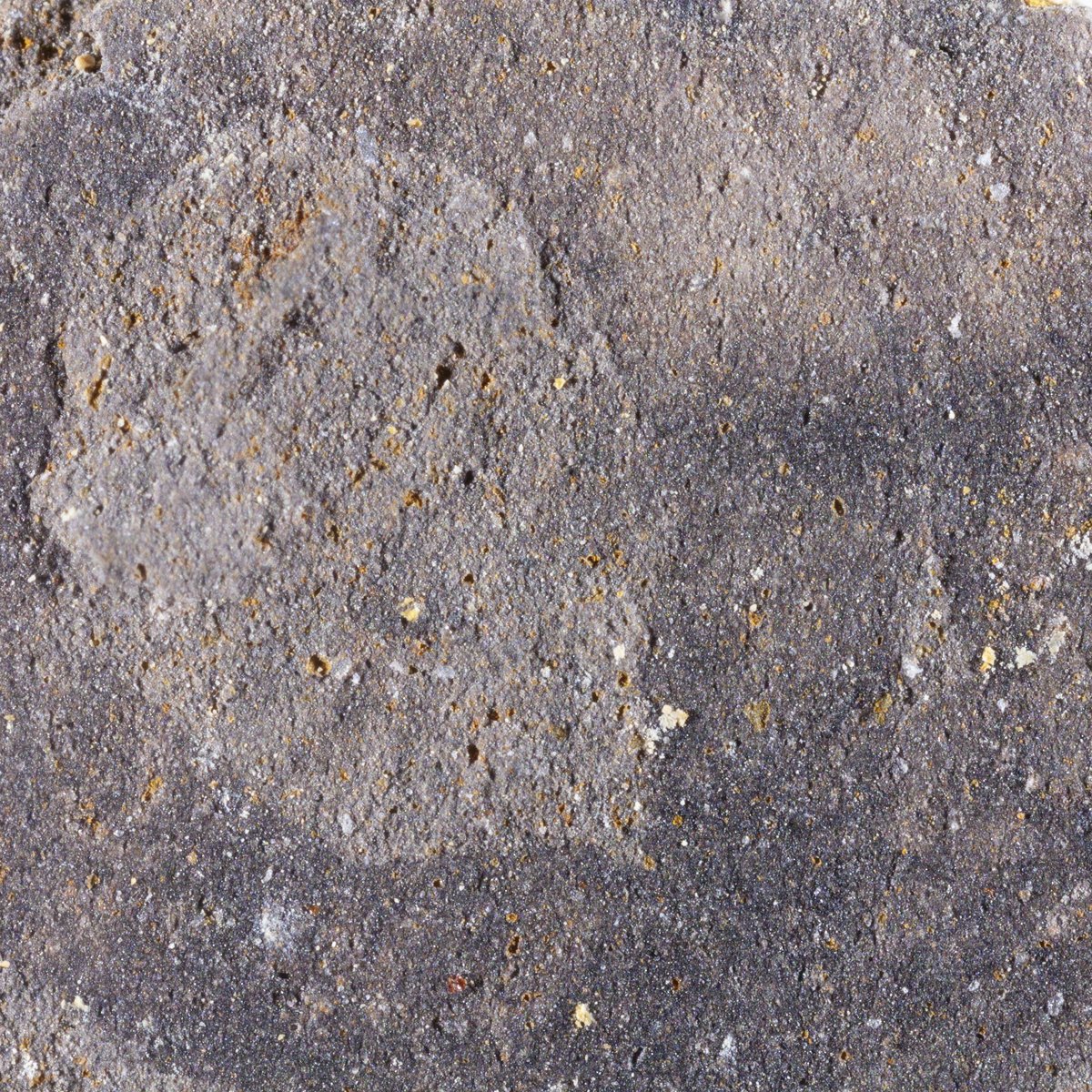
Eoandromeda was a small, soft-bodied organism, with known fossils ranging from just 1 centimeter up to 4.3 centimeters in diameter. Its body plan is strikingly geometric, consisting of eight arms, or vanes, that spiral outwards from a central point, much like the arms of a spiral galaxy or a pinwheel. These arms are not simple tentacles but are themselves complex structures, composed of numerous smaller, transverse filaments or tubules that branch off the main arm axis. The entire organism was preserved as a two-dimensional impression fossil, leaving no direct evidence of its internal anatomy, thickness, or original composition. However, the fine detail preserved in some specimens suggests a relatively robust but non-mineralized body. The overall shape is discoidal and flattened, though this is likely an artifact of the preservation process, where the three-dimensional organism was compressed into the sediment. There is no evidence of a mouth, gut, or anus, which is typical for many Ediacaran fossils. Its eight-fold radial symmetry is a key characteristic, distinguishing it from the pentaradial (five-fold) symmetry of echinoderms or the bilateral symmetry of most other animals. This octaradial symmetry is a significant piece of evidence linking it to the ctenophores, as some members of that phylum exhibit similar rotational symmetry.
The paleobiology of Eoandromeda is highly speculative due to the complete absence of preserved internal structures or direct evidence of behavior. Its lifestyle is inferred entirely from its morphology and the paleoenvironment in which it was found. Given its lack of a discernible mouth or gut, it is unlikely to have been an active predator in the modern sense. One prevailing hypothesis is that it was a detritivore or an osmotroph, absorbing dissolved organic nutrients directly from the water column or the sediment-water interface through its extensive surface area. The numerous fine filaments on its eight arms would have maximized this surface area, making it an efficient structure for nutrient absorption. It is generally believed to have been a benthic organism, living on or just above the seafloor. Its locomotion, if any, would have been extremely limited. It may have been sessile, remaining in one place for its entire life, or it may have been capable of very slow gliding or creeping across the microbial mats that covered the Ediacaran seabed. There is no evidence of social behavior, and fossils are typically found as isolated individuals. Growth patterns are also unknown, but like other Ediacaran organisms, it likely grew by simply expanding its existing structure, adding new filaments to its arms as it increased in size.
Eoandromeda lived in the deep, quiet marine environments of the late Ediacaran Period. The world at this time was vastly different from today; the continents were configured into the supercontinent of Pannotia, and the climate was emerging from the massive 'Snowball Earth' glaciations. The oceans were still relatively low in oxygen, particularly in the deeper waters where these fossils formed. The seafloor was not burrowed by worms or other animals, but was instead covered by extensive, tough microbial mats. This lack of bioturbation is a primary reason why the delicate impressions of soft-bodied organisms like Eoandromeda could be preserved. It shared its habitat with the classic Ediacara Biota, including iconic forms like the frond-like Charnia, the quilted, mattress-like Dickinsonia, and the three-lobed Tribrachidium. In this early ecosystem, complex predator-prey dynamics had not yet fully evolved. Eoandromeda was likely not a predator, and it is unclear what, if anything, preyed upon it. It probably occupied a low-level trophic position, competing with other mat-grazers and osmotrophs for nutrients derived from the microbial mats and the overlying water column. Its existence highlights a period in Earth's history when life experimented with a wide array of bizarre body plans before the Cambrian Explosion established the foundations of modern animal phyla.
The discovery of Eoandromeda is credited to the American paleontologist James Gehling. He found the first specimens in the 1980s while conducting fieldwork in the Ediacara Hills of the Flinders Ranges in South Australia. These fossils were recovered from the Ediacara Member of the Rawnsley Quartzite, a geological formation renowned for its exceptional preservation of the Ediacara Biota. For years, the spiral fossils remained an enigma, informally known as "the pinwheel" among researchers. It wasn't until 2007 that Gehling, along with colleagues Guy Narbonne, Mary Droser, and others, formally described the organism in the journal Science. They named it Eoandromeda octobrachiata, combining Greek and Latin roots: 'Eo' (dawn), 'Andromeda' (referencing the spiral galaxy), 'octo' (eight), and 'brachiata' (armed). The holotype specimen, a particularly well-preserved impression, is housed at the South Australian Museum. The meticulous work of Gehling and his team in interpreting these faint impressions was crucial in bringing this strange creature to the attention of the scientific community and establishing it as a key component of the Ediacaran fauna. Since its initial discovery, a few other specimens have been identified from the same region, confirming its morphology and status as a distinct taxon.
Eoandromeda's evolutionary significance lies in its potential connection to one of the earliest-branching animal phyla, the Ctenophora (comb jellies). The 2007 paper by Gehling et al. and a subsequent detailed analysis by Tang et al. in 2011 argued strongly for this affiliation. The primary evidence is its distinct octaradial (eight-fold) symmetry, which is a hallmark of ctenophores. The eight spiraling arms of Eoandromeda are interpreted as being homologous to the eight ctene rows (comb rows) that modern comb jellies use for propulsion. Furthermore, the fine, transverse filaments on the arms could be precursors to the individual cilia that make up the ctenes. If this interpretation is correct, Eoandromeda would be the oldest and only definitive fossil ctenophore from the Precambrian, pushing the origin of this phylum deep into the Ediacaran. This would provide crucial fossil evidence supporting molecular clock data that suggests the Ctenophora lineage diverged very early from other animals, possibly even before sponges (Porifera). As such, Eoandromeda serves as a potential key transitional fossil, bridging the gap between the enigmatic Ediacaran Biota and the more familiar animal body plans of the Cambrian Period. It represents a critical data point in understanding the very roots of the animal kingdom.
The classification of Eoandromeda as a ctenophore is not universally accepted and remains a subject of scientific debate. While the arguments based on its eight-fold symmetry are compelling, some researchers remain skeptical. Critics point out that Ediacaran organisms often exhibit forms of symmetry and body plans that are not seen in any living animals, suggesting they may belong to extinct experimental lineages, or 'vendobionts,' that are not part of the modern animal tree at all. The lack of preserved soft tissues, such as the apical organ or tentacles characteristic of modern ctenophores, makes the interpretation reliant solely on external morphology. Alternative hypotheses have been proposed, suggesting it could be a type of colonial protist or an organism with no modern analogue. The debate is part of a larger controversy surrounding the nature of the Ediacara Biota itself: are they the direct ancestors of modern animals, or a failed evolutionary experiment that went extinct before the Cambrian Explosion? Resolving Eoandromeda's identity requires the discovery of new, more exceptionally preserved fossils that might reveal details of its internal structure or soft anatomy. Until then, its position as a stem-group ctenophore remains a strong but contested hypothesis.
The fossil record of Eoandromeda is extremely limited, making it a rare and valuable component of the Ediacara Biota. All known and described specimens have been found in one geographic area: the Ediacara Hills in the Flinders Ranges of South Australia. They are preserved as impressions in fine-grained sandstone beds of the Ediacara Member of the Rawnsley Quartzite. These fossils are essentially molds and casts of the organism's body, formed when the creature was buried by sand in a low-energy, deep-marine environment. The overlying sand layer created a 'death mask' of the organism on the underside of the bed. The quality of preservation is generally good for an Ediacaran fossil, capturing the overall spiral shape and the presence of the eight arms, but the finest details of the transverse filaments are only visible in the best-preserved specimens. To date, fewer than a dozen confirmed specimens are known to science, making each one critically important for study. The specific fossil sites within the Flinders Ranges are now protected as part of the Nilpena Ediacara National Park, a world-renowned location for research into the dawn of animal life.
Due to its rarity and the academic nature of the debate surrounding its classification, Eoandromeda has not achieved the same level of public recognition as more visually dramatic prehistoric creatures like dinosaurs. However, within the paleontological community and among enthusiasts of early life, it is a celebrated and fascinating fossil. Its beautiful, galaxy-like spiral form makes it one of the most aesthetically striking of all Ediacaran fossils. Replicas and illustrations of Eoandromeda are featured in museum exhibits dedicated to the origin of life and the Ediacara Biota, most notably at the South Australian Museum in Adelaide, which holds the original specimens. It serves as a powerful educational tool, illustrating the sheer strangeness and diversity of early life forms and highlighting the scientific process of interpreting scant fossil evidence to reconstruct the most ancient branches of the tree of life. It is a symbol of the great mysteries that still surround the very beginning of the animal kingdom.
Classification
Time Period
Discovery
Location
South Australia, Australia
Formation
Ediacara Member of the Rawnsley Quartzite
Frequently Asked Questions
What is Eoandromeda?
Eoandromeda octobrachiata is a mysterious and enigmatic organism from the late Ediacaran Period, approximately 560 to 555 million years ago, representing one of the earliest and most complex forms of life in the fossil record. Its name, meaning "dawn Andromeda," alludes to its spiral, galaxy-like ap...
When did Eoandromeda live?
Eoandromeda lived during the ediacaran period of the precambrian era approximately 560-555 million years ago.
Where was Eoandromeda discovered?
Fossils of Eoandromeda were discovered in South Australia, Australia in the Ediacara Member of the Rawnsley Quartzite.
What did Eoandromeda eat?
Eoandromeda was a detritivore or osmotroph. It lived in deep-sea marine habitats.
What type of fossil is Eoandromeda?
Eoandromeda is preserved as a impression fossil. The preservation quality is good.
Related Specimens
From the precambrian era · impression fossils

-bark/c858d48fc5cb.jpg)