Spriggina
Spriggina floundersi
Image: Image sourced via web search (Fair use / Educational)
About Spriggina
Spriggina was a fascinating and enigmatic organism that inhabited the ancient seafloors of the Ediacaran Period, approximately 560 to 550 million years ago. Its fossils, primarily found in the Flinders Ranges of South Australia, represent one of the earliest complex multicellular animals, offering crucial insights into the dawn of animal life before the Cambrian explosion. Spriggina is particularly significant for its bilateral symmetry and segmented body plan, features that hint at a potential relationship with later arthropods or annelids, though its precise phylogenetic placement remains a subject of intense scientific debate. Its existence challenges our understanding of early animal evolution and the origins of fundamental body plans.
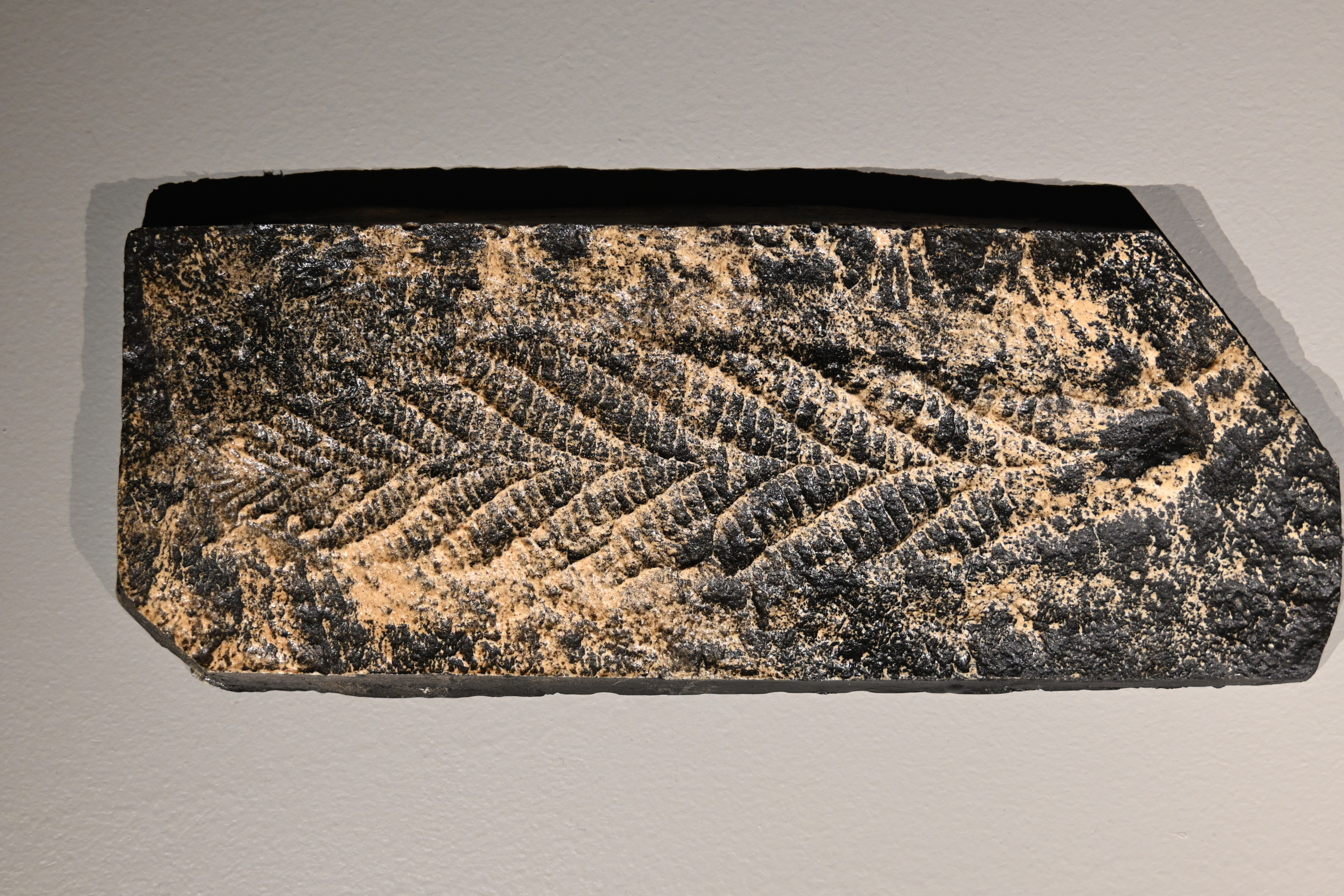
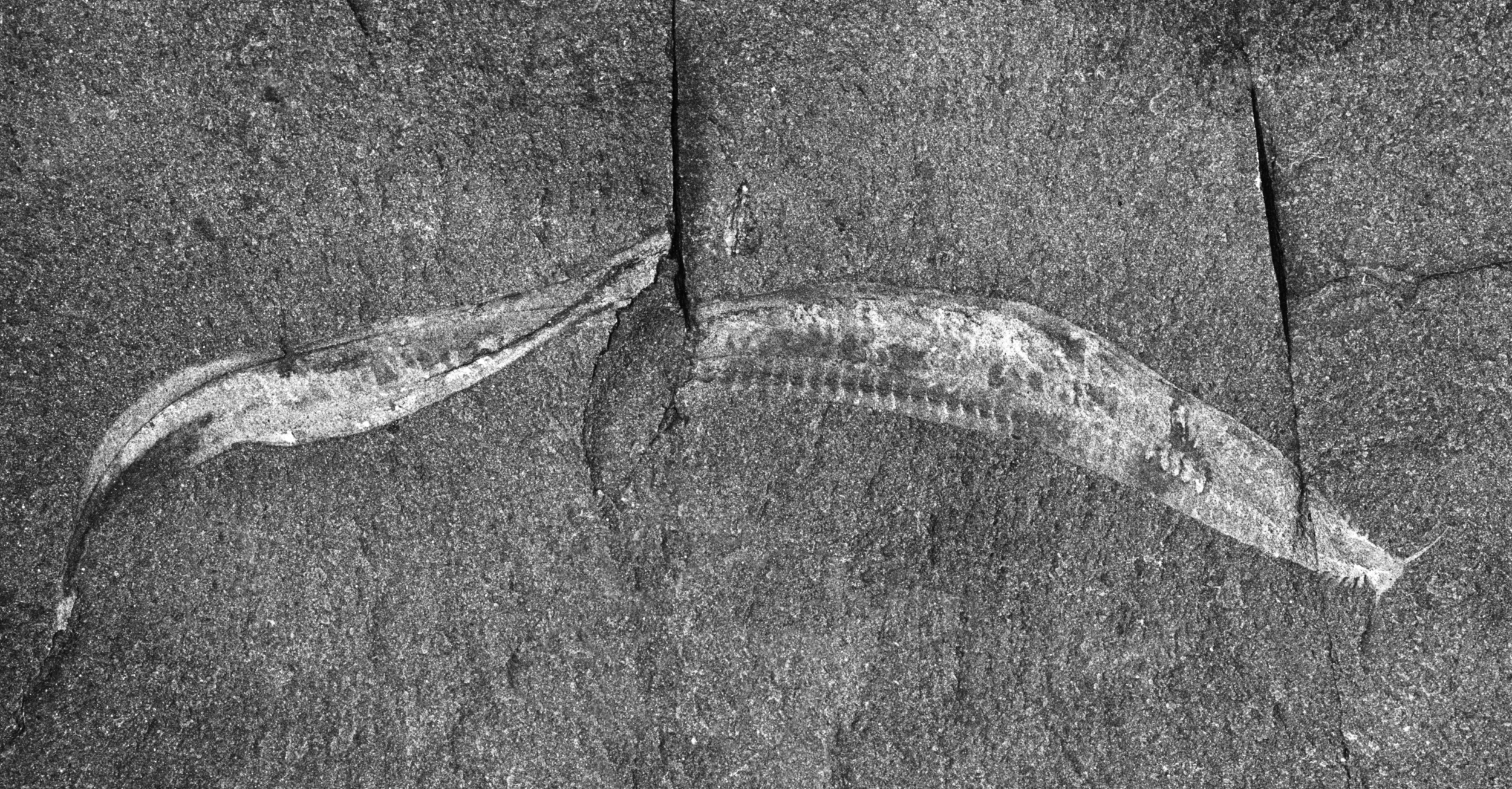
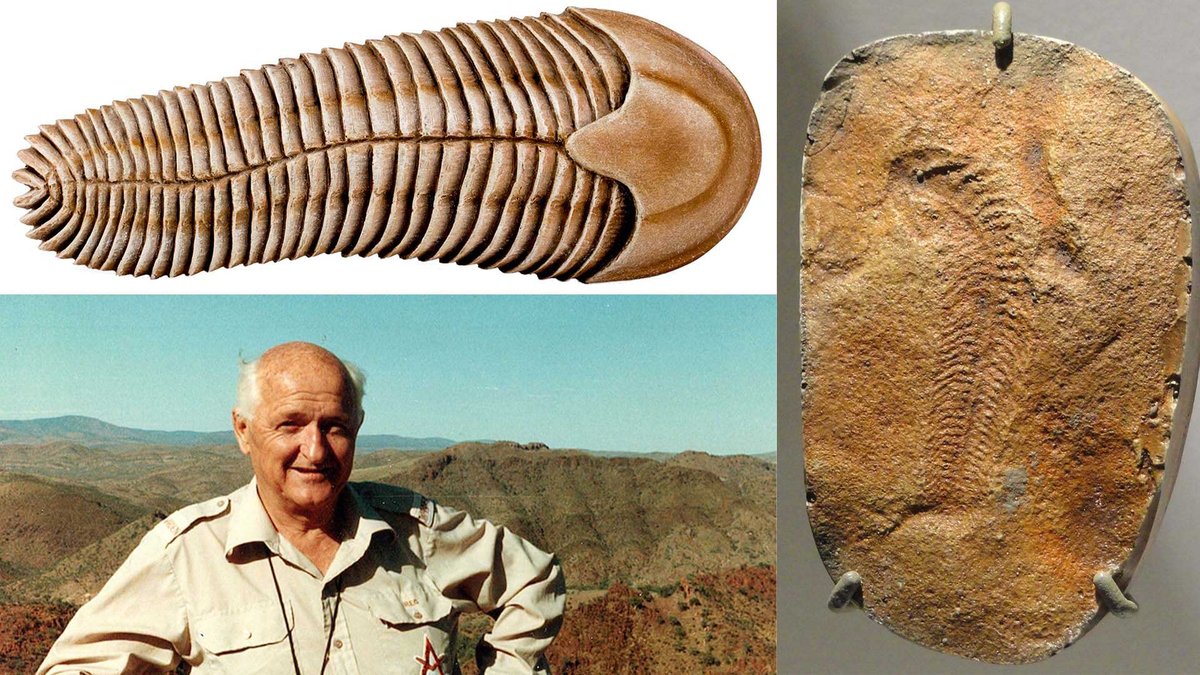
Spriggina floundersi was a relatively small, flattened, and elongated organism, typically measuring between 3 to 5 centimeters in length, though some specimens might have reached slightly larger sizes. Its body was characterized by a distinct bilateral symmetry, with a clear anterior (head-like) region and a segmented trunk. The anterior end featured a horseshoe-shaped structure, often interpreted as a head shield, which bore a pair of depressions that some researchers have controversially suggested might represent eyes or sensory organs. The trunk was composed of numerous segments, or metameres, which were arranged in an alternating, offset pattern along the midline, a feature known as glide symmetry or a 'zig-zag' arrangement. These segments were not perfectly aligned across the body's central axis, which distinguishes it from the more typical bilateral segmentation seen in later arthropods or annelids. The dorsal surface was typically convex, while the ventral surface was flat, suggesting a benthic lifestyle. There is no evidence of a hard exoskeleton, shell, or internal skeleton; Spriggina was a soft-bodied organism, preserved as impressions in fine-grained sandstones. Its overall morphology suggests a creeping or crawling mode of locomotion along the seafloor, possibly using muscular contractions of its segmented body. The lack of discernible appendages, such as legs or antennae, further complicates its classification.
Given its soft-bodied nature and the limited resolution of its fossil impressions, direct evidence for Spriggina's diet and paleobiology is scarce, leading to considerable inference. Most researchers propose that Spriggina was a detritivore, likely feeding on microbial mats or organic detritus that covered the Ediacaran seafloor. Its flattened body and presumed ventral mouth would have been well-suited for grazing on these biofilms. The absence of obvious predatory structures, such as jaws or grasping appendages, makes a carnivorous diet unlikely, though some early interpretations considered it a predator. Locomotion is inferred to have been a slow, creeping motion, possibly involving peristaltic waves of muscular contraction along its segmented body, similar to modern worms. The 'head' region, if indeed sensory, might have aided in navigating the microbial mat environment to locate food. There is no direct evidence of social behavior, such as colonial living or aggregation, and it is generally assumed to have been a solitary organism. Growth patterns are also speculative, but like many segmented organisms, it likely grew by adding new segments from a posterior growth zone. Metabolic rates are presumed to have been low, typical of early Ediacaran organisms in a world with lower atmospheric oxygen levels compared to today.
During the Ediacaran Period, Earth's continents were arranged differently than today, with a supercontinent called Rodinia having recently broken apart, and another, Pannotia, beginning to assemble. The climate was generally mild, following the severe 'Snowball Earth' glaciations of the Cryogenian Period. The oceans were relatively shallow in many areas, and the seafloor was often covered by extensive microbial mats, forming the base of the food web. The environment Spriggina inhabited was a calm, shallow marine setting, likely below wave base, where fine sediments could accumulate. Co-existing species included other enigmatic Ediacaran biota such as Dickinsonia, Tribrachidium, Mawsonites, and various frond-like organisms like Charnia. The ecosystem was largely dominated by sessile or slow-moving organisms, and the concept of a complex food web with active predator-prey relationships was still in its infancy. Spriggina, as a presumed detritivore, occupied a primary consumer or decomposer role, grazing on the abundant microbial mats, which were the dominant primary producers of the time. The absence of burrowing or bioturbation in the sediments suggests a relatively undisturbed seafloor environment.
Spriggina floundersi was first discovered in 1946 by Reginald C. Sprigg, a geologist working for the South Australian Department of Mines. Sprigg made the initial discovery in the Ediacara Hills of the Flinders Ranges, South Australia, while prospecting for minerals. He stumbled upon the impressions of these strange organisms in quartzite rocks, recognizing them as fossils, but initially struggled to get his findings accepted by the scientific community, as the prevailing view was that complex life only emerged in the Cambrian. It wasn't until later, with further discoveries and the recognition of the Ediacaran biota as a distinct assemblage of Precambrian life, that Sprigg's work gained widespread acceptance. The genus was formally named Spriggina in his honor by Martin F. Glaessner in 1958. The species name, floundersi, refers to the Flinders Ranges where it was found. The Ediacara Member of the Rawnsley Quartzite formation in the Flinders Ranges remains the primary and most significant locality for Spriggina fossils. There isn't one single 'famous' specimen like 'Sue' for Tyrannosaurus rex, but rather numerous well-preserved impressions that collectively define the species.
Spriggina's evolutionary significance lies in its unique combination of features that place it at a critical juncture in the early evolution of animals. Its bilateral symmetry and segmentation are hallmarks of the Bilateria, the vast group of animals that includes most modern complex life forms. For a long time, Spriggina was considered a potential early arthropod, possibly an ancestor or close relative of trilobites, due to its segmented body and what appeared to be a head shield. However, the distinctive glide symmetry of its segments, where segments on one side are offset from those on the other, differs from the strict bilateral segmentation of arthropods and annelids. This has led to proposals that Spriggina belongs to a separate, extinct phylum or group called Proarticulata, which represents an early, experimental branch of animal evolution that did not lead directly to modern phyla. Alternatively, some researchers have suggested it could be an early annelid or even a stem-group ecdysozoan. Regardless of its precise placement, Spriggina provides tangible evidence for the early diversification of complex body plans and the emergence of fundamental bilaterian features long before the Cambrian explosion, offering insights into the morphological innovations that paved the way for later animal evolution.
The classification and evolutionary affinities of Spriggina are among the most persistent scientific debates surrounding Ediacaran biota. Initially, it was often grouped with arthropods or annelids due to its segmentation. However, the discovery of its unique glide symmetry, as opposed to true bilateral segmentation, led to the proposal of the extinct phylum Proarticulata by Mikhail Fedonkin. This classification suggests that Spriggina and its relatives represent a distinct, early evolutionary experiment in bilaterian body plans that ultimately died out without modern descendants. Other interpretations have included it as a stem-group annelid, a basal ecdysozoan, or even a highly derived form of a simpler organism. The presence or absence of a mouth and anus, and the interpretation of its 'head' region, are also subjects of ongoing discussion. Some researchers have even questioned whether the 'head' is truly a head or merely an anterior segment. Recent studies employing advanced imaging techniques continue to re-examine existing specimens, hoping to uncover finer anatomical details that might resolve these long-standing controversies, but a consensus on its precise phylogenetic placement remains elusive.
The vast majority of Spriggina fossils are found in the Ediacara Member of the Rawnsley Quartzite in the Flinders Ranges of South Australia. This region is part of the Ediacara Hills, which is the type locality for the entire Ediacaran biota. While some similar forms have been reported from other Ediacaran localities globally, such as the White Sea region of Russia, the best-preserved and most numerous specimens of Spriggina floundersi come from Australia. Hundreds of individual specimens have been identified, ranging in size and preservation quality. The fossils are preserved as impressions on the undersides of sandstone beds, formed when sediment rapidly covered the organisms lying on microbial mats. This mode of preservation, known as 'death masks,' captures the external morphology of the soft-bodied organisms with remarkable detail, considering their lack of hard parts. The quality of preservation varies from fair to good, with some specimens showing clear segmentation and anterior structures. The fine-grained nature of the host rock is crucial for this level of detail, as coarser sediments would not have captured such delicate impressions.
Spriggina, as one of the iconic members of the Ediacaran biota, holds significant cultural impact, particularly within the scientific community and among paleontology enthusiasts. Its distinctive segmented form and enigmatic nature make it a popular subject in textbooks and museum displays illustrating early animal life. Notable displays featuring Spriggina and other Ediacaran fossils can be found in major natural history museums, such as the South Australian Museum in Adelaide, which houses an extensive collection from the Ediacara Hills. It frequently appears in documentaries and popular science articles discussing the origins of complex life and the mysteries of the Precambrian. Its presence underscores the educational importance of understanding the deep history of life on Earth, showcasing a pivotal period of biological experimentation before the explosion of diversity seen in the Cambrian. While not as widely recognized as dinosaurs, Spriggina represents a crucial chapter in the story of life, captivating those interested in the very beginnings of the animal kingdom.
Classification
Time Period
Discovery
Location
Flinders Ranges, South Australia
Formation
Ediacara Member of the Rawnsley Quartzite
Frequently Asked Questions
What is Spriggina?
Spriggina was a fascinating and enigmatic organism that inhabited the ancient seafloors of the Ediacaran Period, approximately 560 to 550 million years ago. Its fossils, primarily found in the Flinders Ranges of South Australia, represent one of the earliest complex multicellular animals, offering c...
When did Spriggina live?
Spriggina lived during the ediacaran period of the precambrian era approximately 560-550 million years ago.
Where was Spriggina discovered?
Fossils of Spriggina were discovered in Flinders Ranges, South Australia in the Ediacara Member of the Rawnsley Quartzite.
What did Spriggina eat?
Spriggina was a detritivore. It lived in marine habitats.
What type of fossil is Spriggina?
Spriggina is preserved as a impression fossil. The preservation quality is good.
Related Specimens
From the precambrian era · impression fossils